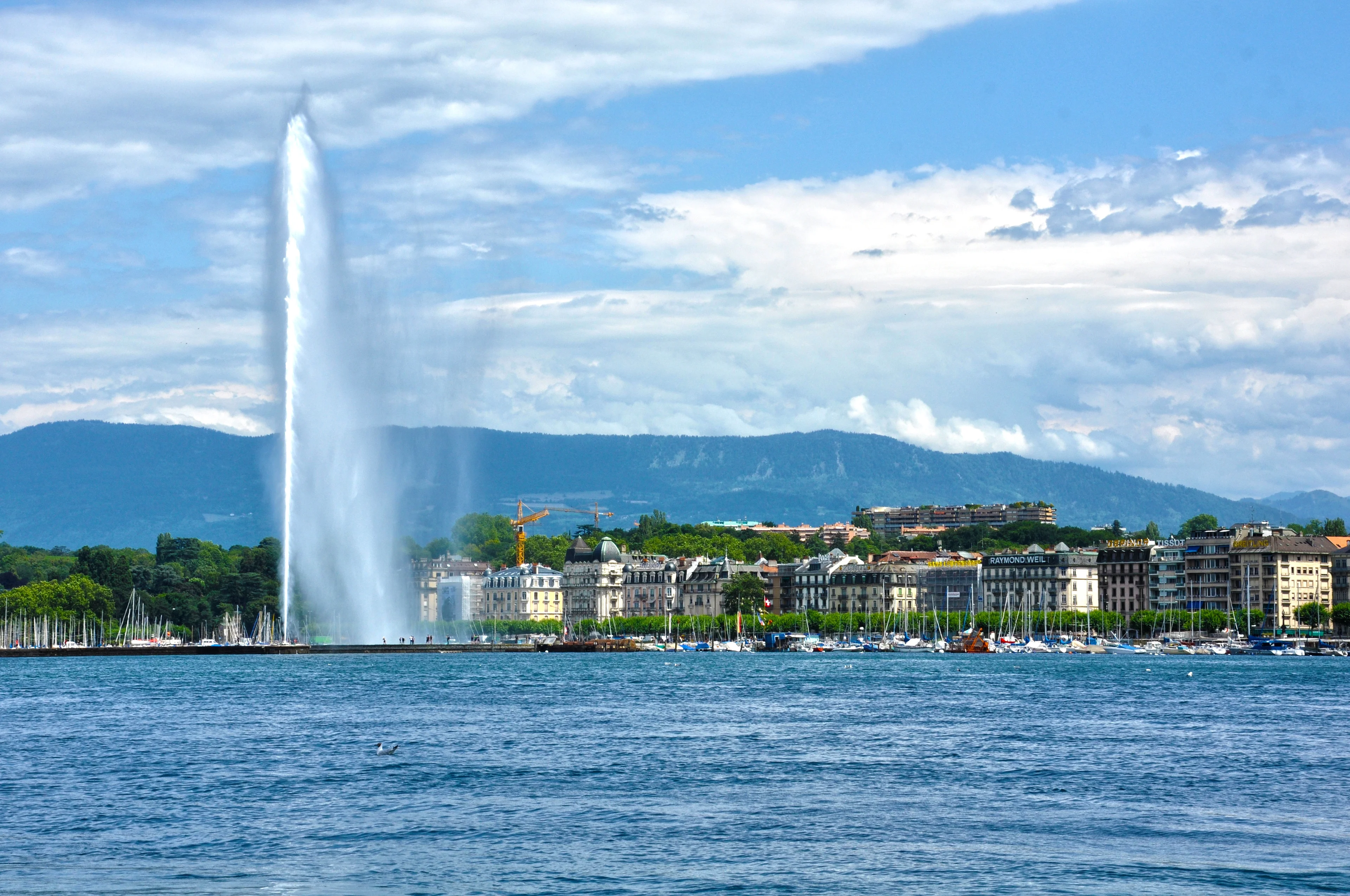
Genève et son jet d'eau

Top 8 most beautiful cities in Switzerland to visit2026 ranking

Discover our members' favourite cities in Switzerland. Feel free to publish your own reviews to take part in this collaborative ranking.

Favourite cities in Switzerland among our members, approved by the editors

#1 Geneva +41 recs

Geneva trades the stiff, buttoned-up Swiss stereotype for a cosmopolitan energy that feels more like a relaxed European capital. You can spend your morning walking the cobblestones of the Old Town or exploring free museums, then transition to a swim at the Bains des Pâquis, a local favorite where people jump into the lake year-round. Between the towering Jet d'Eau and the world-class chocolate shops, the city strikes a balance between Swiss efficiency and a slower, French-inspired pace of life.

Must-sees

#2 Bern +10 recs

Bern is a compact capital city of fewer than 150,000 residents, yet it serves as the seat of the entire Swiss federal government. Nestled against the Aar river, the city preserves a wealth of history, including an old town designated as a Unesco World Heritage site. Located within easy reach of the Alps and the sprawling Parc Naturel du Gantrisch, Bern is a logical starting point for anyone looking to explore Switzerland.


The elegant Old Town of Bern

Most of the narrow streets and the six kilometers of arcades that define Bern's old town date back to the 14th century. The city is defined by its sandstone architecture, such as the Bern Minster, a church founded in 1421 with ornate Gothic details. The main entrance is particularly striking. Sculpted by Erhart Kung, it features 294 individual figures depicting scenes from the Last Judgment. You can climb the 312 steps of the bell tower for a panoramic view of the city, with the Alps serving as a backdrop.

Another major landmark is the expansive Bundesplatz, which features 26 water jets representing each of the cantons that make up Switzerland. This square sits directly in front of the Federal Palace, the center of Swiss political power, easily identified by its distinctive green copper domes. As you walk through the city center, you will likely encounter the Zytglogge, or Clock Tower. Every hour on the hour, mechanical figures including a bear, a golden rooster, a jester, and Chronos perform a brief show on its facade.


Essential sights in Bern

If you enjoy gardens, head to the Rosengarten (Rose Garden). Beyond its hundreds of varieties of roses and irises, this hilltop park offers the best vantage point looking down over the city. The garden is located just above the famous Bärengraben (Bear Pit), housing the city's heraldic animal. If you are traveling with children, head to the Dählhölzli zoo to see species like leopards, wolves, and puffins.

Bern's cultural scene is equally compelling. The Zentrum Paul Klee is housed in a unique, wave-like contemporary building designed by Renzo Piano. The city's Museum of Fine Arts has been active since 1879 and holds a significant collection of renowned works. Finally, you can learn about the life and genius of the 20th century's most famous scientist at the Einstein House, located in an apartment where he once lived.


When to go

Bern is a year-round destination. For a unique local experience, visit on the fourth Monday of November for the Zibelemärit (Onion Market), a massive festival that celebrates the vegetable in every imaginable form.


How to get there

The most efficient way to reach the Swiss capital is to fly into Zürich, Geneva, or Lausanne, and then complete your journey to Bern by train.

Must-see

#3 Lugano +5 recs

Lugano is the hub of the canton of Ticino, located in the Italian-speaking southern part of Switzerland. Flanked by Monte Brè and San Salvatore, the city stretches along Lake Lugano, sitting right on the border between Switzerland and Italy. Lugano is a prosperous city, serving as one of the country's primary financial and convention centers. Its mild, nearly Mediterranean climate comes from its southern position at the foot of the Alps. This creates a lush, subtropical environment, which you can explore in Parco Ciani, a landscaped garden lining the lake. While walking through the park, you can also catch some culture at Villa Ciani, which hosts fine arts exhibitions, or visit the cantonal natural history museum.

Highlights of Lugano

With its Renaissance-era buildings clustered around the Piazza della Riforma and a historic, pedestrian-friendly downtown reminiscent of Lombardy, Lugano retains an unmistakable Northern Italian vibe. Visit the San Lorenzo Cathedral, a regional landmark, before heading down to the lakefront promenade. The waterfront features charming arcades filled with boutiques and restaurants. For high-end shopping, Via Nassa is where you will find the most luxury establishments.

Nearby, you will find the Santa Maria degli Angioli church, which houses an impressive Passion and Resurrection fresco by Bernardino Luini, a student of Leonardo da Vinci. For art lovers, the Museo d'arte della Svizzera Italiana (MASI) focuses on fine arts, while the LAC is a dedicated space for contemporary works.

Culture buffs should also check out the Museum of Cultures, which offers an ethnographic look at European, Asian, and African regions. The Hermann Hesse Museum, located in a traditional house just outside Lugano, details the life and works of the writer.

An Exceptional Natural Setting

Lugano stands out for its dramatic geography. Beyond the lake, which is certainly swimmable, the city is surrounded by mountains, including Monte San Salvatore, often compared to the Sugarloaf Mountain in Rio de Janeiro. To get into the mountains, you have two funicular options. One takes you up Monte Brè from Cassarate, granting access to hiking trails and the olive tree path along the lake. The other departs from Lugano-Paradiso toward Monte San Salvatore. At the summit, you get a panoramic view of the city and its surroundings, extending all the way to the high peaks of the Alps to the west.

When to visit

The climate in Lugano is remarkably mild, making it a year-round destination. That said, it is best to avoid January and February, as these are the coldest and dampest months.

Getting there

Lugano is connected by train or bus in under two hours without transfers to both Zurich and Milan, making it a highly accessible destination.

#4 Zurich +4 recs

Forget the reputation for buttoned-up banking and high-end boutiques. Zurich is a genuinely approachable city and a perfect target for a weekend trip. It packs a charming Old Town and a prime location between a massive lake and the mountains, giving it an outdoor energy that feels a bit like a cleaner, more alpine version of Seattle.

History, food, and art

Start your visit in the Old Town, which is split into two halves by the Limmat River. On the right bank, you cannot miss the Grossmünster cathedral. Its twin neo-Gothic towers are the city's most recognizable landmark. Cross over to the left bank to wander the medieval alleys of the Schipfe, where you will find historic, ornate facades and small craft shops. The Fraumünster church is a must for its stained glass windows, designed by Marc Chagall and Augusto Giacometti (a cousin of the famous sculptor). When you need a break, head to the Lindenhof esplanade. It is shaded by 90 linden trees and offers a great vantage point looking down over the city.

This area is also the right spot to sit down for a heavy cheese fondue at a traditional restaurant. If you are a fan of Gruyère, Vacherin, or Appenzell, you will be in heaven. For dessert, do as the locals do and grab some Swiss chocolate. Sprüngli is arguably the most famous confectionery in Zurich, if not all of Switzerland. Once you have recovered from the cheese, you can hit the Thermal Baths or browse the city's museum scene. The Swiss National Museum holds a deep collection of local history, while the Kunsthaus Zurich is packed with art ranging from the 18th century to the present day. If you want something different, check out the FIFA Museum or the Museum of Digital Art.

Natural surroundings

Beyond the polished storefronts and busy streets, Zurich leans hard into the natural beauty of Switzerland. The city sits on a lake that stretches 42 kilometers, a favorite spot for locals to swim. A 3-kilometer waterfront path is a go-to for Sunday strolls and runners. You can also get out on the water with a mini-cruise. If you are in town in November, look for Expovina, a unique wine festival held directly on boats docked in the harbor. Those who want to get into the mountains should set aside at least one day for the Swiss Alps. There are dozens of trails for hikers, but if you want something easier, just head to the Uetliberg (869 meters), which you can reach by foot or via funicular.

When to go

Aim for June through August to catch the best weather and long, sunny days. November through March are the coldest months, though temperatures in the city typically remain manageable.

Getting there

Flights from major US hubs into Zurich Airport (ZRH) are frequent. If you are already traveling within Europe, a flight from Paris to Zurich runs about 120 EUR (approx. $130) with a flight time of 1h 20m. You can also take the train from Paris, which takes about 4h 20m. If you are coming from Strasbourg, Zurich is a straightforward 2h 30m drive.

Must-see

#5 Lucerne +2 recs

Lucerne is a city in central Switzerland, positioned right on the shores of Lake Lucerne. The Old Town is exceptionally well preserved, featuring medieval structures like the Museggmauer, a 870-meter-long rampart that once guarded the city from invaders. The most iconic sight is the Chapel Bridge, or Kapellbrücke, which spans the Reuss river. Built of wood, this covered bridge is lined with 17th-century murals. In the middle of the span sits the Wasserturm, a 34-meter-tall medieval tower.


A beautiful city in the heart of Switzerland

Wander through the winding lanes of the Old Town to see the city's various squares and historical landmarks. The Weinmarkt, for example, is an elegant public square featuring a fountain that dates back to 1481. Nearby, the Hirschenplatz stands out for its well-maintained facades, many of which are protected heritage sites.

Cross over to the south bank via the historic Dance of Death Bridge, or Spreuerbrücke, which also traverses the Reuss. On this side, you will find the ornate Jesuit Church. Art enthusiasts should visit the Rosengart Collection, which houses works by Picasso and Klee. Continue east toward the lakefront to see the KKL (Lucerne Culture and Convention Center), designed by the internationally renowned architect Jean Nouvel in 1999. The concert hall inside features specialized acoustics developed with the help of American acoustic engineer Russell Johnson. The surrounding waterfront is also the departure point for steamboat cruises on the lake.

Reconnect with the mountains in Lucerne

Lucerne is framed by the surrounding peaks. Do not miss the chance to visit Mount Pilatus and Mount Rigi. They are accessible by cable car and offer solid hiking trails along with sweeping views of Lucerne and the valley below. Think of the scale like the Rockies, but with the town sitting right at the base of the water.

To learn about the ice age and the unique local geology, head to the Glacier Garden.


Learn more about Swiss history

If you are interested in the humanistic values that shaped Switzerland, two monuments are worth your time. The Lion of Lucerne is a sculpture carved directly into a sandstone cliff, dedicated to the Swiss Guards who died protecting King Louis XVI of France. Right nearby is the Bourbaki Panorama, one of the few circular panoramic paintings in the world, which depicts a tragic event from the 19th-century war between France and Prussia.


When to go

Both summer and winter are excellent times to visit Lucerne. If your schedule allows, try to catch the Lucerne Festival. It is dedicated to classical music and takes place at various times throughout the year.


How to get there

Lucerne is well connected by train and bus to major cities across Switzerland. By car, the A4 motorway links Lucerne to Zurich in just 50 minutes.

#6 La Chaux-de-Fonds +1 rec

Perched at an elevation of about 3,300 feet in the Jura mountains of Switzerland, La Chaux-de-Fonds sits near Neuchâtel. The city is a masterclass in urban planning. After a devastating fire in 1794, it was rebuilt on a grid system designed by Charles-Henri Junod. This layout was specifically crafted to support the local watchmaking industry, which remains a pillar of this part of Switzerland. It is also the hometown of the influential architect Le Corbusier, who left his mark here with several buildings, including the Maison Blanche, a home he designed for his parents.


The Watchmaking City of Switzerland

A portion of La Chaux-de-Fonds is inscribed as a UNESCO World Heritage site for its unique watchmaking urbanism. The entire city was reimagined at the end of the 18th century to optimize the craft. You can see this modern approach in the orientation of old workshops and the wide avenues designed to improve the flow of movement for workers. Think of it as an industrial-era version of a master-planned community.

La Chaux-de-Fonds is a stop on the Swiss Watch Route that winds through the Jura mountains between Geneva and Basel. For a deep dive into the design and history of the industry, head to the Musée International d'Horlogerie, which houses roughly 4,500 pieces dating from the 17th century to the present.

The city is also a hub for Art Nouveau, with many buildings dating to the early 20th century. Look for the local variation known as the "style sapin" (fir tree style), which incorporates motifs inspired by the local Jura flora and fauna.


Leisure in La Chaux-de-Fonds

For a cultural fix, visit the Musée des Beaux-Arts, which displays a collection of Swiss and international artists, including works by Matisse, Le Corbusier, Van Gogh, and Pissarro. The Quartier Général is an contemporary art center housed in the city's former slaughterhouses. Finally, the Musée Paysan et Artisanal offers a look at the life of the farming families who were the original clockmakers.

If you are traveling with family, do not miss the zoo du Bois du Petit-Château. It is a scenic, free-to-access nature space where you can wander among animals, reptiles, and amphibians in the vivarium. A small annex museum also features exhibits on African wildlife.


When to Visit

If you love snow, head to La Chaux-de-Fonds in winter. For the best weather to explore the city's sights, plan your trip between June and September.


Getting There

To reach La Chaux-de-Fonds, fly into Geneva and take a train to Neuchâtel before connecting to your final destination. Travelers coming from France should note that there is a direct regional train service connecting Besançon to La Chaux-de-Fonds in about 1 hour and 45 minutes.

#7 Saignelégier +1 rec

Saignelégier is a Swiss village perched above the Doubs Valley near the border with France. It sits at the heart of the Franches-Montagnes, a sprawling 200 square kilometer plateau tucked into the heights of the Jura mountains. The region earned its name during an era when the local prince-bishop exempted the territory from taxes to encourage settlement in what was then considered a harsh, inhospitable climate. Today, the area around Saignelégier offers a sense of seclusion, characterized by expansive pastures and dense spruce forests.


A charming Jura mountain village

During the 17th century, Saignelégier served as the base for the lords of the la Franche-Montagne seigneury, a legacy that left behind several historic homes and an understated, elegant neo-baroque church.

The real draw of Saignelégier, however, is its natural surroundings. The village is an ideal jumping-off point for exploring the parc naturel régional du Doubs. Hikers often follow the marked trail from the village to the l’étang de la Gruère, a peat bog that showcases the region's unique wetland ecology. Along the way, you can stop at the Centre Nature Les Cerlatez for insights into how the last ice ages shaped these wetlands. The étang des Royes, a quieter and more rugged body of water located within the municipality, is another worthwhile spot for those seeking solitude.


A haven for horses

If you are an equestrian enthusiast, Saignelégier is a must. The Franches-Montagnes region boasts over 200 kilometers of dedicated riding trails. Within the village, you can find local outfitters offering wagon and carriage rides. For a closer look at the local horse breeds, visit the Fondation pour le Cheval in the hamlet of Le Roselet, just outside the village. The sanctuary cares for retired horses, ponies, donkeys, and mares with their foals. If you visit in August, you can catch the Marché-Concours national de chevaux, the largest annual horse gathering in Switzerland.


When to go

Your timing depends on your preferred pace. Winter opens up the landscape for cross-country skiing and snowshoeing. When spring and summer arrive, the focus shifts to long-distance hiking through a landscape dotted with isolated farmhouses, meadows, and thick spruce forests.


How to get there

By car, you can reach the village via route 18. A regional train line also connects Saignelégier to La-Chaux-de-Fonds in about forty minutes.

Must-see

#8 Lausanne

As the capital of the canton of Vaud, Lausanne is the fourth-largest city in Switzerland, perched on the northern shore of Lake Geneva. Built across steep hills and carved by several streams, the city balances a well-preserved medieval old town with the expansive waterfront of the lake. Throughout the 20th century, Lausanne became a hub for international sports governance, notably becoming the home of the International Olympic Committee in 1915. Today, you can visit the Olympic Museum to explore the origins, history, and values of the Games. Serving as both a major rail hub and a university town, Lausanne maintains a steady pace of cultural activity and outdoor recreation.


Lausanne's landscapes

Lausanne is a city defined by its elevation, offering frequent lookouts over Lake Geneva with the Alps serving as a backdrop. Head to the esplanade de Montbenon for a perspective that ranks among the most impressive in the city.

The medieval old town is centered around the grand Notre-Dame Cathedral, which has served as a Protestant church since 1536. Inside, look for the 13th-century frescoes and polychrome details. If you are around after 10:00 PM, you might hear the night watchman calling out the hour, a tradition that has survived for centuries. Nearby, visit the place de la Palud, a square surrounded by historic buildings and marked by the Justice fountain. This is the site where the city's independence from Bern was declared in 1798. The Palais de Rumine is also located just a short walk away.

Head down to the waterfront for a different pace. The quais d’Ouchy, dating back to 1901, provide a path along the water that links beaches, boat docks, and green spaces, including the roseraie de la place du général Guisan and Parc du Denantou.


Cultural activities in Lausanne

Lausanne’s cultural scene covers a wide range of interests, from outsider art and local cheese production to contemporary architecture and science. Plan time for the Plateforme 10 arts district. This complex houses several foundations, including the Fine Arts Museum, the Museum of Design and Contemporary Applied Arts, and the Elysée Museum, which focuses on photography. A single ticket typically allows access to these collections, letting you move between different art forms at your own pace.


When to go

Aim for the warmer months to visit Lausanne. Winter weather here can be gray and damp, which often limits outdoor activities.


How to get there

The train is the most efficient option. The TGV Lyria service connects Paris to Lausanne in about four hours. Alternatively, you can fly into Geneva and take a connecting train to the city. Once you arrive, the local two-line metro system makes getting around the hilly terrain straightforward.

Latest reviews

Two very different vibes

I spent a full day in Lausanne to visit a Swiss friend. At first, I found the city pretty average, especially around the train station. Fortunately, the historic part made up for it. The cathedral and…

57 0

The Swiss capital is worth the trip!

I was pleasantly surprised by Bern. After having a negative first impression while driving around the city on the highway, I finally discovered that the Swiss capital is home to a remarkable city cent…

53 0

A city of exceptional beauty

I discovered this city during the Women's Euro soccer championship. Crossed by a river and nestled on the shore of a lake, Thun blends the old and the new pretty well. It is possible to get across thi…

39 0

A nice surprise

I was pleasantly surprised by my visit to Basel. The city center is really nice, especially the banks of the Rhine where you can swim in the summer. But the city is mainly known for its culture, and i…

22 0

The sun changes everything

Geneva is night and day depending on the weather. When it is nice out, it is a real joy to walk around Lake Geneva. The water sparkles on the surface and it is such a pleasure to stroll there. While h…

24 0

Rankings by travellers, for travellers

Our rankings are powered by thousands of reviews from travelers like you, not the arbitrary pick of a single editor. Every positive review you publish raises the destination’s score.

1 positive review = +1 reco

Your voice matters!

Have you travelled and discovered amazing places? Share your experience and help the community rank the most beautiful destinations! Sign up for free to post reviews and make your voice heard.