
Visiting the English Garden
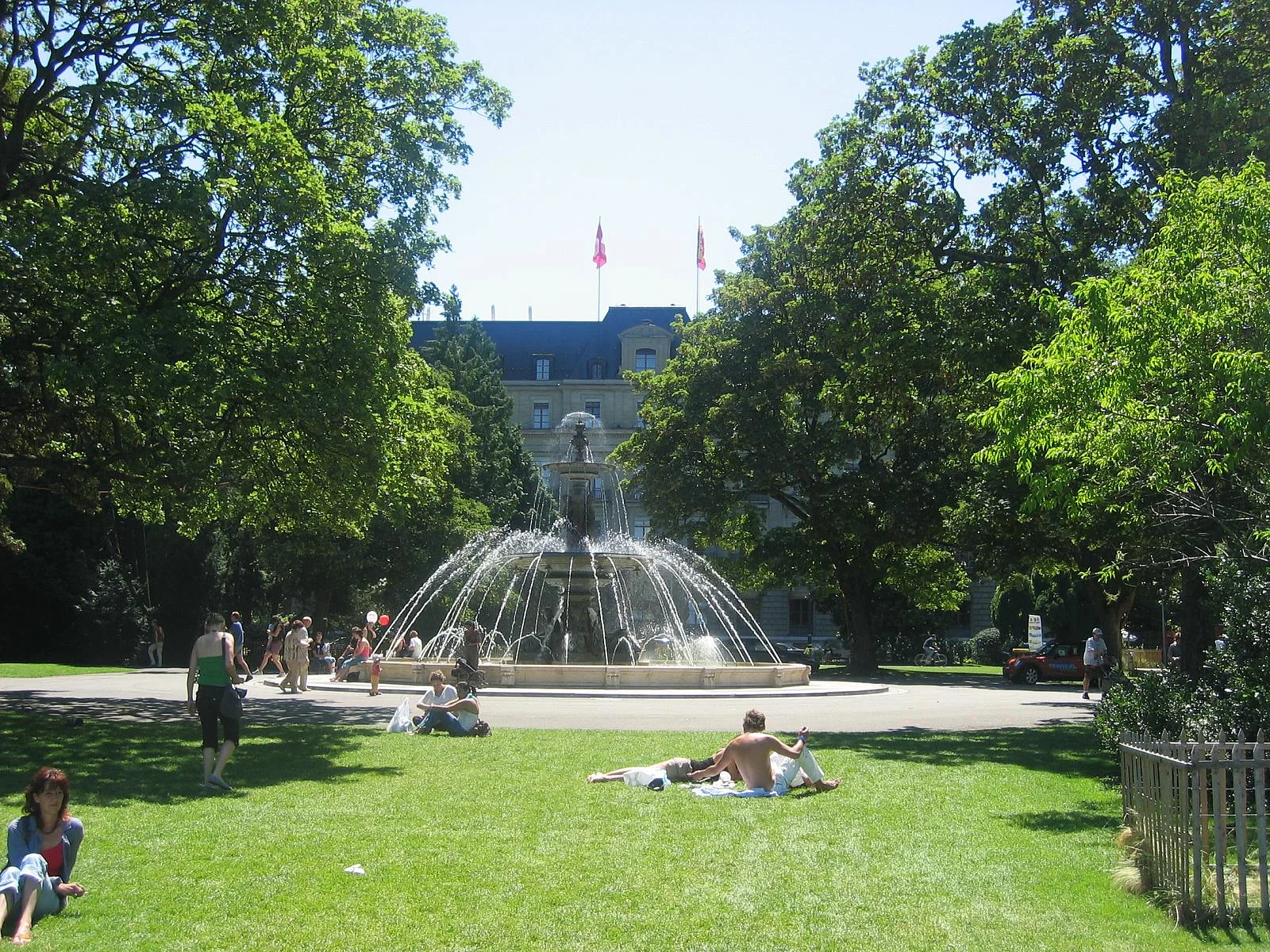
On the left bank of Lake Geneva, the English Garden is one of the most pleasant walking spots in Geneva. While it is not expansive, it stands out with its mature trees and decorative features that give it a unique character. At its heart sits the famous Flower Clock, a primary reason to explore the winding paths that have brightened the waterfront since 1854.
When flowers tell the time
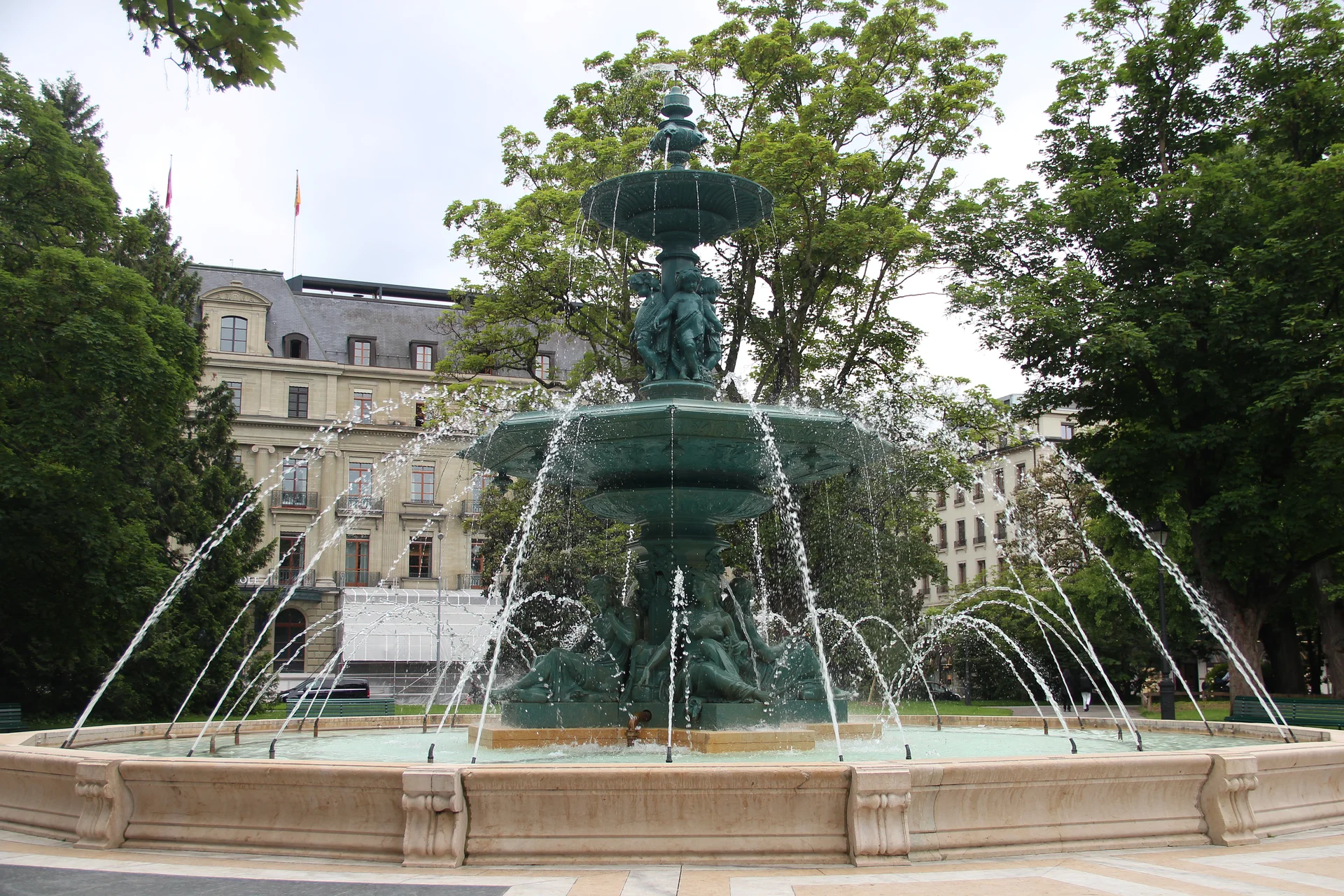
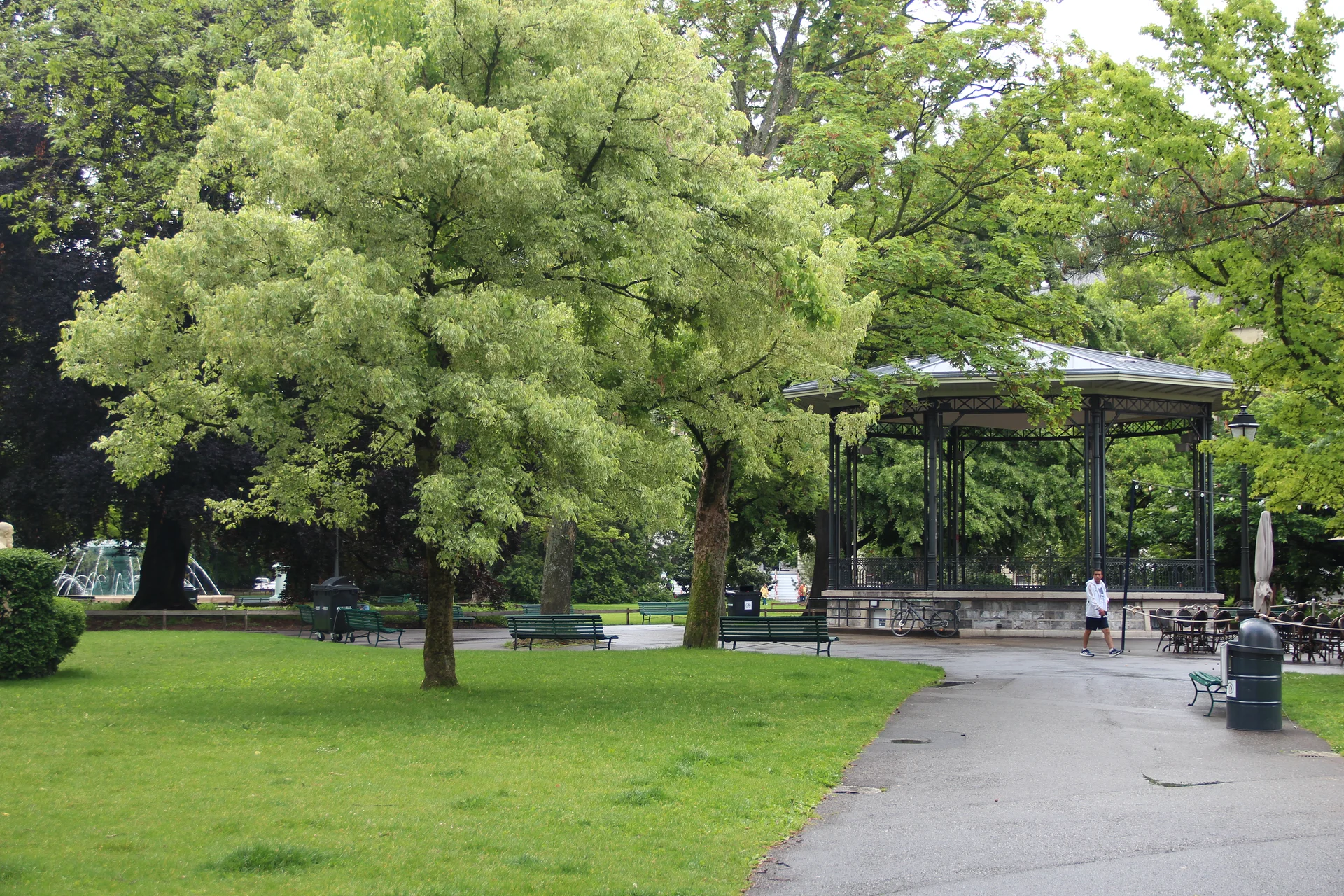
When the rade (harbor) underwent its major transformation in the late 19th century, the park was a natural addition. It embraced the English landscaping style that swept through green spaces across Europe, and in Geneva, it was the first to adopt this aesthetic. Moving away from rigid layouts, it offers a path where trees grow freely, with a massive copper beech planted in 1895 serving as a prime example. It is not the only tree of that age, as visitors will notice a giant thuja and an imposing sequoia along the paths. Between the horse chestnut trees and the magnolia, distinct species are found everywhere. In the center of the English Garden, the monumental Four Seasons fountain is a highlight. Cast in 1862 at an art foundry, it nearly rivals the famous Jet d'eau located just a few yards away. But in the city of watchmaking, it is once again a unique dial that steals the show. A true landmark, the Flower Clock has become the site's symbol and is known globally. With a diameter of 5 meters and a circumference of 18 meters, this floral and technical masterpiece blends different crafts. Created in 1955, it requires thousands of plants that are replaced with seasonal blooms to ensure it stays vibrant throughout the year. Its 2.5-meter second hand is a Patek Philippe design, and its precision is pure Switzerland, naturally.
Opening hours
Open 24/7

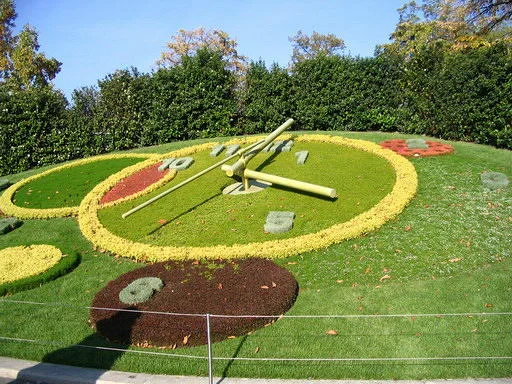
Just a few steps from the famous Jet d'Eau and the lake, a pretty park for relaxing, running, hanging out....