
Valparaiso

Top 4 most beautiful cities in Chile to visit2026 ranking

Discover our members' favourite cities in Chile. Feel free to publish your own reviews to take part in this collaborative ranking.

Favourite cities in Chile among our members, approved by the editors

#1 Valparaíso +32 recs

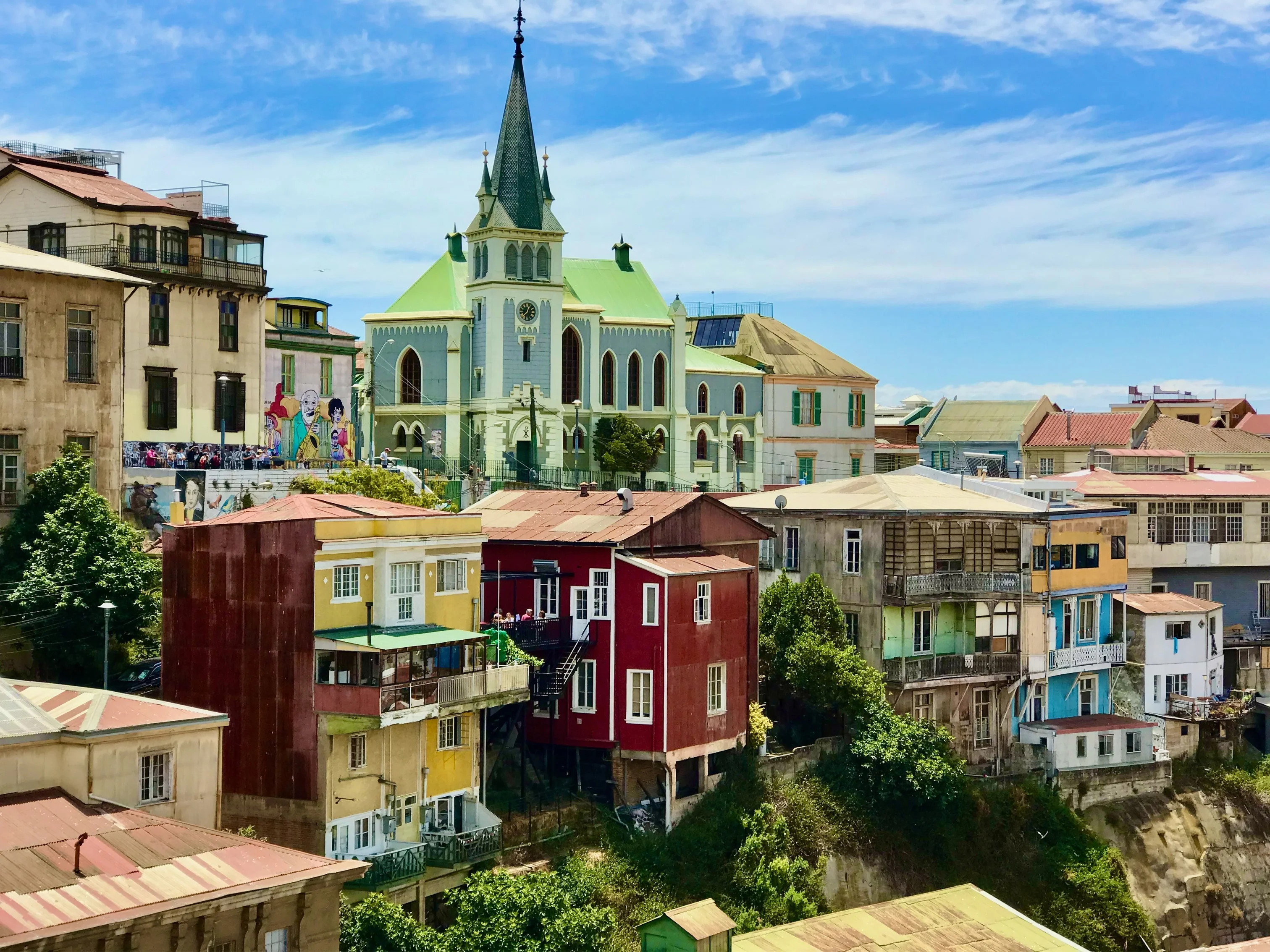
As the primary port of Chile, Valparaíso is a city of distinct contrasts, tucked into a wide Pacific bay and framed by 45 steep hills known as Cerros. Founded in 1544 by Pedro de Valdivia, the city entered a golden age during the 19th century, drawing gold seekers, shipping magnates, and major banking institutions. A massive earthquake and the opening of the Panama Canal in 1914 eventually stifled this growth. Today, the city is a hub for students and artists, filled with street art, museums, cafes, and boutiques. Its historic center is even recognized as a Unesco World Heritage site.

The maritime heritage of Valparaíso

Located along the waterfront, the Barrio Puerto is the oldest district in the city. Sitting between the flatlands and the hills, you will find historical landmarks like the Iglesia de la Matriz. The Plaza Sotomayor, lined with official government buildings, serves as the institutional heart of Valparaíso. You can see the Monument to the Heroes of Iquique, which commemorates the naval battle of May 21, 1879. Housed in a mansion typical of the early 20th-century bourgeoisie, the Palais Baburizza and its Museum of Fine Arts are another essential stop. Afterward, head to the Muelle Prat, a small pier where you can catch a boat for a tour of the bay.

A labyrinth of colorful hills

The atmosphere in Valparaíso is defined by the maze of hills overlooking the port, each acting as a neighborhood with its own distinct identity and local culture. These residential Cerros are served by fifteen funicular elevators. To really explore the corners of these colorful districts, walk the steep streets, which also gives you a front-row seat to the city's street art. The essential Cerros include Cerro Concepcion and Cerro Alegre, both packed with plazas, walkways, and viewpoints like the Mirador Yugoslavo and Paseo Gervasoni. Do not miss the Open-Air Museum of Valparaíso on Cerro Bellavista, a collection of murals inaugurated in 1992. Another highlight is the Paseo 21 de Mayo on Cerro Artilleria, which offers one of the best panoramas in the city. Near Cerro Carcel, the Parque Cultural de Valparaiso, built on the site of a former prison, is worth a visit for its exhibitions and expansive green spaces.

Other things to see in Valparaíso

Fans of the Chilean poet Pablo Neruda should visit his home on Cerro Bellavista, La Sebastiana. It holds a beautiful collection of art and period furniture. Down in the flatlands, take a walk through Plaza Victoria, a pleasant spot with large trees and fountains bordered by the cathedral. Near the port, visit the Mercado El Cardonal for an authentic local scene. You might also head over to the Paseo Muelle Barón, where you can often spot sea lions resting nearby.

When to go

Valparaíso is most pleasant to visit during the southern summer, between December and April.

How to get there

The city is easily accessible by bus from Santiago. You will arrive at the Terminal de Buses Rodovario after a trip of about 1 hour and 30 minutes.
#2 Santiago +32 recs

As the capital of Chile, Santiago is home to roughly 5 million people. The city was founded in 1541 during the colonial era by Pedro de Valdivia, centered on what is now the Plaza de Armas, the city's institutional heart. The population surged at the end of the 20th century as people moved from rural areas to the city seeking better opportunities. The metropolis is split by the Mapocho River, which is flanked by green spaces like Parque Forestal and the Parque de las Esculturas, where you can find 40 sculptures created by prominent Chilean artists.

Central Neighborhoods in Santiago

Start your walk at the city's main square, the Plaza de Armas. This is where you will find the Metropolitan Cathedral of Santiago, a neoclassical structure, alongside museums such as the Museo Histórico Nacional, which covers Chile's colonial and republican history. Nearby, the Museo de Arte Precolombino is essential for its collection of ceramics, sculptures, and textiles from various pre-Columbian cultures. Finally, do not miss the Palacio de la Moneda, the seat of the Chilean government, located just a few blocks away.

The Lastarria neighborhood, or the Fine Arts district, is another staple of the capital. After stopping by the Museum of Fine Arts, enjoy the energetic, colorful vibe around Cerro Santa Lucia, which frequently hosts local sports and cultural events.

San Cristobal Hill and Surroundings

To see Santiago from above, head to San Cristobal Hill, which encompasses the largest urban park in Chile, covering 722 hectares. It is accessible to everyone, and you can choose to hike up or take the funicular. At the summit, you will find a statue of the Virgin Mary, crafted in 1908 by Mathurin Moreau. Pope John Paul II held a mass here in 1987. The area around San Cristobal also includes a zoo and a botanical garden.

At the base of the hill, make time for the bohemian neighborhood of Bellavista, a hub for artists filled with street art, bars, and boutiques. Nearby, you will find La Chascona, one of the homes of Chilean poet Pablo Neruda, which still displays his original furniture and decor.

For those looking to get even higher, head to the eastern side of the city to tackle the Gran Torre de Santiago. It is the tallest skyscraper in South America at 300 meters, offering an aerial view of the entire valley.

The Legacy of the Pinochet Dictatorship

If you want to understand the period of the Chilean dictatorship between 1973 and 1990, visit the Museum of Memory and Human Rights. The institution commemorates the 40,000 victims of the Pinochet regime and details the major political and military turning points of that era.

When to Go

The best time to visit Santiago is from November through April.

Getting There

Fly into Santiago de Chile Airport.

Getting Around

Once you are in the city, the metro and bus network is efficient and reliable, capable of taking you just about anywhere in the metropolitan area.

Must-sees

#3 San Pedro de Atacama +8 recs

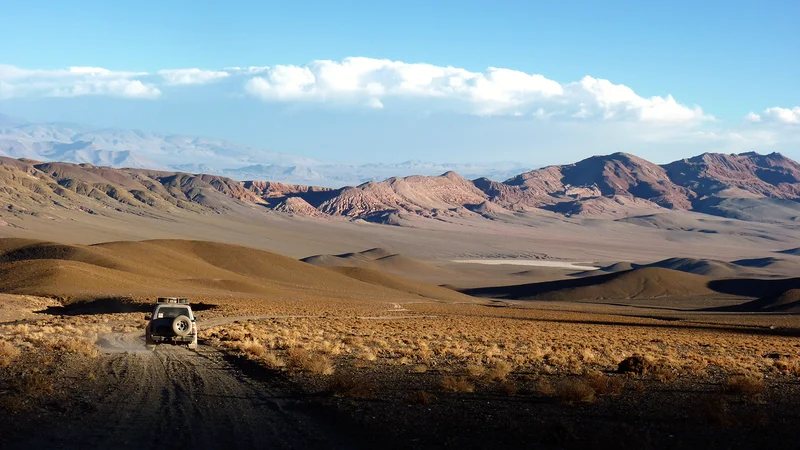
San Pedro de Atacama sits in the middle of one of the driest deserts on the planet. This Chilean village serves as a base for exploring wind-carved valleys, active geysers, and pre-Columbian archaeological sites. With some of the clearest skies in the Southern Hemisphere, it is a premier destination for stargazing. The laid-back pace and stark, high-altitude landscapes offer a complete change of scenery from the typical US national park experience.

Must-see

#4 Punta Arenas +2 recs

You have reached the literal end of the world. For travelers who find comfort in isolation, Punta Arenas is the destination. Located at the southern tip of Chile on the Brunswick Peninsula, this city serves as the primary gateway for exploring the Strait of Magellan.

A history carved in architecture

Often called the capital of Chilean Patagonia, Punta Arenas spent years isolated from global trade routes before the Panama Canal opened. Long before European settlers arrived in the late 19th century lured by the prospect of gold, the region was home to indigenous groups including the Yagan, Ona, Tehuelche, and Alakalouf people, who survived in one of the planet's harshest climates.

Today, the city retains a distinct character. The Plaza de Armas is the heart of the city, framed by grand mansions built during the late 19th and early 20th centuries. At its center stands a statue of explorer Ferdinand Magellan. The Sacred Heart Cathedral, completed in 1901, remains a local landmark. Do not miss the Palais Sara Braun, a neoclassical residence still filled with its original period furniture. For a deeper look at local history, the Blanchard Residence, which houses the Chilean Antarctic Institute, and the Braun Menendez Regional Museum are essential stops. Even the local cemetery is a significant site, filled with elaborate mausoleums belonging to the city's founding families and the grave of the Unknown Indian.

Landscapes at the edge of the world

Once you have finished exploring the city, head to the water. From the Costanera at the port, you can look out across the same channels that challenged early mariners. Local boat operators run cruises through the Strait of Magellan, where you can spot humpback whales in the open water. About 30 kilometers northeast of the city lies the Isla Magdalena National Park. It takes about two hours by boat to reach the island, which is home to a massive colony of Magellanic penguins. Punta Arenas also serves as the departure point for expeditions to Karukinka Park, Cape Horn, Alberto de Agostini National Park, Cabo de Hornos National Park, and the Laguna Parrillar Reserve.

When to go

Do not expect beach weather here. Because of its latitude, the city experiences frequent rain and intense wind gusts year-round. Avoid the period from May to September, when temperatures hover between 0 and 5 degrees Celsius (32 to 41 degrees Fahrenheit). During the rest of the year, temperatures rarely climb above 15 to 20 degrees Celsius (59 to 68 degrees Fahrenheit).

How to get there

The most practical way to reach Punta Arenas is by plane from Santiago, which takes about 4 hours. You can also arrive by bus or car via Ruta 9, though be prepared for a drive of over 3,000 kilometers from the capital.

Latest reviews

A charming capital

Santiago is big, really big even. Nestled in the Andes Mountains, there is so much to do and see. Great museums that are rich and varied, beautiful monuments including the Metropolitan Cathedral which…

45 0

A little slice of paradise

I still remember telling myself that since I was already in Santiago, I might as well go to Valparaíso, which isn't far by bus. I knew it by name from my grandfather's stories, which he passed down to…

42 0

Disappointed by the swimming

I didn't go to Chile for the beach, but I still wanted to make a relaxing stop on the Pacific coast. La Serena had been presented to me as a well-known seaside resort, not too far from the capital (50…

29 0

Hard to form an opinion

Interesting city with quite a few flaws. To start with the negative, the traffic and pollution (both air and noise), plus the striking social inequalities. Some neighborhoods could pass for upscale ar…

29 0

A mix of urban culture and colonial past

What I remember most about this city are the curiosities that make it a unique place, and also the muscle aches that make it a real workout :) Overlooking the bay, dozens of hills to climb on foot or…

24 0

Rankings by travellers, for travellers

Our rankings are powered by thousands of reviews from travelers like you, not the arbitrary pick of a single editor. Every positive review you publish raises the destination’s score.

1 positive review = +1 reco

Your voice matters!

Have you travelled and discovered amazing places? Share your experience and help the community rank the most beautiful destinations! Sign up for free to post reviews and make your voice heard.