
Santiago's green lung, under the gaze of the Virgin
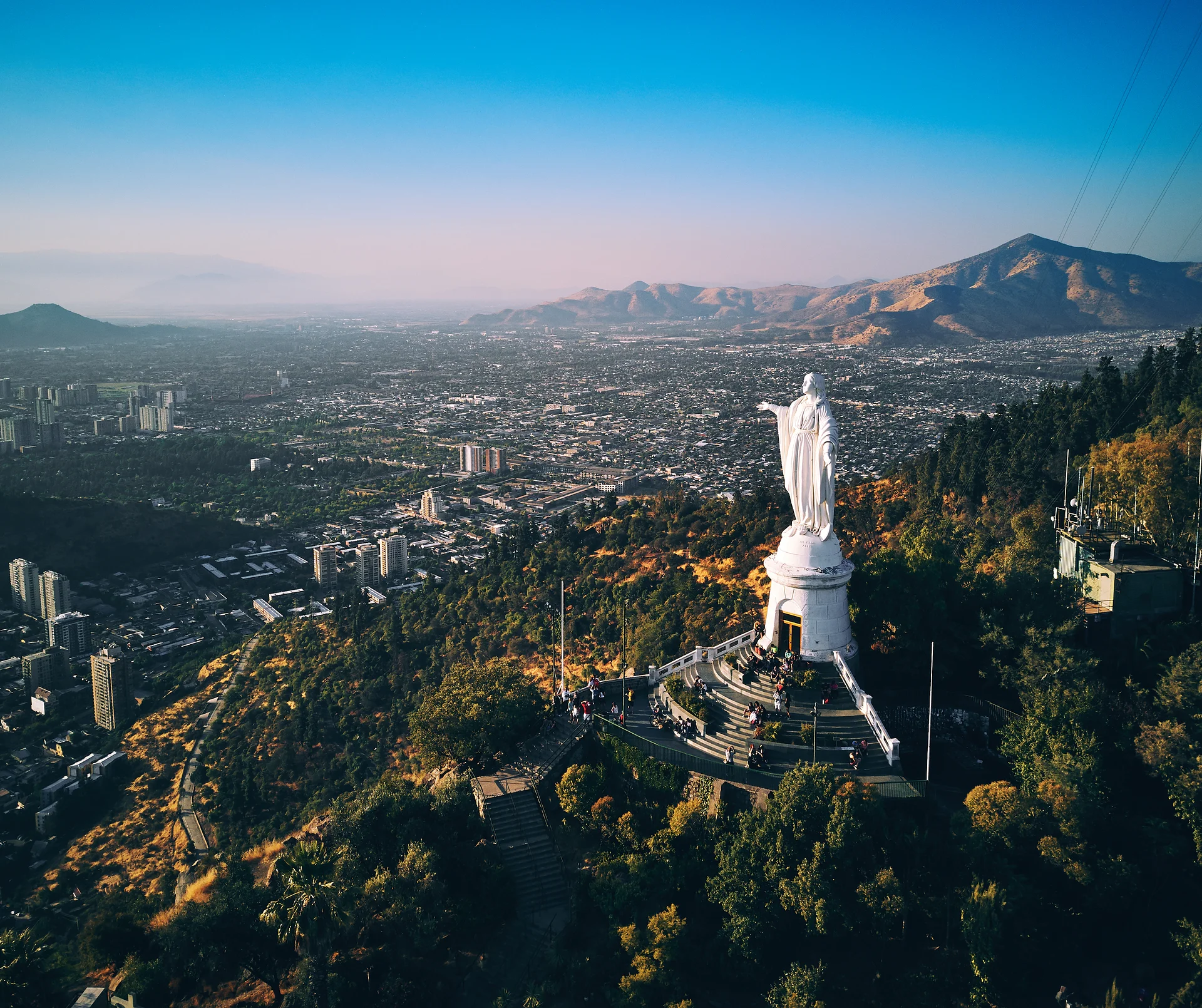
In the heart of the Chilean capital, San Cristóbal Hill stands as a sanctuary of greenery and serenity. This iconic hill reaches an altitude of 880 meters, towering about 300 meters above Santiago. Its summit, crowned by an imposing statue of the Virgin Mary, has watched over the city for over a century and creates a silhouette recognizable from nearly every neighborhood in the metropolis.
Why climb San Cristóbal Hill?
The site possesses a richness that goes beyond its role as a lookout point. Originally known by its Mapuche name Tupahue, the hill was renamed by Spanish conquistadors in honor of Saint Christopher, who served as a landmark for travelers. Today, this hill houses the Parque Metropolitano, the largest urban green space in Santiago at 722 hectares. It is a genuine lung for a city of more than six million residents.
Beyond the exceptional panorama over the Andes mountain range and the urban sprawl, you will discover a place where nature, history, and spirituality intersect.
The statue of the Virgin and the sanctuary
At the summit sits the Virgen de la Inmaculada Concepción, an immaculate white statue 22 meters tall (14 meters for the statue itself, 8.3 meters for the pedestal). Illuminated every night, it becomes a spiritual lighthouse visible from across the city.
Inside the pedestal is a small chapel where Pope John Paul II prayed and blessed the city of Santiago on April 1, 1987. An amphitheater set at the foot of the statue regularly hosts masses and religious ceremonies.
A place for contemplation and views
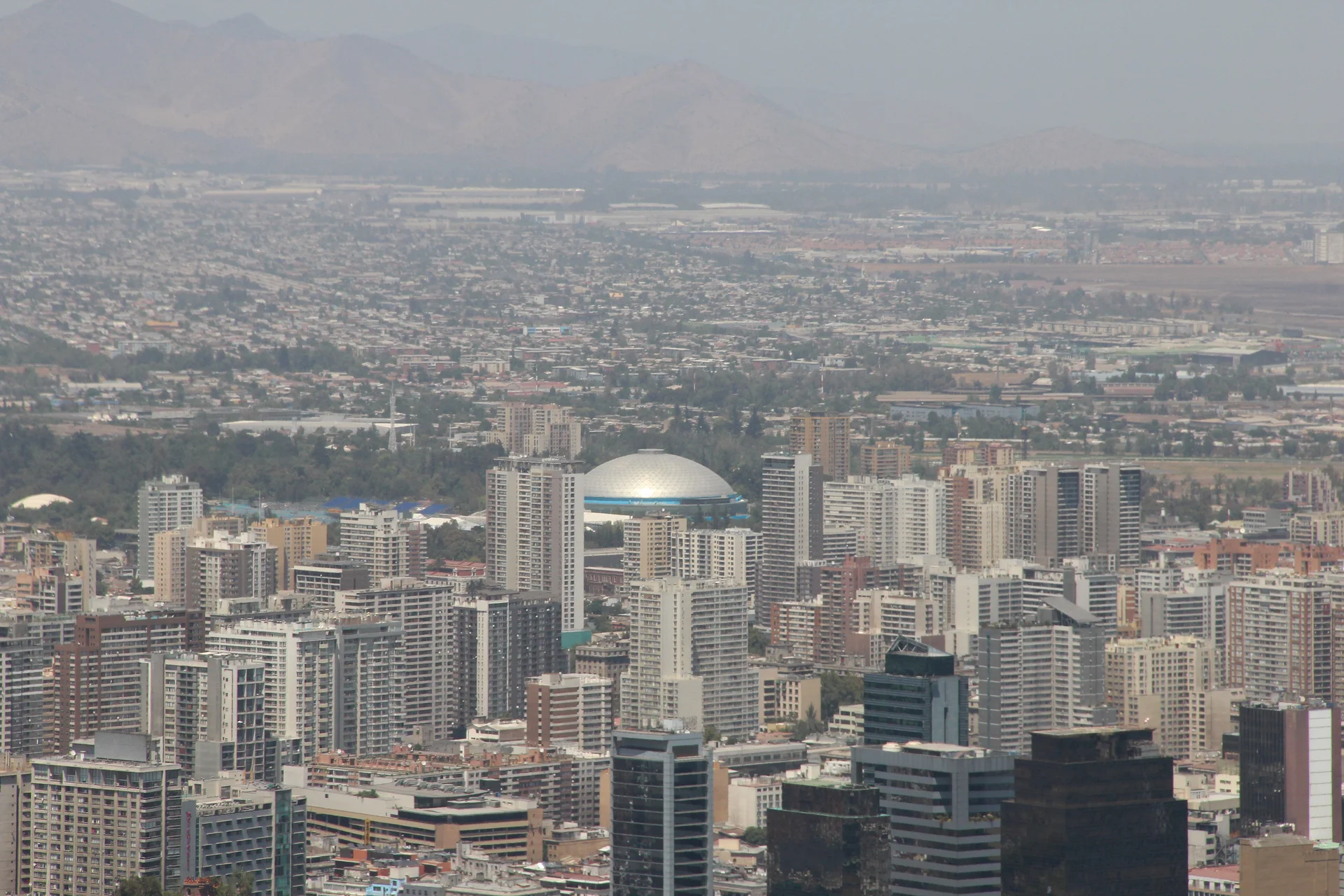
The terraces built around the sanctuary offer 360-degree views over Santiago. On a clear day, the spectacle is striking. On one side, the snow-capped peaks of the Andes draw a majestic line. On the other, the city stretches as far as the eye can see in the central valley. The morning generally offers optimal visibility, while the sunset ignites the sky with vivid colors.
Ways to reach the top: funicular, cable car, or hiking
Three options are available to reach the summit, each with its own charm.
The historic funicular
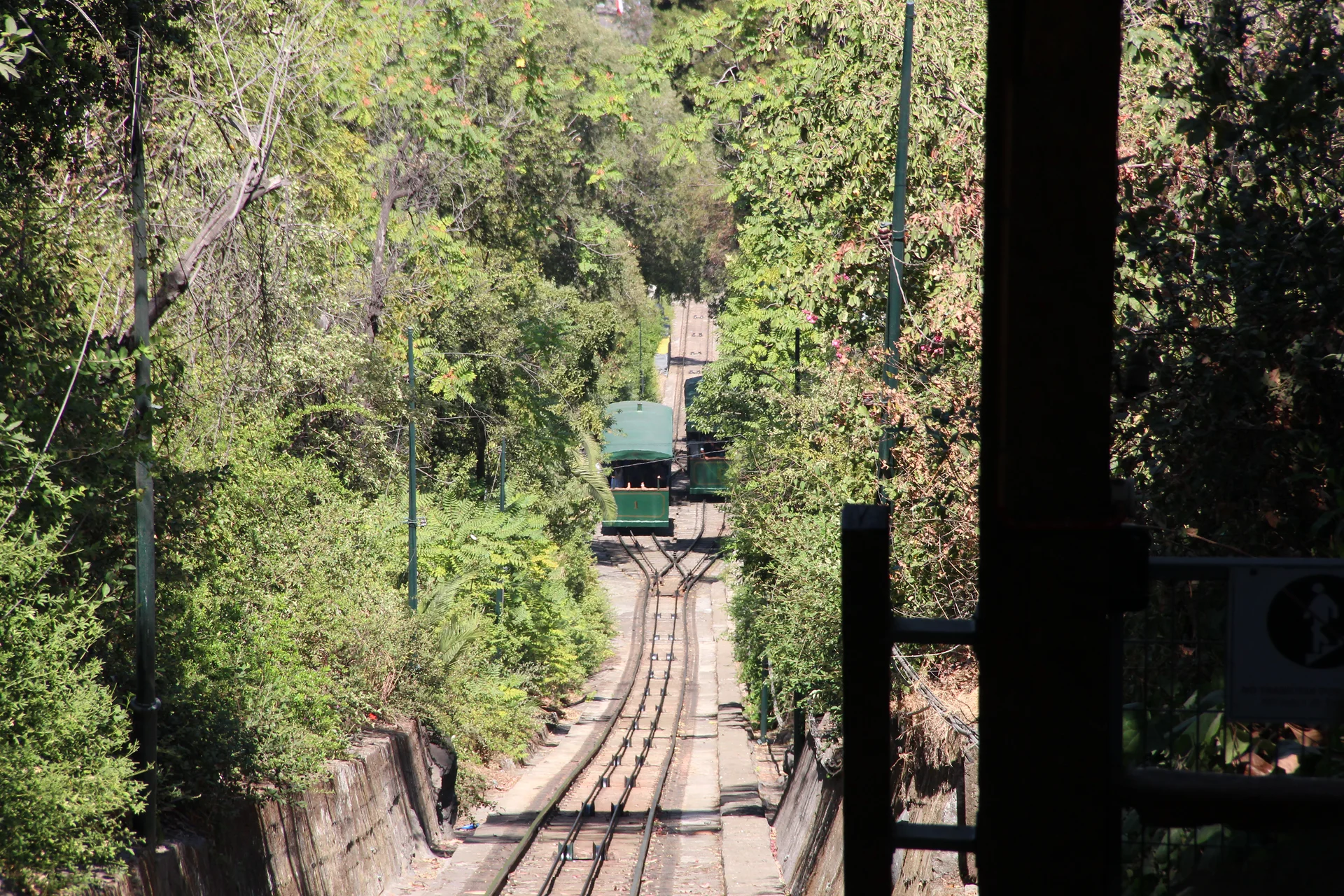
From the Bellavista neighborhood, at the base of Calle Pío Nono (Pío Nono Street), the funicular climbs along the flank of the hill. This installation, opened in the 1920s, retains a vintage feel. The trip of about 15 minutes allows for a quiet ascent with progressive views of the city. The funicular makes a stop halfway near the national zoo.
The panoramic cable car
More modern, the teleférico (cable car) connects the Oasis station (Pedro de Valdivia entrance) to the Cumbre station at the summit, flying over the wooded parks. The glass cabin offers a spectacular aerial perspective of Santiago, the Andes, and the lush vegetation of the park. An intermediate station, Tupahue, serves the botanical garden and the pools.
The hike up
The most active visitors can take the hiking trails from Plaza Caupolicán. Expect about 45 minutes to 1 hour to climb the 300 meters of elevation gain. The path winds through Mediterranean vegetation and offers changing panoramas at every switchback. Plan for good shoes, water, and sun protection.
Friendly tip: To make the most of your visit, choose a different combination for going up and down. For example, take the cable car up to admire the aerial views, explore the summit, then head back down via the funicular or on foot. The Vive el Parque ticket allows you to use all the park transportation for one day.
The hidden treasures of the park
San Cristóbal Hill is not limited to its summit. The park holds several attractions worth exploring.
The Japanese Garden
An oasis of tranquility, the Jardín Japonés offers a striking contrast to the urban bustle. Cherry blossoms, lotus ponds, arched bridges, and manicured floral arrangements create a zen atmosphere perfect for meditation.
The Tupahue and Antilén pools
Perfect for cooling off during hot Santiago summer days (December to March), these two municipal pools offer a unique setting with views of the city. They are particularly popular on weekends with local families.
The National Zoo of Chile
Located on the slopes of the hill, the zoo houses more than 150 animal species, including several endemic to South America like the pudú, the smallest deer on the continent. While aging, it remains a popular attraction, especially for children.
The Manuel Foster Observatory
Less known to the general public, this astronomical observatory was installed in 1903 and twinned with the famous Lick Observatory at the University of California. It testifies to the scientific importance of the site.
When to visit San Cristóbal Hill?
Each season offers a different experience:
- The southern summer (December-March) brings generally clear skies and long days, ideal for enjoying the pools.
- Autumn (April-June) dresses the vegetation in shimmering colors and offers soft light for photography.
- Winter (July-September) can be foggy, but clear days reveal the majestically snow-covered Andes.
- Spring (October-November) wakes up the flowers and offers pleasant weather for hiking.
Opening hours
Pedestrian access to the park is available from 6:00 AM to 7:00 PM, with extended hours during the summer.
*Information subject to change

San Cristóbal Hill is surely the most famous hill in Santiago. You can get up there either on foot or by using its popular funicular. Once you are at the top, you get an unbeatable view of the whole city through the park. Whether it is the Gran Torre or, of course, the Andes Mountains.