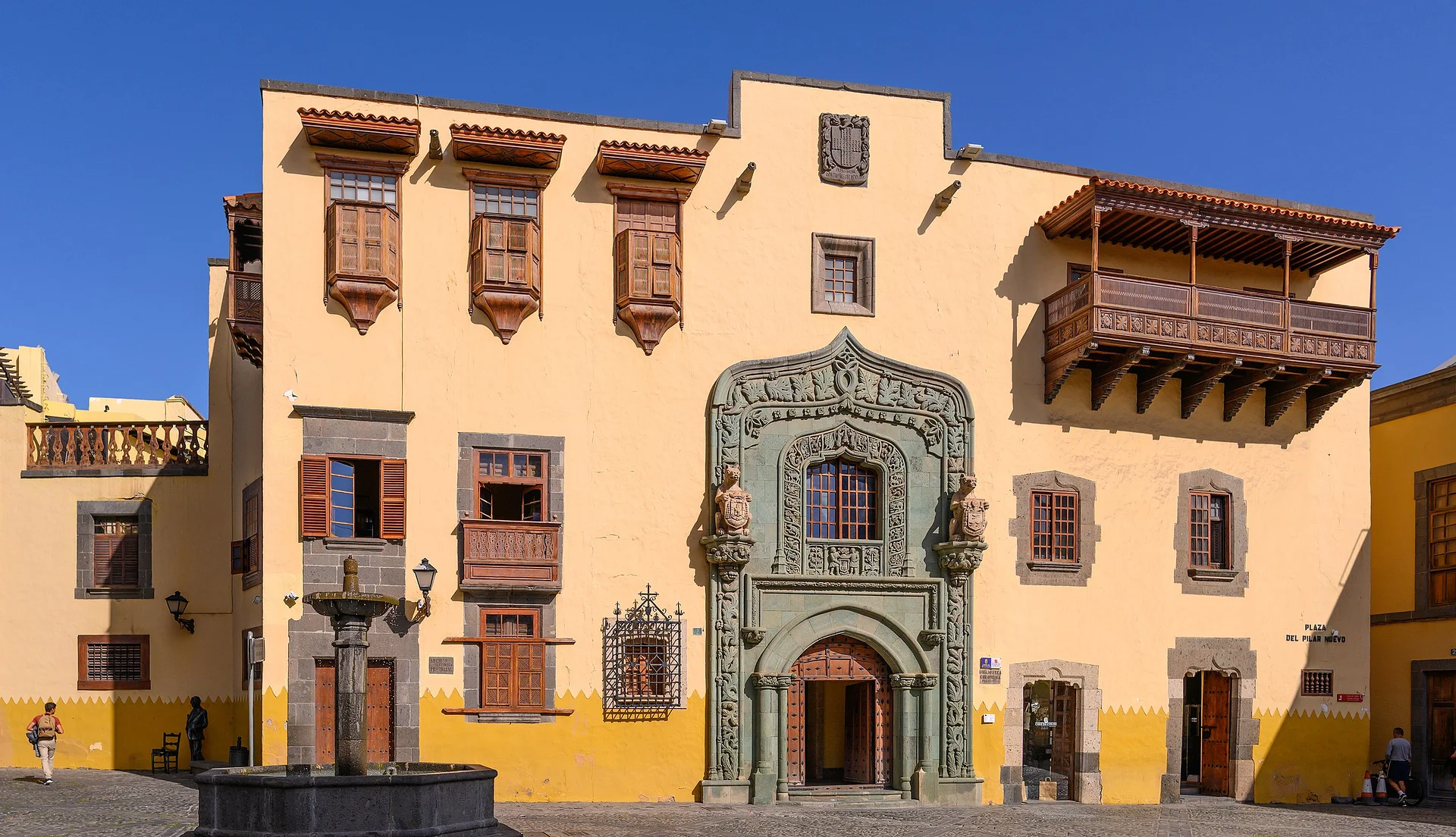
Visiting Gran Canaria
A round island in the Canaries, some two hundred kilometres off the African coast, nicknamed the miniature continent. In the south, the Maspalomas dunes run down to the sea, and the sun shines almost every day. In the middle, roads climb through the pines to Roque Nublo, a basalt monolith standing at over 1,800 metres. In the north, the valleys are green and the villages white.
Las Palmas, the capital, lives facing the ocean: the old town of Vegueta on one side, the city beach of Las Canteras on the other. Here the southern resorts sit alongside cave hamlets and wild cliffs. You come for the winter sun, the hiking and the variety of landscapes, all crossed in an hour's drive.
You'll love it if
- You're after sun and mild weather in the middle of winter
- You like mixing beaches, hiking and mountain villages
- You want a real city with its neighbourhoods and local life
Look elsewhere if
- You shy away from big southern resorts
- You dream of an island that's wild and unspoilt everywhere
- You plan to explore the interior without a car
The must-sees
-
A small desert of golden sand, protected, running down to the sea at the end of Maspalomas beach. Walk there early in the morning, when the wind has wiped out the previous day's tracks, or at sunset, when the ridges turn copper.
-
The symbol of the island, a finger of basalt standing on top of the mountain. A half-hour path climbs up to it from the road. On a clear day you can see Tenerife's Teide, resting above the sea of clouds.
-
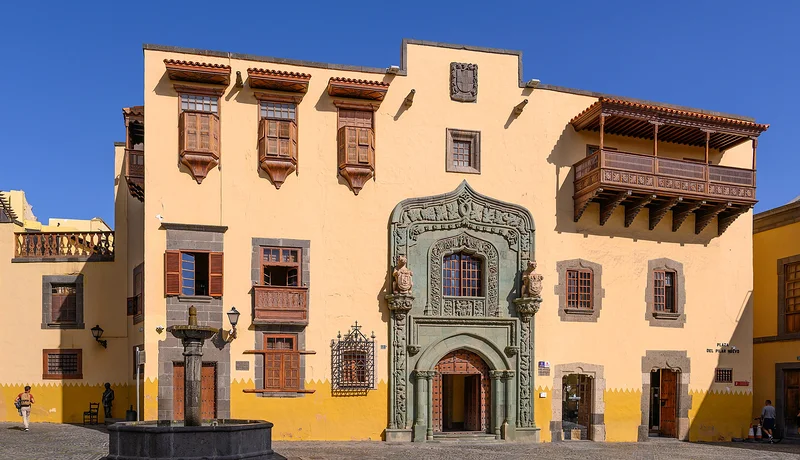
3 Vegueta, the old town +1 rec
The founding district of Las Palmas, with colonial houses and wooden balconies, Santa Ana cathedral and the house where Christopher Columbus is said to have stopped. On Sunday morning, stroll the cobbled squares before the city wakes up.
-
A small fishing port in the south-west, crossed by canals, with low houses with painted door frames and cascading bougainvillea. On Fridays a market sets up on the harbour. In the evening, the terraces watch the boats come in.
-
5 Agaete and its natural pools Coast
In the north-west, Puerto de las Nieves lines up its white houses facing the cliffs. The natural pools, carved into the volcanic rock, fill at high tide. In the neighbouring valley, farms grow coffee, a rare thing in Europe.
The classic trap
Spending your whole stay in a southern resort and seeing nothing of the island but the hotel beach. The interior, the north and Las Palmas are less than an hour's drive away, and that's where the island reveals itself. Hire a car for at least two days, and head up to the peaks early, before the clouds rise.
Our itineraries in Gran Canaria
| Length | Route | What you see |
|---|---|---|
| 4 days | Las Palmas › Teror › Roque Nublo › Maspalomas | The city, a mountain village, the peaks and the dunes |
| 1 week | Las Palmas › Agaete › Tejeda › Mogán › Maspalomas | The north, the cliffs, the interior, the fishing port and the south |
| 10 days | A loop of the island, with two nights in the middle and a hike | All the island's variety, from the coast to the pines on the peaks |
Start with Las Palmas: Vegueta in the morning, Las Canteras beach in the evening. The next day, drive up via Teror to Roque Nublo, then head down to the south and its dunes. Got a week? Add the north-west and Agaete, a night in the mountains at Tejeda, and an evening on the harbour at Mogán.
When to visit Gran Canaria
| Appeal | Season | Temperatures | Highlight | Crowds and prices |
|---|---|---|---|---|
| WinterDec. to Feb. | 15 to 22 °C | Winter sun in the south and almond trees in blossom | High | |
| SpringMarch to May | 16 to 24 °C | Hiking and green peaks | Medium | |
| SummerJune to Aug. | 20 to 28 °C | The beaches, with the north often under cloud | Medium | |
| AutumnSept. to Nov. | 19 to 27 °C | A sea that's still warm and gentler prices | Medium |
Our advice
The island can be visited all year round. Come from November to March to escape winter, booking early for Christmas and the February carnival. Prefer spring or autumn for quiet hiking. In summer the north often stays under a lid of cloud: stay in the south.
Getting to Gran Canaria
-
By plane The simplest
Direct flights link London and many UK cities to Gran Canaria in about four and a half hours. The airport is on the east coast, twenty minutes from Las Palmas and half an hour from Maspalomas.
-
By ferry between the islands To combine
Fast ferries link Agaete to Tenerife in just over an hour, and Las Palmas to the other islands. You can combine two islands in one trip without flying again.
-
By bus on the island Without a car
A network of intercity buses links the airport, Las Palmas and the southern resorts several times an hour. It also serves the interior villages, but far less often.
Once there, a motorway runs along the east and south coasts, from Las Palmas to Mogán. For the interior and the north-west, hire a car: the mountain roads are winding but well kept, and the scenery is worth every bend.
Getting around Gran Canaria
A car is the best way to discover the island: in an hour you go from the dunes to the pines on the peaks. Buses are fine for Las Palmas and the south, much less so for the interior. On foot, old mule tracks link the mountain villages around Roque Nublo.
Good to know
Mountain roads are narrow, with tight bends and plenty of cyclists at weekends. Park early at Roque Nublo: the car park is small. A UK licence is all you need to drive in the Canaries, on the right.
What to eat in Gran Canaria
- Papas arrugadas: small potatoes boiled in salted water, served with red or green mojo.
- Queso de flor de Guía: a cheese curdled with thistle flower, made in the north of the island.
- Gofio: a flour of toasted grains, inherited from the first inhabitants, as porridge or dessert.
- Sancocho canario: salted fish with potatoes and mojo, the dish of family meals.
- Bienmesabe: an almond and honey cream, a speciality of the village of Tejeda.
- Rum and coffee: rum from Arucas and coffee from the Agaete valley, one of the only ones in Europe.
To eat like the locals, look for a guachinche or a small village tavern in the interior: local wine, grilled meat, papas and mojo. On the coast, ask for the catch of the day. In Las Palmas, you'll taste the island's cheeses at the Vegueta market.
Where to stay in Gran Canaria
| Area | What for | Good to know |
|---|---|---|
| Las Palmas | City, Vegueta, Las Canteras beach | The liveliest |
| Maspalomas and Playa del Inglés | Dunes, beaches, guaranteed sun | The most beach-focused |
| Mogán and the south-west | Fishing port, sheltered coves | The sunniest |
| Tejeda and the interior | Peaks, villages, hiking | The most mountainous |
| Agaete and the north-west | Cliffs, natural pools, coffee | The most authentic |
How much does a trip in Gran Canaria cost?
| Trip | Length | Budget per person |
|---|---|---|
| Budget (apartment, bus, taverns) | 1 week | €450 to €700 |
| Comfort (beach hotel, hire car) | 1 week | €900 to €1,500 |
| Luxury (luxury hotel by the dunes) | 1 week | €2,000 to €3,500 |
- The season: from Christmas to carnival, prices in the south rise sharply.
- The car: book it early, you'll often pay less than on arrival.
- Apartments: with a kitchen, they cut the food budget a lot.
- Interior taverns: you eat well there for far less than on the coast.
- Las Palmas: you'll often find rooms cheaper than in the south.
Traditions and way of life in Gran Canaria
Before the Castilians arrived, the island was home to the Canarios, who lived in caves dug into the rock and grew barley for gofio. In Gáldar, the Cueva Pintada keeps their geometric paintings, and in Artenara, cave houses are still lived in. The Spanish conquest ended in 1483, and Las Palmas, founded five years earlier, became a stopover on the route to the Americas.
In the 20th century, from the 1960s, the desert south became one of Europe's great sun destinations. The interior kept its villages, its festivals and its paths. Passing a house carved into the cliff? It may have been lived in for centuries.