
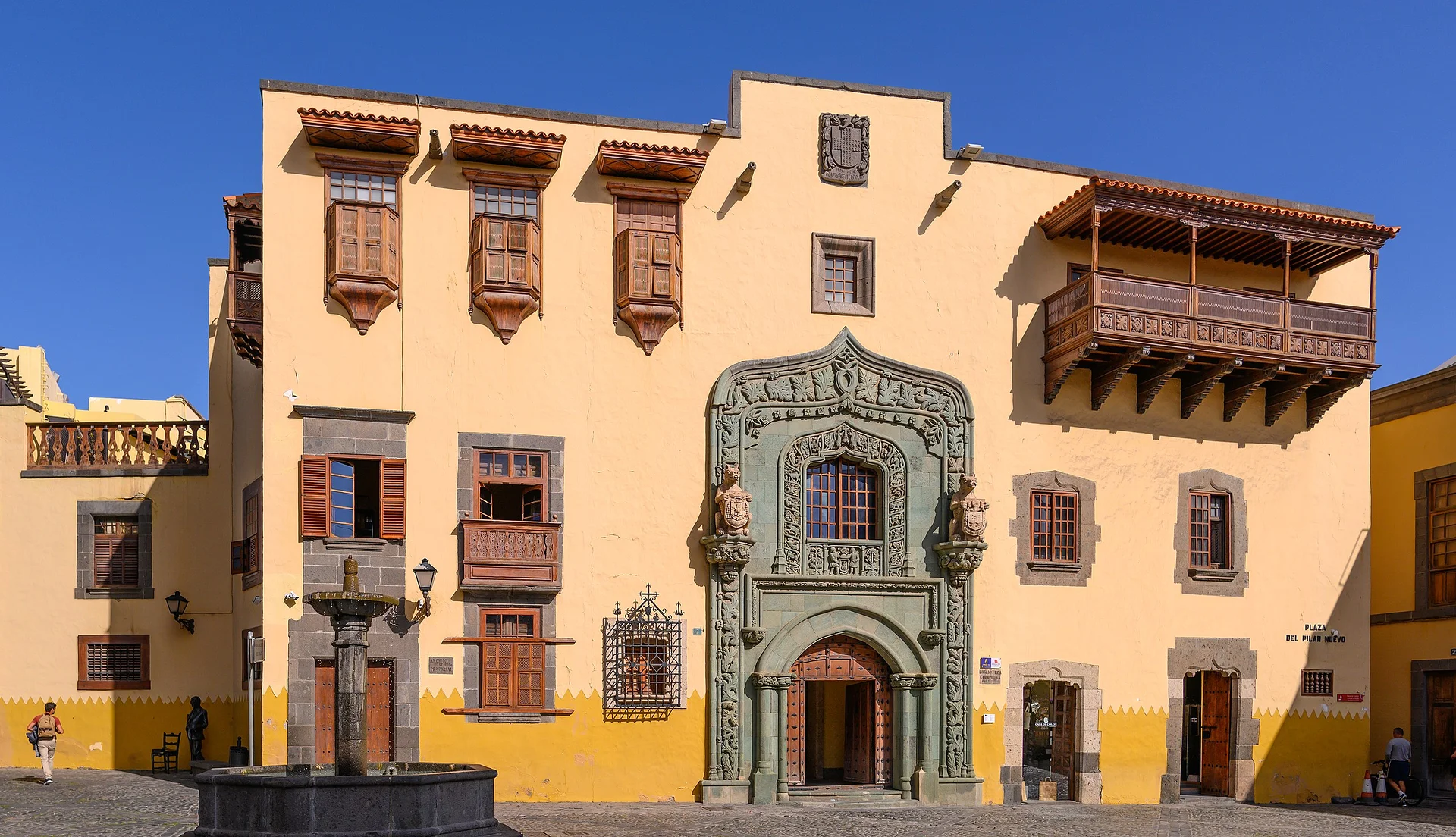
Visiting the Columbus House Museum
In the southern part of Las Palmas, the historic Vegueta neighborhood has a distinct character. Among its many notable buildings, it is hard not to appreciate the beauty of the former Governor's House. While it represented the seat of power in 1478, it now houses the Columbus House Museum, a site dedicated to the history of the Canary Islands, their relationship with the Americas, and the maritime adventurers, most notably Christopher Columbus. He stopped here during his voyages, and a dedicated space honors his time on the island.
Legendary navigator and fascinating cultures
Featuring three courtyards, including one with a Gothic wellhead and Renaissance arches, this residence is a beautiful example of colonial architecture. The building itself is worth the trip, housing treasures like a wooden balustrade salvaged from the Santo Domingo (Saint Dominic) convent after it was destroyed by privateers. Within these walls, thirteen exhibition rooms showcase Canarian and American cultures from before the arrival of Europeans. The first floor focuses on Christopher Columbus and his voyages, as all expeditions stopped in the Canary Islands to resupply, and the room where the explorer stayed has been reconstructed. With scale models of caravels, historical artifacts, and navigation instruments, the museum immerses you in the era of exploration. In the crypt, the focus shifts to indigenous peoples through three collections: Mexican, Amazonian, and a display featuring 160 original pieces of emerald. The second floor is dedicated to the island and the history of Las Palmas, covering its development from the 15th to the 16th century. The collection includes paintings from the 16th to the 20th century by Mexican, Flemish, and Canarian artists. The Columbus House Museum set in this grand environment is as educational as it is visually striking.
Opening hours
| Monday | 10:00-18:00 |
|---|---|
| Tuesday | 10:00-18:00 |
| Wednesday | 10:00-18:00 |
| Thursday | 10:00-18:00 |
| Friday | 10:00-18:00 |
| Saturday | 10:00-18:00 |
| Sunday | 10:00-15:00 |

Overall, I didn't really like Las Palmas compared to the rest of the Canaries.
The Columbus House is the exception. In this property, typical of the colonial era, you walk through different patios, each decorated in its own way. The interior is also a testament to the colonial period. Christopher Columbus stopped here several times, hosted by the governor, on his trips to America.
The house is now a museum, with old explorer maps, miniature ships, a reconstructed ship cabin, paintings, and explanations in several languages, including French, about navigation and the lives of the great explorers.