Visiting Tenerife
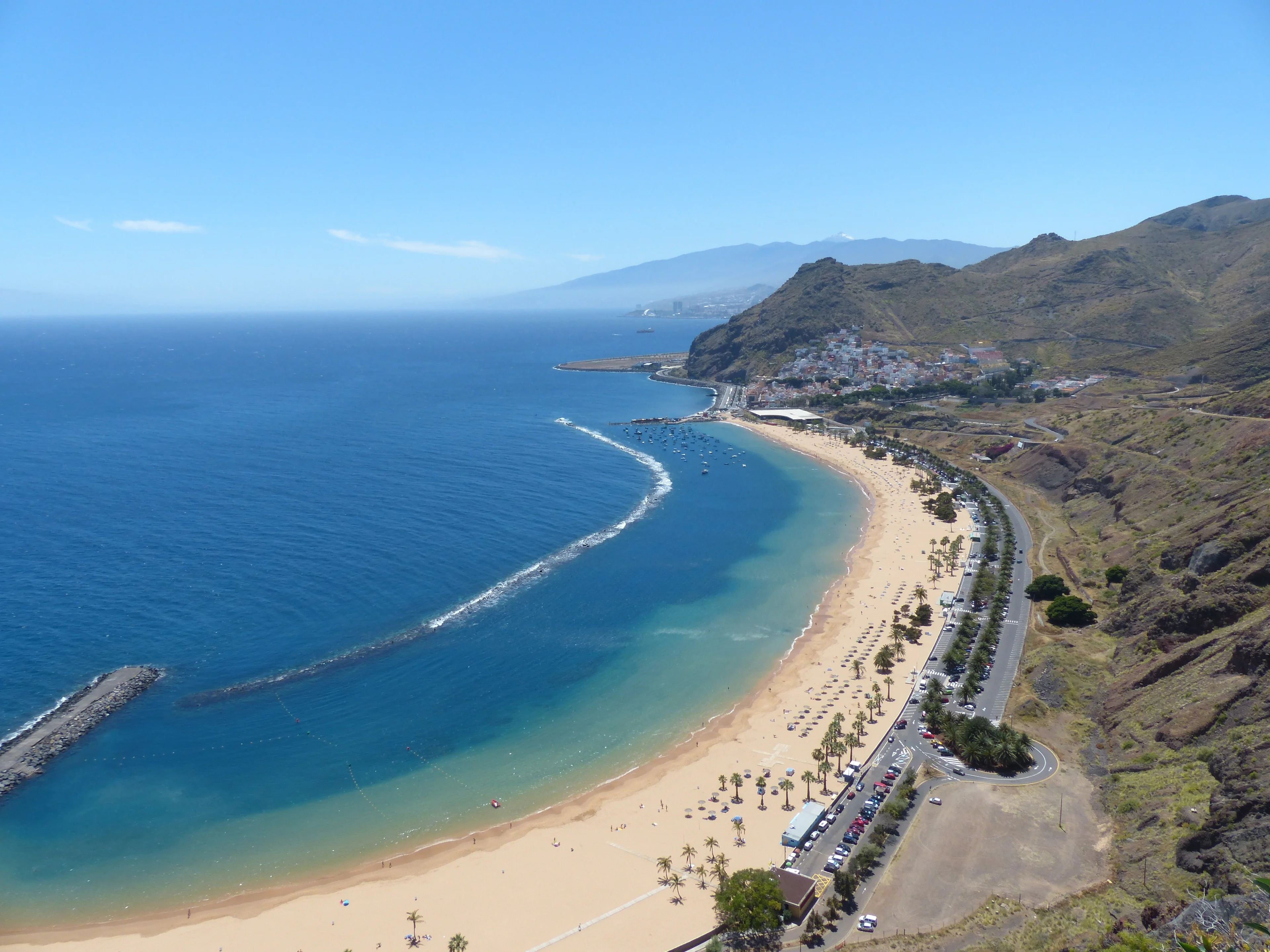
An island built around a volcano: Mount Teide, the highest peak in Spain, splits Tenerife into two worlds. In the north, the trade winds push the clouds against the mountain, and the valleys stay green, planted with bananas and vines. In the south it almost never rains: that is where the sun, the beaches and the big resorts are.
Our members all say it in their own way: the south for going out, the north for the villages, and less than an hour's drive between them. In the middle lies the Teide crater, a desert of lava above 2,000 metres that you cross by car.
You will love it if
- You want sunshine in the middle of winter, with the sea next door
- You like changing scenery in a single day, from lava fields to forest
- You are looking for hikes, from the volcano to the ridges of Anaga
Give it a miss if
- You are after long beaches of natural golden sand
- You want to do everything without a car
- Big seaside resorts wear you out
The must-sees
-
1 Climbing Mount Teide The summit
The cable car takes you up to 3,555 metres in a few minutes, onto the La Rambleta plateau. The last 163 metres to the crater are on foot, along the Telesforo Bravo trail, and only with a permit: since January 2026 it costs foreign visitors €15 and is booked on the Tenerife ON platform. The cable car ticket does not include it. Book both, and go up early: the air is thin up there, and the wind picks up in the afternoon.
-
2 The Masca gorge Hiking
In the Teno massif, in the north-west, a trail drops from the hamlet of Masca towards the sea between walls several hundred metres high. The gorge only opens on certain days, by reservation, with a daily cap and a compulsory shuttle bus: allow €28 per non-resident adult. Wear proper shoes, take water, and pick one of the first slots, before the heat sinks into the gorge.
-
3 The Anaga forest and Benijo beach The wild north-east
Above Santa Cruz, the Anaga road runs through a laurel forest often wrapped in mist, then dives towards villages clinging to the ridges. At the very end lies Benijo beach, black sand facing rocks that rise out of the ocean. Swimming there is often dangerous: come for the walk and the sunset, not for a swim.
-
4 The Santa Cruz carnival February
For almost three weeks the capital lives in the street: the queen's election, murga contests, float parades, and nights when the whole city dances in fancy dress. It is one of the biggest carnivals in the world. Book your hotel very early, and stay in La Laguna if Santa Cruz is full: the tram links the two cities.
-
5 The Los Gigantes cliffs At sea
On the west coast, cliffs several hundred metres high drop straight into the ocean. They are best seen from a boat, leaving from the small harbour of Los Gigantes: pilot whales live offshore all year round, and whale-watching trips leave every day. Choose a small boat and a morning trip, when the sea is at its calmest.
The classic trap
Heading up Mount Teide in the afternoon without booking anything. Cable car seats go quickly, so do summit permits, and the wind often shuts the cabin. Book the day before, go up in the morning, and check the summit forecast: above the clouds it can be cold, even in summer.
Our itineraries in Tenerife
| Length | Route | What you see |
|---|---|---|
| Long weekend (4 days) | Puerto de la Cruz › La Orotava › Teide › La Laguna | The north, the volcano, the old town |
| 1 week | Puerto de la Cruz › Teide › Masca › Los Gigantes › Anaga | The volcano, the cliffs, the forest |
| 10 days | Puerto de la Cruz › Anaga › Teide › Los Gigantes › Los Cristianos › La Gomera | The whole island, then its neighbour |
Tenerife is explored by car, from one or two bases. The north puts you closest to the villages and the forest, the south closest to the sun and the boats. One week: four nights in the north, three in the south. One day left? Take the ferry from Los Cristianos to La Gomera, a fifty-minute crossing.
When to visit Tenerife
| Appeal | Season | Temperatures | Sea | Crowds and prices |
|---|---|---|---|---|
| WinterDec. to Feb. | 15 to 22 °C | 19 to 20 °C | High | |
| SpringMarch to May | 16 to 24 °C | 19 to 20 °C | Medium | |
| SummerJune to Sept. | 20 to 29 °C | 21 to 24 °C | High | |
| AutumnOct. and Nov. | 18 to 26 °C | 22 to 23 °C | Medium |
Our advice
Aim for March, April or October: it is warm in the south, the Teide trails are open, and prices stay well below Christmas and carnival levels. In winter the summit can be covered in snow and the volcano road can close for a few days: keep a spare day.
Getting to Tenerife
-
Direct flights The easiest
Direct flights link Tenerife with London and many UK and Irish airports, in about four and a half hours. Almost all of them land at Tenerife South, in Granadilla, twenty minutes from the beaches of Los Cristianos.
-
Via Tenerife North For the north
The island's second airport, in La Laguna, mostly handles flights from mainland Spain and the other islands. It drops you twenty minutes from Santa Cruz and half an hour from Puerto de la Cruz.
-
To La Gomera The island next door
Ferries leave Los Cristianos several times a day and cross in about fifty minutes. You can take your hire car on board, if your contract allows it.
Staying in the north? Look at flights to Tenerife North first, or via Madrid: landing in the south costs you more than an hour of motorway. And if your car hire desk is at the south airport, check that it accepts a drop-off in the north.
Getting around Tenerife
Hire a car: our members repeat it in almost every review. Buses link the towns well, but not Mount Teide or the trailheads at the time you need to be there. A motorway runs round the east side, from Puerto de la Cruz to Los Cristianos; elsewhere, mountain roads are slow and winding.
Good to know
Leave the car between Santa Cruz and La Laguna: a tram links the two centres. Fill up before driving up Mount Teide, there is no petrol station in the national park, and allow an hour's drive from the north as from the south.
What to eat in Tenerife
- Papas arrugadas: small potatoes boiled in very little salted water until their skins wrinkle. You eat them with your fingers.
- Mojo: the islands' sauce, red with chilli and paprika, green with coriander. It goes with the papas, fish and meat.
- Conejo en salmorejo: rabbit marinated in garlic, wine and paprika, then stewed. A dish from the island's interior.
- Gofio: a flour of toasted grains, inherited from the first inhabitants. It thickens soups and desserts.
- Goat's cheese: fresh, semi-cured or smoked, often served grilled with palm honey.
- Guachinches: in the north, tables opened by winegrowers for a few weeks a year, to sell their wine with home cooking.
Head up to the villages above La Orotava or Tacoronte to find a guachinche: the menu runs to a few dishes, the wine is the house's own, and the bill stays gentle. Choose, on the coast, the catch of the day in a small harbour over the picture menu of a resort promenade.
Where to stay in Tenerife
| Area | What for | Worth knowing |
|---|---|---|
| Puerto de la Cruz | Old town, harbour, Loro Parque | The base for the north, the liveliest |
| La Orotava and the valley | Balconied houses, vines, Teide | Quiet, little going on at night |
| Santa Cruz and La Laguna | Capital, carnival, Anaga | City life more than beach |
| Costa Adeje and Los Cristianos | Sun, beaches, boats | The big resorts of the south |
| Los Gigantes | Cliffs, sunsets, Masca | Small, far from everything else |
How much does a trip in Tenerife cost?
| Trip | Length | Budget per person |
|---|---|---|
| Budget (apartment, buses, market food) | 7 days | €450 to €750 |
| Comfort (4-star hotel, car, restaurants) | 7 days | €1,000 to €1,600 |
| Luxury (5-star hotel, boat trips, fine dining) | 7 days | €2,400 to €4,500 |
- Timing: Christmas, carnival, Easter and August are the most expensive weeks. May, June and November are the kindest on the budget.
- The car: it is the biggest expense, but it replaces coach excursions, and fuel is cheaper than in the UK.
- Mount Teide: you pay for the cable car, then €15 more per person for the summit permit.
- Masca: you will pay €28 per non-resident adult, shuttle included.
- Meals: a guachinche or a village bar costs far less than a terrace in Costa Adeje.
Traditions and way of life in Tenerife
People speak Spanish, with the sing-song Canarian accent, and a buenos días opens every door for you. Here the bus is called a guagua. Lunch is late, rarely before 2 pm, and dinner after 9 pm.
In La Laguna, the Unesco-listed old town served as a model for colonial cities in the Americas: its straight streets and houses with wooden balconies are best explored on foot. Mount Teide was sacred to the Guanches, the island's first inhabitants. Stick to the marked paths: the plants of the crater grow nowhere else.