
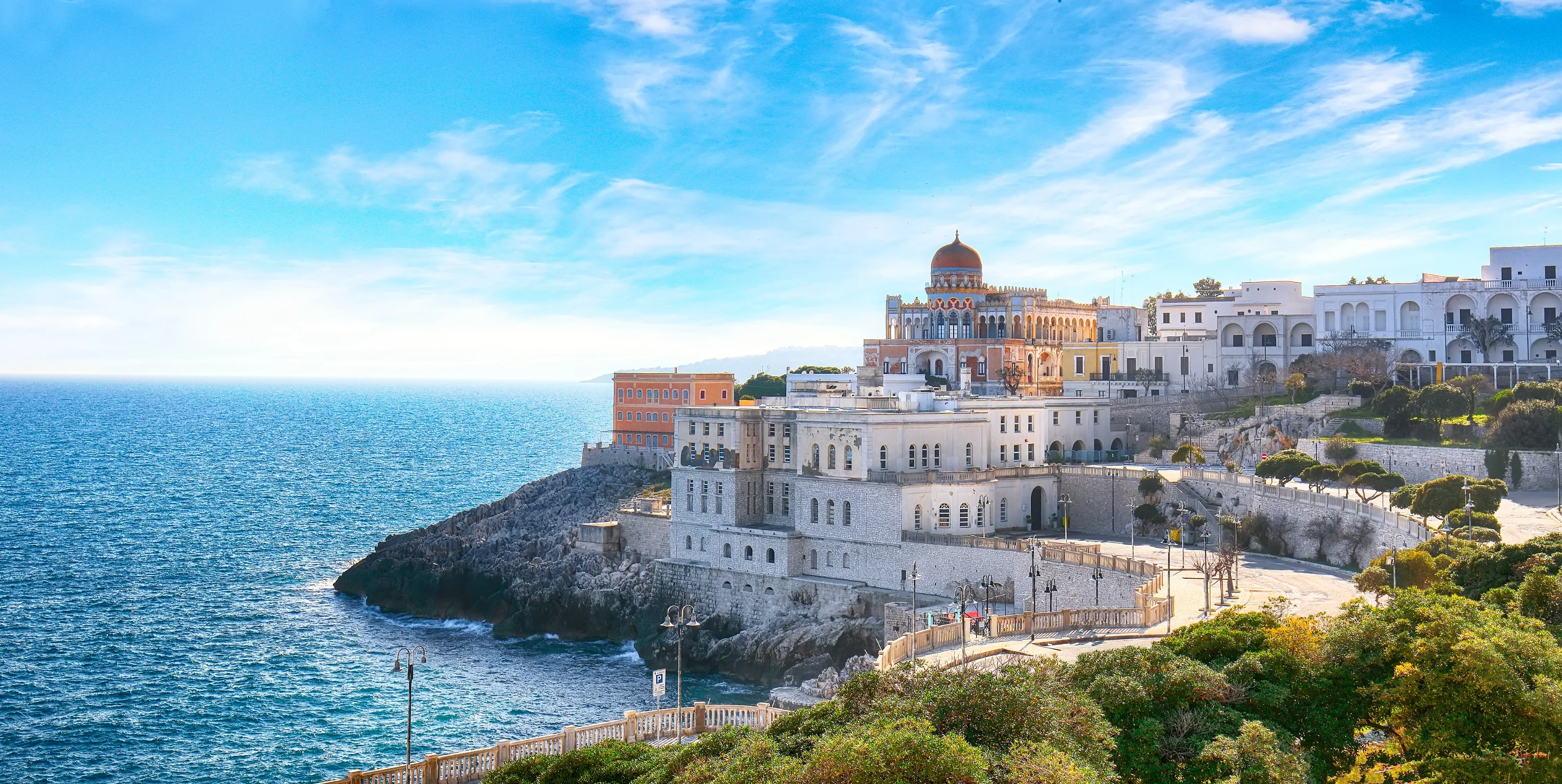
Where to stay in Apulia: the 6 areas to know in 2026
In Apulia the question is not only where to sleep, but in what. A masseria, a fortified 17th-century farm in the middle of the olive groves. A trullo with a dry-stone roof. A village apartment in an albergo diffuso, where reception is on one street and your room on another. A baroque palace in Lecce. No other region in Italy offers that.
The rest follows: a masseria means a car and dinner on site, a trullo puts the villages within walking distance, a palace puts the town there. Six areas below, from the Gargano in the north to the Ionian beaches in the south, 236 miles apart. Count on $101 to $210* a night in May, June and September, and double that in August on both coasts.
Compare hotel prices in Apulia
In a hurry? Find the best accommodation deals in 3 clicks.
Compare live deals from Booking, Expedia, Agoda and other partners.
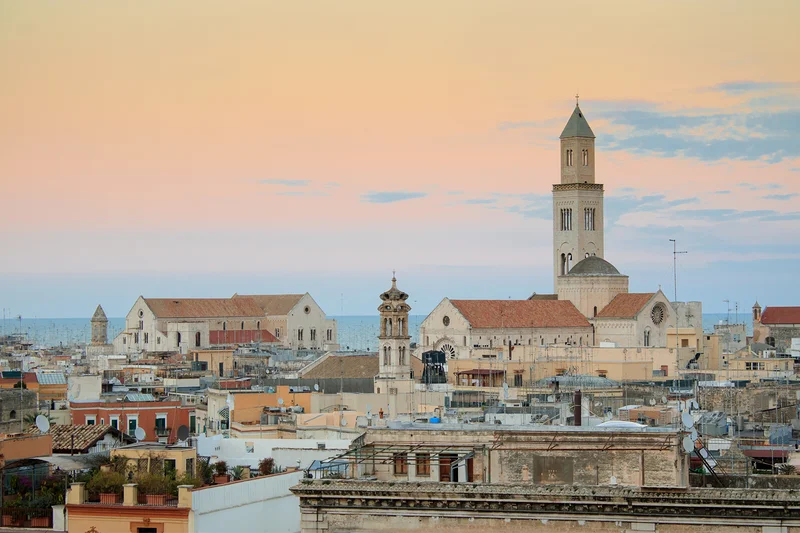
Compared to the wonderful villages with hundreds of trulli, the small city of Bari doesn't really offer much of interest. However, during a second visit for work, I appreciated the location of this town for easily exploring the surrounding area, as well as the good restaurants and bars in its historic city center.
One base or several?
The region runs 236 miles from the Gargano to Santa Maria di Leuca, and the only fast road follows the Adriatic. Here is what works, by length of stay.
- A long weekend, 3 nights: One base in the Itria Valley, and nothing else. The white villages are twenty minutes from one another, both seas thirty, and Bari an hour away for the return.
- A week: Two bases: the Itria Valley, then the Salento, in Lecce if you come for the stone, in Gallipoli if you come for the water. An hour and a half of driving between them, and one long drive in the week.
- Ten days: Three bases, adding the Gargano at the start or the end: it is three hours from everything else, so you take it on arrival or on the way out, never in the middle.
- Two weeks: Four bases at most, splitting the two Salento coasts: the Ionian for sand, the Adriatic for coves and Otranto. Beyond that, you spend your mornings repacking.
How much driving between two bases?
By car, outside July and August. The train links Bari to Lecce, but serves the villages poorly and the Gargano not at all.
| Route | Driving time | Good to know |
|---|---|---|
| Bari → Vallée d'Itria | 1 hr | Alberobello via the Putignano road |
| Bari → Lecce | 1 hr 45 | Or 1 hr 30 by direct train, several a day |
| Vallée d'Itria → Lecce | 1 hr 30 | Via Brindisi, the only fast road |
| Lecce → Gallipoli | 45 min | 25 miles, direct road |
| Bari → Vieste | 3 hr | The Gargano is a detour, not a stopover |
| Vieste → Gallipoli | 4 hr 30 | 236 miles: the two ends of the region |
| Polignano a Mare → Monopoli | 15 min | 6 miles, or one train stop |
At a glance: our picks by traveller type
Pick the profile that fits you and go straight to the recommended area.
Map of the areas in Apulia
See how the areas sit relative to one another before choosing your base. Click a name to jump to its description.
The Itria Valley The center, between the two seas
to sleep in a trullo or a masseria, with everything under an hour away
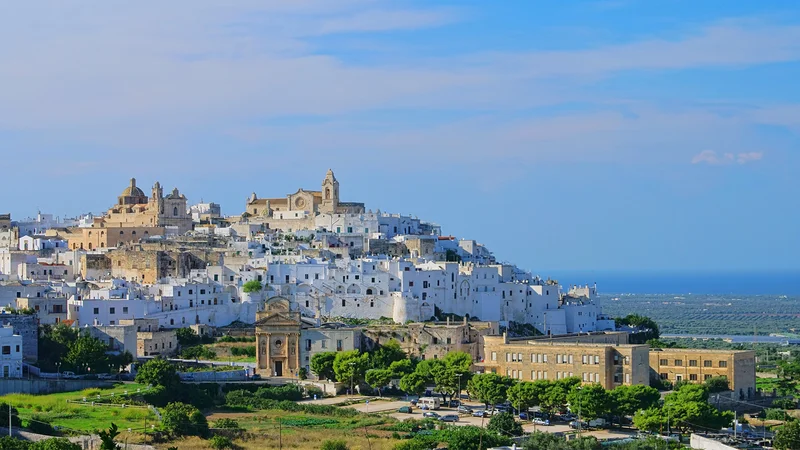
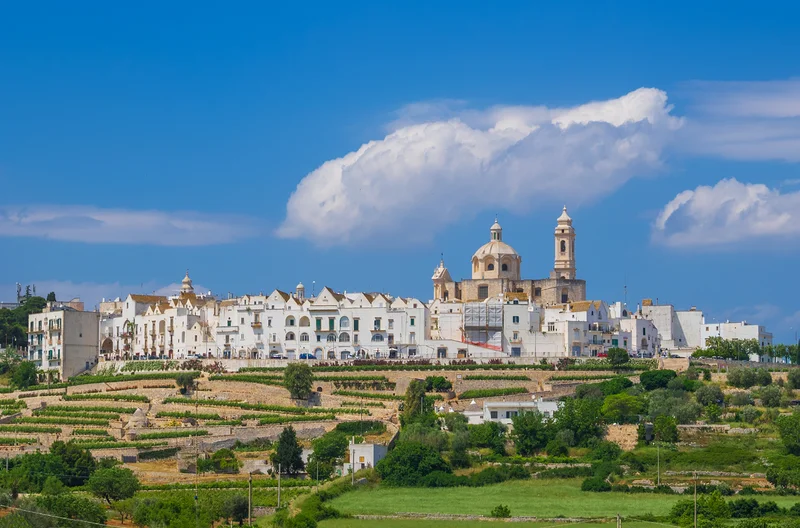
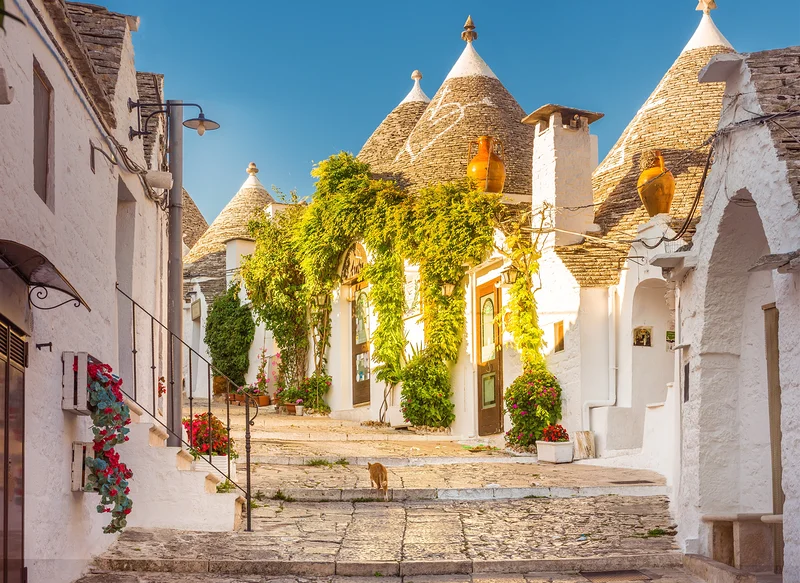
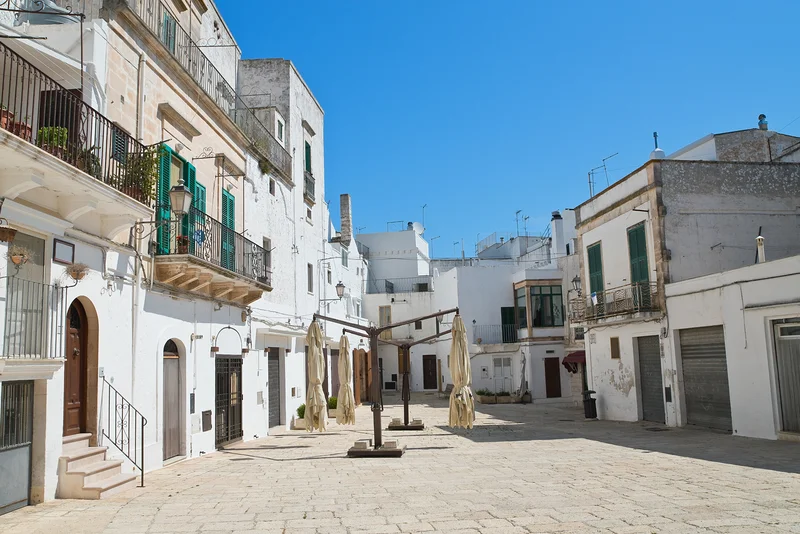
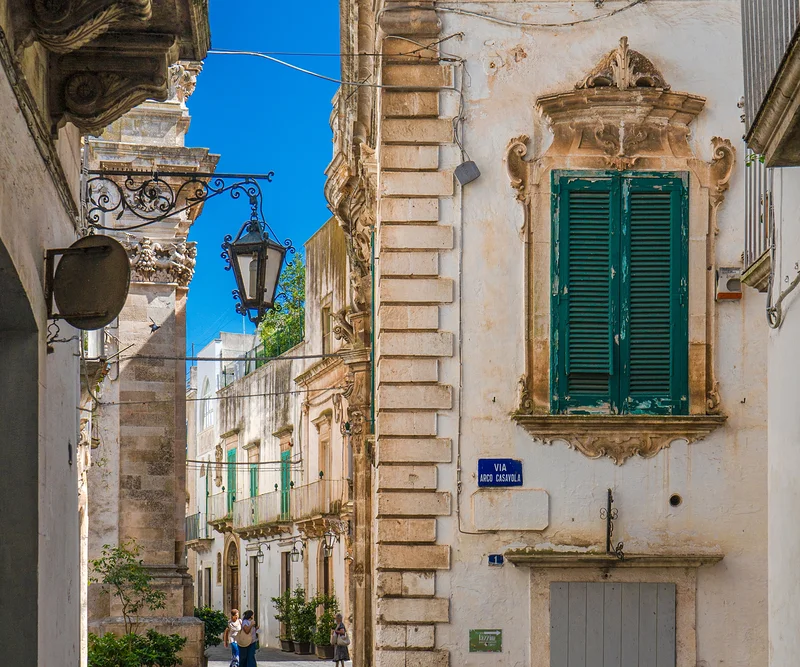
The plateau of white villages: Alberobello and its fifteen hundred trulli, Locorotondo laid out in a ring on its hill, Ostuni visible from twelve miles away, so white is it, Cisternino and its fornelli, where you pick your meat at the butcher's before it goes on the grill. This is the best-placed area in the region: both seas are thirty minutes away, Bari an hour. The trade-off: no beach on foot, and Alberobello is emptying of residents as its trulli turn into shops.
It is famous for its fornelli, which are a type of skewer that you eat grilled.
The towns in this area
Where to stay in this area
Masseria Le Carrube Luxury
Nineteen suites in a former oil farm, on the hill four miles from Ostuni, among the carob trees. The kitchen garden supplies the table, and a car is essential: that is the very principle of a masseria.
Sotto le Cummerse Mid-range
Fourteen apartments scattered through the lanes of Locorotondo, each with its own kitchen, reception on another street. You sleep among residents rather than among travelers, and it is the truest formula on the plateau.
Le Alcove Luxury
Six rooms only, in trulli on the main square of Alberobello, under dry-stone vaults. Sleeping in a trullo is the experience everyone comes here for: it books months ahead.
Pros
- Both coasts a thirty-minute drive away
- The only place where the lodging is itself a sight
Cons
- Not one beach you can walk to
- Alberobello is saturated between ten and five
The Adriatic coast, from Polignano to Monopoli The east, above the cliff
for the sea and the white old towns, without giving up the villages
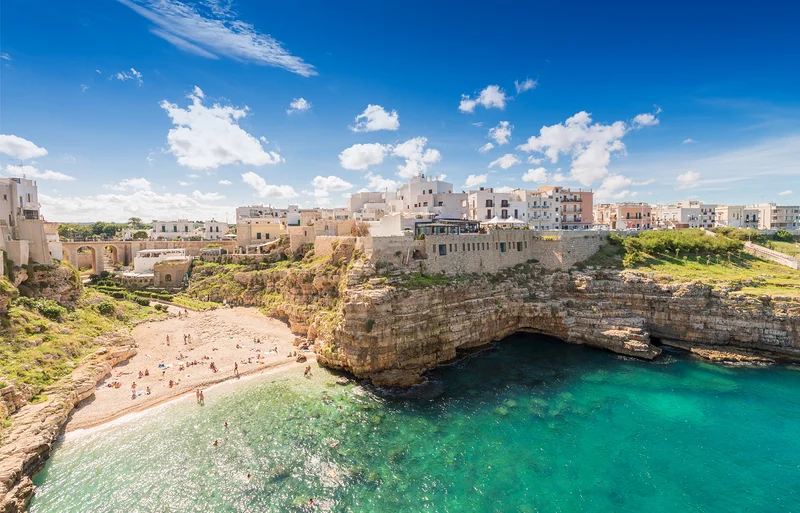
A limestone cliff pierced with coves, and two towns on top of it. Polignano a Mare overlooks Lama Monachile beach, a tongue of pebbles wedged between two walls, and that is the image everyone brings home from Apulia. Monopoli, six miles further south, has the fishing port and the ramparts the other one has lost. Inland, the Castellana caves drop two hundred and thirty feet underground. What you give up: the coves are tiny and full by mid-morning in summer.
You have to head a bit away from it to enjoy the old port, with its blue fishing boats, for a beautiful and authentic Mediterranean vibe.
The towns in this area
Where to stay in this area
Don Ferrante Luxury
Inside the walls of Monopoli, on via San Vito, on the old bastion facing the sea. Whitewashed walls, old stone, and the pool set on the rampart: you hear the water all night.
Pros
- Two old towns on the sea, six miles apart
- The Itria Valley twenty minutes inland
Cons
- Coves too small for the July and August crowds
- Polignano is seen in half a day, no more
Bari The capital, the airport and the ferries
to arrive, to leave, and to pay less than anywhere else
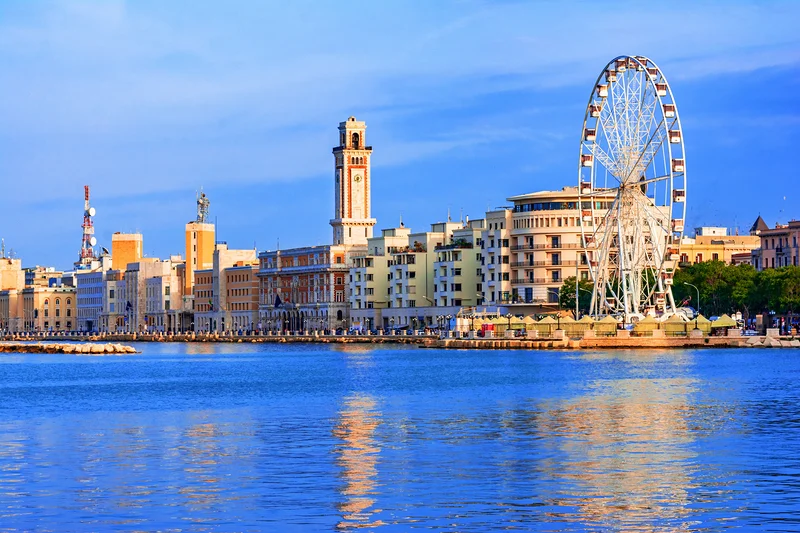
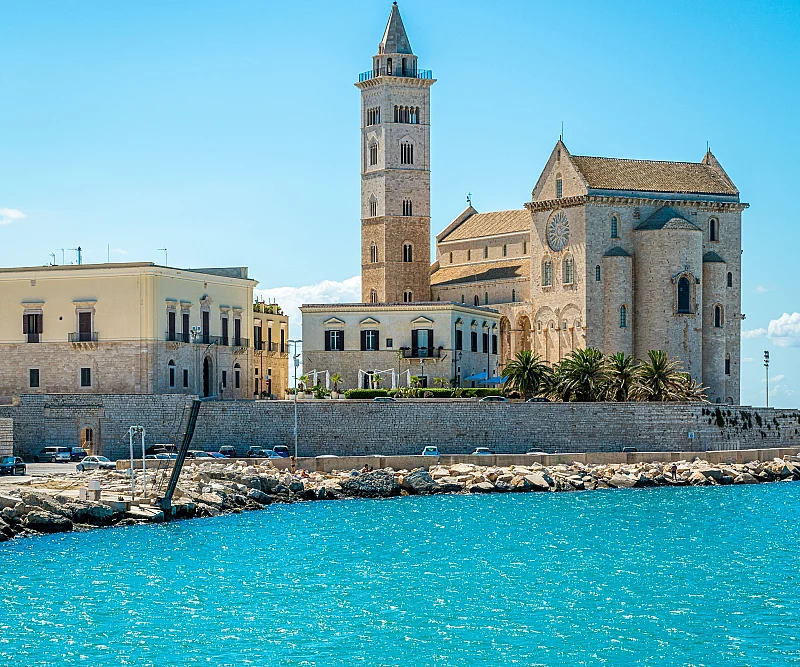
The town you come in through: the airport, the fast-train station from Rome, and the port where ferries leave for Greece and Albania. The old town, Bari Vecchia, fits into a maze of lanes where women make orecchiette on their doorsteps, on strada Arco Basso. The Basilica of San Nicola has held the saint's relics since 1087 and draws Orthodox pilgrims year-round. In exchange, Bari is not a holiday town: it is a working town, and its beach is an urban one.
I recommend heading to the fish market to discover the traditions of this southern Italian city.
What to see and do in this area
Where to stay in this area
JR Hotels Oriente Bari Mid-range
A 1928 palace on corso Cavour, seventy-five rooms behind an Art Nouveau façade, a ten-minute walk from Bari Vecchia and five from the station. The address that serves as a first and a last night.
Pros
- Airport, trains and ferries in the same place
- The lowest rates in Apulia, all year round
Cons
- No beach worth a full day
- A working town, not much turned toward the traveler
The Gargano The spur, far to the north
for cliffs, coves and forest, far from everything else
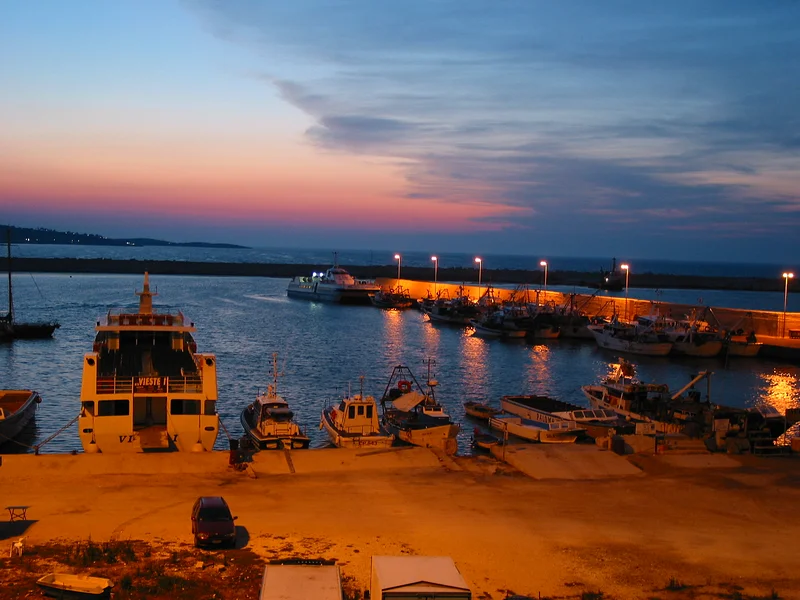
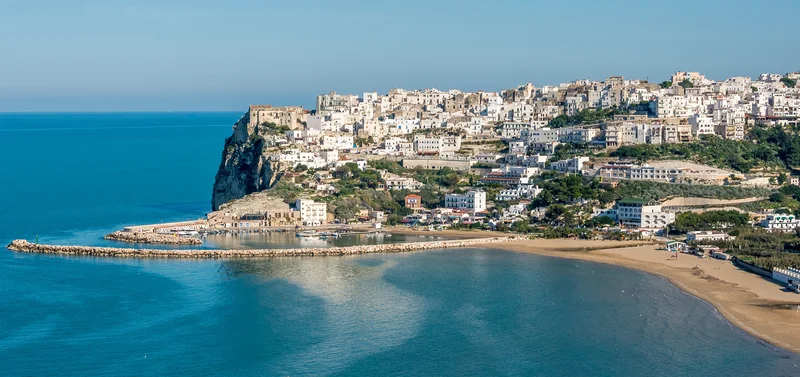
The headland that forms the spur of the boot, and the part of Apulia that least resembles the rest: a beech forest at twenty-six hundred feet, the Foresta Umbra, dropping onto white limestone coves. Vieste and Peschici are two white villages clinging to the cliff, Monte Sant'Angelo shelters a cave where the archangel Michael is said to have appeared in 490, and the Tremiti Islands are reached by boat. The price to pay: three hours' drive from Bari, and a single coast road that jams in August.
With its white houses facing the sea, you will feel like you have ended up on a Greek island.
The towns in this area
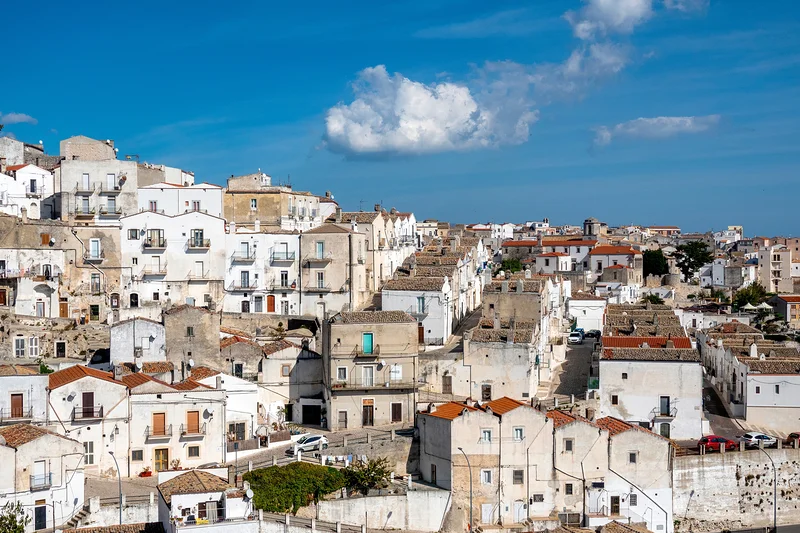
What to see and do in this area
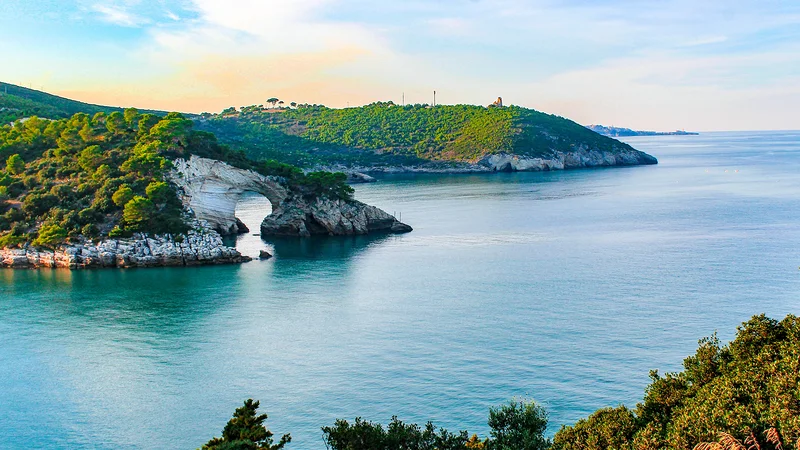
Where to stay in this area
Pizzomunno Vieste Palace Hotel Luxury
On lungomare Enrico Mattei, at the foot of the Pizzomunno monolith, with a private beach and two restaurants. The house has been running for more than fifty years, and it is the only one of its class on the headland.
Pros
- Coves you can only reach by boat
- Forest and sea in the same day
Cons
- Three hours from Bari, four and a half from Gallipoli
- One single coast road, saturated in August
Lecce and the baroque Salento The south, inland
for a whole town carved from the same stone
Lecce stone is soft when it leaves the quarry and hardens in the air: 17th-century carvers worked it like wood, and that is what gives the Basilica of Santa Croce its impossible façade. The town fits inside its walls, everything is done on foot, and it lives all year thanks to its university. Both seas are forty minutes away, one on each side. The flip side: no beach, a center clogged with cars, and an August when the white stone throws the heat back at you.
The towns in this area
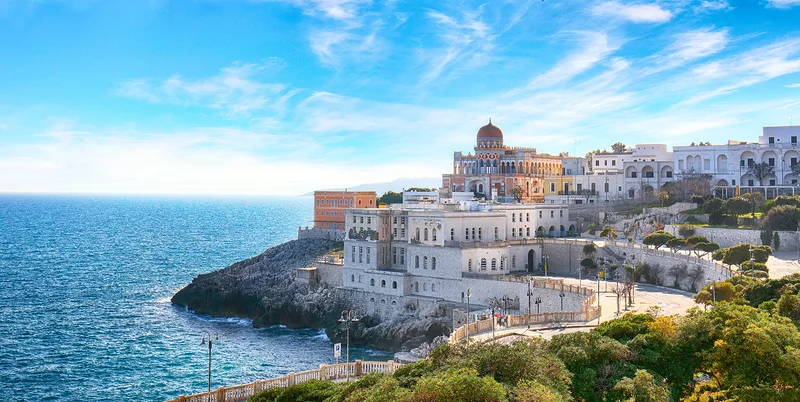
Where to stay in this area
Patria Palace Luxury
An 18th-century residence facing Santa Croce, coffered ceilings and original frescoes, a top-floor terrace level with the carvings. You step out of the hotel in front of the façade you came to see.
Pros
- A town you can see entirely on foot
- Both Salento coasts forty minutes away
Cons
- Not a beach in the municipality
- The historic center is hard to reach by car
Gallipoli and the Ionian coast The southwestern tip
for white sand and turquoise water, crowds accepted
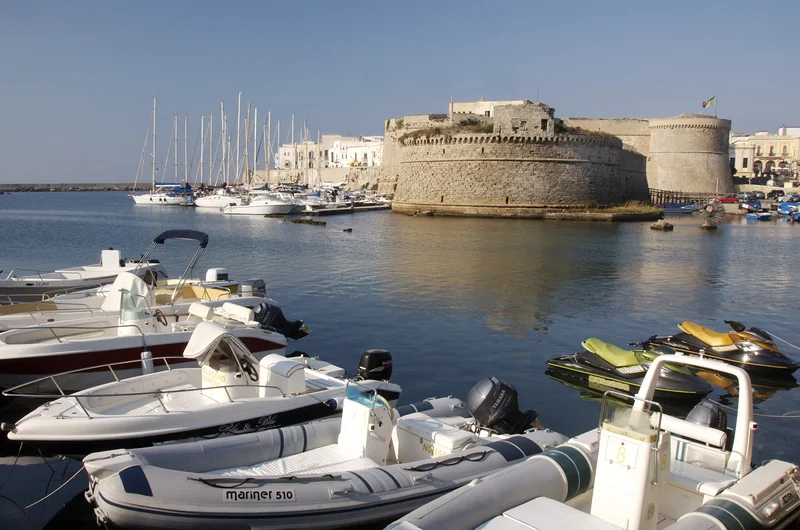
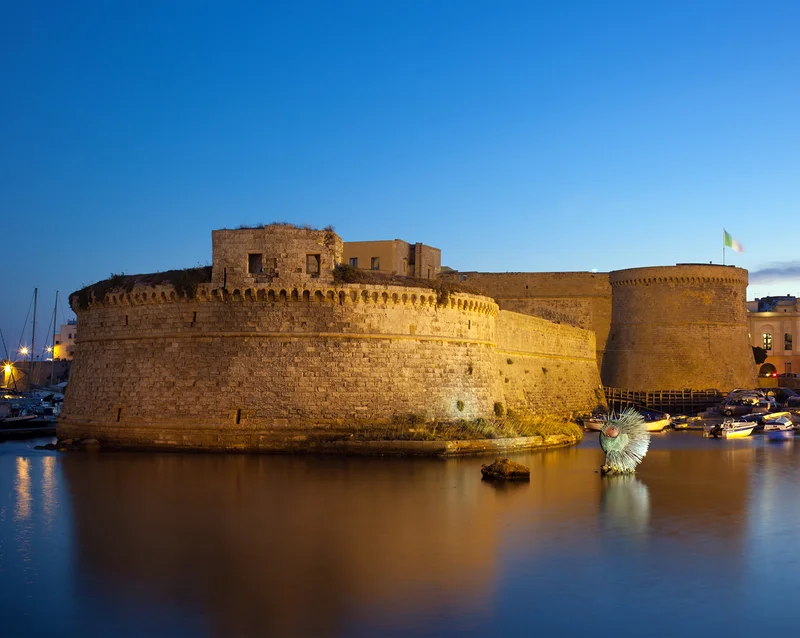
The Ionian coast of the Salento lines up what comes closest to the Caribbean in Europe: Punta Prosciutto and Torre Lapillo, miles of white sand over water that stays clear fifty yards out. Gallipoli sits on an islet linked by a bridge, with its fortress and its lanes above the water. It is also the nightlife capital of the south: in August, the beaches south of town are open-air clubs. Be warned: outside June and September, you share everything.
The old town is built on a small island connected to the mainland by a bridge. The island is dominated by an ancient fortress that you can visit.
The towns in this area
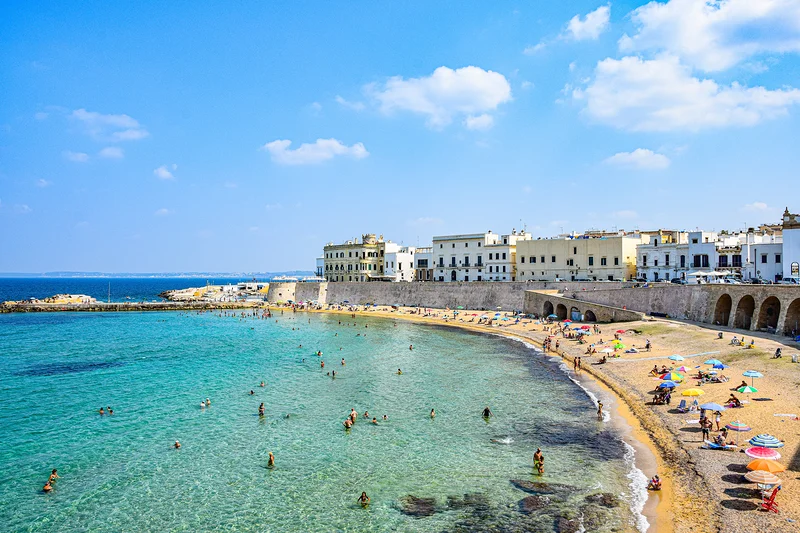
What to see and do in this area
Where to stay in this area
Palazzo del Corso Luxury
Two 19th-century palaces joined on corso Roma, steps from the bridge to the old town, with a terrace and a rooftop pool facing the harbor. The only address of this rank in Gallipoli.
Pros
- The clearest beaches in the region
- An old town surrounded by water, on foot
Cons
- August turns Baia Verde into an open-air nightclub
- The Punta Prosciutto parking lots are full before ten
Our tips for booking the right place
- Choose the kind of lodging before the town: A masseria is an isolated farm: beautiful, with its table and its pool, but you take the car for everything, dinner in the village included. A trullo or an albergo diffuso apartment puts the lanes under your windows and the shops within walking distance. Both cost the same in June; they do not give you the same holiday.
- A car is necessary, except on one line: Trains link Bari to Lecce in an hour and a half, stopping at Polignano, Monopoli and Ostuni on the way. Everything else, the villages of the Itria Valley as much as the Gargano, needs a car: buses exist but stop early and do not run on Sundays.
- The month changes more than the area does: In August prices double on both coasts, beach accesses saturate and the inland villages fill with Italians on holiday. In May, June and September the sea is good, rates return to normal and parking spaces exist. It is the most profitable trade-off of the whole trip.
- Book early for a trullo or a masseria: These houses have six to twenty rooms, not two hundred: they sell out four to six months ahead for July and August, and two to three months for June and September. Off-season, a week is enough almost everywhere.
- Taking the Gargano as a base to visit Apulia: it is three hours from Bari and four and a half from Gallipoli, which makes it a trip in its own right.
- Sleeping in Baia Verde, south of Gallipoli, in July and August if you want quiet: the area lives at night and the beach clubs close at daybreak.
- Choosing Alberobello for a full day: the trulli of Rione Monti have become shops, and the coaches follow one another from ten to five. The neighboring villages, Locorotondo and Cisternino, are lived in.
FAQ: where to stay in Apulia
Where should you stay in Apulia on a first visit?
Masseria, trullo or town hotel?
Do you need a car in Apulia?
Where can you stay cheaply in Apulia?
How far ahead should you book?
North or south Apulia?
 Keep exploring
Things to do in Apulia
Keep exploring
Things to do in Apulia
Comments (0)
No comments yet. Be the first!