
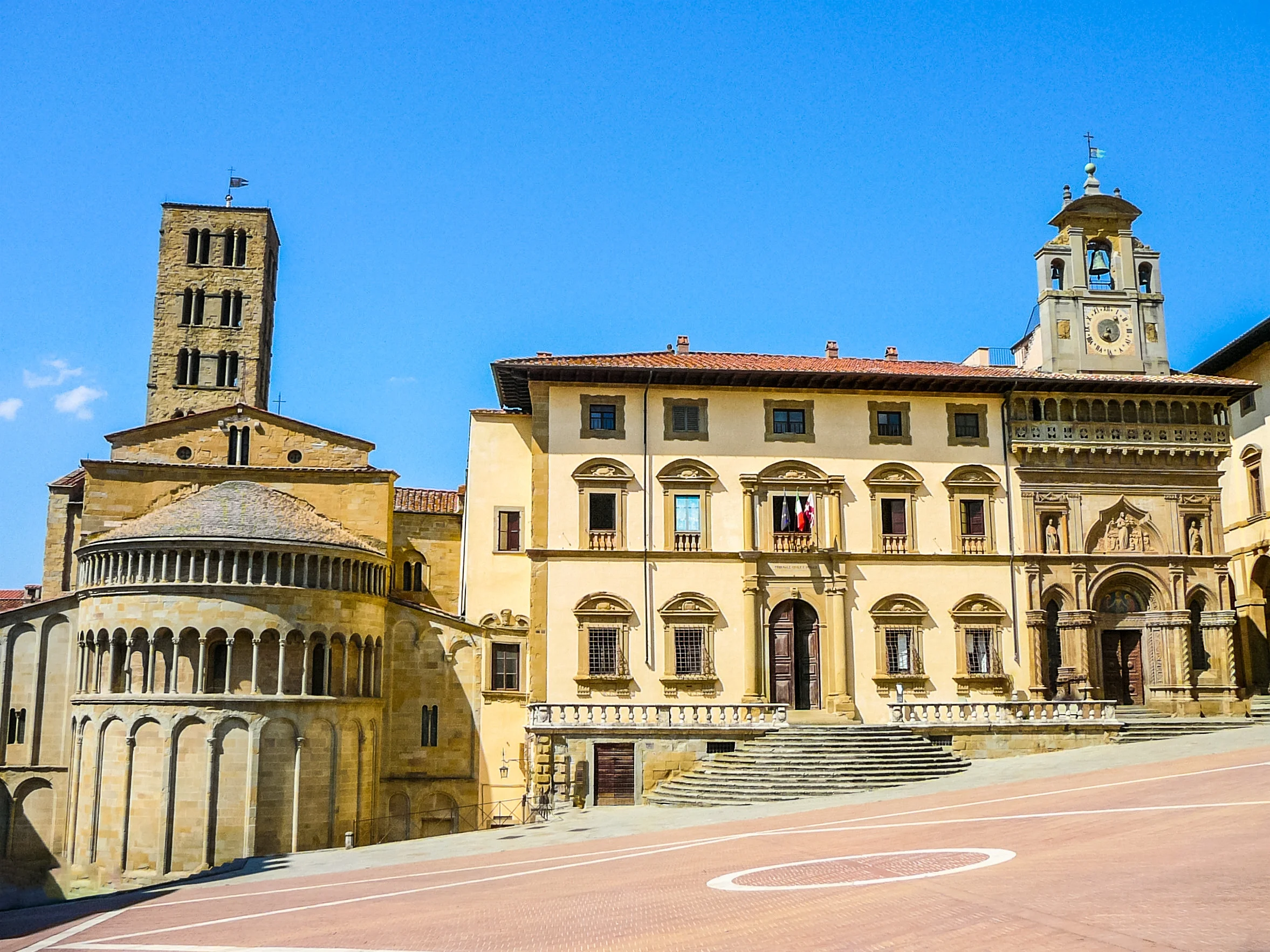
Arezzo, the city of Piero della Francesca and the Chimera
Early in the morning, the Piazza Grande slopes gently beneath your feet, paved with brick and stone, bordered by medieval tower houses and the Romanesque apse of the Pieve. Here, you will not find tour buses at 8am. Arezzo is a working Tuscan city that goes about its daily life, keeping its masterpieces for those who take the time to seek them out.
A destination made for you?
Arezzo appeals to those who love art history without the lines. The Renaissance frescoes are within easy reach, the food is hearty, and prices stay milder than in Florence or Siena.
It will disappoint travelers looking for a postcard film set on every street corner or a thumping nightlife scene. Arezzo is a city of 100,000 residents, serious-minded and rather quiet in the evenings.
Great for:
- Art lovers and fans of Renaissance frescoes
- Food lovers who enjoy traditional Tuscan cooking
- Those wanting a base for day trips to Cortona, Siena, or Florence
- Antique hunters and flea market enthusiasts
Not ideal for:
- Travelers searching for a village frozen in time
- Those hoping for an intense nightlife scene
- Rushed visitors with only a few hours to spare
A friendlier budget than its famous neighbors
Arezzo generally stays cheaper than Florence for sleeping and eating, especially outside the weekends of the major antique fair.
Practical realities
The historic center is walkable, but it climbs: the Piazza Grande and the Fortezza Medicea sit high up, while the train station is at the bottom. Pack good shoes, as the cobblestones are uneven.
The rhythm remains Italian, meaning many churches and shops close in the middle of the day. Plan your sightseeing accordingly.
In the footsteps of Piero della Francesca
The Legend of the True Cross
Inside the church of San Francesco, the chancel is covered with the fresco cycle by Piero della Francesca, The Legend of the True Cross. The tones are soft, the volumes almost sculptural, the faces marked by a calm gravity. It stands as the number one reason to come here.
Access is handled in limited groups by reservation, so book ahead of time, especially during high season.
Friendly tip: reserve your time slot for San Francesco as soon as your dates are locked in, and schedule the visit early in your stay. It gives you a key to understanding the entire region.
The Duomo and Pieve di Santa Maria
The sober Gothic Duomo houses a fresco by Piero, the Magdalene. The Romanesque Pieve di Santa Maria charms visitors with its facade of stacked colonnettes, all different, and its bell tower pierced with numerous openings.
Squares, museums, and antiques
The Piazza Grande and the Fortezza
The square hosts the Giostra del Saracino, a medieval jousting tournament held at the end of the summer and in June depending on the year. The surrounding palaces, including the Palazzo delle Logge and its Vasari loggia, give the entire setting a theatrical look.
Next, walk up toward the Parco il Prato and the fortress: the view over the rooftops and the valley rewards the effort.
The antique fair
On the first weekend of every month (Saturday and Sunday), the Fiera Antiquaria takes over the Piazza Grande and surrounding streets. It ranks among the largest antique markets in Italy. Pack patience and cash, and keep in mind that accommodations fill up fast that weekend.
Vasari's House and museums
Casa Vasari, the home of the artist and biographer of Renaissance painters, is decorated with frescoes by his own hand. The Gaio Cilnio Mecenate National Archaeological Museum preserves Roman pottery from Arezzo, famous in antiquity, alongside the Etruscan Chimera of Arezzo, though the original is displayed in Florence.
Where to eat and drink in Arezzo?
Taste the ribollita, a bread and vegetable soup, and pici with ragout. Florentine bistecca appears here too, and the region is known for beef from the Valdichiana.
Seek out the trattorias in the alleys around the Piazza Grande rather than the ones facing directly onto the square. In the central streets, many small spots offer a simple and solid set menu of the day.
Where to stay in and around Arezzo?
The historic center makes the best choice since everything is walkable and you can enjoy quiet streets at night. The surrounding countryside offers agriturismi nestled in the Tuscan hills, which work well if you have a car.
Book well in advance for the antique fair weekends and the dates of the Giostra.
How to get to Arezzo?
The city has no major commercial airport. Travelers most often arrive via Florence (Florence or Pisa airports) and take a train. The Florence-Arezzo route is direct and frequent, taking about one hour on a fast train.
From Rome, plan for about 1.5 to 2 hours by train depending on the service. By car, the A1 autostrada serves the city. Park in the lots on the outskirts of the center.
How to get around Arezzo?
On foot, quite simply. The center is compact and distances are short, but the hills are steep. City buses connect the station to outlying neighborhoods.
A car is useful if you want to explore the countryside, castles, and villages of the Casentino or Valdichiana valleys. In the center, part of the zone has restricted traffic, so avoid driving into those areas.
When to go?
Spring and early autumn offer the best conditions with soft light, mild temperatures, and fewer crowds. Summer days can get hot and heavy.
For the atmosphere, aim for the first weekend of the month for the antique fair or the days of the Giostra, but expect crowds and higher prices.


Passing through Arezzo by chance on June 2, a public holiday in Italy, I was lucky enough to discover a superb antique market on Piazza Grande, in the historic center. This medieval square is magnificent, almost timeless. It feels like you are back in the days of the gladiators. The surrounding alleys are just as charming and lively. A wonderful Tuscan surprise!