
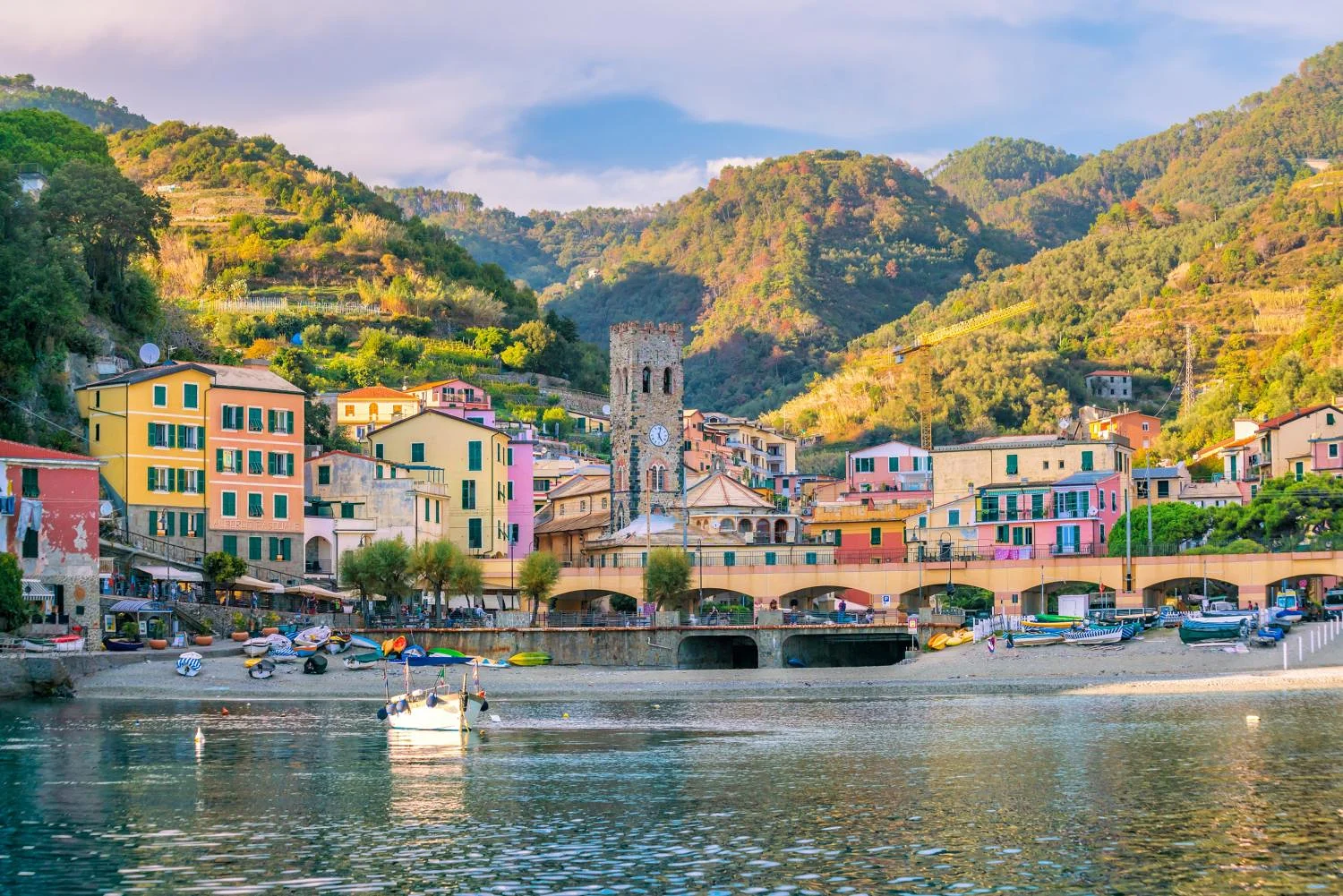
Monterosso al Mare, the Cinque Terre village that plays by its own rules
Back in 1910, a local couple who made a fortune in Argentina commissioned a 14-meter-tall Neptune statue to guard their seaside villa. Sculptor Arrigo Minerbi built a reinforced concrete giant holding up a seashell terrace on his shoulders. Allied bombing during World War II blasted the villa to pieces, and a brutal storm in 1966 ripped off the colossus's arms, trident, and shell.
Today, Il Gigante still stands at the edge of the beach, a battered torso staring down the sea, part ruin and part local mascot. That sums up Monterosso pretty well. It is a village that has always thought big despite its compact size.
The Cinque Terre resort town, with a twist
Monterosso sits at the westernmost end of the five villages and takes the title of the largest. It is also the only one boasting an actual sand beach complete with rows of umbrellas, lounge chairs, and a proper seaside promenade. For families traveling with kids, visitors with limited mobility, or anyone who just wants to throw down a towel without navigating jagged rocks, it is the practical choice. The village terrain is also noticeably flatter than its neighbors, which makes a huge difference when you are dragging rolling luggage or pushing a stroller.
If you are after raw cliffside charm where colorful tower houses cling precariously to the rock, you will find that in spades over in Manarola or Riomaggiore. Monterosso leans into its resort identity, particularly in the modern Fegina neighborhood where hotels line the shoreline. That is not a flaw, but you should know what to expect. The historic center sits on the opposite side of a pedestrian tunnel bored right through the San Cristoforo headland, preserving its intact Ligurian character with narrow alleyways, colorful facades, and laundry fluttering between tall buildings.
An easy walk, no hiking boots required
Unlike the other Cinque Terre villages, most of Monterosso sits at street level. The train station is right on the Fegina beachfront, which cuts out unnecessary hauling of bags. The pedestrian tunnel connecting the modern zone to the Borgo Antico is short, well-lit, and flat. Only the uphill walks toward the Capuchin monastery and the Soviore sanctuary require any real legwork.
A slightly higher price tag than the rest of the Cinque Terre
Monterosso is the most expensive of the five villages, particularly when it comes to lodging. Expect to pay $169 to $320* per night for a double room during peak season, $40 to $62* per person for a sit-down restaurant meal, and $23 to $40* for a daily Cinque Terre Treno Card. If you visit in May or October, hotel rates drop by 30 to 40 percent.
The beach and waterfront: Monterosso's ultimate luxury
The Fegina beach stretches for hundreds of meters right past the train station, lined with the orange and green umbrellas that have become an iconic postcard image of the village. Most of the sand belongs to private stabilimenti balneari (beach clubs), meaning you pay for a lounger and umbrella, usually running between $23 and $45* for the day depending on the row and season. Three free public beach zones remain: one in front of the station, one under the Gigante statue, and one at the edge of the historic center. They fill up fast in the summer.
The sand mixes with fine pebbles, and the water stays clean and shallow near the shore. It is the only stretch of coastline in the Cinque Terre where small children and casual swimmers can wade in without worry. You can rent kayaks right on the beach, and boat tours depart from the small harbor to cruise the coast toward Vernazza or Riomaggiore, dropping anchor for open-water swims in coves you cannot reach by land.
Friendly tip: The small public beach tucked right under the Gigante at the far eastern end of Fegina draws smaller crowds than the one by the station. The footing is rockier, but the vibe is quieter with the concrete giant for company.
The Borgo Antico: The village's other side
Walk through the tunnel under the San Cristoforo hill and the entire scene shifts. The narrow alleyways, called caruggi in the local Ligurian dialect, carry the scent of fresh basil and warm focaccia. The San Giovanni Battista church, built in the thirteenth century, features a striking facade of alternating white and dark green marble stripes in the Ligurian Gothic style. Right next door, the Oratorio dei Neri, a seventeenth-century baroque chapel, houses a white marble skeleton holding a scythe. It is equal parts unsettling and fascinating.
The village takes its name from the Obertenghi, red-headed marquises who held the hilltop fort here. The original residents actually came from Albereto, a mountain hamlet destroyed by the Lombards in the seventh century. Centuries later, Nobel Prize-winning poet Eugenio Montale spent his summers in a Fegina villa nicknamed the yellow pagoda. His poems about lemon groves and Mediterranean light were born right here, and you can still spot ceramic plaques quoting his verses on walls around town.
Friendly tip: Hike up to the Capuchin monastery and its San Francesco church on the ridge dividing the two halves of the village. The viewpoint sweeps across the entire bay, and the church holds a Crucifixion painting attributed to Van Dyck. Admission is free, and the spot stays surprisingly peaceful even in midsummer.
The hike to Vernazza: The star segment of the Sentiero Azzurro
The coastal path connecting Monterosso to Vernazza is widely considered the most scenic and most demanding stretch of the Sentiero Azzurro (Blue Trail). Plan for 2 hours to cover 3.7 km with about 280 meters of elevation gain. The trail climbs steadily through wild brush and terraced lemon groves, then drops down a long stone staircase winding through vineyards before spilling into Vernazza. You need a valid Cinque Terre Card to hike this trail.
During peak visitor times, authorities make the path one-way from Monterosso to Vernazza between 9:00 AM and 2:00 PM, a detail worth factoring into your daily schedule. For experienced hikers, the trail heading toward Punta Mesco, the promontory marking the northern edge of the bay, offers a free and much less crowded alternative. Allow 1 hour each way to reach the lighthouse, where you get plunging views over the Gulf of Monterosso and, on a clear day, all the way to the Maritime Alps and Corsica.
Lemons and anchovies: A dual culinary identity
Monterosso's food culture revolves around two staples. Lemons, grown on stone terraces above the village, flavor liqueurs, desserts, and seafood marinades. Anchovies, fished for centuries in the local waters, are a point of local pride. Known as u pan du ma (the bread of the sea) in the Ligurian dialect, Monterosso anchovies stand out for their firm flesh and delicate flavor, a result of the high salinity of the local waters. Fried, stuffed, salted, or marinated in lemon, you need to try them prepared every possible way.
The village dedicates two annual festivals to them. The Sagra dell'Acciuga Fritta on the third Saturday of June features anchovies fried in a giant fish-shaped pan and served with sgabei, traditional savory dough fritters. The Sagra dell'Acciuga Salata in September celebrates the traditional salted and preserved version. Both events remain authentic community gatherings rather than tourist traps.
Where to eat and drink in Monterosso al Mare
For focaccia, Il Massimo della Focaccia in the Fegina neighborhood and Il Frantoio in the historic center battle it out for the local crown. The latter is also worth a stop for its wood-fired farinata, a chickpea flour flatbread that is crispy on top and creamy in the middle. You can make a full meal out of it for under $9*.
Ristorante Ciak, a Borgo Antico fixture operating since 1974, serves up standout spaghetti with mussels, clams, tomatoes, and Taggiasca olives. Chef Luigi, recognizable in his sailor uniform, works an open kitchen. For a dramatic setting, L'Ancora della Tortuga occupies an old military bunker blasted into the cliffside, putting your dining table right over the waves. Reservations are essential for both. When it is time for a drink, the patio at Enoteca Internazionale makes an ideal perch for a late-afternoon glass of Cinque Terre DOC white wine or sweet Sciacchetrà.
Where to stay in Monterosso al Mare and nearby
You have two distinct zones to choose from. The Borgo Antico offers alleyway charm and close proximity to restaurants, but hotel rooms tend to be small and lack sea views. Fegina, the modern stretch, lines up beach-facing hotels with direct station access. Hotel Porto Roca takes the luxury crown, perched on the cliff between the two districts. Locanda Il Maestrale, in the historic center, mixes comfort with local character, while the more contemporary MìaChì sits just a short walk from the station.
If you are working with a tighter budget, La Spezia makes a smart alternative base just a 23-minute train ride away with hotel prices running two to three times lower. Levanto, the first town north of the Cinque Terre, offers a broad sandy beach, plenty of shops, and fast rail connections. For a completely different experience, the Soviore Sanctuary tucked among the chestnut trees above Monterosso rents out simple guest rooms.
How to get to and around Monterosso al Mare
Monterosso is the first Cinque Terre village you hit coming from the north. From La Spezia Centrale, the train takes 23 minutes. From Genoa, expect about 1 hour and 30 minutes on a regional train. From Pisa, it takes 1 hour and 30 minutes to 2 hours with a quick transfer in La Spezia. From Florence, plan for 2.5 to 3 hours.
There is no service from North America to Pisa or Genoa: fly into Milan or Rome and continue by train, or connect through a European hub to Pisa, the handiest gateway once you are in Europe. Bringing a car is a headache because the village is pedestrian-only and the Fegina parking lot charges around $23 to $34* per day with very limited spaces. Local ferries connect Monterosso to the other villages during the high season, giving you a great vantage point of the coastline from the water.
When to go
The sweet spot for visiting runs from mid-May to late June and from early September to mid-October. May brings the lemon festival and the start of swimming weather, while September delivers the anchovy festivals, still-warm sea temperatures, and much smaller crowds. July and August turn stifling, packed to the gills, and make finding a spot on the public beach a daily battle. Hiking trails can also shift to one-way directions during those peak summer months.
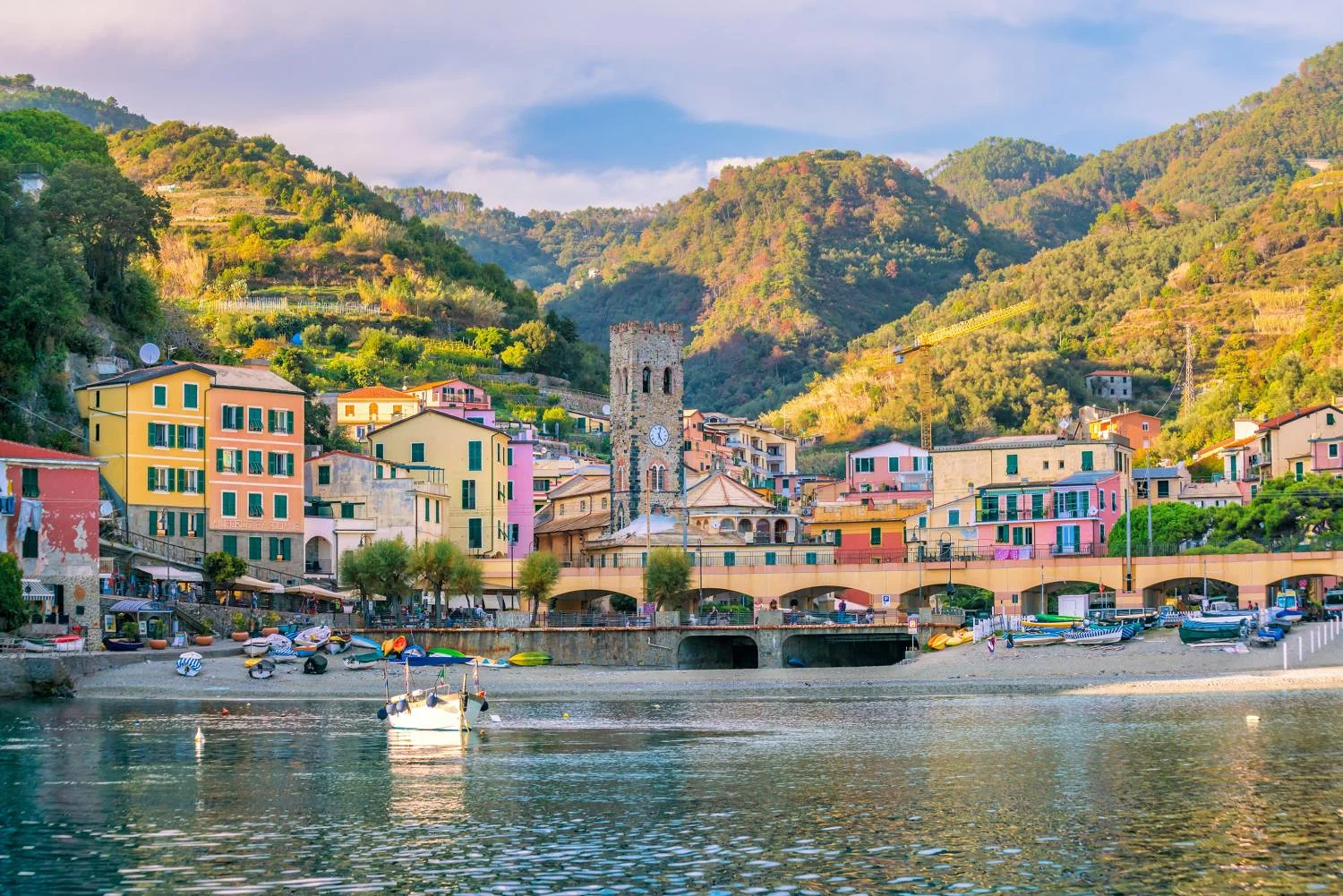
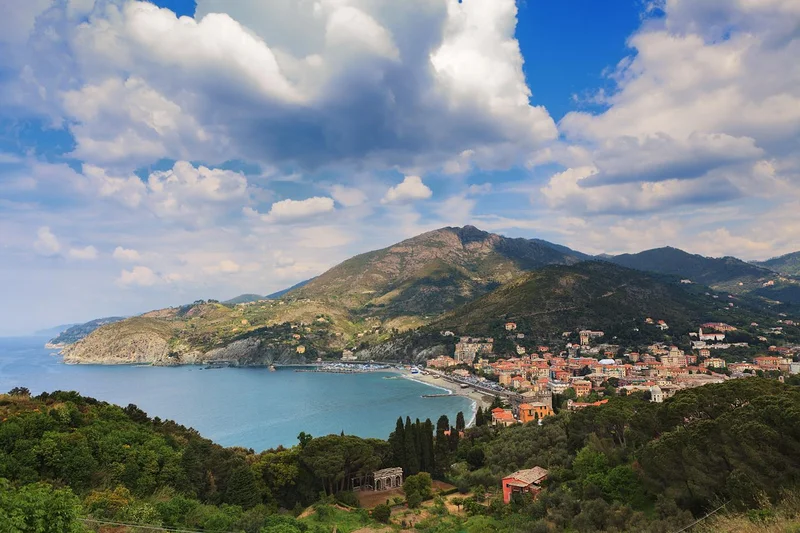
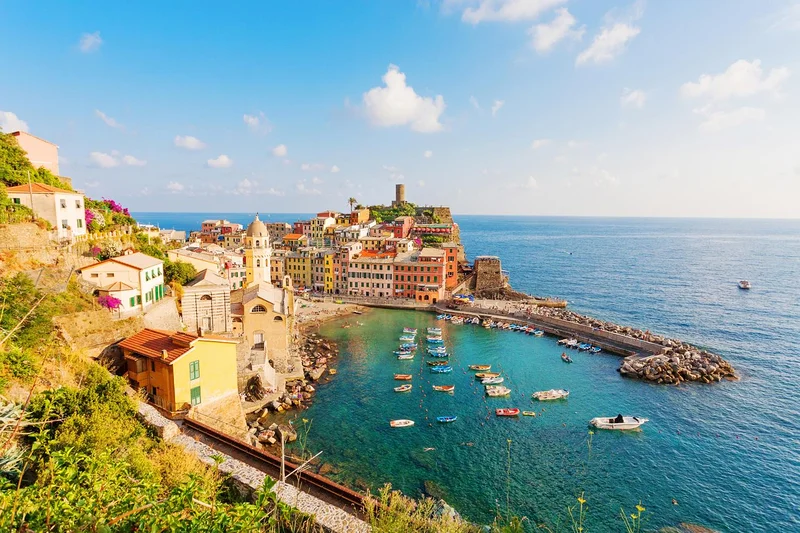
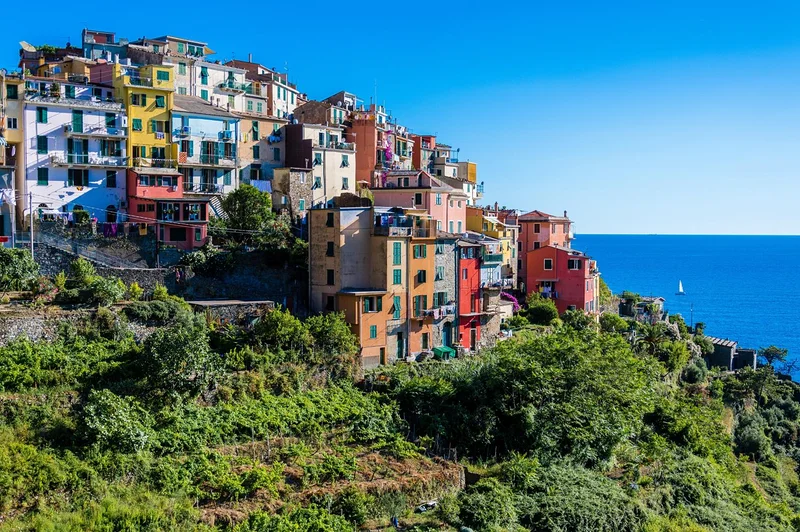
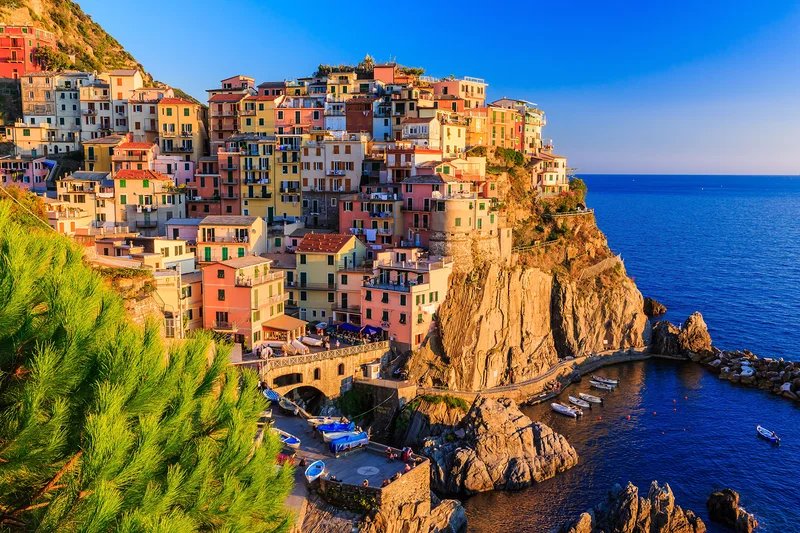
Each of the Cinque Terre villages has its own perks. This one is perfect if you are looking for that vacation vibe. The beach is right there, accessible directly from the village! The view with the bridge is really charming! Make sure to visit the monuments too, I was very impressed by the Neptune statue, Il Gigante!