
Visiting Gallipoli, the Italian gem on the Ionian Sea
Picture a whitewashed old town set on a tiny island, connected to the mainland by nothing more than a single bridge. In the morning, fishermen return to the harbor in their azure-blue boats. By afternoon, the turquoise water calls from sandy coves. When evening hits, the limestone alleys fill with the scent of grilled fish and the sound of laughter echoing between baroque facades. This is the real Puglia, where you can smell the salt and the history mixed together.
The perfect destination for those who love coastal dolce vita
This small city in southern Puglia is for travelers who want a balance between Mediterranean relaxation and cultural discovery without the stress. Do you enjoy wandering through historic alleys in the morning and diving into crystal-clear water in the afternoon? You are in the right place.
In July and August, crowds are a given, especially at the most popular beaches. Costs remain reasonable compared to more high-end Italian destinations, but expect to budget a bit more for waterfront dining. A car is almost essential if you want to explore secret coves and neighboring villages.
If you are looking for wild nightlife or major international museums, you will find better options elsewhere. Here, the pace is quiet and almost nonchalant.
The Città, a baroque jewel on its own island
Cross the bridge Papa Giovanni Paolo II and you are transported to another time. The Città, this compact old town perched on its rock, can be explored on foot in a few hours, but it deserves much more of your time. The brilliant white houses follow the path of the old walls, creating a labyrinth where every alley leads to a small square, a surprise church, or a plunging view of the sea.
Do not miss the Fontana Greca on Piazza Alda Moro, in the Il Borgo neighborhood. This fountain reportedly dates back to the 3rd century BC and is considered the oldest in Italy. Its base features mythological scenes and the city coat of arms. The Cathedral of Sant'Agata impresses with its excessive baroque opulence, carved entirely from carparo, the local honey-colored stone. Inside, the intricate decoration from floor to ceiling is jaw-dropping.
Also, peek into the smaller, lesser-known churches you will find while wandering. As for palaces, Palazzo Tafuri and Palazzo Granafei show off the past wealth of local nobles. For the curious, the Museo Civico covers the natural history of the region, while the Museo Diocesano focuses on sacred art.
Pro tip: Visit the Città early in the morning or late in the afternoon during summer, when the low light highlights the white facades and the heat becomes less intense. The paved alleys feel like a movie set at these times.
Beaches and coves: take your pick
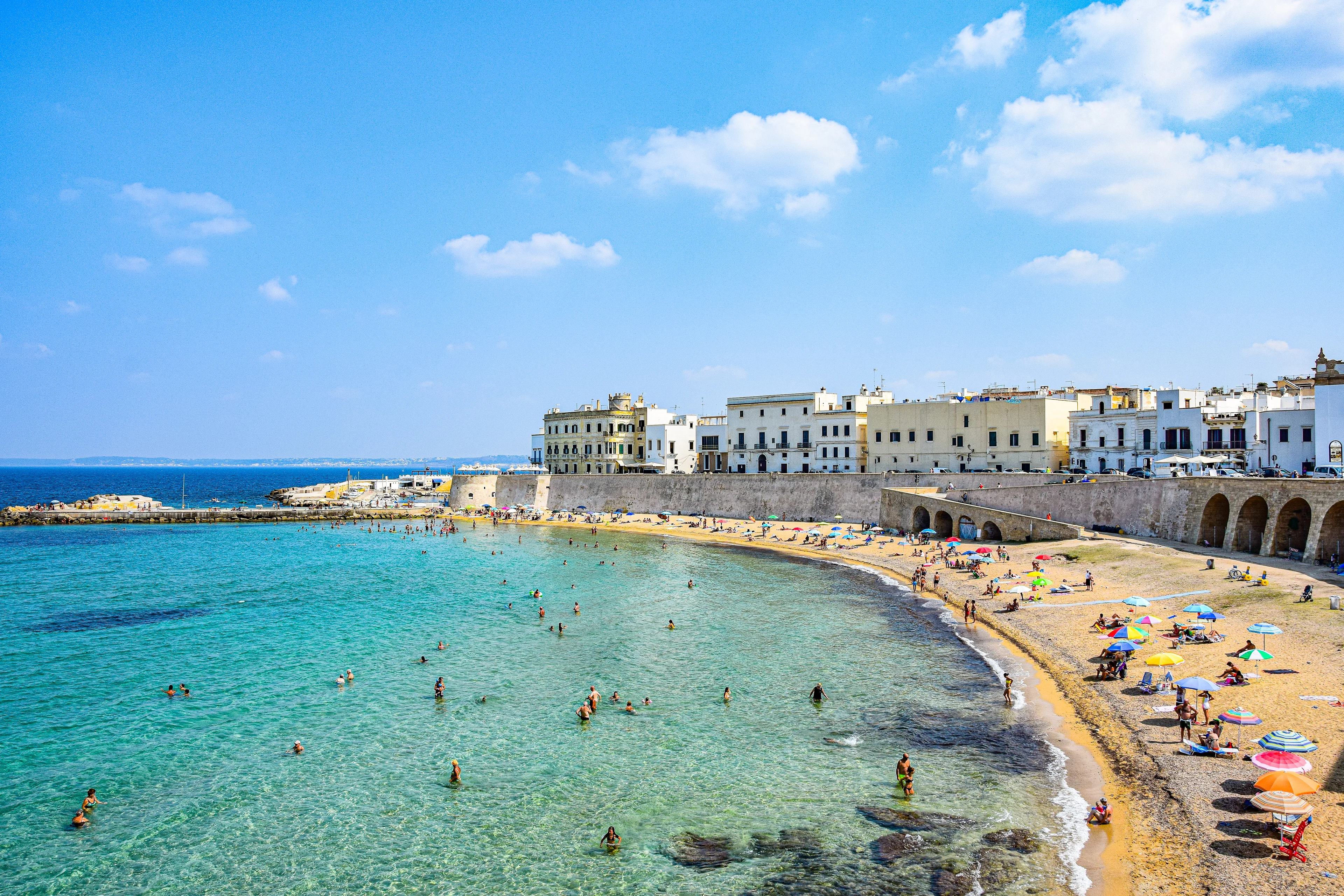
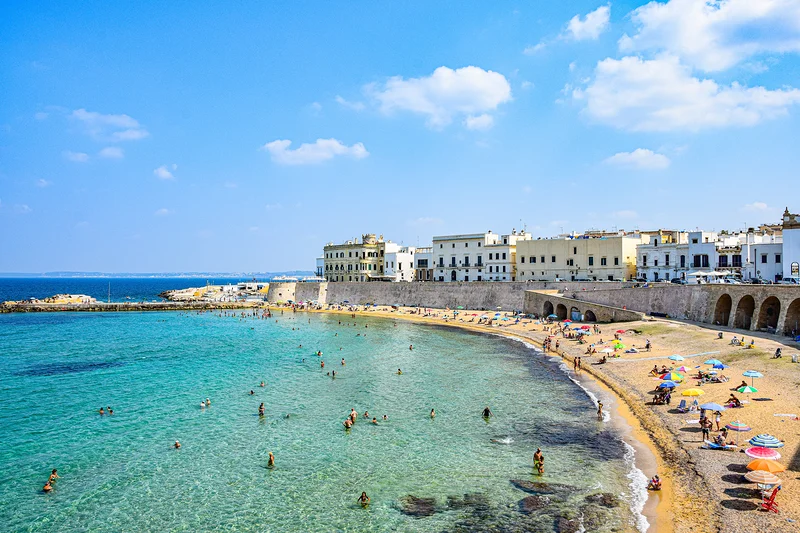
It is best to be clear from the start: the beaches are what make Gallipoli tick. Purità (literally the beach of purity) remains the icon, that long stretch of fine sand that ranks as one of the most beautiful in Puglia. The water is incredibly transparent, perfect for snorkeling near the rocks. Thrill-seekers hit the area for kitesurfing or kayaking.
But there are many other options around the city. Baia Verde attracts a younger, festive crowd with beach clubs and music late into the night. Rivabella is more family-oriented and appeals to those seeking calm. Punta Pizzo, a bit more rugged, offers a preserved setting with dunes and a pine forest in the background.
For a true nature break, plan an excursion to Isola Sant'Andrea. This nature reserve can be explored on foot via marked trails or by boat from the port. The natural heritage is exceptionally rich, with limestone cliffs, sea caves, and marine life teeming below the surface.
Pro tip: Rent a scooter or bicycle to tour the beaches in one day. You will be able to find your own slice of paradise far from the crowds, especially if you explore the small coves between Punta Pizzo and Santa Maria al Bagno.
Between sea and heritage: the best of both worlds
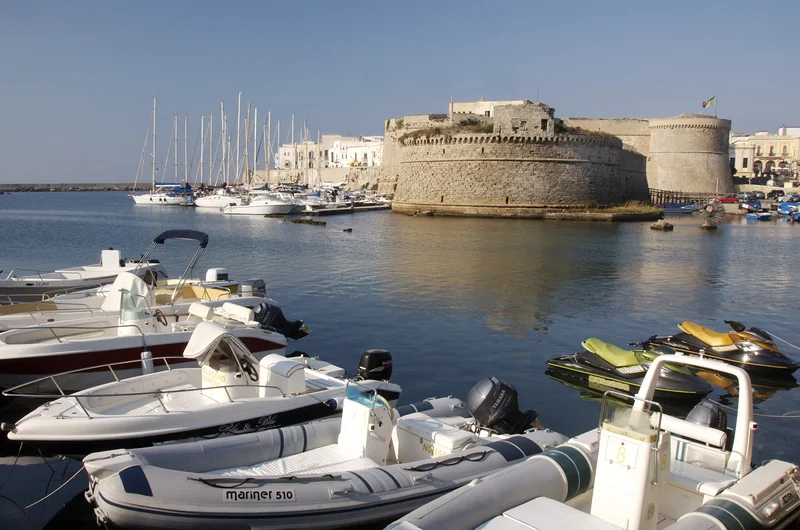
The small fishing port is worth a morning visit all on its own. The colorful boats sway gently, the fish market is in full swing by dawn, and the atmosphere remains authentic despite the tourism. This is where you will find the freshest fish for your meals.
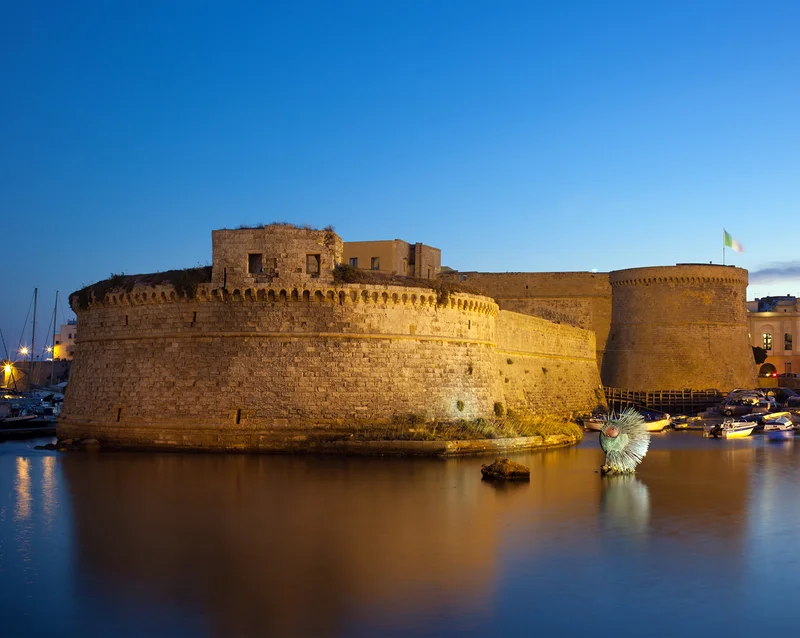
The Castle of Gallipoli, an imposing fortress built between the 15th and 16th centuries, is worth visiting for the panoramic view from the ramparts. On one side, the Ionian Sea stretches as far as the eye can see. On the other, the old town reveals itself in all its architectural splendor. The walls themselves tell the story of centuries of defense against maritime invasions.
Pro tip: The sunset from the castle ramparts is a classic moment. Arrive half an hour early to find a good spot, and stay after to watch the old town light up gradually in the twilight.
Where to eat and drink in Gallipoli?
Local cuisine celebrates the products of the Ionian Sea with almost religious respect. The polpo alla pignata, octopus stewed in a clay pot with tomatoes and spices, is a staple you will find in all the good restaurants at the port. The frutti di mare (seafood) are of incomparable freshness, often served raw with just a squeeze of lemon.
Do not miss the pasticciotto, that custard-filled pastry locals devour at breakfast with a strong espresso. For an aperitif, try the Negroamaro, the potent red wine produced in the surrounding vineyards. Trattorias in the old town often offer excellent value for money, especially those hidden in the alleys away from the tourist waterfront.
Where to stay in and around Gallipoli?
Staying in the Città offers the most authentic experience. You will wake up to the sound of seagulls and shutters clacking, right in the heart of the medieval atmosphere. The bed and breakfasts set up in ancient noble residences offer charm and character, but book well in advance for high season.
If you are looking for more modern comfort and direct beach access, look toward Baia Verde or Rivabella, where hotels and tourist residences are numerous. For a quiet and authentic stay, the masserie, these fortified farms turned into charming accommodations, dot the surrounding countryside just 10 to 15 minutes away by car. You will enjoy a pastoral setting with a pool and, often, an excellent meal.
How to get to and around Gallipoli?
The closest airport is Brindisi, about 80 km (50 miles) to the north, with direct flights from several European cities. Expect a 1-hour drive with a rental car, the most practical way to explore the region. The airport in Bari, larger and busier, is a 2-hour drive away but offers more international connections.
The train connects Gallipoli to the main cities of Puglia, notably Lecce in about 1 hour. The station is in the new town, a 10-minute walk from the old town. Once there, the Città is exclusively for pedestrians, as cars are banned. To visit the beaches and the surrounding area, a car or scooter remains essential. Local buses exist but are infrequent out of season. Expect to pay 3-5 EUR ($3-5) for daily parking near the bridge in summer.
When to go?
July and August guarantee the best weather and perfect water temperatures, but also the highest prices and crowded beaches. May-June and September-October offer the best compromise: mild weather, water that is still warm enough for swimming, and a city that finally has room to breathe. Rates drop 30 to 40% outside the summer peak. If you are coming only for the heritage, early spring in March and April reveals a peaceful and blooming Gallipoli, even if the water remains too cool for swimming.
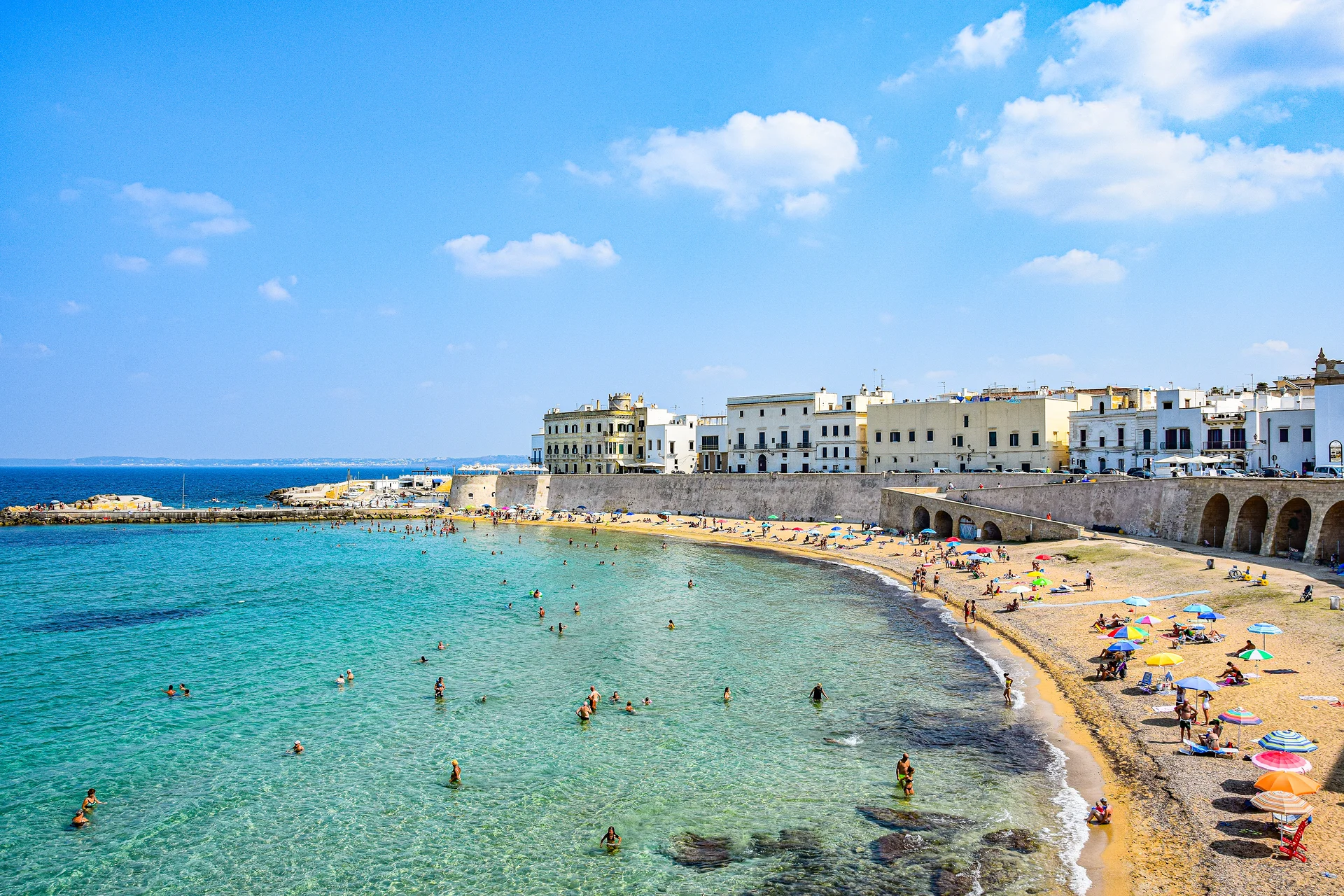
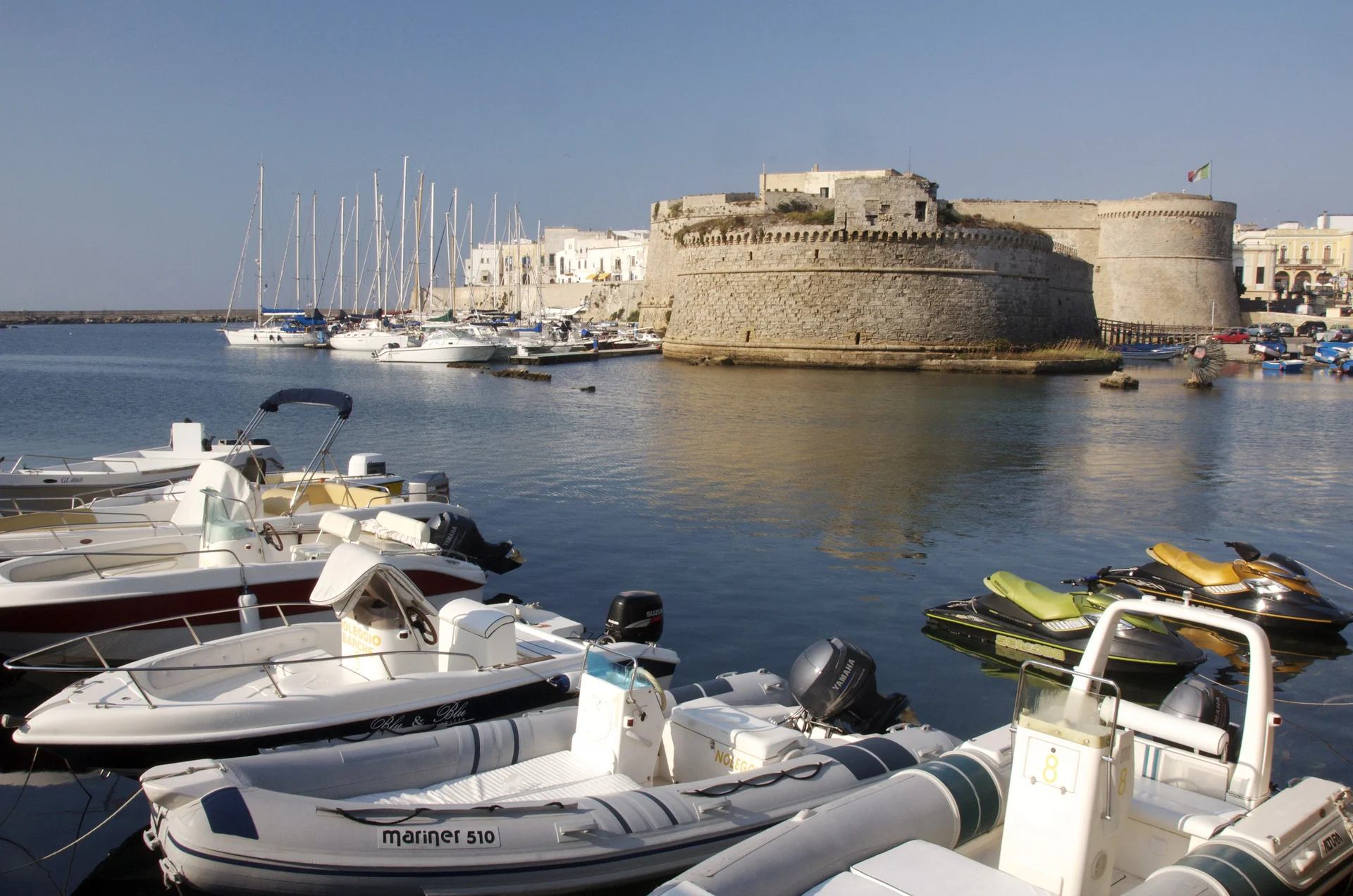
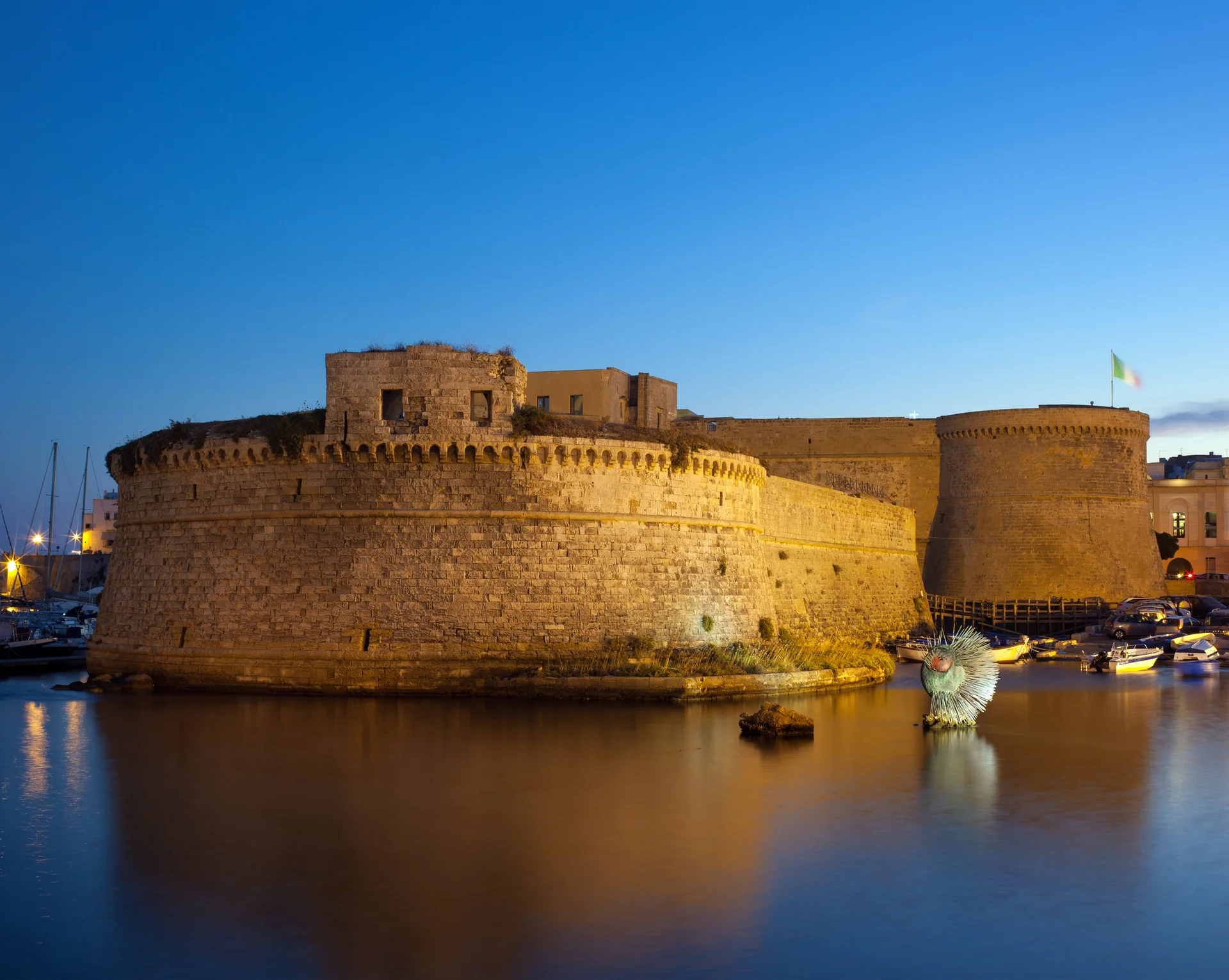
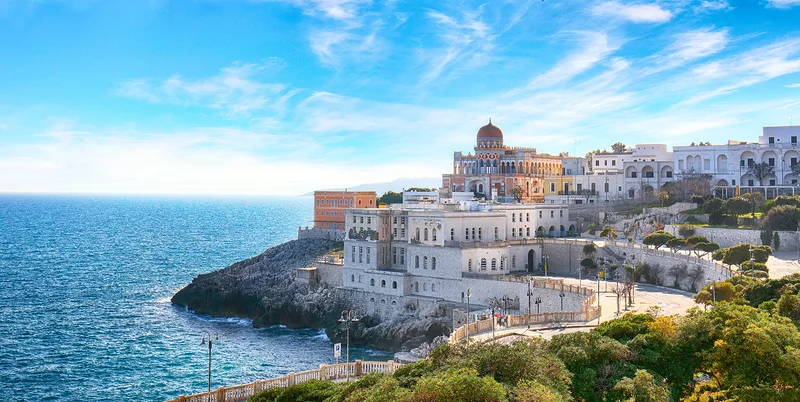
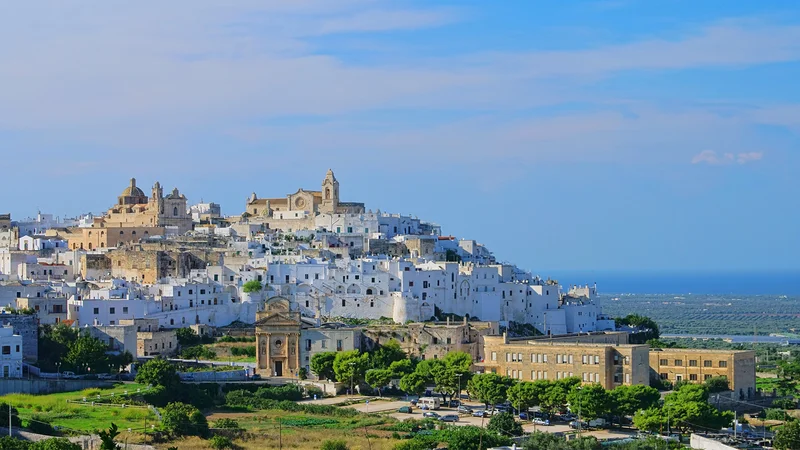
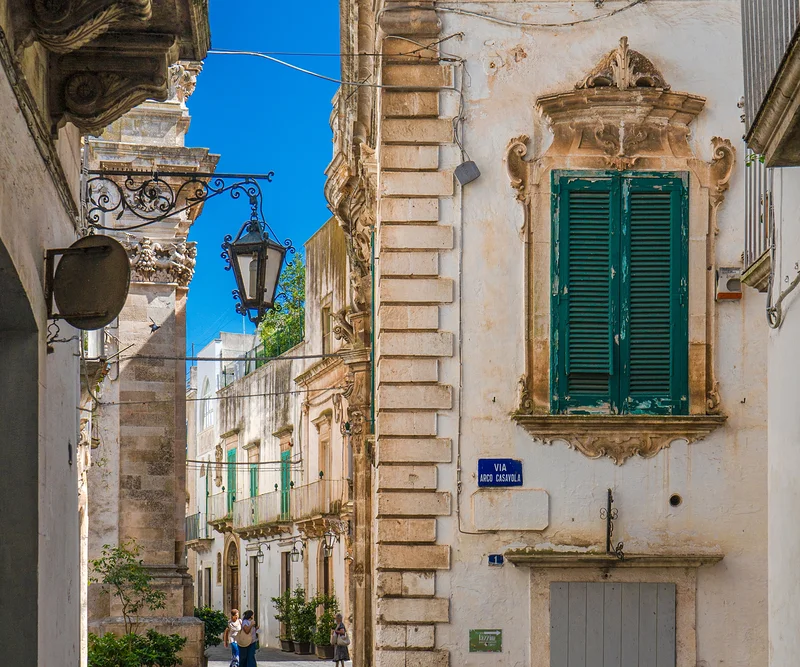
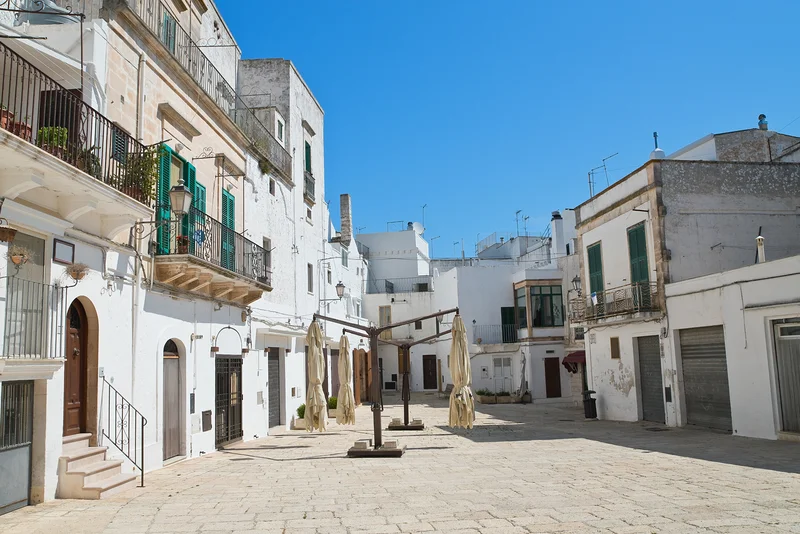
The center of Gallipoli is really very charming. It is an island village surrounded by turquoise waters. The views you get from the ramparts are truly magnificent. The town is lively and vibrant, especially around the fishing port. I found the atmosphere quite local and authentic. It is the right place to discover the heart of Puglia.