
Rhodes, where the knights left the keys
The Colossus is gone. The bronze statue that once towered over the harbor, counted among the ancient wonders of the world, collapsed during an earthquake over two thousand years ago. Yet pulling up to the Mandraki harbor entrance, where two bronze deer now stand guard, you still feel a ghost of it. It is as if the giant's shadow lingers over this Dodecanese island, the largest in the archipelago, sitting just 11 miles from the Turkish coast.
An island for history buffs, and plenty more
Most travelers arrive drawn to the footsteps of the Knights of Saint John. The medieval old town, a UNESCO World Heritage site, is the largest inhabited fortified city in Europe. But reducing this island to its past is a mistake. Windsurfing enthusiasts head straight to Prasonisi, the southern headland where the Aegean Sea meets the Mediterranean in a dramatic collision of waves. Families favor the sandy beaches of the east coast, while hikers tackle the pine forests of Mount Attavyros, peaking at 3,989 feet.
If you are looking for an intimate, postcard-perfect Cycladic vibe, though, keep driving. Mass tourism has turned parts of the coast like Faliraki into soulless mega-resorts, and summer crowds pack the narrow lanes of Lindos. The fix is simple: rent a car and escape inland or down to the wild south.
A gentler budget than elsewhere in Greece
Prices run 15 to 20 percent lower than in Santorini or Mykonos. Expect $57 to $90* a night for decent lodging, $14 to $21* for a full tavern meal, and $3.40 to $5.70* for a quick gyro. Car rentals hover around $40* a day in peak season.
The Old Town of Rhodes: a 2,500-year labyrinth
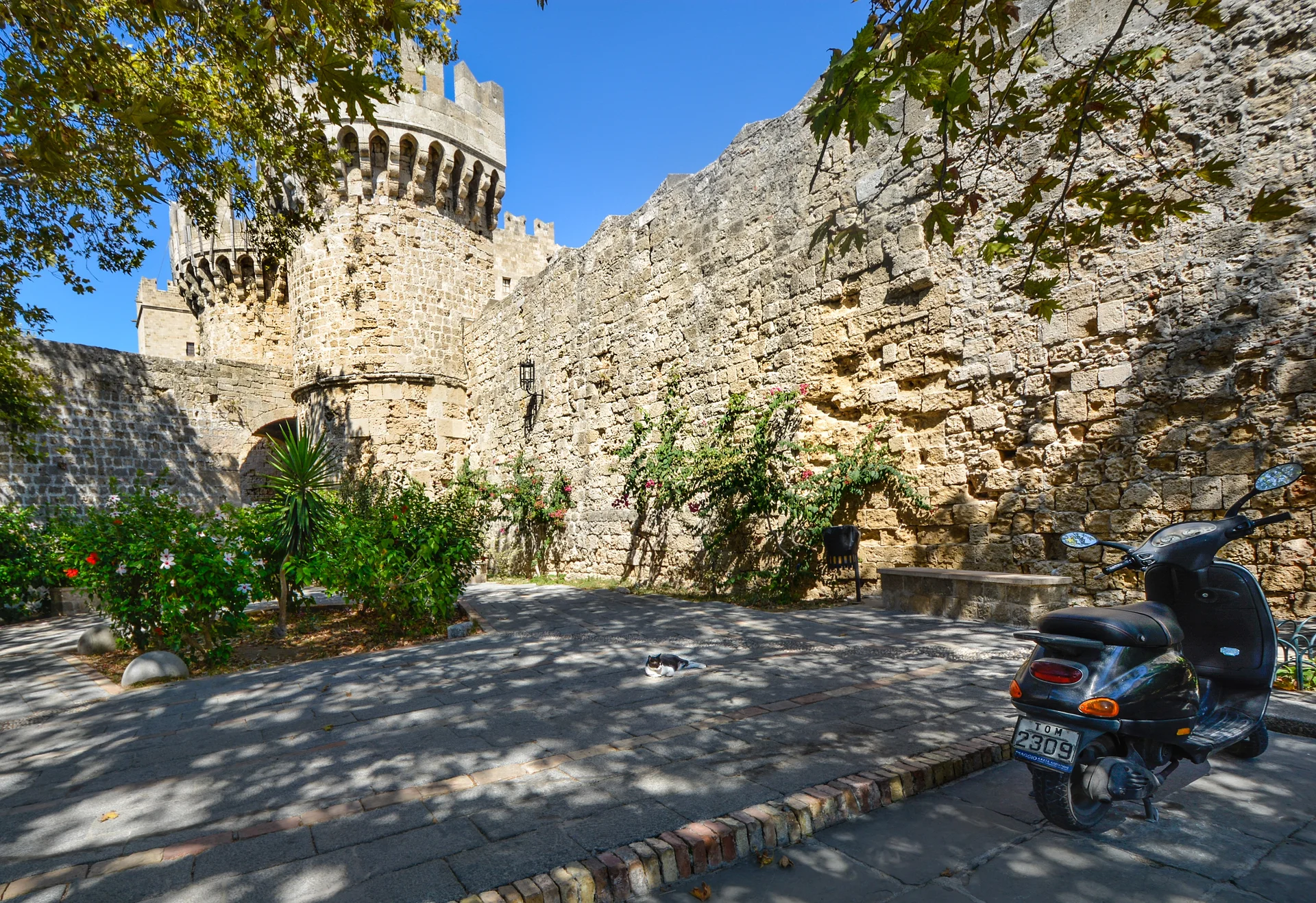
Walking through the Amboise Gate feels like stepping across centuries. Behind the two-and-a-half-mile ramparts, cobblestone alleys wind past Gothic buildings, Ottoman minarets, and Byzantine churches. The Knights of the Order of Saint John held the island from 1309 to 1522, leaving behind monumental inns and a fortress-like palace.
The perfectly preserved Street of the Knights lines the former lodgings assigned by nationality, from France and Spain to Italy and England. At the far end, the Palace of the Grand Masters commands attention with its massive towers and Roman mosaic floors. Entry costs $9*, with a $2.30* add-on for rampart access and a sweeping view over the rooftops.
Friendly tip: Tour the old town early in the morning or late in the afternoon. Between 11:00 AM and 4:00 PM, cruise ships unload thousands of passengers. The Jewish Quarter to the southeast stays quieter and houses the Kahal Shalom Synagogue, the oldest active synagogue in Greece.
Lindos: blazing beauty, crowds included
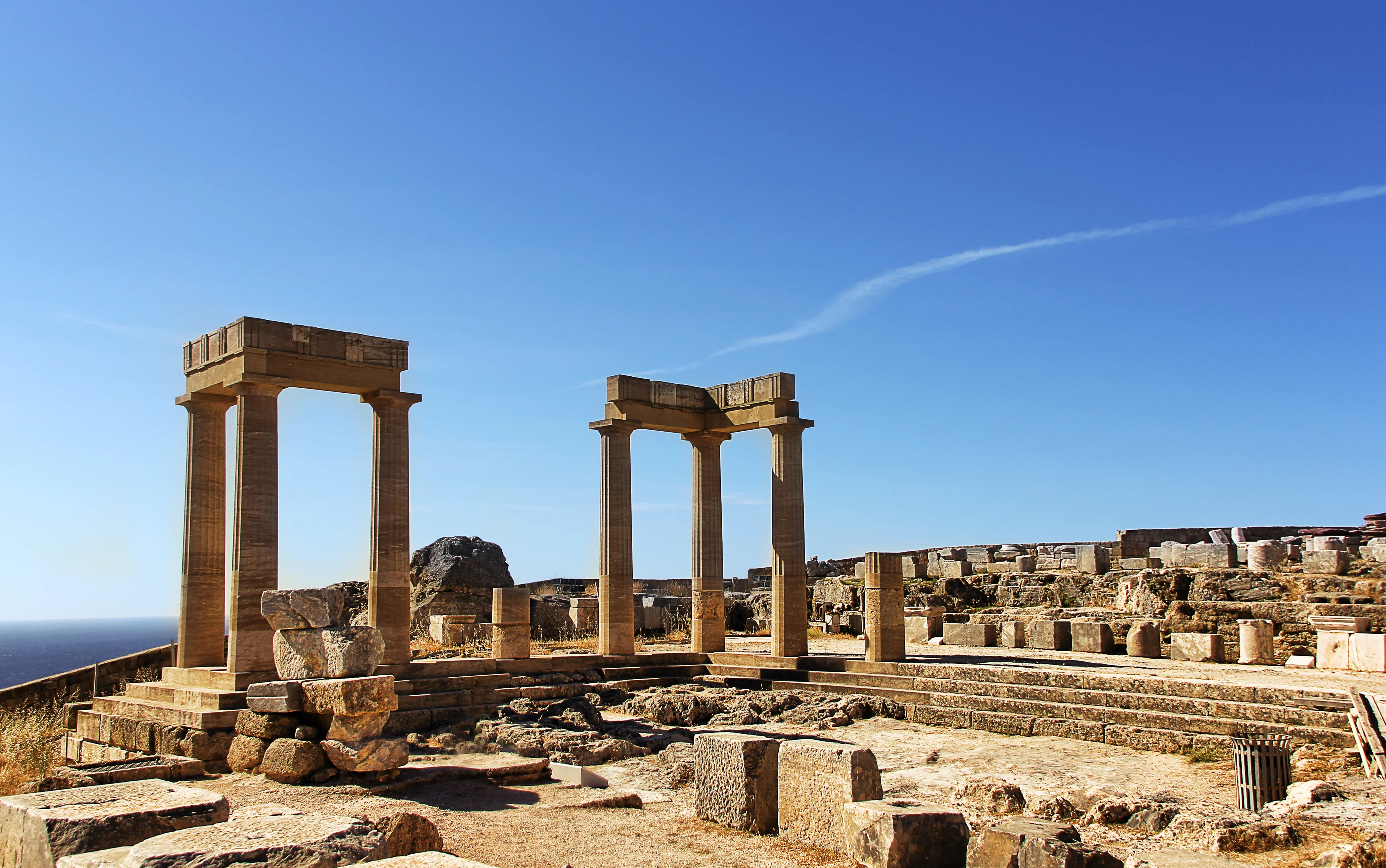
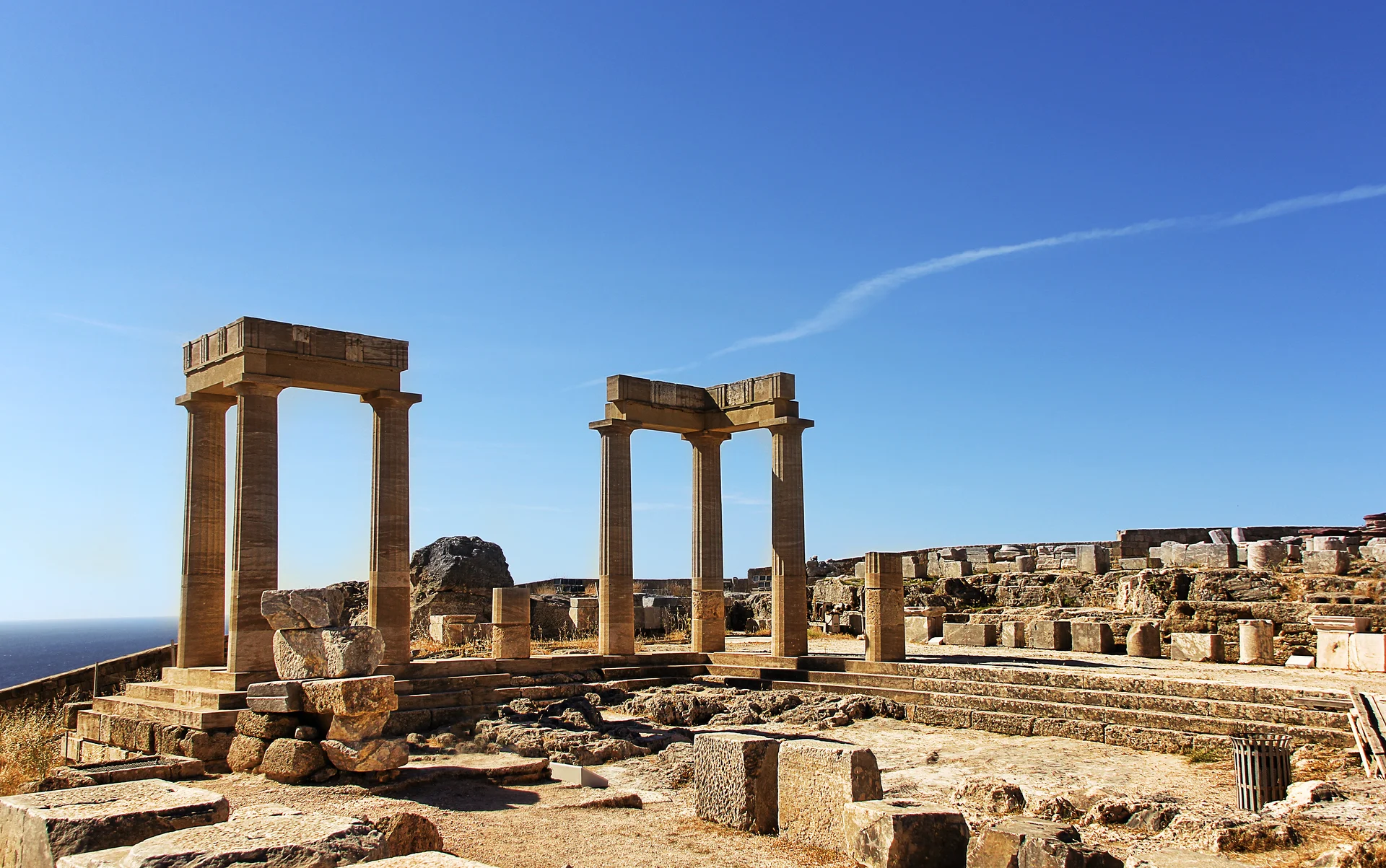
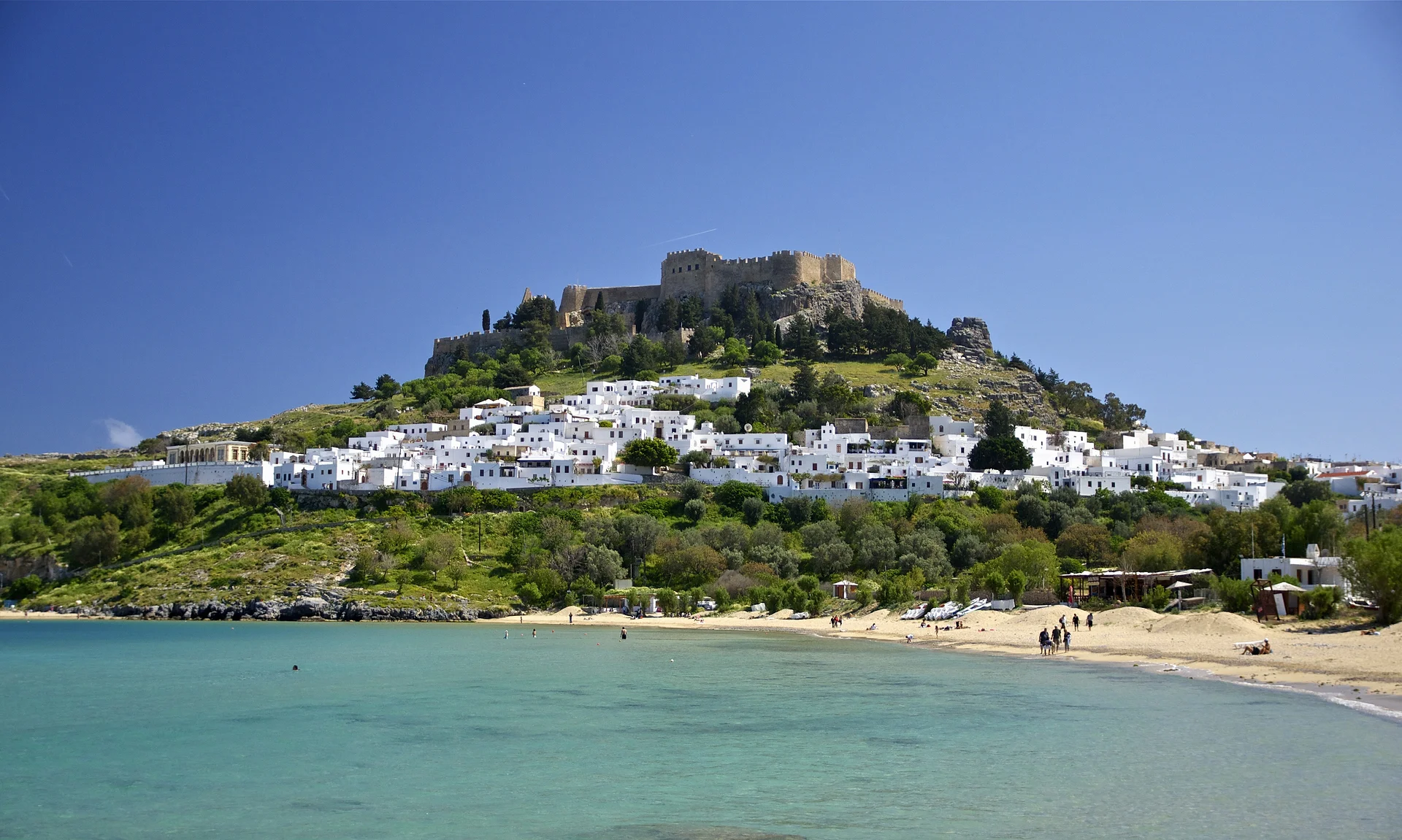
Perched 31 miles south of the capital, this whitewashed village spills down a hillside and catches every eye. The Acropolis of Lindos towers 380 feet above two turquoise bays, anchored by the Temple of Athena Lindia dating to the 4th century BCE. Walking up takes about twenty minutes via uneven stone steps. Reluctant walkers can hire a donkey, though animal welfare concerns make that a poor choice.
Pedestrian alleys overflow with boutiques and rooftop dining terraces. Down below, Saint Paul's Bay offers a tiny beach tucked between rocks, complete with a white chapel popular for weddings year-round. The water glows a surreal, transparent blue.
Friendly tip: Climb to the acropolis right before closing, around 7:00 PM in summer. You skip the baking heat and the tour groups, and sunset from the temple is unforgettable.
The wild south: where the winds collide
Cape Prasonisi at the absolute southern tip shifts shape with the tides. In summer, a sandbar connects the main island to a rocky islet, while winter channels reopen and churn up dangerous currents. Windsurfers and kitesurfers flock here from around the globe because the Aegean side churns up whitecaps while the Mediterranean side stays calmer.
Heading back up the quieter west coast, the fortresses of Monolithos and Kritinia offer dizzying drop-offs and panoramas. Monolithos delivers a killer sunset over the sea and the island of Halki. Nearby, the 15th-century Kritinia Castle built by the Knights is free to visit.
Nature escapes: butterflies and hidden springs
The Valley of the Butterflies, roughly 18 miles from town, draws millions of Jersey tiger moths between June and September. They swarm to reproduce near the sweetgum trees whose resin attracts them. Wooden walkways cross this shaded gorge where streams cascade. Keep noise to a minimum and do not disturb them, as their survival depends on it.
Less famous, the Seven Springs form a cool, pine-shaded oasis. A pitch-black, 590-foot water tunnel cut straight through the rock requires wading ankle-deep to reach a small artificial lake. It feels a bit claustrophobic, but it hits the spot after a hot beach day. Admission is free.
Where to eat and drink in Rhodes?
Rhodian cooking mixes Greek and Middle Eastern flavors. Try pitaroudia, fried chickpea fritters served with tzatziki. The local version of a slow-cooked stew is lakani, combining goat and chickpeas simmered for hours. Cumin shows up here far more often than on the Greek mainland, seasoning dishes throughout the island.
In the old town, Marco Polo Café serves careful Mediterranean plates in a hidden courtyard. For fresh catches, head to the Stegna Kozas tavern right on Stegna beach near Archangelos. Up in Embonas, a wine village on the slopes of Mount Attavyros, tavernes grill up chops paired with local house wine. Tamam in the old town remains a reliable pick for comforting, reasonably priced homestyle cooking.
As for wine, the island has produced Athiri white wine since antiquity. To sample it, 10GR Hotel & Wine Bar stocks the widest local wine list in an upscale setting.
How to get to and around Rhodes?
Diagoras International Airport handles seasonal direct flights from major European hubs between April and October, running about three and a half hours from Western Europe. Off-season connections usually route through Athens on Aegean Airlines, which flies year-round.
From Athens, ferries out of Piraeus take 12 to 15 hours to reach the island. Crossings also connect Turkey from Marmaris, Fethiye, or Bodrum in one to two hours. The photogenic island of Symi sits just a one-hour boat ride away.
On the ground, a car is essential for exploring. Roads are decent and parking is free outside town centers. Two bus networks cover the island: KTEL for the east coast and RODA for the west, though wilder southern stretches have sparse service. Taxis post flat rates at stands, running roughly $34* from the capital to Lindos.
When to go?
The island averages over 300 days of sunshine a year. May to June and September to October strike the ideal balance with pleasant weather, warm sea temperatures, and smaller crowds. July and August bring heavy crowds and peak prices. The Valley of the Butterflies only makes sense in summer, peaking between June and September.
Winter flips the script: tourists vanish, the old town reclaims its quiet, and prices drop hard. It is prime time for history lovers to hit the archaeological sites without traffic or heat. The sea is too chilly for swimming, but hikes through the green interior show off lush growth.
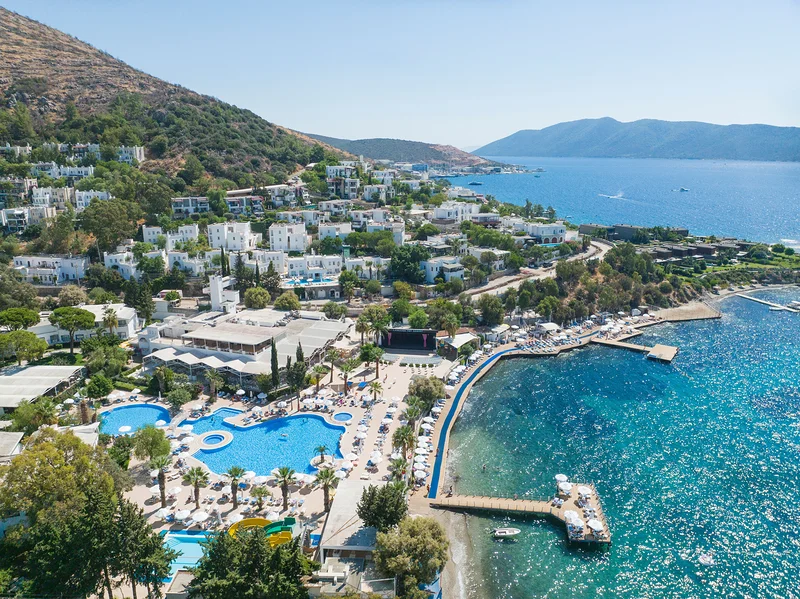
I really liked my trip to Rhodes. There are some very beautiful beaches as well as interesting historical sites. It is true that the modern developments from recent years are not necessarily very pretty, but there are still some authentic corners left to discover.