
Where to stay in Frankfurt am Main: the 5 neighborhoods to know in 2026
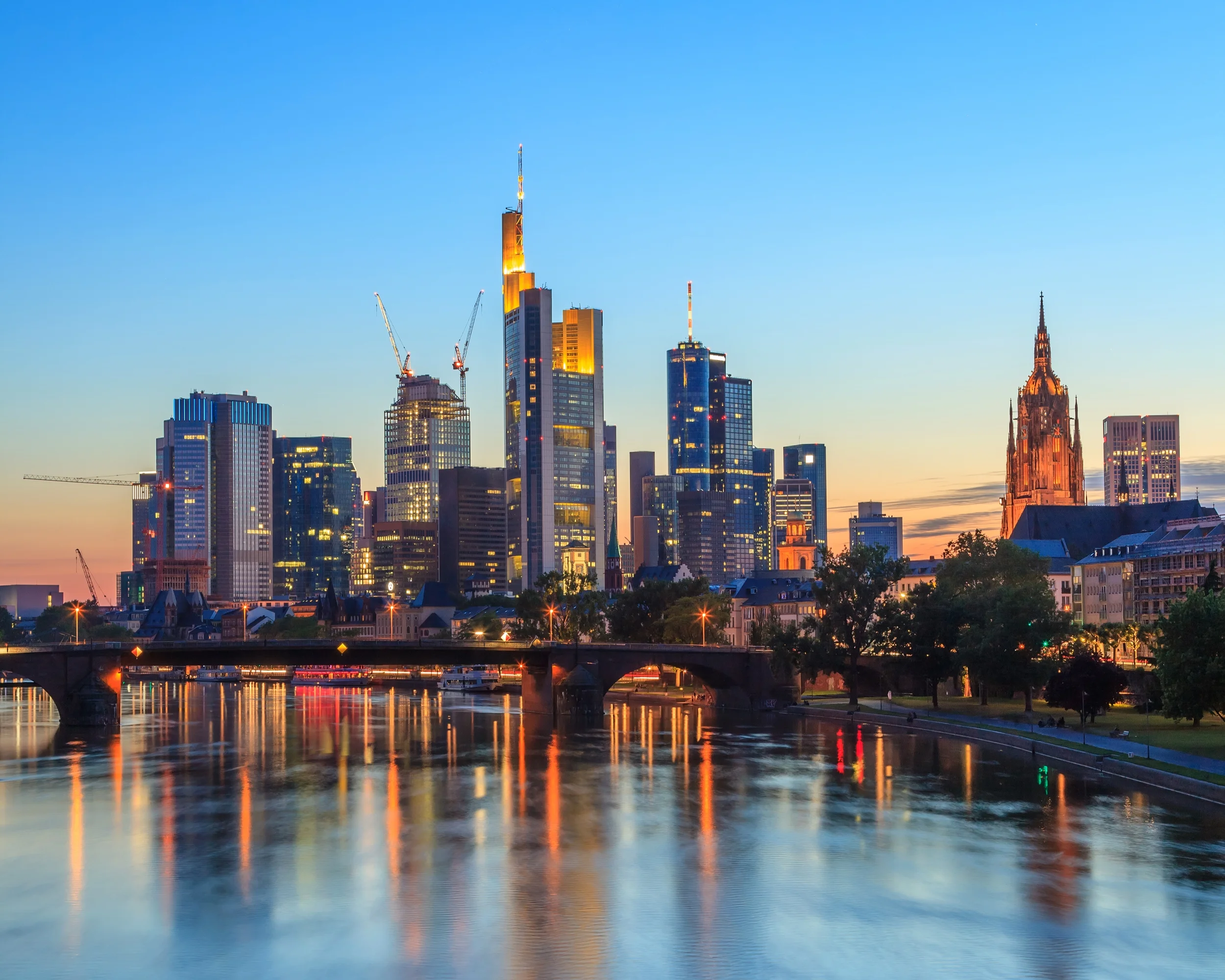
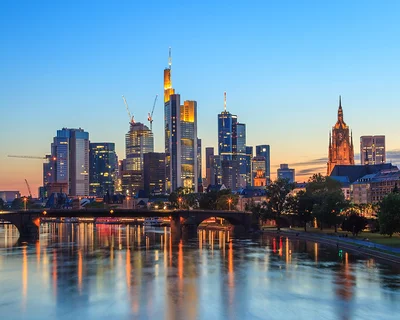
It is the only German city with a skyline, and its residents make jokes about it: Frankfurt am Main and its glass towers hold six hundred and fifty thousand residents, the size of a county town. The result is a short, dense city where you go from the skyscrapers of the central bank to the half-timbered houses on the town hall square in an eight-minute walk, and where the museum bank is reached by a single bridge.
Rates come down to four markers, the last of which counts most: $46* at entry level, $113* for a decent three-star, $147* for a four-star, and double that during the big trade fairs. In Frankfurt, the week you pick therefore weighs more than the neighbourhood you pick. Here are the five, from the handsomest to the cheapest.
Compare hotel prices in Frankfurt am Main
In a hurry? Find the best accommodation deals in 3 clicks.
Compare live deals from Booking, Expedia, Agoda and other partners.
At a glance: our picks by traveller type
Pick the profile that suits you to head straight to the recommended neighborhood.
The neighborhood map in Frankfurt am Main
Get your bearings on the neighborhoods and must-see sights before choosing where to drop your bags. Click a name to jump to its description.
The Altstadt and the Römerberg The Römerberg square and its half-timbered houses, the Römer, town hall since 1405, the imperial cathedral and its museum, St Paul's church where the first German parliament sat, the Schirn art gallery, the museum of modern art, the history museum, Goethe's birthplace and its museum, the archaeological museum, the Russian church of St Nicholas, Konstablerwache square
to see everything on foot, for a first visit, for the museums
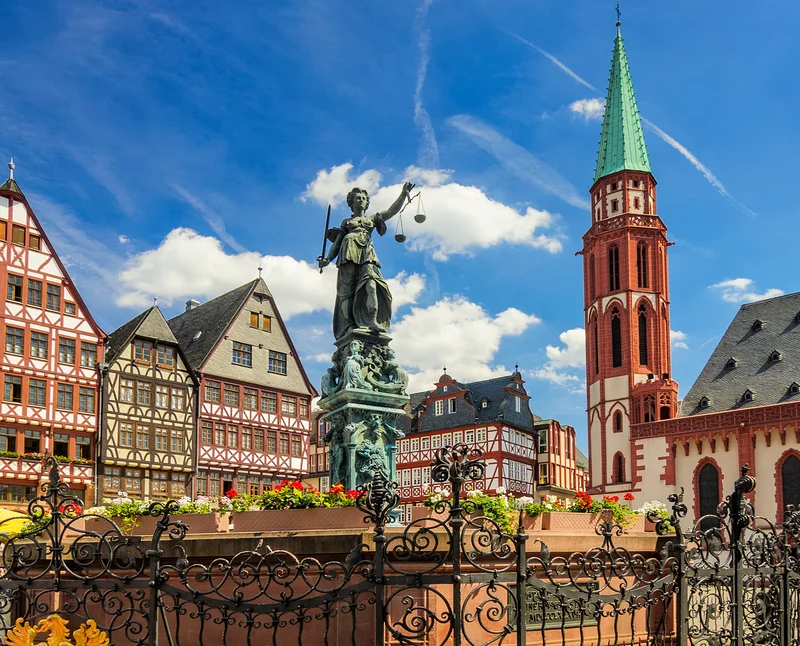
The historic core fits into four hundred metres, and you need to know this before you arrive: the half-timbered houses on the Römerberg are reconstructions, the city having been flattened in 1944, and the newest row opened in 2018. That takes nothing away from the square, still the most photographed in Germany, nor from the Römer, town hall since 1405. Around them stand the imperial cathedral where emperors were crowned, St Paul's church where the first German parliament sat, and Goethe's birthplace, also rebuilt. The glass towers start two streets away.
What to see & do in the neighborhood
Where to stay in this neighborhood
Motel One Frankfurt-Römer Budget
8.5 from more than five thousand three hundred reviews, with 9.5 for location, the highest in this guide, 9.0 for staff, 8.9 for cleanliness, 8.8 for comfort, 8.7 for the wifi and 8.4 for facilities as for value. The rooms are small and the reviews say so; the tram runs behind and the square is three minutes away. Around $102*.
Pros
- The square, the cathedral and four museums within four hundred metres
- One bridge to cross for the museum bank
Cons
- Very busy by day, and deserted after eight in the evening
- Nothing genuinely old: it is all rebuilt
The Innenstadt, the Zeil and the banking district The Main Tower and its deck open to the public, the Commerzbank tower, the Eschenheimer tower, the last medieval gate still standing, the stock exchange and its two animal statues, the Hauptwache and the Zeil shopping street, the Old Opera and the Frankfurt Opera, St Catherine's church, the Jewish museum, the English-language theatre, and to the east the zoo, the Dialog Museum and the water park
for the view from above, for the shops, for the opera
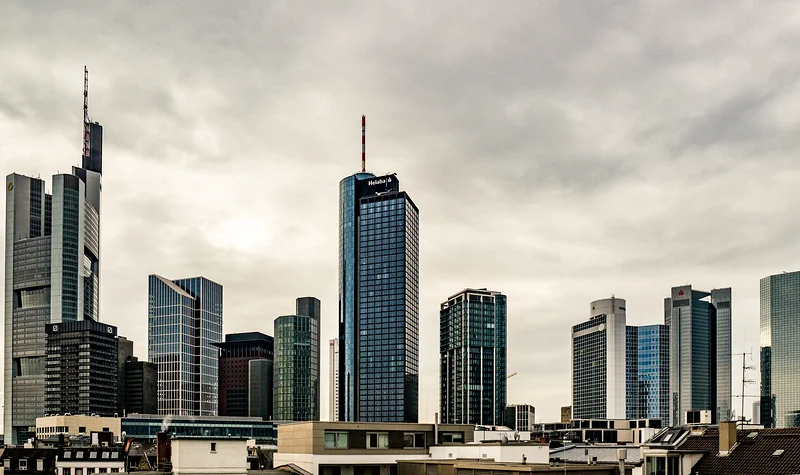
This is the district of towers, and one of them can be visited: the Main Tower is the only skyscraper in the city whose deck is open to the public, two hundred metres above the roofs, with binoculars provided. The Zeil, a pedestrian street, runs from the Hauptwache down to Konstablerwache between the shopfronts; at its western end, the Old Opera closes a square where people drink outside from the first warm days. Between two banks, the statues of Schiller and Goethe are a reminder that the city had writers before it had towers.
What to see & do in the neighborhood
Where to stay in this neighborhood
Steigenberger Icon Frankfurter Hof Luxury
8.4 from more than one thousand two hundred reviews, with 9.5 for location, 9.0 for comfort, 8.9 for staff, 8.8 for cleanliness, 8.6 for facilities and 7.8 for value, which is the honest mark of a grand hotel. An 1876 palace between the stock exchange and the station, spa, four restaurants. Budget $320*.
Pros
- The Main Tower deck and the Zeil shops on foot
- Metro and tram to every other neighbourhood
Cons
- An office district: little life on Sundays
- Rates climb here first when a trade fair comes
The Bahnhofsviertel, around the station Nothing to visit, and that is the point: the district is a grid of streets between the central station and the banking district, a ten-minute walk from the Römerberg
for the rates, for the trains, for a night before a flight
This is where there are the most rooms and the lowest rates, and it is also the only neighbourhood in this guide whose location travellers mark below nine: 8.4, when the other four addresses sit between 9.1 and 9.5. The reason fits in one sentence: the streets between the station and the towers mix restaurants from all over the world, offices, and a prostitution and drug district the city has never moved. Nothing there is dangerous by day, everything is plain to see, and you simply need to know what you will find on stepping out of the hotel.
Where to stay in this neighborhood
Premier Inn Frankfurt City Centre Budget
8.5 from more than two thousand two hundred reviews, with 9.2 for staff, 9.0 for cleanliness, 8.9 for comfort and 8.8 for value. And 8.4 for location, which says the district rather than the hotel: it stands on Elbestrasse, five minutes from the central station. Daily housekeeping can be declined at booking. Around $79*.
Pros
- The lowest rates, and the station five minutes away
- Ten minutes' walk from the Römerberg, fifteen from the Zeil
Cons
- The worst-rated location in this guide, 8.4 out of 10
- Nothing to visit in the district itself
The Westend, the trade fair and the gardens The exhibition grounds and the 1909 Festhalle, the red-brick Messeturm, the Deutsche Bank twin towers, the Senckenberg natural history museum and its dinosaurs, the historic campus of Goethe University, the Palmengarten and the botanical garden next door, the Skyline Plaza shopping centre and its roof garden, the television tower
for a trade fair, for families, for the gardens
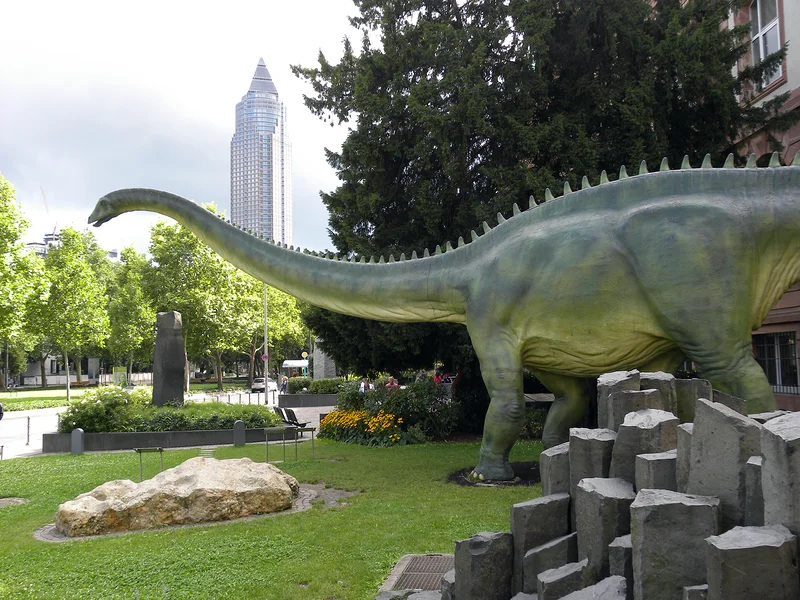
West of the towers, the Westend is the district of bourgeois villas and gardens, cut in two by the exhibition grounds. The Palmengarten and the adjoining botanical garden take up twenty-two hectares of glasshouses and ponds, and the Senckenberg museum adds one of the largest dinosaur collections in Europe: our reviews remember a child who came out of it marvelling, with activities cut to his age. On the business side, the red-brick Messeturm and the 1909 Festhalle frame the exhibition grounds, which fill the entire city six times a year.
What to see & do in the neighborhood
Where to stay in this neighborhood
Meliá Frankfurt City Mid-range
8.6 from more than five thousand two hundred reviews, with 9.2 for cleanliness as for comfort, 9.1 for location, 9.0 for facilities, 8.8 for staff and 8.3 for value. Opened in 2021 opposite the exhibition grounds, rooftop restaurant, and a car park whose rate the reviews find steep. Allow $158*.
Pros
- The exhibition grounds on foot, and the gardens to breathe
- The natural history museum and its dinosaurs for a family day
Cons
- Rates double during trade-fair weeks, here first of all
- Twenty minutes by metro to the Römerberg
Sachsenhausen and the Museumsufer The Städel museum and its seven hundred years of painting, the Liebieghaus and its sculpture, the museum of applied arts, the German film museum, the German architecture museum, the communication museum, the Henninger tower and its platform, the big stadium to the south
for the museums, for the cider taverns, for the quiet
On the far bank, a kilometre of riverside lines up six of this guide's museums, and that is what people call the Museumsufer: the Städel for seven hundred years of painting, the Liebieghaus for sculpture, then film, architecture, applied arts and communication, five minutes from one another. Behind them, old Sachsenhausen keeps its cobbled lanes and its cider taverns, served in a stoneware jug, which is the city's drink and is poured nowhere else in Germany quite this way.
Where to stay in this neighborhood
Hotel Hübler Mid-range
The best-rated staff in this whole series of guides: 9.7. The rest follows, 8.8 overall from more than four hundred reviews, with 9.4 for cleanliness, 9.3 for location, 9.0 for value, 8.9 for comfort and 8.6 for facilities. A family business in Sachsenhausen, soundproofed rooms, a ten-minute walk from the Städel. Around $113*.
Pros
- Six museums along one kilometre of riverside
- The cider taverns and quiet streets in the evening
Cons
- A bridge to cross for the centre and the towers
- Loud at weekends around the taverns
Our tips for booking the right place
- Check the trade-fair calendar before choosing a neighbourhood: This is the trade-off Frankfurt forces on you, and no other city in these guides forces it as hard. Outside a fair, a well-rated three-star goes for around $113* and a four-star for around $147*. During a big trade fair, the same rooms go at $210 and $240*, and not only near the exhibition grounds: those grounds are INSIDE the city, so the Altstadt, the Bahnhofsviertel and Sachsenhausen rise together. Shifting your week by seven days halves the bill, and it is the one piece of advice in this guide worth two free nights.
- The only skyscraper deck open to the public, and it is windy: Frankfurt's towers are offices, except one: the Main Tower lets anyone up onto its platform, two hundred metres up, and provides binoculars. From there the city reads at a glance, the rebuilt half-timbering below, the bend of the river, and the six museums on the far bank. A detail our reviews point out and guidebooks forget: at that height there is almost always wind, and you catch cold up there even in fine weather. Take a jacket, even in July.
- The cider is poured from a stoneware jug, and only here: Frankfurt cider is not Normandy cider: dry, sharp, barely sparkling, served from a blue stoneware jug in the taverns of old Sachsenhausen, and cut with sparkling water by anyone who finds it rough. It comes with a seven-herb sauce served over potatoes, which is the other local speciality. Two things to know: these taverns close early on weekdays, and most of them take cash only.
- The central bank is no longer where the maps show it: Many maps still place the European Central Bank in the tower in the centre, near the Opera: it left in November 2014. Its seat is now in the Ostend, three kilometres east, two twisted glass towers set on a former market hall, visible from a long way off from the bridges. They cannot be visited, but they make the best photograph in the city at sunset, from the Sachsenhausen bank.
- Booking without looking at the trade-fair calendar: the same room can double in price from one week to the next, in every neighbourhood at once.
- Looking for the Zeilgalerie on the shopping street: it was demolished in 2016, and another building has occupied the plot since 2018.
- Expecting a genuine old town on the Römerberg: the city was flattened in 1944, the half-timbering is reconstruction and the newest row dates from 2018.
- Choosing the Bahnhofsviertel without knowing what you will see there: it is the worst-rated neighbourhood in this guide for location, and the reason is not distance.
FAQ: where to stay in Frankfurt am Main
Which neighbourhood should you stay in in Frankfurt?
How much does a night in Frankfurt cost?
How many days do you need in Frankfurt?
Can Frankfurt be visited on foot?
When is the best time to come?
What can you see in Frankfurt in one day?
 Keep exploring
Things to do in Frankfurt am Main
Comments (0)
No comments yet. Be the first!