
Visiting La Grande-Motte: French Seaside Utopian Vision Made Real
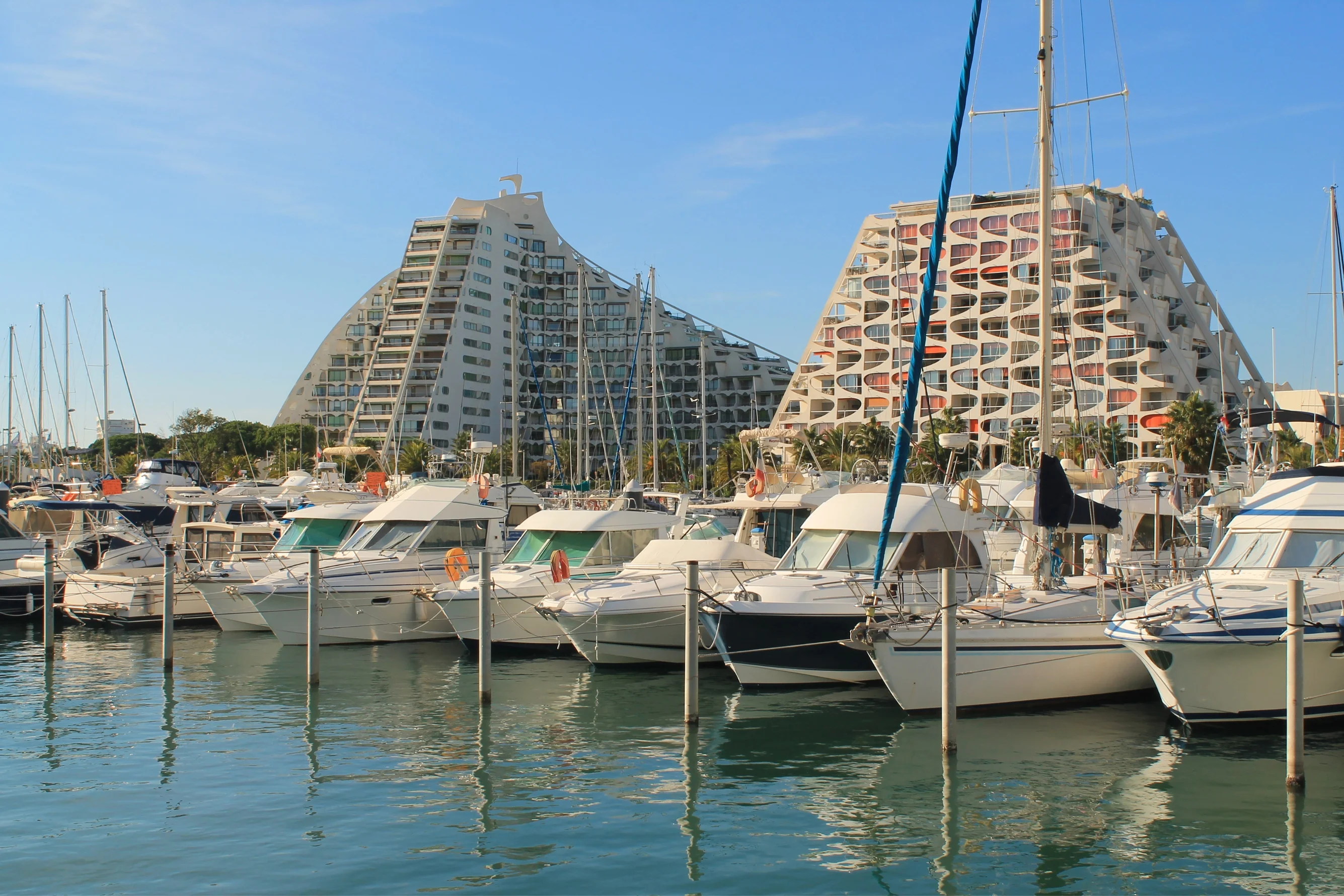
Picture modern pyramids rising straight out of the Mediterranean sand, 7 kilometers of Blue Flag beaches, and an architectural boldness that still sparks debate today. Welcome to a truly one-of-a-kind resort town born in the 1960s from an ambitious architectural dream, now officially recognized as 20th-century heritage.
Is La Grande-Motte Right for You?
If you are looking for classic Provençal charm or the refined exclusivity of the French Riviera, keep moving. This resort caters to fans of brutalist design, families seeking well-organized beach days, and watersports enthusiasts. Mid-range budgets work well here ($57-$90*/day compared to $169* on the Côte d'Azur), but travelers chasing old-world medieval stone villages will likely leave disappointed.
You will definitely want a car to explore nearby spots like Montpellier or the Camargue. Once you arrive, though, park it and leave it: 25 km of bike lanes and walkable distances make this town a textbook model of soft mobility.
Futuristic Architecture: The Legacy of Jean Balladur
The core of the experience lies in the revolutionary architecture dreamed up by Jean Balladur. The 15-story Grande Pyramide dominates downtown at 60 meters high, while the Conques de Venus in the Couchant neighborhood curve like concrete waves frozen in time. These shapes are entirely intentional, drawing direct inspiration from the pyramids of Teotihuacan and the inverted profile of the Pic Saint-Loup.
Six architectural discovery trails ($1.20* at the tourist office) unlock the secrets of this unique city. The architect engineered every detail: 70% green spaces, parking lots positioned 600 meters away from the beaches, and building orientations optimized for sea breezes.
Friendly tip: photograph the pyramids during the golden hour, when the concrete takes on a warm glow under the Mediterranean light. The contrast against the deep blue sea creates striking shots.
Seven Kilometers of Beaches for Every Vibe
Four distinct beaches cater to different preferences. The plage du Couchant draws families with calm waters and a nautical club offering sailing, windsurfing, and paddleboarding. On the flip side, the plage du Grand Travers offers wild, open kilometers flanked by protected dunes, serving as the local escape for Montpellier residents dodging the tourist crowds.
The centre-ville packs its pedestrian promenade with restaurants and ice cream shops, while Point Zéro marks the birthplace of the resort with playgrounds and a more natural feel. Every beach holds the Blue Flag label, guaranteeing water quality and proper amenities.
Friendly tip: skip the central beaches on July and August weekends. Aim for weekday mornings or after 6 PM when families head back in for dinner.
A Bustling Marina and Watersports Galore
The marina (1,547 berths) pulses to the rhythm of 2 million annual visitors. The Yacht Club teaches watersports starting at age 4, including catamarans, windsurfing, and paddleboards. Kitesurfers take over the dedicated zones whenever the east wind picks up, while jet skis, parasailing, and catamaran cruises depart daily toward the Camargue.
On land, the Golf International spreads 42 holes across 100 hectares of pine trees and water hazards. This Florida-style course designed by Robert Trent Jones Sr. stays open year-round. The 25 km of bike lanes connect the beaches, parks, and the étang du Ponant, where flamingos and herons fish in the wild.
Where to Eat and Drink in La Grande-Motte
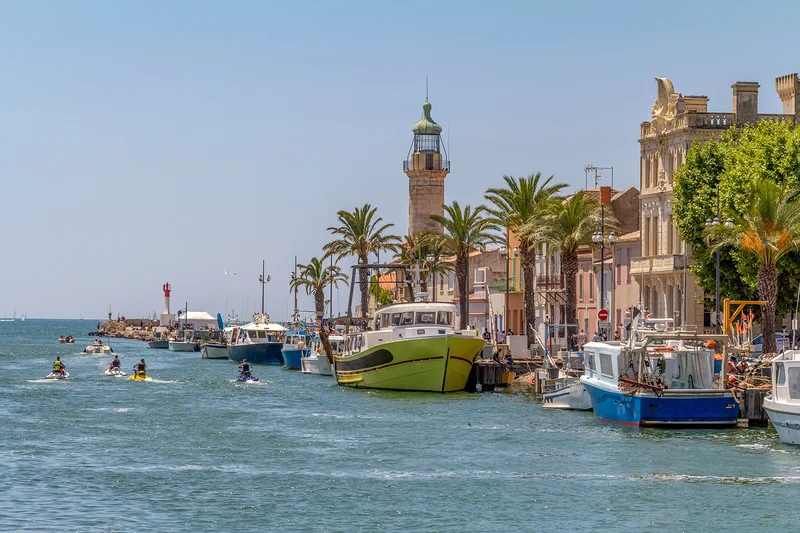
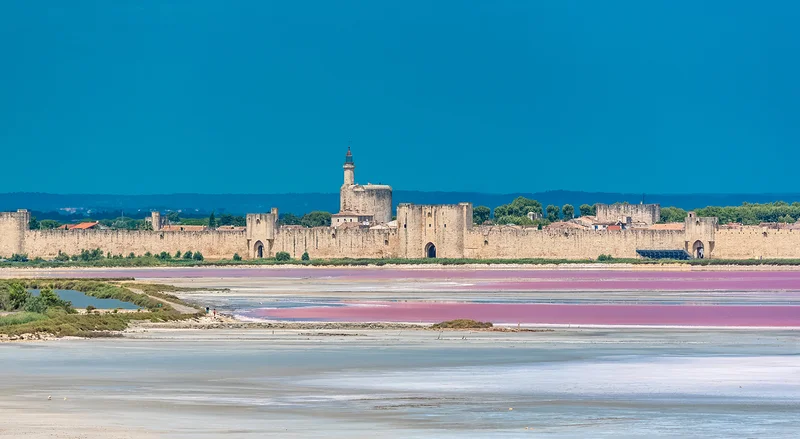
Local dining blends Camargue traditions with fresh Mediterranean seafood. Huîtres de Bouchet, farmed by a local restaurateur, offer a distinct regional specialty. Camargue bull stew shares menu space with sea bream straight from the daily catch at Le Grau-du-Roi, while three varieties of Camargue rice, including the famous red IGP grain, accompany the dishes. A pinch of fleur de sel d'Aigues-Mortes ties it all together.
Down at the harbor, Saveurs Marines serves the local oysters with panoramic views, while L'Essentiel focuses tightly on seasonal ingredients. The beachfront ranges from ultra-chic La Plage (5 stars) down to family-friendly beach shacks with kids' menus under $34*. Expect to spend between $17 and $23* for a casual brasserie lunch, and $57*+ for fish specialties. Reservations are essential down at the port and all weekend long.
Where to Stay in La Grande-Motte and Around
The 5-star La Plage tops the luxury market right on the waterfront, while Les Corallines adds thalassotherapy wellness packages into the mix. Families favor the Novotel near the golf course or the Mercure by the marina ($135-$400*/night). Vacation rentals via platforms like Airbnb offer everything from studios to family apartments ($50-$230*/night), often yielding the best overall value.
Campgrounds like Le Garden (400m from the beach) and La Petite Motte appeal to tighter budgets with mobile homes and campsites starting at $30*/night. Choose downtown or Couchant if you are traveling with kids for the lifeguarded beaches and easy parking, or pick Ponant for residential quiet around the golf course and lagoon.
How to Get Here and Get Around La Grande-Motte
The Montpellier Airport sits just 10 km away with flights from major European hubs, plus a direct 8-minute shuttle ($2.30*). By train, take the TGV to Montpellier Saint-Roch (3h14 from Paris), then hop on tram line 1 and bus 606 for a total trip of 45 minutes costing $1.80*. By car, take the A9 highway exit for La Grande-Motte and choose from 8,000 free parking spaces spread across the resort. There is no direct flight from North America: connect through Paris or Amsterdam to Montpellier, or land at Marseille, 150 km east, which offers more routes.
Once you arrive, the bicycle reigns supreme thanks to 25 km of dedicated lanes carrying the Accueil Vélo certification. Rentals are everywhere, including e-bikes. Walking distances remain manageable in this compact town, and local buses handle regional links back to Montpellier.
When to go
May, June, and September offer the best conditions with temperatures around 20 to 24°C, warm water, and moderate crowds. July and August guarantee sunshine and 27°C weather alongside peak crowds during the French school breaks. Avoid mid-July through August if you want peace and quiet, opting instead for April, May, or October to enjoy the 300 annual days of sunshine, though some resort services may be limited.
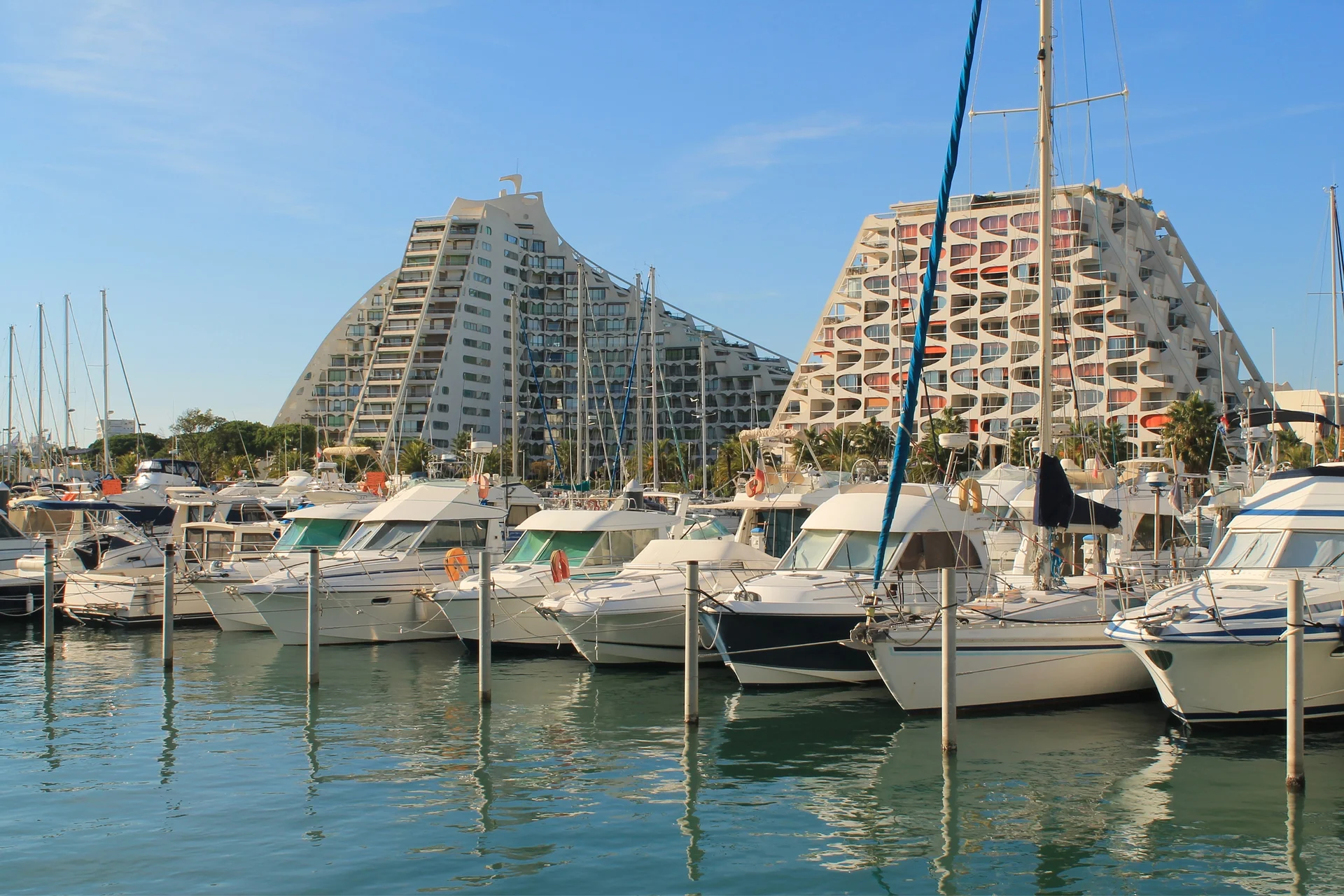
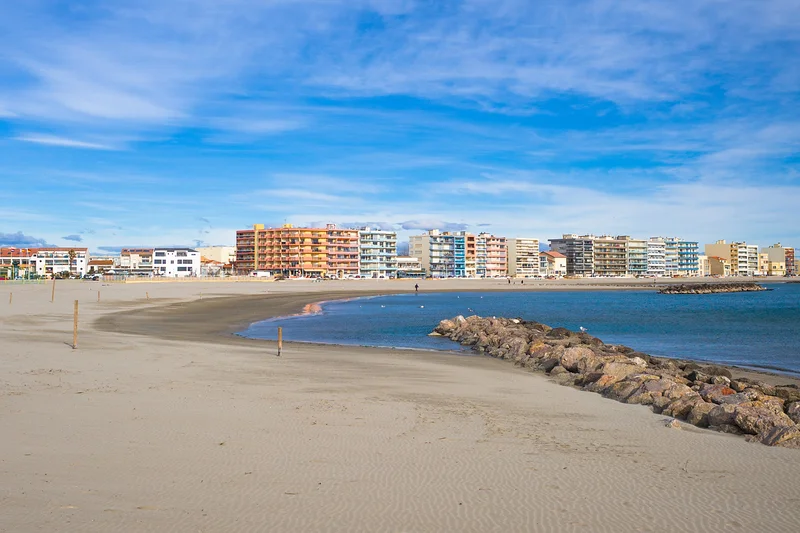
The first thing that jumps out at you when you arrive is definitely the city's unique architecture, with its pyramid-shaped buildings. But in my opinion, these structures have aged a bit. Designed in the 60s and 70s, they reflect a specific era and a vision that was very futuristic at the time, but today, some of them feel a bit dated.
On the other hand, the beaches are superb, vast, and well-maintained, and the vibe is very pleasant. Between restaurants, ice cream shops, markets, and water sports, there is plenty to do to have a great time.
I also really appreciated the many green spaces and the bike paths.
The setting, the sea, and the laid-back atmosphere make it a nice, refreshing seaside destination.