
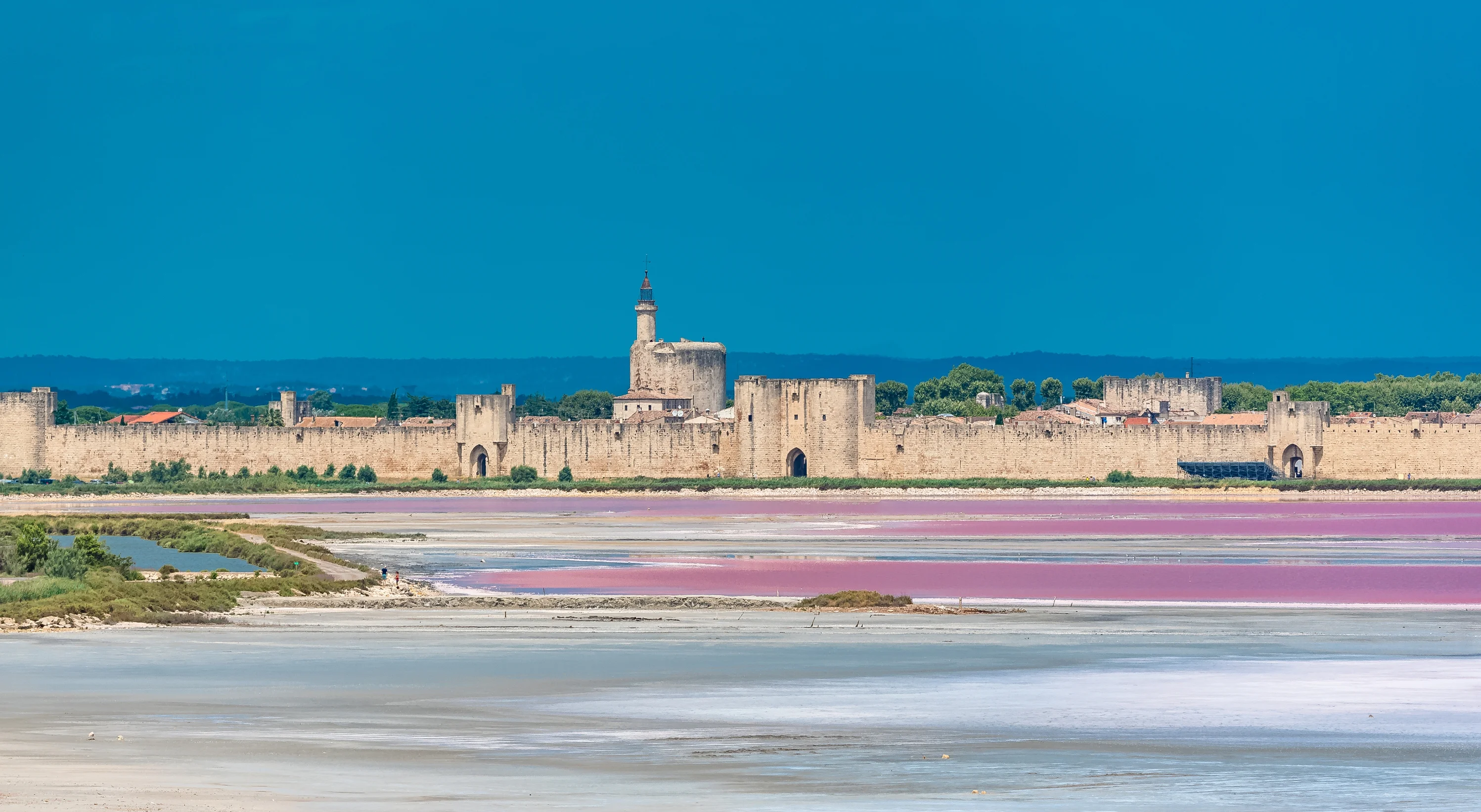
Exploring Aigues-Mortes, a Walled Fortress Between History and Salt Marshes
Right on the edge of the Camargue, Aigues-Mortes is a medieval walled town in the Gard department known for its intact stone ramparts, narrow cobblestone streets, and deeply rooted local traditions. Founded by Louis IX, this former port city feels like stepping straight back into the Middle Ages, backed by unique wetlands and centuries of heritage.
Ramparts Steeped in History
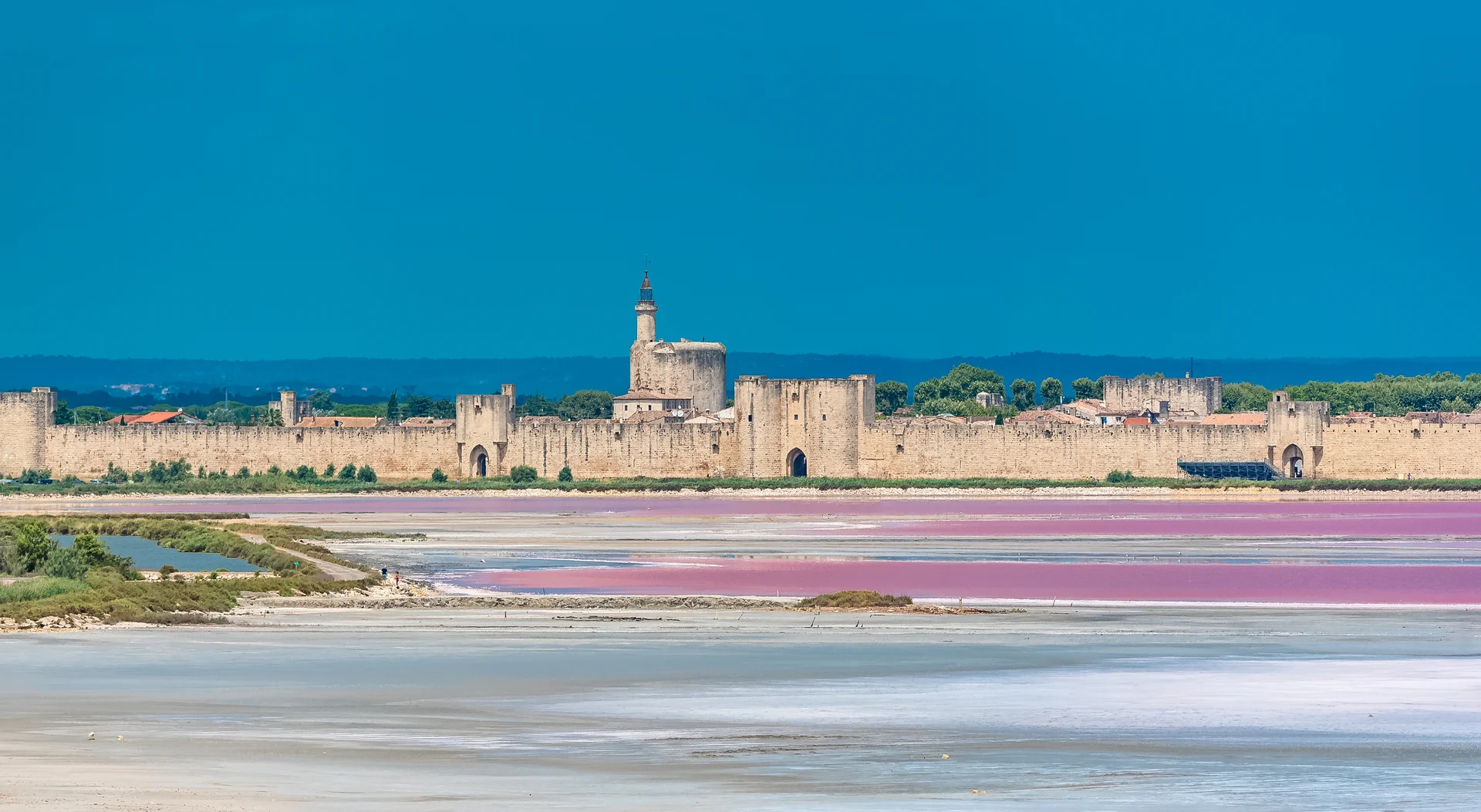
The Aigues-Mortes ramparts stretch for 1,640 metres around the entire perimeter of the town, standing as a heavy reminder of its past military importance. Walking the wall path brings you to the Tour de Constance, a stark tower that served as a prison where Marie Durand was locked away for 38 years. From the top walk, the views stretch out over the blinding white salt flats and the surrounding Camargue plains.
Striking Religious Architecture
Right inside the walls, the église Notre-Dame-des-Sablons catches the eye with its stripped-down Gothic lines and modern stained glass windows. Nearby, the chapels of the Pénitents Gris and Pénitents Blancs point to the intense religious devotion that shaped the town over centuries, offering quiet, artistic spots to step out of the sun.
The Salt Flats and Their Surreal Landscapes
Just outside the stone gates, the Salins d’Aigues-Mortes stretch out as far as the eye can see. These salt evaporation ponds turn shades of bright pink in the summer sun and have been worked since Roman times. A guided tour on a small open-air train explains how the salt workers operate while giving you a close look at the local wildlife, particularly flocks of pink flamingos.
A Lively Central Square
The place Saint-Louis forms the social hub of the town, ringed by shaded café terraces where locals gather. A statue of Louis IX stands right in the middle, paying tribute to the king who established the port. It is the natural spot to sit down for a local pastry or simply watch the afternoon unfold.
Authentic Camargue Flavors
The food in Aigues-Mortes draws heavily on the surrounding wetlands and marshes. Gardiane de taureau, a rich beef stew made with local bull meat and red wine, is the signature dish. For dessert, fougasse d’Aigues-Mortes offers a soft, brioche-like texture scented with orange blossom. A chilled glass of IGP Sable de Camargue rosé pairs naturally with both.
Where to eat?
- La Table de Paco (intra-muros): Traditional cooking highlighting local ingredients in a cozy dining room.
- Le Dit Vin (intra-muros): Inventive bistro fare with a chalkboard menu that shifts with the seasons.
- Le Bistrot Paiou (intra-muros): A casual neighborhood spot serving hearty dishes rooted in Camargue traditions.
When to go?
Spring and autumn bring comfortable temperatures and smaller crowds. In August, the fête de la Saint-Louis takes over the streets with historic reenactments, jousting tournaments, and costumed parades. Summer runs hotter, but it keeps all the outdoor sights and boat tours running at full speed.
How to get there?
Aigues-Mortes is reachable by regional train from Nîmes or Montpellier with regular daily connections. If you are driving, the A9 highway puts the town within easy reach. Montpellier Airport sits about 30 km away, handling domestic and international flights.

I stopped by Aigues-Mortes during a trip to the Camargue, and I really enjoyed the visit. The ramparts are impressive, the lively narrow streets are full of charm, and above all, the town is ideally located in the heart of the Camargue, between salt marshes and wild nature. It is a great discovery that really feels like a change of scenery. If you are in the region, I highly recommend making a detour.