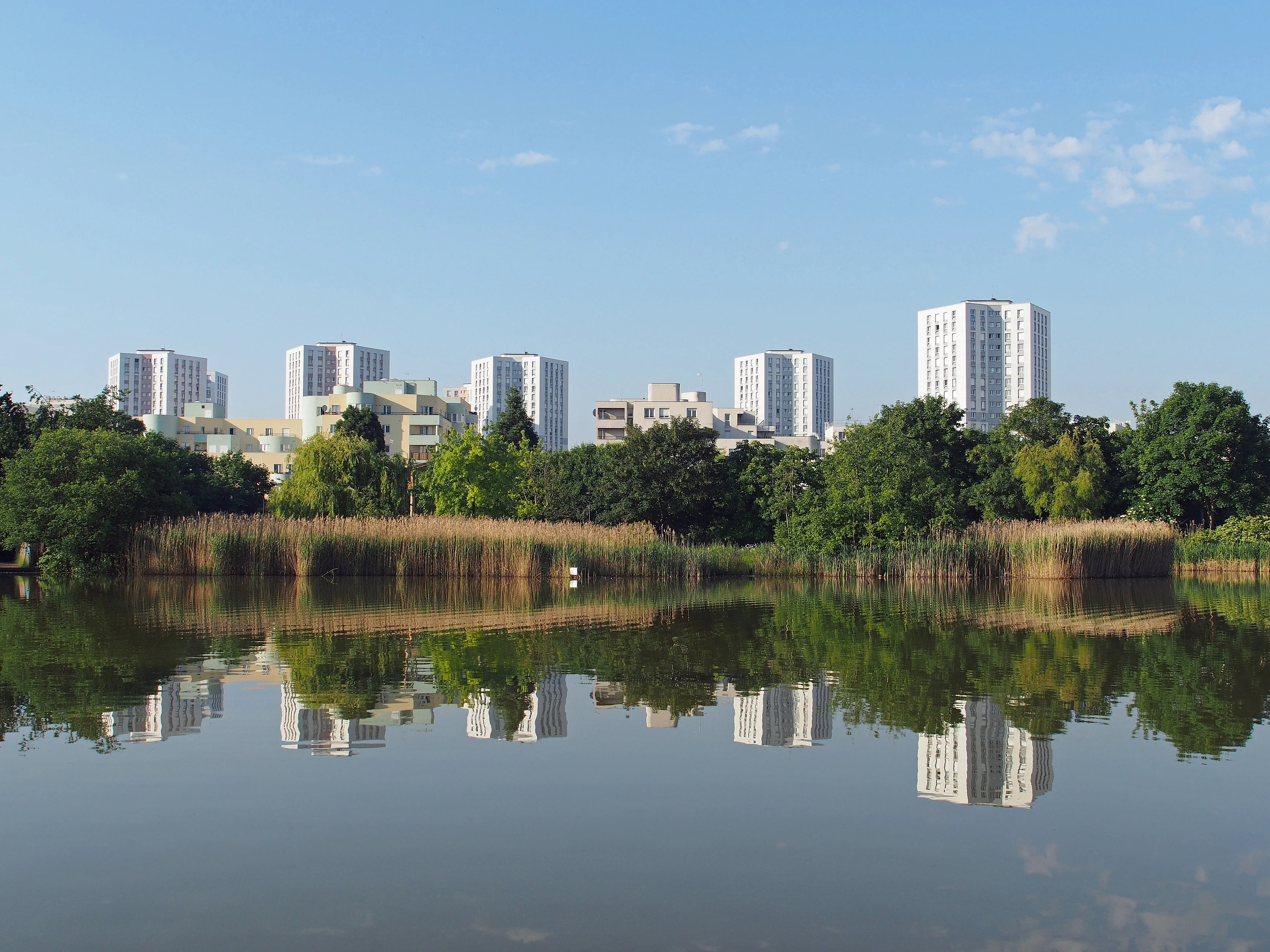
Nanterre, the Parisian suburb you think you know without ever visiting
Mention Nanterre to someone from Paris, and they will instantly picture La Défense, glass skyscrapers, crowds exiting the RER A train station, or public housing projects featured in local news reports.
Yet the city existed long before the high-rises. Local tradition holds that Saint Genevieve was born here in the 5th century on the bluffs overlooking the Seine River. Sandwiched between Europe's densest business district and a historic town center that feels almost like a country village, Nanterre pulls off an urban balancing act unlike anywhere else in the Paris region.
Is this destination right for you?
Nanterre appeals to travelers who want to understand the complexities of Greater Paris. You get a stark contrast between the skyline of La Défense and the winding lanes of old Nanterre, along with CAC 40 corporate headquarters sitting just blocks away from community allotment gardens. It also makes practical sense as a base if you want to tour Paris while keeping accommodation costs down.
On the flip side, if you are planning a romantic getaway or want a picturesque downtown to stroll through all day, look elsewhere. Nanterre remains fundamentally a working city driven by weekday professional commuters.
Great for:
- Business travelers working around La Défense
- Travelers looking to stay near Paris on a budget
- Fans of urban planning and contemporary architecture
- Anyone who enjoys green spaces along the riverbanks
Not ideal for:
- History buffs seeking dense medieval architecture
- Romantic or slow-paced sightseeing trips
- Visitors looking for a lively evening tourist scene
A significantly softer budget than central Paris
| Expense | Range |
|---|---|
| Night in a basic hotel | $70 to $104* |
| Night in a comfortable hotel (3-4 star chain near La Défense) | $127 to $210* |
| Quick bite or takeout | $9.30 to $16* |
| Sit-down restaurant meal | $21 to $35* |
| Daily transit and small expenses | $12 to $18* |
Estimated rates subject to change
Practical realities
The city connects to Paris in record time via the RER A and metro line 1, both of which have terminals or stops at La Défense, just five minutes from Nanterre-Préfecture. The climate mirrors the rest of the Île-de-France region, bringing mild summers and cool, rainy winters with no real surprises for European travelers.
As for safety, Nanterre poses no unusual risks for visitors who stick to the main areas like the town center, La Défense, and the university. Much like any outer Paris suburb, you simply want to avoid wandering alone late at night in isolated residential housing tracts.
La Défense, the skyline that sleeps on weekends
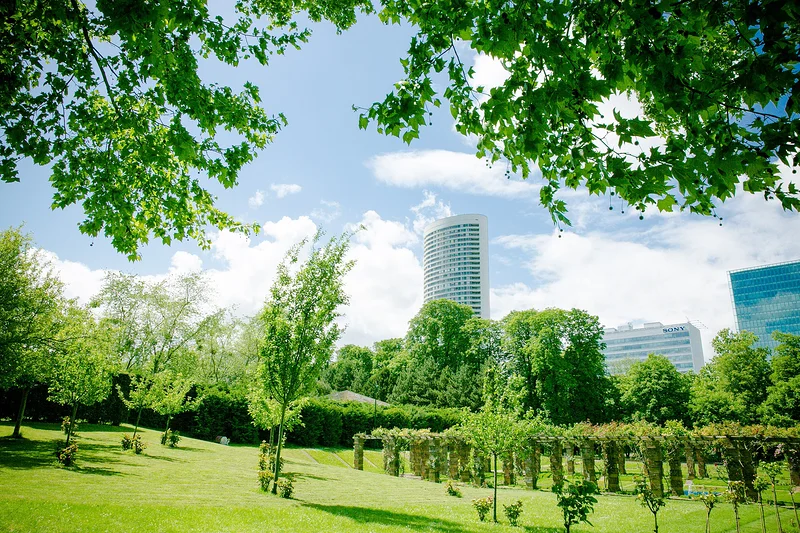
The business district sprawls across Nanterre territory, even though most people associate it with Paris proper. Completed in 1989, the Grande Arche still anchors the esplanade, which is open to pedestrians free of charge. An outdoor sculpture park featuring works by Miró, Calder, and César catches visitors off guard when they stumble upon modern art tucked between corporate towers.
Weekends completely transform the atmosphere. Office workers clear out, the streets empty, and the district takes on an eerie, movie-set vibe. It makes for fantastic architectural photography if you appreciate vast, quiet public spaces.
Old Nanterre, the other side of the city
The historic core maintains a genuine neighborhood feel centered around the cathedral of Sainte-Geneviève-et-Saint-Maurice. Built mostly between 1924 and 1937, the current structure houses an impressive series of 1930s frescoes.
The market of the Centre, held on Place du Maréchal-Foch on Tuesday, Thursday, and Sunday mornings, provides a great window into daily life and local neighborhood hustle.
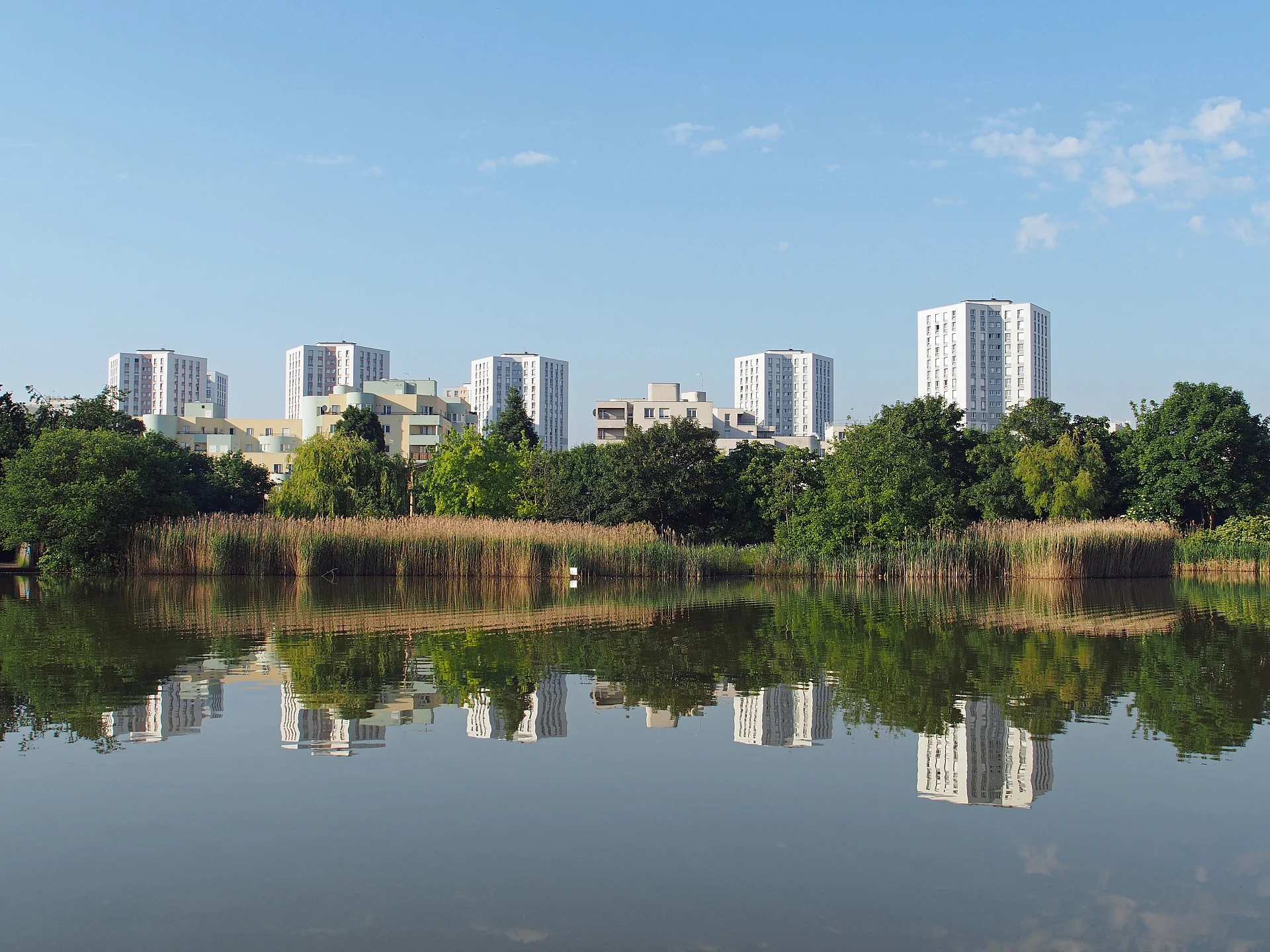
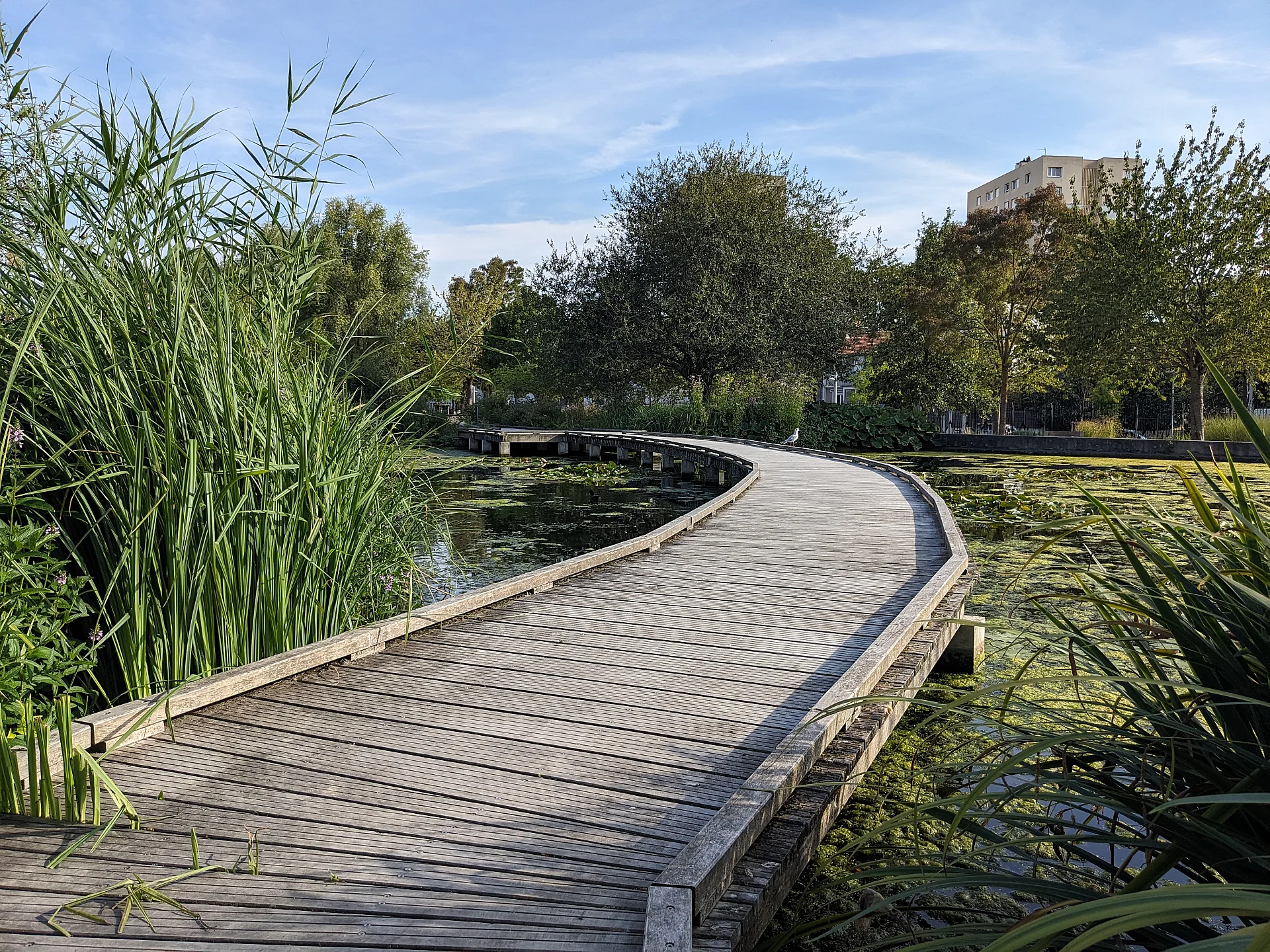
Built over former industrial wasteland, the parc André Malraux offers expansive lawns and ponds that draw local families in droves on weekends.
Where to eat and drink in Nanterre?
Dining options around La Défense cater primarily to the corporate crowd, meaning fast-casual spots and brasseries at lunch that tend to quiet down significantly by dinner. The historic downtown offers a wider and more budget-friendly variety, shaped by a diverse immigrant population. North African, Portuguese, and West African eateries sit side by side in the neighborhood restaurants surrounding the market.
Where to stay in and around Nanterre?
The La Défense sector holds the bulk of the hotel inventory, featuring international business chains that frequently slash their rates over the weekend. Downtown Nanterre offers more modest, budget-oriented choices if you value savings over stepping right outside your hotel door into the high-rises.
How to get to Nanterre?
From Paris, the RER A takes roughly 15 to 20 minutes from Châtelet-Les Halles straight to Nanterre-Préfecture. International travelers can reach the city from Paris-Charles de Gaulle airport in just under an hour using public transit, and Orly airport is roughly an hour away depending on your train and metro connections.
How to get around Nanterre?
Between La Défense, several RER stations (A and E), and metro line 1, commuting to Paris takes minimal effort. A daily or weekly Navigo transit pass is the most practical choice for getting around without stressing over individual ticket fares.
Driving makes little sense given how congested traffic and parking around La Défense can get during the workweek. The historic center is easy to explore on foot, but crossing over to the business district requires public transit.
When to go?
Any season works for a visit, but weekends are the prime time to experience La Défense from a completely different angle while it is empty and silent. Weekdays bring more energy and crowds, along with heavy commuter traffic during rush hours.