
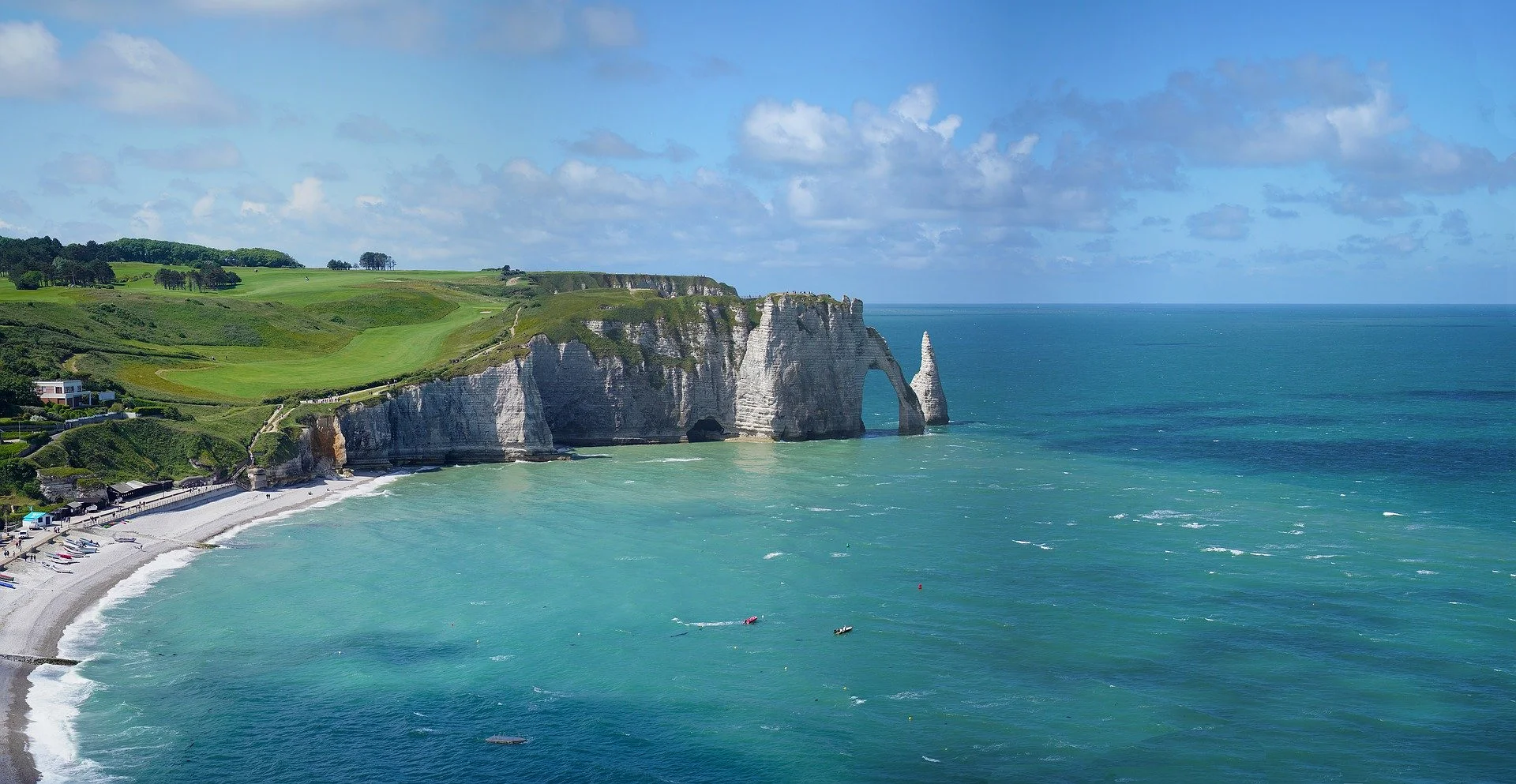
Etretat, where the cliffs defy imagination
Guy de Maupassant got it wrong. Generations of visitors repeat that the writer compared the Aval Cliff to an elephant dipping its trunk into the water. In reality, he described the Porte d'Amont in his first novel, taking care to specify that it was "the small gate." This persistent mix-up sums up Etretat nicely, a place where legends blend with reality, where white chalk carved by the sea for 100 million years creates shapes so improbable they look made up.
A destination for travelers who prefer cliffs over lounge chairs
This village of 1,300 residents draws 1.5 million visitors every year. The reality is straightforward: in summer, up to 10,000 people crowd in daily. If you are looking for a fine sand beach to sunbathe peacefully, keep walking. The pebble beach does not really invite lounging, and the water stays cold even in August.
Etretat suits hikers, geology buffs, Impressionism fans, and anyone who wants to see with their own eyes what Monet painted more than 80 times. Families with kids can spend a great day here, provided everyone is ready for a climb. Visitors with limited mobility will run into serious challenges on this hilly terrain.
A reasonable budget for Normandy
Plan on $90 to $169* a day for a couple, factoring in lodging from $79 to $230* a night, meals from $17 to $45*, and activities. The gardens cost $14 to $16* per adult, and the Arsène Lupin Museum runs about $9*. Parking remains the main pain point: $8.50* minimum for 5 hours in the downtown lots.
The cliffs: three arches on the English Channel
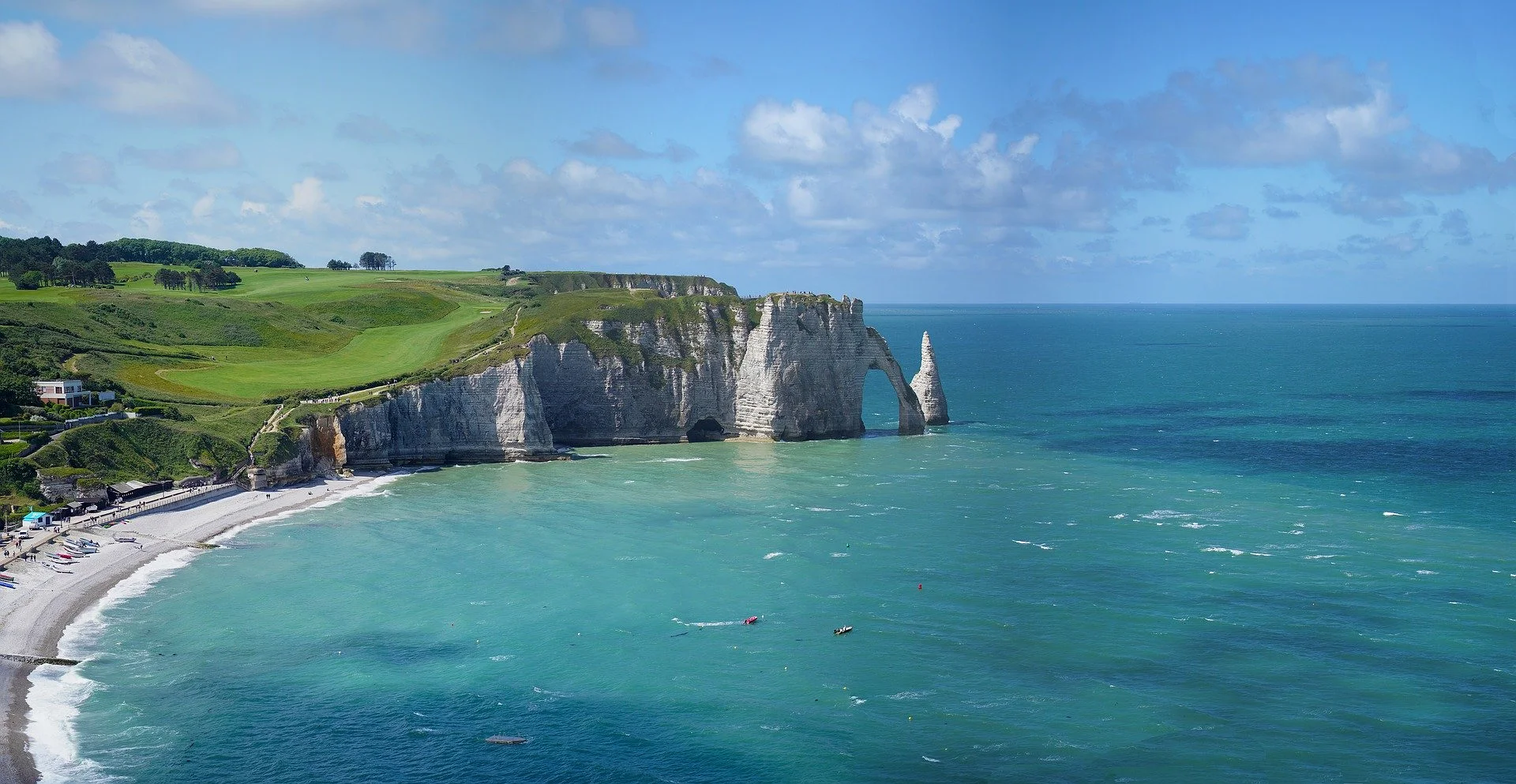
The Porte d'Aval and its 55-meter Aiguille form the most photographed panorama here. According to Maurice Leblanc, this hollow needle hides the treasure of the kings of France. His gentleman thief Arsène Lupin supposedly set up his hideout there. The Netflix series with Omar Sy revived this legend, drawing a whole new generation of visitors.
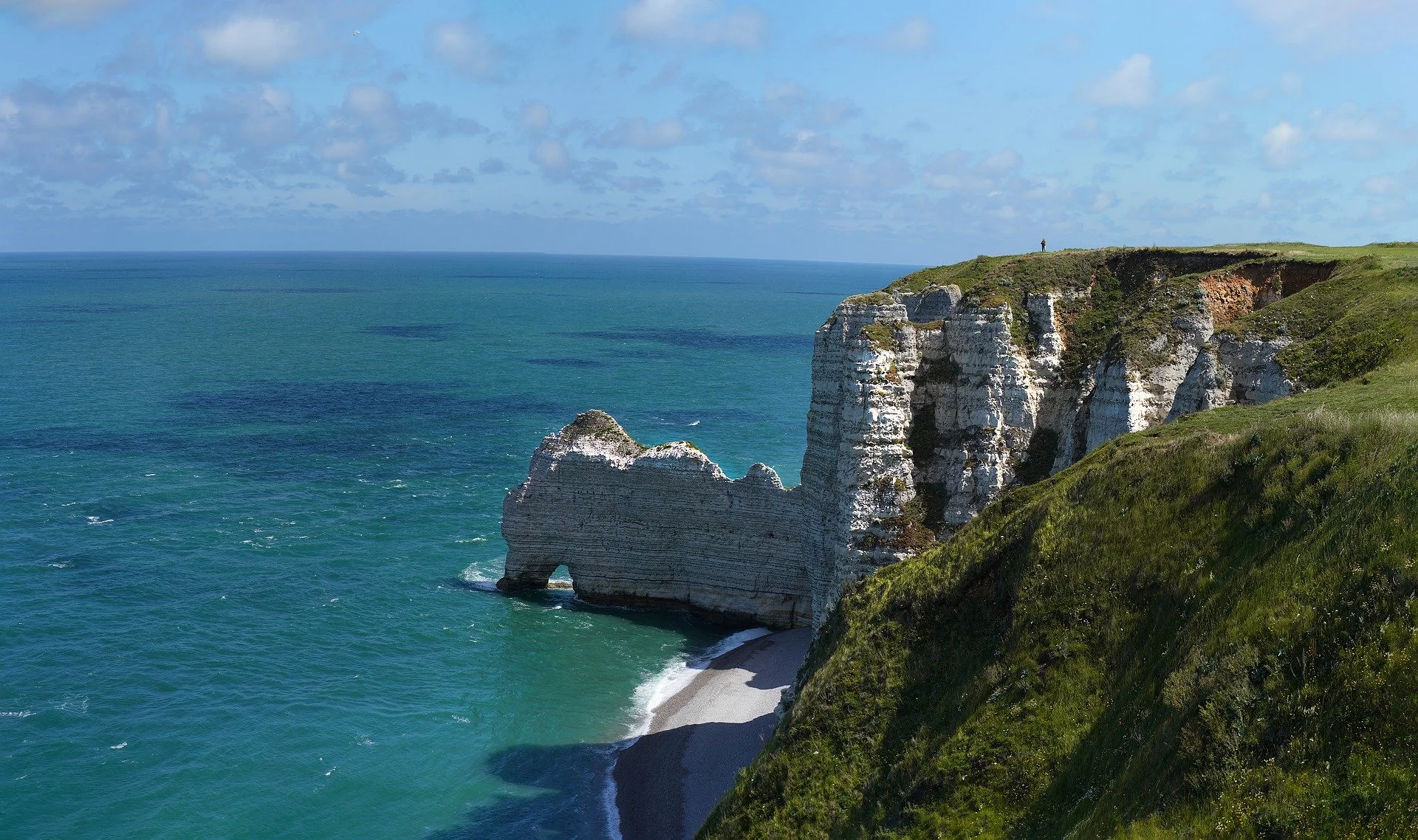
The Manneporte, the largest of the three arches, has to be earned. You have to cross the Jambourg Beach while following the chemin des Douaniers trail to reach it. Maupassant claimed a ship with all sails set could pass underneath it. Its summit is where you get the best photos of the Porte d'Aval.
Friendly tip: the Trou à l'Homme, a tunnel carved into the Aval Cliff that connects two beaches, is only accessible a few hours a day at low tide. Check the tide schedules before you go.
At the top: gardens and a chapel
The Etretat Gardens have occupied the top of the Amont Cliff since 2017. This is not a traditional flower garden. Russian landscape architect Alexandre Grivko created seven spaces where hedges trimmed into undulating shapes converse with contemporary art sculptures. The view of the Aiguille from the Jardin Impressions alone justifies the $14 to $16* admission fee. Some visitors find the price steep for "just clipped boxwood," but that misses the whole concept.
The Notre-Dame de la Garde Chapel, rebuilt after the bombing raids of 1944, overlooks the Amont Cliff. Sailors used to pray here before heading out to sea. Nearby, a monument honors the aviators Nungesser and Coli, who flew right over this spot in 1927 before disappearing during their attempt to cross the Atlantic.
In the village: Lupin and historic stone
The Clos Arsène Lupin occupies the former home of Maurice Leblanc. This interactive tour turns every room into a puzzle to solve. Fans of the Netflix series will enjoy it, while others might find the audio guide a bit long.
The Manoir de la Salamandre, a 14th-century timber-framed building, stands right in the center of the village. It was taken apart in Lisieux and then rebuilt here stone by stone. The covered market hall, built in 1926, hosts a market every Thursday morning where local producers sell cider, Camembert, and fresh fish.
Friendly tip: taking pebbles from the beach is prohibited by municipal order: they form the barrier that shields the town from flooding and the foot of the cliffs from erosion.
Where to eat and drink in Etretat?
Matelote, a traditional coastal fish stew, warms you up after a hike on the cliffs. The waterfront restaurants charge tourist prices. To eat better, walk a few blocks away from the beach.
La Marie Antoinette serves seafood with a view of the English Channel. Le Galion serves hearty Norman dishes in a quieter setting. For a quick bite, the creperies in the center offer decent buckwheat galettes at modest prices. Farm cider and Calvados accompany every meal around here.
How to get to and around Etretat?
Etretat no longer has a train station. The old rail line has been converted into a rail-bike track. From Paris, take the train to Le Havre or Bréauté-Beuzeville, then hop on bus 24 or X50 for 35 to 45 minutes. The total trip takes around 3 hours and costs $29 to $45*.
Driving remains the most practical choice. From Paris, figure on 2.5 hours via the A13 and A29 highways. Downtown parking lots cost between $5.70 and $12* depending on how long you stay. The Grand Val parking lot behind the bus station offers the best value. In summer, arrive before 10 AM to snag a spot near the beach.
Once you are there, everything is walkable. A little tourist train connects the center to the gardens for anyone looking to skip the climb.
When to go?
May, June, and September hit the sweet spot between mild weather and manageable crowds. Winter turns the village into a peaceful haven, though wind and rain can dampen the visit. To see the cliffs all to yourself, show up at sunrise: watching the early light hit the white chalk makes the early wake-up call worth it.
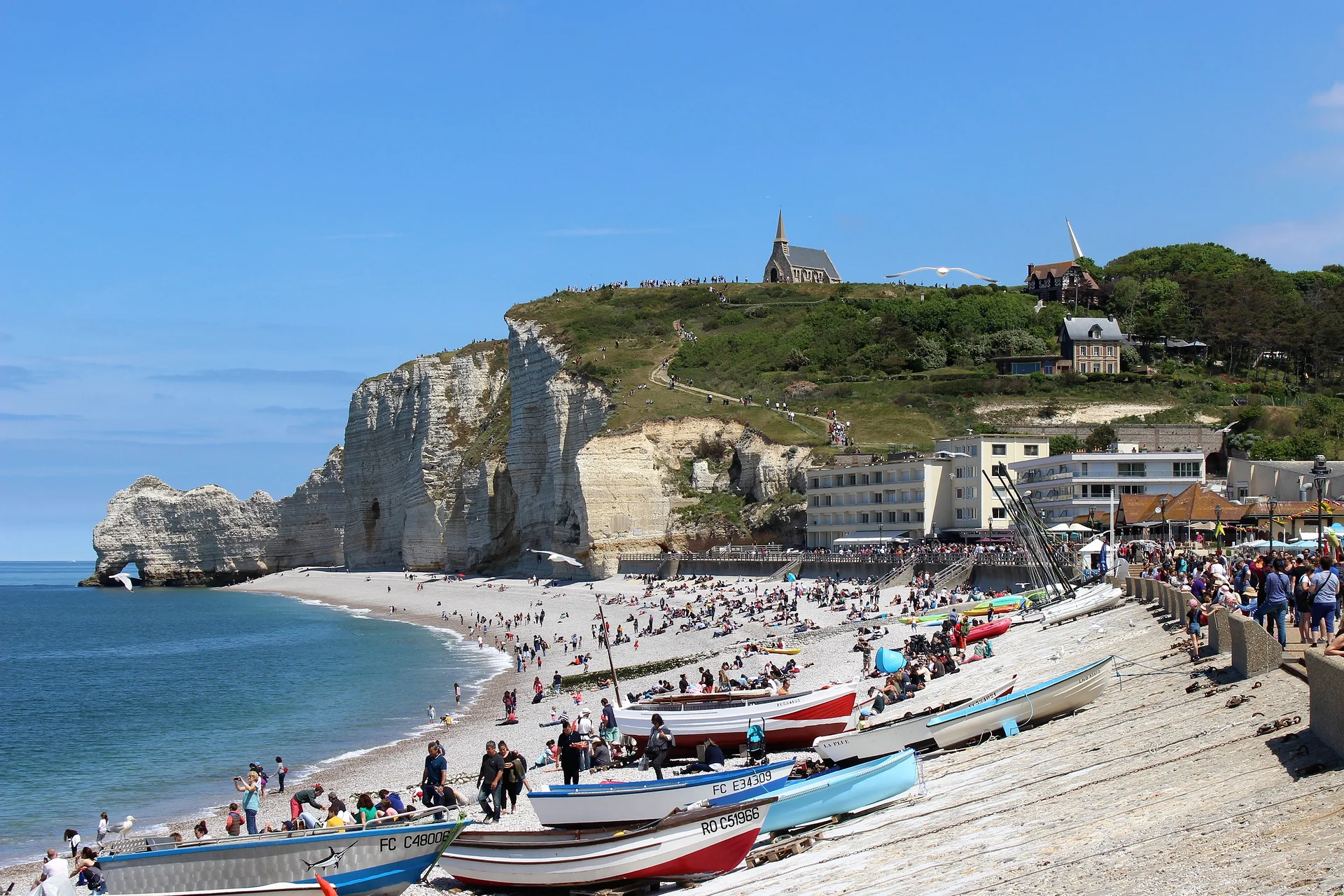
You go to Etretat more for its cliffs and pebble beach than for the town itself. Still, it is very pleasant to walk around there. Its little narrow streets, its fishermen's or half-timbered houses, its central wooden market hall... Unfortunately, the picture is quickly spoiled when there is a large influx of tourists. So if you can, go there in the off-season instead. Otherwise, Yport is a great alternative!