
Le Havre, the city that chose a different kind of comeback
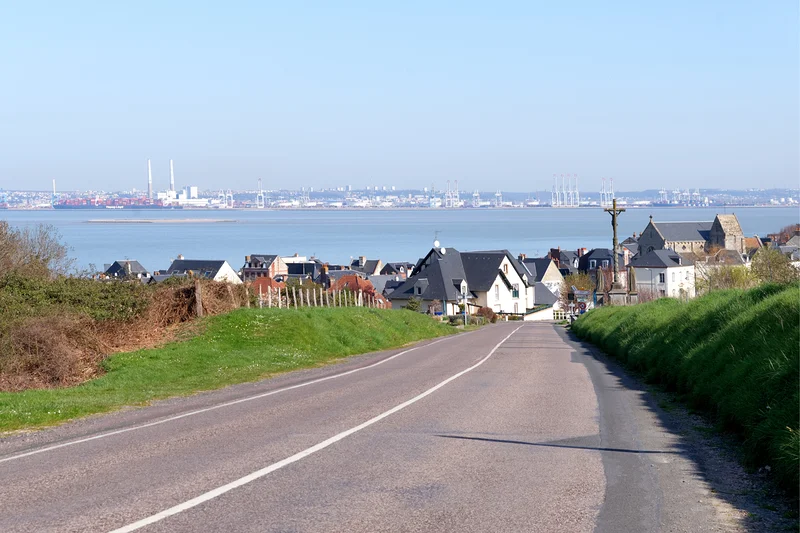
Right here, in this port town at the mouth of the Seine estuary, Claude Monet set up his easel on a hazy morning in 1872 to paint Impression, Sunrise, the canvas that gave an entire artistic movement its name.
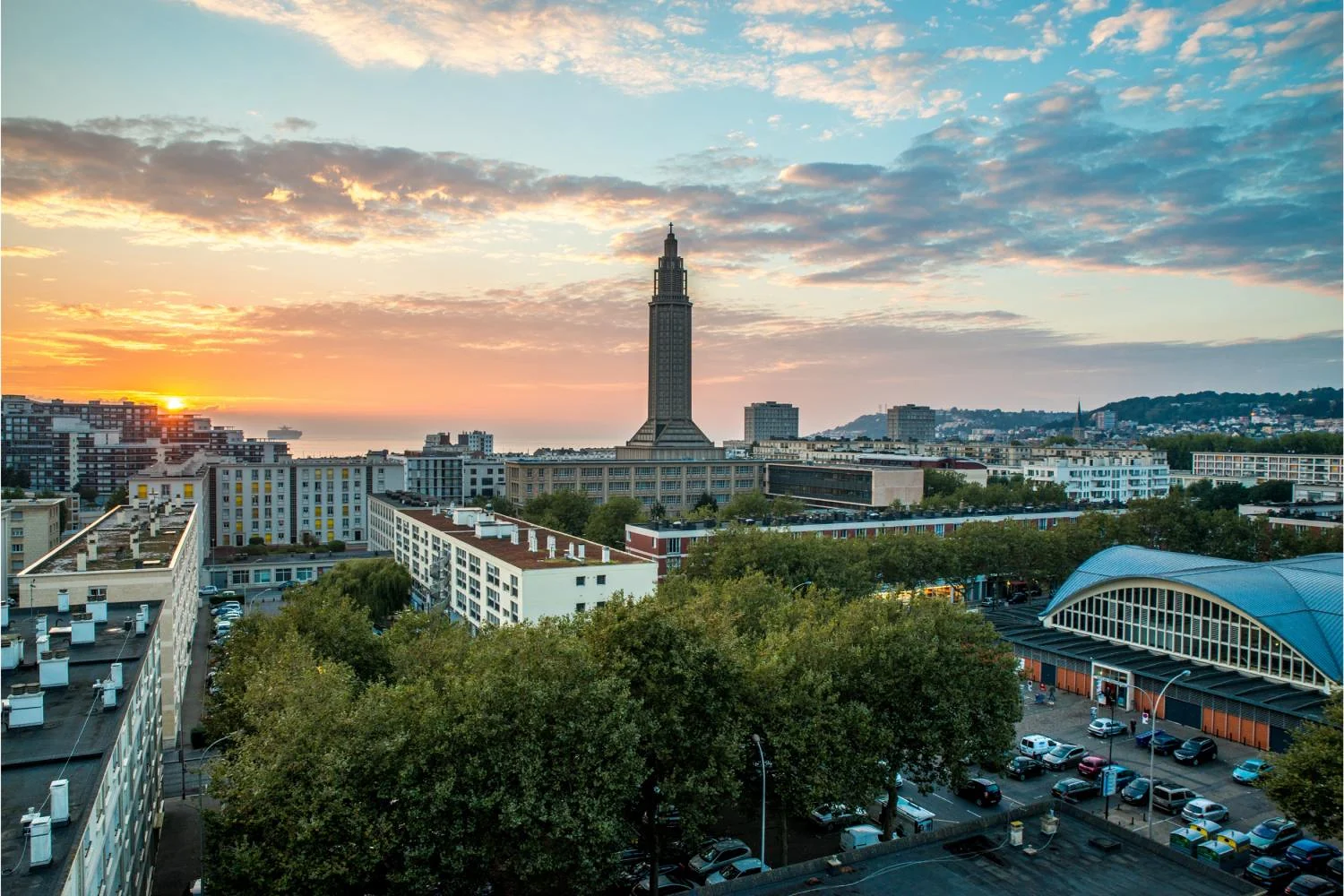
A century later, Allied bombings leveled 85 percent of the city. Instead of rebuilding what was lost, civic leaders made a radical gamble: they entrusted the future of the town to concrete and light. The result is a destination unlike anywhere else in France, named a UNESCO World Heritage site in 2005.
Is this destination right for you?
Let's be direct: if you are looking for the cobblestone alleys and half-timbered houses typical of Normandy, you will not find them here. This city appeals to travelers curious about brutalist architecture, people who find beauty in geometric lines and wide-open perspectives stretching toward the sky.
It also draws impressionism enthusiasts because the MuMa museum houses the second-largest collection of its kind in France, right behind the Orsay Museum. As for families, the pebble beach right in the city center and France's largest free outdoor skatepark provide an unexpected playground.
On the flip side, if you need quaint charm to feel like you are on vacation, the unvarnished modernity of the rebuilt center might catch you off guard. Some visitors need a few hours to adjust to this distinct aesthetic. You have to be willing to look at things differently.
Practical details for an easygoing stay
Everything in the Perret center is walkable. Public transit runs efficiently, with a modern tram line connecting key points. The weather follows classic Normandy patterns, so pack a rain jacket even in summer. Shops close on Sundays and often on Mondays, which is worth keeping in mind for short trips.
An accessible budget for Normandy
Plan for between $90 and $146* per day for a couple covering lodging, meals, and sightseeing. Hotels are much more reasonably priced than in Honfleur or Deauville, running between $79 and $135* a night for a 3-star property. A meal at a good restaurant costs $29 to $45* per person, and admission to the MuMa stays under $12*.
The Perret Center: A 20th-century architectural laboratory
Auguste Perret had twenty years to rebuild an entire city from scratch. The outcome still divides opinions, but it commands attention. His reinforced concrete apartment blocks, each featuring unique details unified by proportional harmony, frame wide avenues where natural light flows freely. Rue de Paris, featuring covered arcades inspired by the Rue de Rivoli in Paris, captures the essence of this vision.
Do not miss the Perret show apartment, a faithful recreation of a 1950s home complete with period furniture, built-in garbage chutes, and revolutionary central heating. The 50-minute guided tour offers a firsthand look at the daily lives of the first residents rehoused after the war.
Friendly tip: Ride the elevator to the 18th floor of the City Hall tower for free panoramic views over the entire city and the estuary. That elevated perspective is where the logic of Perret's urban grid truly clicks.
Saint-Joseph Church and Le Volcan: Two monuments defying time
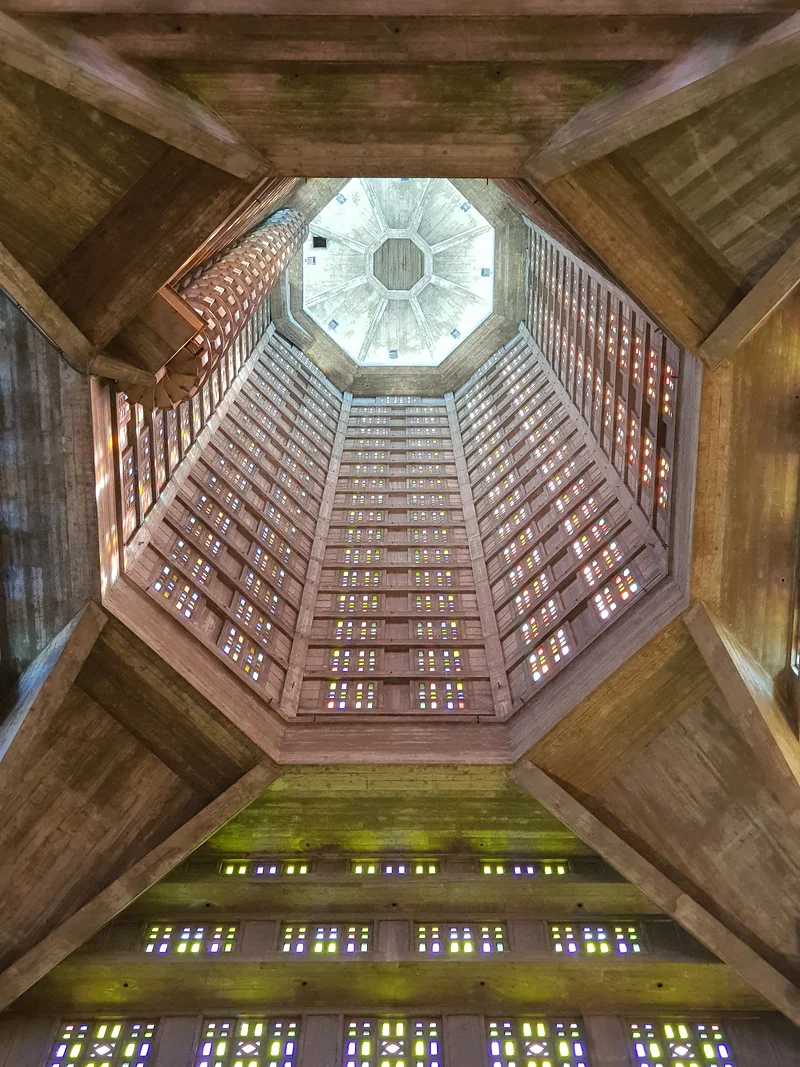
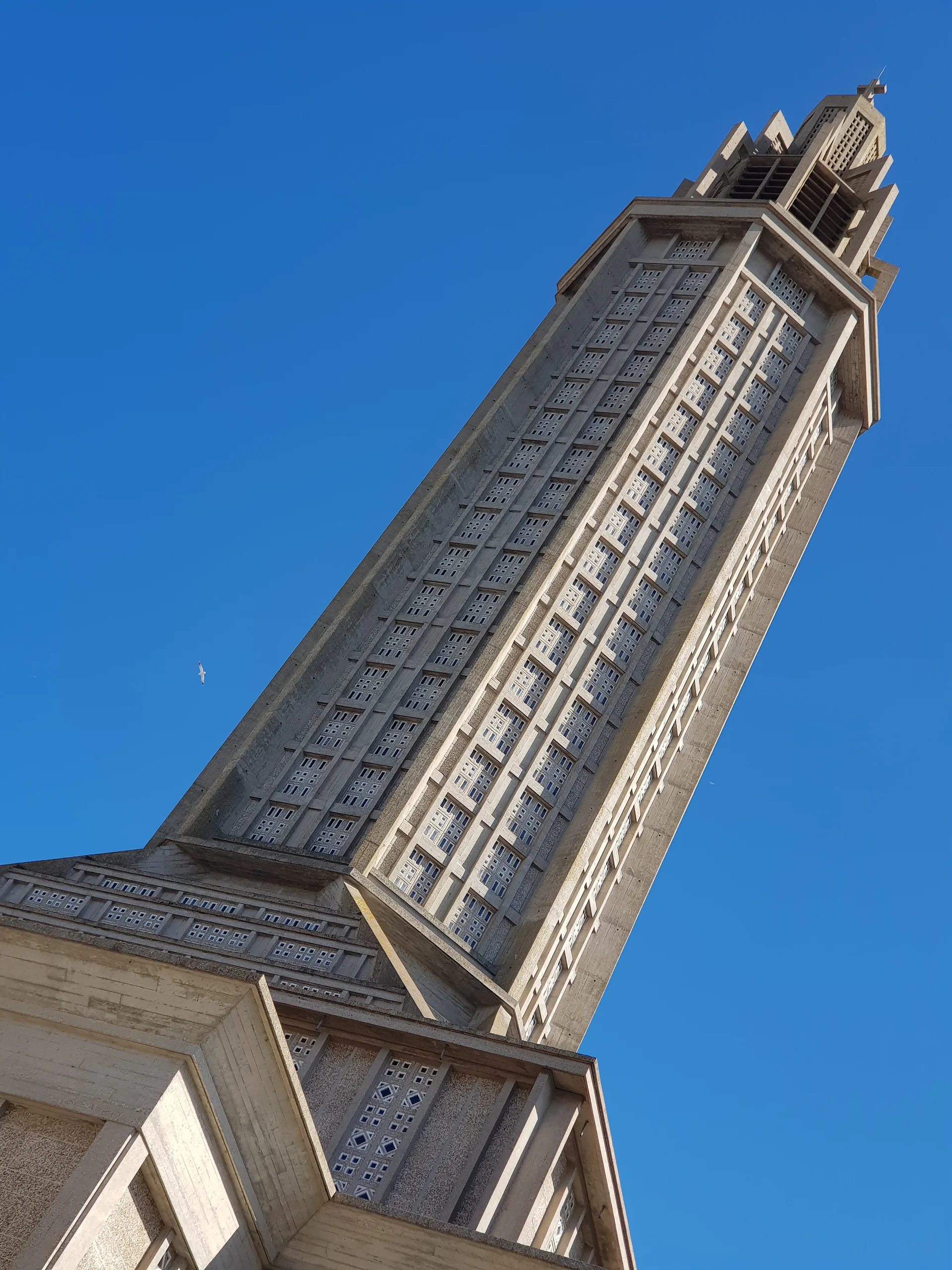
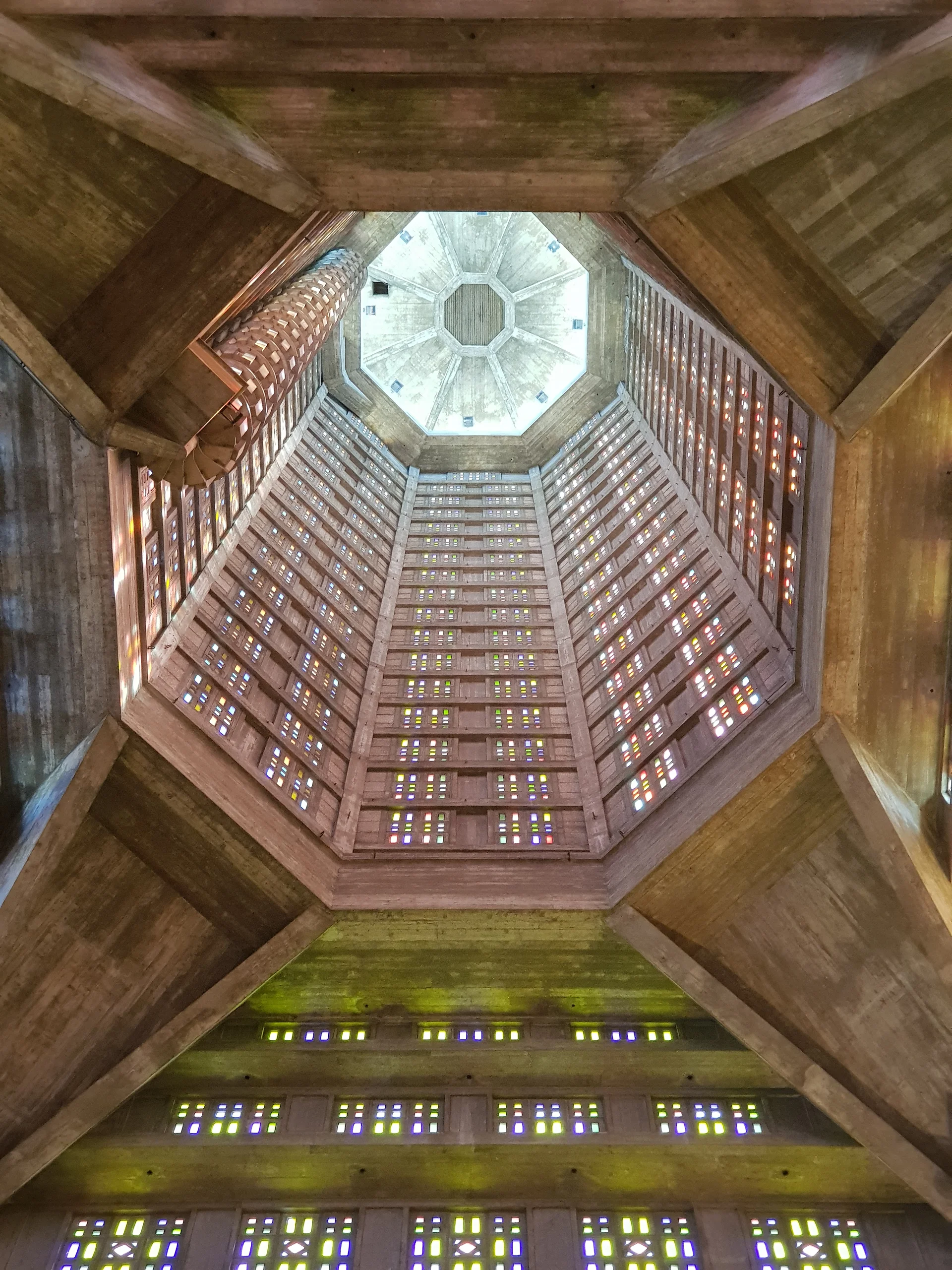
Saint-Joseph Church looks like a New York skyscraper dropped onto the Normandy coast. Its octagonal lantern tower reaches 107 meters and is visible from all over town. Inside, 12,768 colored glass panes turn sunlight into a shifting kaleidoscope. Visit in the late afternoon when low rays cut through the stained glass, and the visual impact matches any Gothic cathedral.
Just a few hundred meters away, Oscar Niemeyer's Volcan contrasts sharply with the strict geometry of the Perret center. This curving white cultural complex houses a performance hall and a futuristic library. Locals affectionately call it "the yogurt pot," leaning into their trademark irony.
The waterfront: Where the city breathes
A rare privilege for a city of this size is having a two-kilometer beach right in the downtown area. Pebbles replace sand, but the panoramic view of the harbor entrance makes up for it. In summer, pop-up beach bars open along Boulevard Albert-Ier. The vibe has nothing in common with the Mediterranean, but it carries a distinct, unpretentious northern charm.
At the end of the beach, the monumental arches of Catène de Containers, an artwork by Vincent Ganivet created for the city's 500th anniversary, frame a striking view. Painted in bright hues, these stacked shipping containers nod directly to Le Havre's maritime identity.
For higher vantage points, climb up to the Jardins Suspendus. This converted Napoleonic fort spans 17 hectares of botanical gardens filled with plants from five continents. The views over the Seine estuary are exceptional. Stop by L'Orangeraie, the on-site tearoom, for a fresh juice looking out over the landscape.
Around the port: The neighborhood that survived
Saint-François is the sole neighborhood that survived the bombings. Its narrow alleys and old fishermen's houses clash heavily with the rest of the city. This area hosts the fish market alongside unpretentious, hearty seafood spots.
Right next door, the Maison de l'Armateur reflects the wealth of 18th-century maritime trade in Le Havre. This five-story mansion centered around an internal light well is worth visiting for its exhibits on historic overseas commerce.
Friendly tip: Book a narrated harbor tour with Navigation Normande. Getting up close to the giant container ships of Port 2000 gives you a real sense of scale. Tickets run $16* for a one-hour boat ride.
Where to eat and drink in Le Havre
The culinary scene here has expanded significantly in recent years. As France's leading port for coffee imports, that heritage shows in artisanal roasters like Cafés Charles Danican up on the heights or Brûlerie Duchossoy, whose head roaster earned the title of Best Roaster in France.
For seafood, Le Grignot serves generous platters sourced straight from the daily catch. Le Margote, recognized with a Bib Gourmand, turns out creative Normandy dishes right across from Bassin du Roi. Meat lovers head to Beef and Wine near the Volcan for dry-aged cuts paired with curated wines. Le Restaurant des enfants sages, set inside a former school, delivers a unique setting paired with careful, scratch-made cooking.
Where to stay in Le Havre and the surrounding area
The Perret downtown district holds the majority of lodging options. Hôtel Vent d'Ouest, positioned right across from Saint-Joseph Church, features a Nuxe spa and tasteful nautical decor inside a landmark building. The Best Western Art Hôtel leans into street art along its hallways while occupying a Perret structure. For a lighter budget, JOST Hôtel near the train station provides modern rooms and solid value.
Travelers looking for unique stays can book La Grande École, a collection of ten tiny houses with private terraces nestled inside a central garden, combining privacy with a prime location.
How to get to and around Le Havre
From Paris, TER Normandie trains depart from Gare Saint-Lazare and reach Le Havre in 2 hours and 5 minutes to 2 hours and 20 minutes. Fares range between $18 and $45* depending on how early you book, with roughly fifteen daily departures providing plenty of flexibility.
Driving from Paris takes about 2 hours and 30 minutes via the A13 and A131 motorways. Street parking is manageable in the center, supported by reasonably priced underground garages. Electric vehicles park for free on public streets.
From North America you fly into Paris-CDG and pick up a Saint-Lazare train straight through to Le Havre. The closest regional airport is Deauville-Saint-Gatien, 30 km away, and from the UK the Brittany Ferries route connects Portsmouth to Le Havre in 5 hours and 30 minutes.
Once you arrive, the tram and bus networks cover the city efficiently. A well-developed bike path network makes it possible to pedal out to the Étretat Cliffs 30 km away or across to Honfleur via the striking Normandy Bridge.
When to go
May through September brings ideal weather for the beach and long waterfront evenings. The Un Été au Havre festival animates the town all summer with contemporary art installations scattered through public spaces. Autumn brings low, golden light that impressionists would have loved. Winter stays gray and windy, but the museums are quiet and hotel rates hit their lowest points.
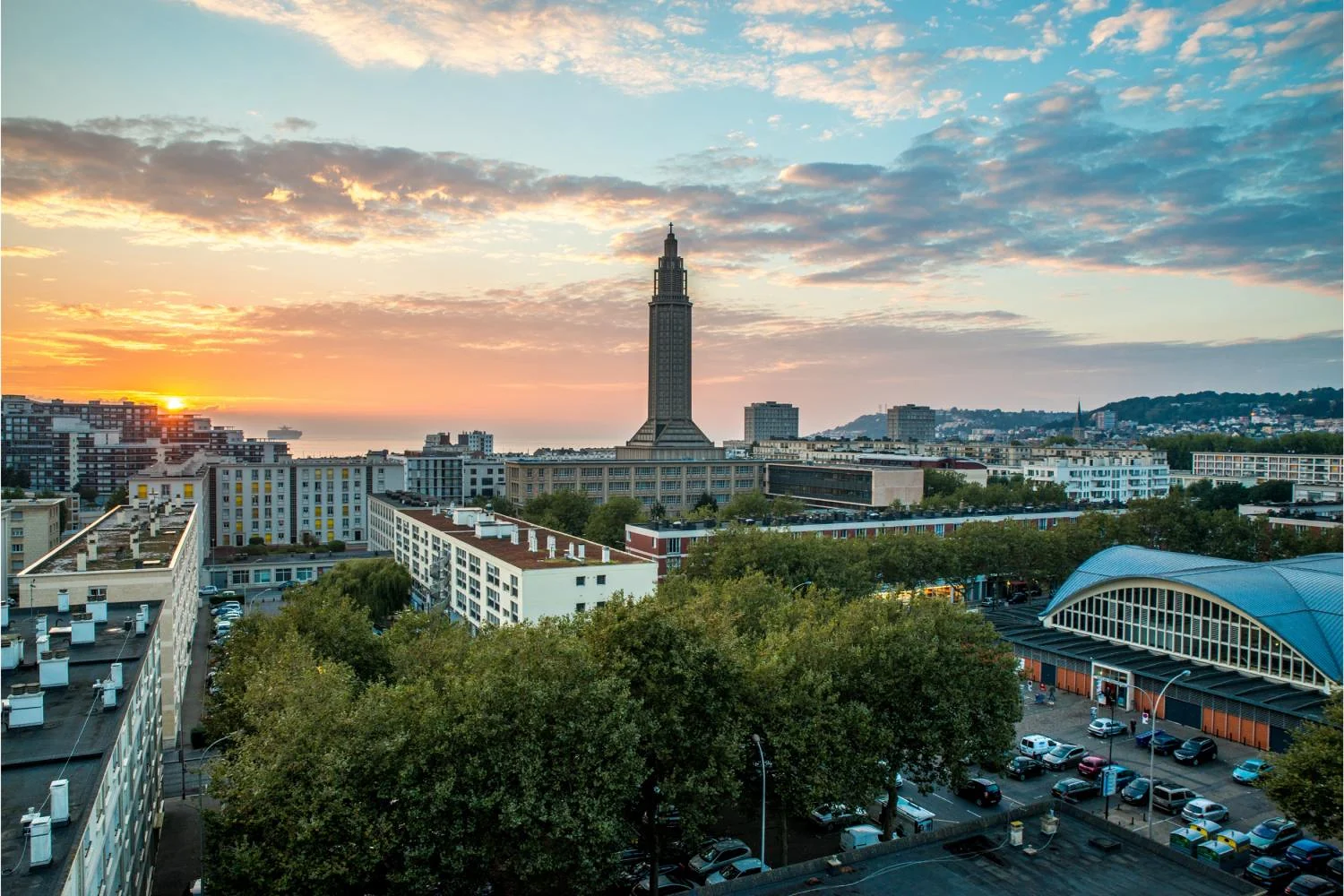
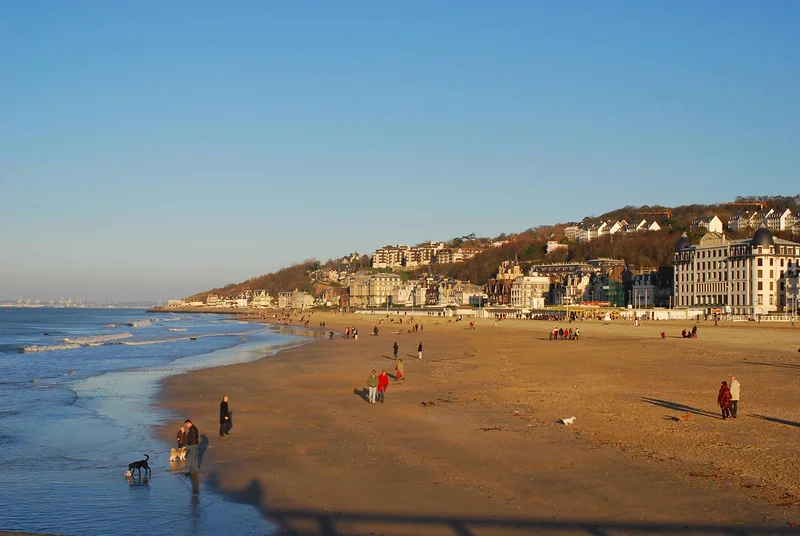
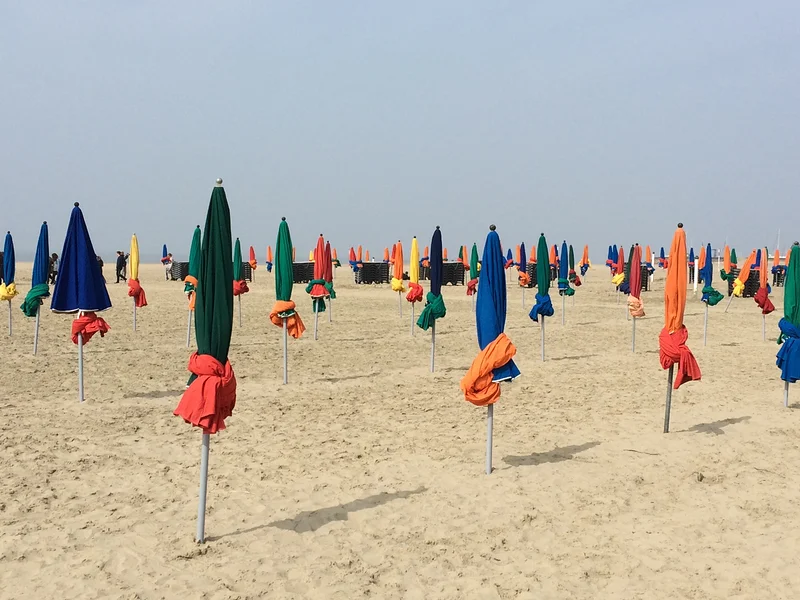
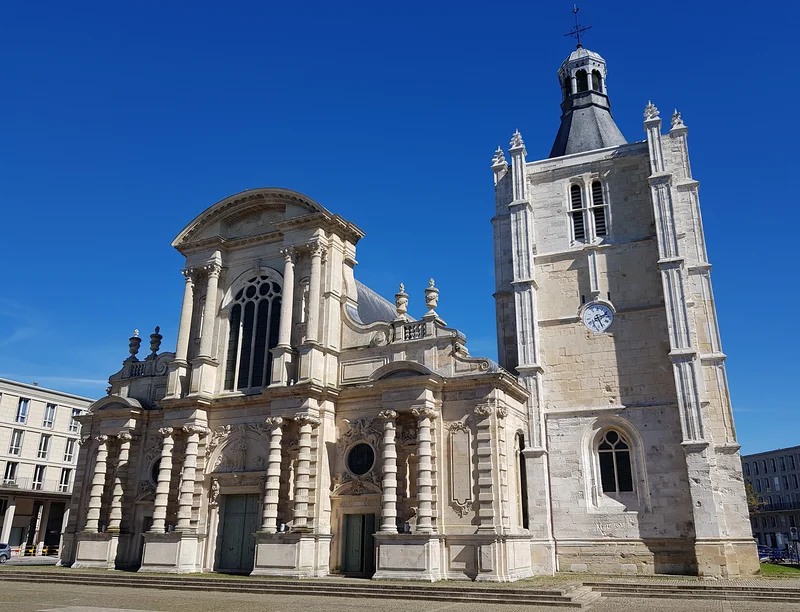
Le Havre is a modern city with a painful past! Wandering around town means discovering the post-war reconstruction. Visiting the Le Havre Cathedral and Saint-Joseph Church is a way to learn more about the Le Havre of the past. Eating mussels and fries by the sea in the summer means enjoying the charm of a beach town and some sublime sunsets. Visit the city during the day and finish on the beach promenade in the evening, you will be charmed!