
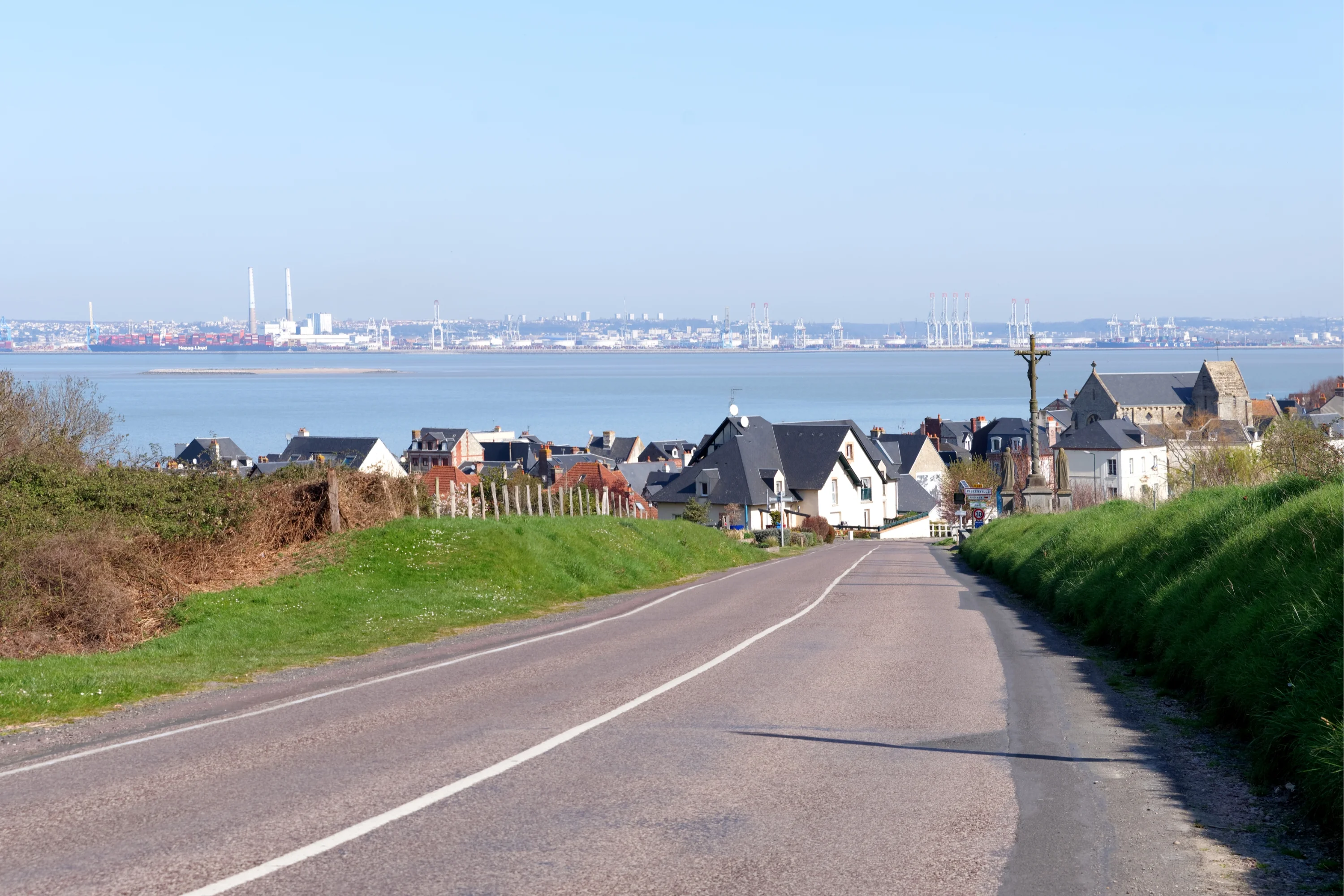
Villerville, where Gabin and Belmondo shared a drink for the ages
In 1962, Henri Verneuil was scouting locations to adapt a novel by Antoine Blondin. He landed on this small beach town tucked between Trouville and Honfleur, temporarily renamed Tigreville for the shoot. Jean Gabin ran a fictional hotel there, while Jean-Paul Belmondo played a drunken matador weaving through cars.
Sixty years later, locals still celebrate the film every autumn, the Cabaret Normand retains its original look, and markers scattered through the streets invite visitors to retrace the steps of two French cinema legends.
Villerville: an antidote to the crowded beaches of the Côte Fleurie
Home to 700 residents, this village appeals to travelers seeking quiet who want to escape the buzz of Deauville and Trouville. Forget casinos and luxury boutiques here. Instead, you get cobblestone lanes lined with colorful timber-framed houses, a 19th-century washhouse, and a Romanesque church topped with a flat-stone roof, an architectural rarity in Normandy.
Hikers will appreciate the 4 kilometers of the falaises des Roches Noires revealing geological layers dating back 160 million years. Book lovers can browse the secondhand stalls along rue du Général Leclerc, which functions as a mini book village.
On the flip side, those hunting for fine sand beaches will leave disappointed. At high tide, the pebble beach nearly vanishes. Nightlife does not exist, and local shops close early. Plan for half a day to explore the village, but consider spending the night to catch the evening light hitting the cliffs.
A reasonable budget for the Côte Fleurie
Expect to spend $113 to $169* per day for a couple covering lodging and meals. Village restaurants offer set menus between $23 and $40*. Hotels run between $102 and $210* per night depending on the season, coming in cheaper than their equivalents in Deauville.
In the footsteps of a cult classic
The "Un Singe en Hiver" walking tour kicks off on rue de la Cabine, right in front of the Cabaret Normand where Belmondo orders his famous Picon-bière. Informational panels mark the shooting locations with period photos and behind-the-scenes stories. The legendary car bullfight scene was filmed on rue du Général Leclerc, the exact spot where Bébel pulled off his first movie stunt. A caricature mural of the two actors faces the sea near the old gendarmerie.
Inside the Cabaret Normand, the wood-paneled walls and red-and-white checkered curtains remain untouched. A dedicated fan club regularly gathers here to recite Michel Audiard's snappy dialogue. Every year in late October, Villerville transforms back into Tigreville for a tribute weekend featuring screenings, exhibits, and fireworks launched from the beach just like in the film's final scene.
Friendly tip: the Place du Guettoir, where sailors' wives once waited for their husbands to return, offers the best vantage point for photographing rue de la Cabine with its flower-laden Norman balconies.
The Roches Noires cliffs: 160 million years facing the sea
These clay cliffs rising 60 meters form a 135-hectare protected natural site classified by Calvados. Their name comes from dark limestone blocks scattered across the beach, covered in seaweed and lichen. Amateur geologists will spot Late Jurassic fossils. Birdwatchers can watch oystercatchers, curlews, and sandpipers on the rock flats. A rare orchid, the common spotted orchid, grows on the dry grasslands up top.
The Parc des Graves offers developed access with marked trails, an overlook, and picnic areas. A 3.6-kilometer coastal trail connects Villerville to Trouville along the ridge. If you want to head down to the base of the cliffs, check the tide schedule beforehand since rising water can trap careless walkers.
Friendly tip: head down to plage des Graves at low tide to spot the two waterfalls spilling from the clay walls. Access is from the parking lot at the top of the park, and sturdy shoes are a must.
The village of painters and books
Eugène Boudin and Raoul Dufy set up their easels here long before film crews arrived. The Notre-Dame de l'Assomption church, featuring a massive 12th-century bell tower, kept its Romanesque chancel and flat stone slab roof, an exceptional find in this region. The washhouse built in the late 19th century reflects the arrival of early Parisian vacationers and the sanitation push that accompanied early tourism.
Rue du Général Leclerc now hosts several bookshops and secondhand dealers that earned the town its nickname of book village. A small market selling Norman goods pops up on Place du Lavoir on Tuesday and Saturday mornings from Easter through All Saints' Day.
A theater festival in barns and gardens
Since 2014, the Festival à Villerville takes over unexpected spots during the final weekend of August: a garage facing the cemetery, the school classroom, the château farm, and private apartments. Young theater troupes from major drama schools showcase original works developed during three-week residencies. Tickets run $12* per show or $68* for a full pass. The vibe stays intimate, far from massive festival crowds, with artist-audience meetups after every performance.
Where to eat and drink in Villerville?
La Cabane Bleue on plage des Graves is the local favorite. With your toes in the sand, lounge chairs, and reasonably priced seafood platters, you get oysters and a glass of Muscadet facing the cliffs. The spot closes on Tuesdays and takes no reservations.
For a sit-down meal, the restaurant at Hôtel Le Bellevue serves Norman cuisine centered on catch of the day: lobster, scallops, and coastal fish. The sunroom looks out over a garden sloping toward the sea. Le Paquebot, an old casino converted into a hotel-restaurant, offers a seafood menu inside a maritime-themed dining room. Crêperie du Coin on rue du Maréchal Foch serves classic Norman bistro fare with a sunny patio.
Where to stay in Villerville and nearby?
The village features two charming addresses. Hôtel Le Bellevue, a century-old villa listed with Demeures & Châteaux, features rooms with garden and sea views. Le Paquebot, housed in the former casino facing the pier, is the only beachfront hotel between Cabourg and Honfleur. Expect $135 to $230* a night in high season.
For tighter budgets, several bed and breakfasts and vacation rentals operate in the village and surrounding hamlets. Trouville and Honfleur offer broader choices less than a twenty-minute drive away.
How to get to and around Villerville?
From North America you land at Paris-CDG; from Paris, expect a 2 hour and 15 minute train ride to the Deauville-Trouville station, followed by a 15-minute taxi or shuttle ride. By car, it is a 2-hour drive via the A13 and the D513 coastal route. The Deauville-Normandie Airport sits four miles away. The ports of Le Havre and Caen run ferry connections to England for British visitors.
Once you arrive, everything is walkable. The Place du Lavoir parking lot charges a fee in season but stays free outside of school breaks. Another parking area sits at the top of Parc des Graves for direct cliff access. The Nomad bus network links Villerville to Trouville and Honfleur, though departures run on a limited schedule.
When to go?
Visit from May through September to enjoy coastal hikes and the patio at La Cabane Bleue. The theater festival in late August draws contemporary performance fans. The Fête des marins, celebrated since 1896 around August 15th, decorates the streets with fishing nets and gathers children in striped sailor shirts for a folk parade. Skip July and August weekends if you want to dodge crowds. The village stays quiet, but parking fills up fast.
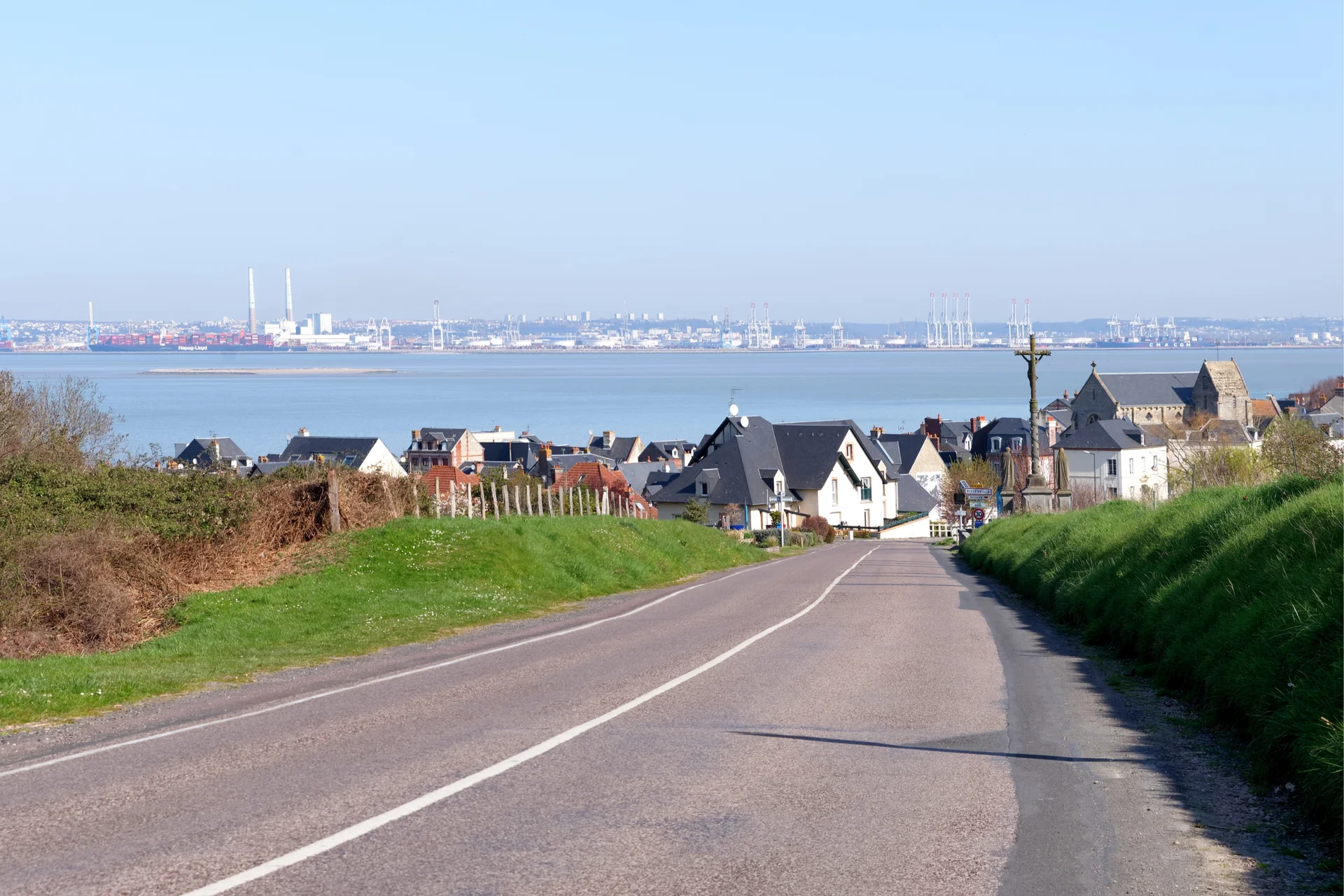
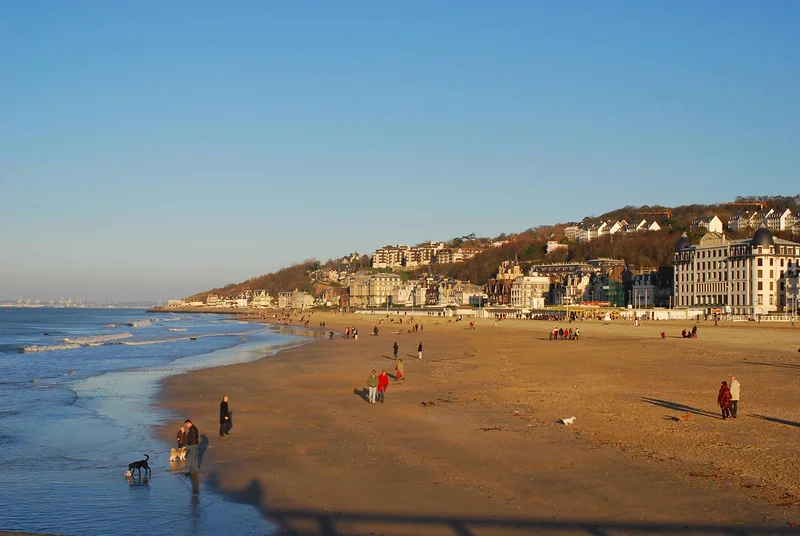
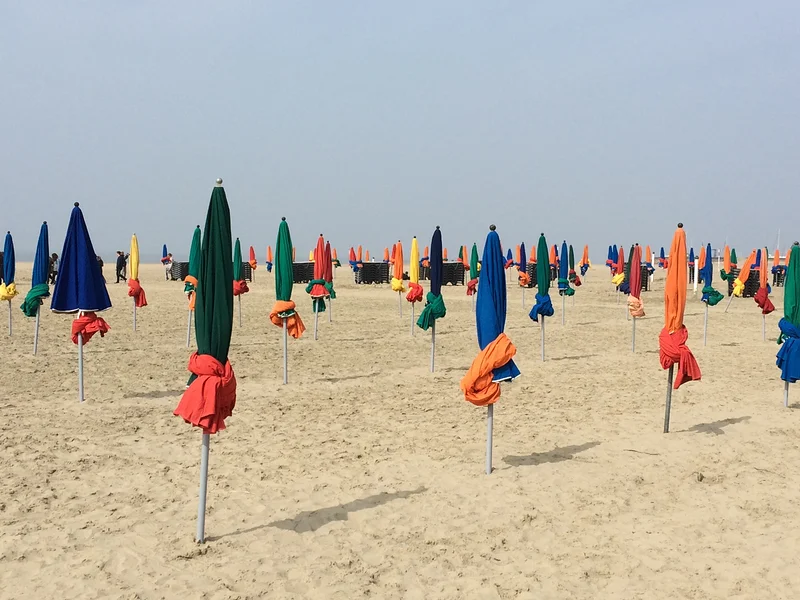
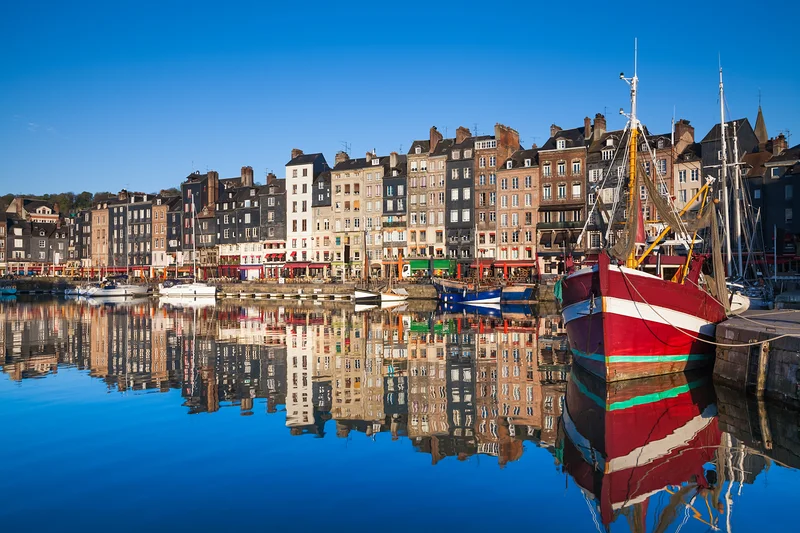
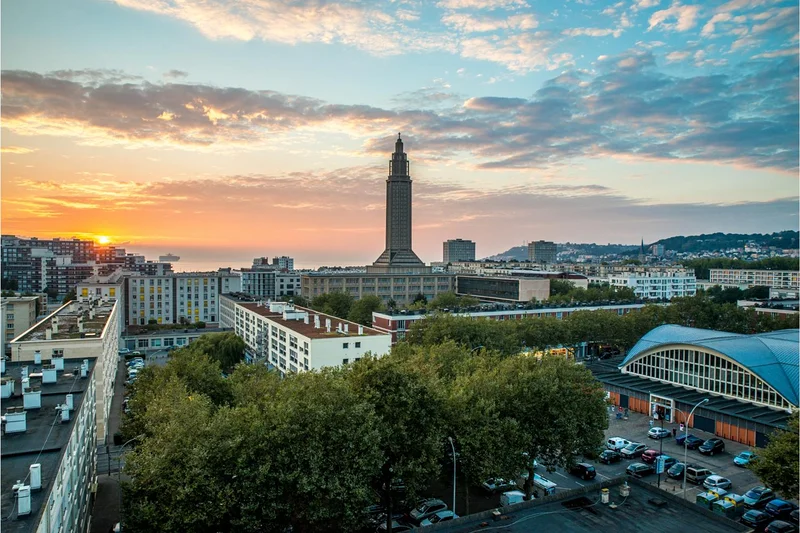
Even though this village is famous for the movie "Un singe en Hiver" filmed here in the 60s, wandering along its narrow streets is very pleasant out of season for its quietness, and in season for its summer coastal vibe. Many informative signs refer to the movie. Even though the waterfront faces Le Havre and its port, the walk along the cliff is a must. On the road between Honfleur and Trouville-sur-mer, take the time to stop there for a while.