
Noirmoutier-en-l'Île, where the road disappears under the ocean twice a day
9:30 AM on a July morning. The paved road points straight toward the horizon right through the water. On both sides, emergency refuge beacons stand at regular intervals. Fishermen gather cockles from the puddles. In an hour and a half, the sea will swallow the 4.2 km of the Passage du Gois. Welcome to Noirmoutier, an island you have to earn.
A haven for nature lovers and cyclists
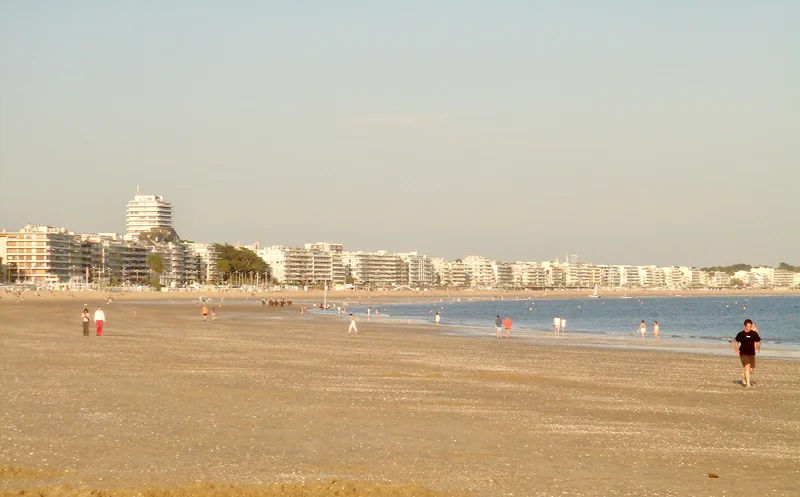
This Vendéen island of 49 km² suits families looking for quiet, cyclists, and food lovers alike. The flat terrain makes bike rides easy across 83 km of protected bike paths. Beaches stretch for 40 km with shallow water that is ideal for children. Salt marshes cover a third of the territory and shift in appearance as the light changes through the day.
The exceptional microclimate lets mimosas bloom in winter and holm oaks grow just like on the Mediterranean coast. Plan for 2 to 3 days to explore the island properly. Architecture fans might feel underwhelmed because, aside from the medieval castle and a few grand homes, the main charm lies in the natural landscapes and whitewashed houses with blue shutters. July and August turn the island into a bustling anthill, so booking months in advance is mandatory.
Reasonable budget for a resort island
Expect to budget $90 to $124* per day in high season. A savory galette runs around $14*, a gourmet restaurant menu costs between $34 and $57*, and bike rentals start at $12* for the day. A 3-star hotel ranges from $102 to $169* a night, and family campsites charge $29 to $45* per site. Castle admission is $9*, and the aquarium is $11* for adults.
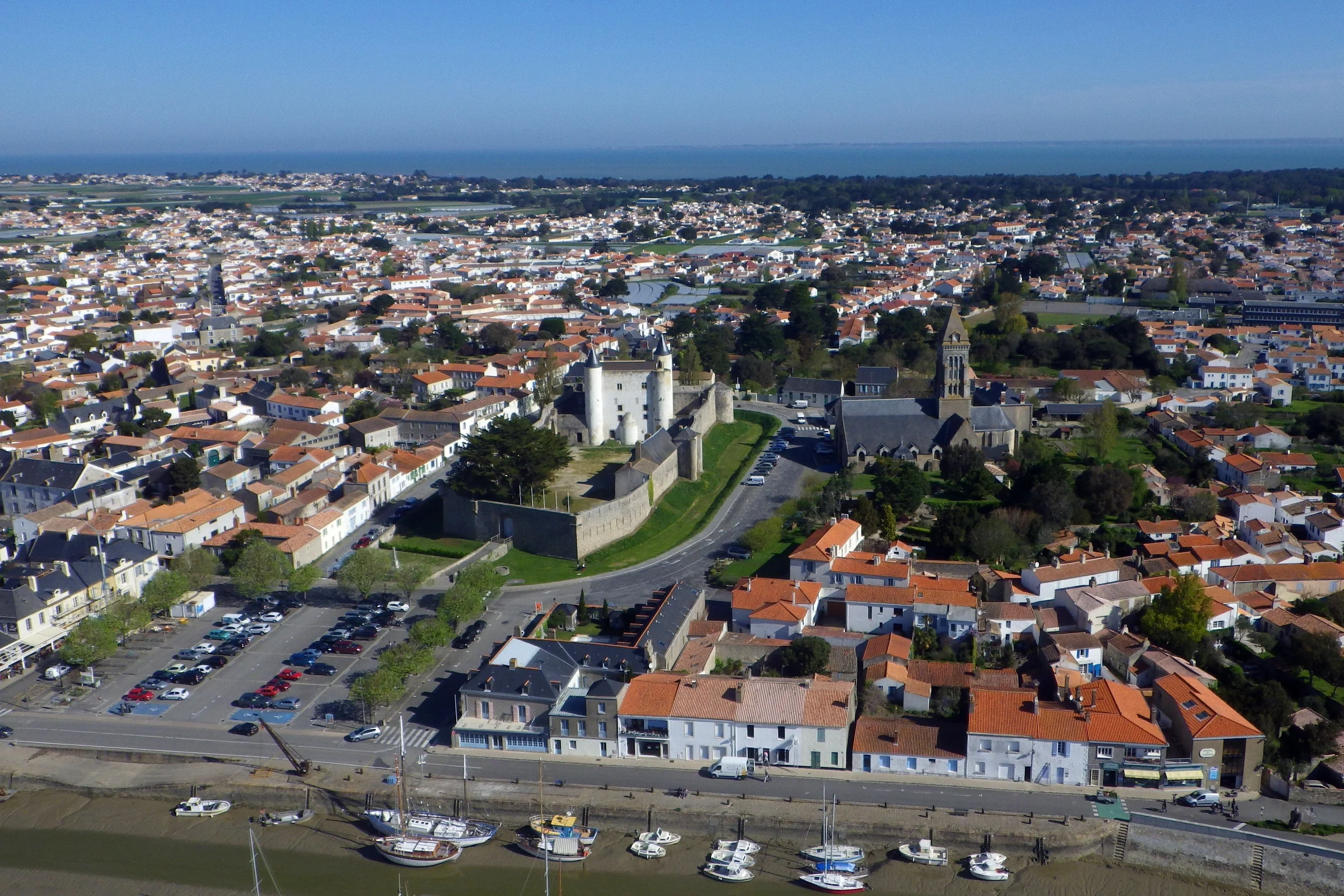
The historic town and the castle
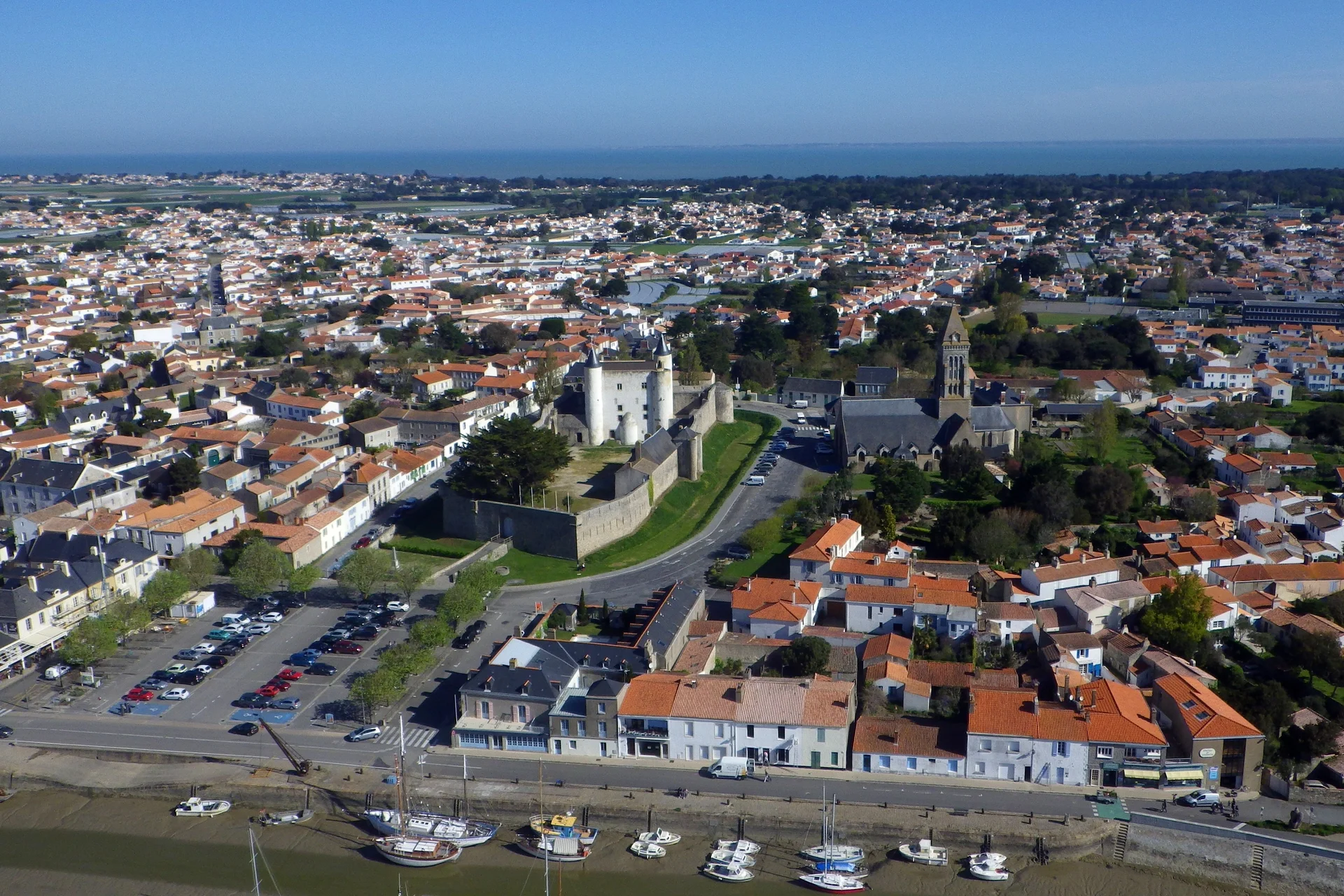
The center of Noirmoutier-en-l'Île concentrates the action. Place de la République hosts traditional markets on Tuesday, Friday, and Sunday mornings. Stalls feature local producers, fresh oysters, Noirmoutier salt, and Bonnotte potatoes. The pedestrian street lined with shops leads to the port through the Banzeau neighborhood, one of the oldest sectors occupied since the 11th century.
The castle-museum, a 12th-century fortress listed as a Historic Monument, towers over the town. You can tour the ramparts and the keep from April to November. The collections trace the turbulent history of the island, the Vendée wars, and the salt economy. Take in the panoramic view of the island and the marshes from the top of the tower. The nearby Saint-Philibert Church blends Romanesque and Gothic styles. Its 11th-century crypt preserves the relics of the monk who founded the monastery in 674.
The Hôtel Jacobsen, an 18th-century shipowner's mansion converted into the Maritime Heritage Center, explains how humans shaped this island by building polders in the 17th century to reclaim land from the sea, draining the marshes, harvesting salt for 1,500 years, and using the Passage du Gois since the 18th century.
Friendly tip: visit the salt marshes in the late afternoon when the low light makes the salt pans glow. Several salt workers offer free tours in the summer, notably Serge at Puylorson from 4:30 PM to 6:00 PM.
Le Bois de la Chaise and upscale beaches
This green lung right outside town unfolds a nearly Mediterranean landscape. Holm oaks, maritime pines, strawberry trees, and mimosas form a dense forest planted at the beginning of the 20th century. Wealthy villas called chalets hide in the greenery, connected by private paths. The atmosphere evokes the French Riviera more than the Atlantic.
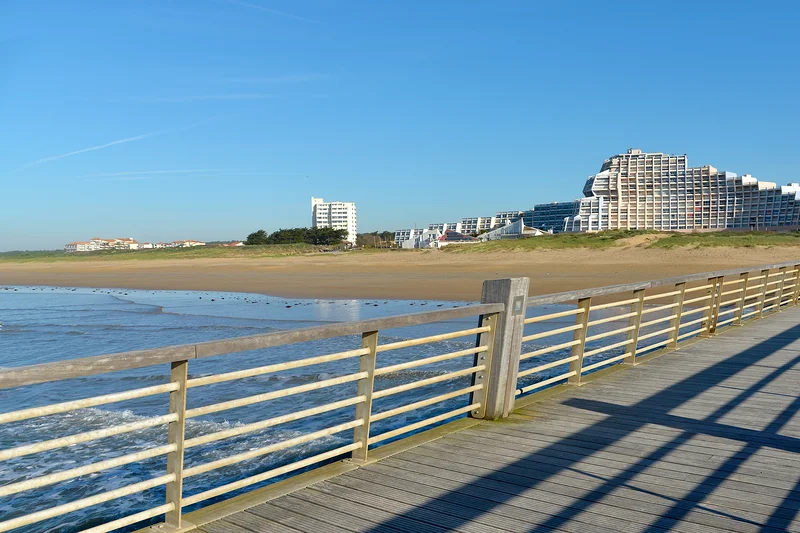
Plage des Dames embodies classic coastal Noirmoutier with its white beach huts lined up since 1861, its wooden pier built in 1889, and its Belle Époque vibe. Very popular in season, it offers shallow water with lifeguards on duty in the summer. Right next door, Anse Rouge tucks itself into a secret cove. About twenty well-maintained beach huts border the golden sand crescent. Discretion and peace are guaranteed.
The Souzeaux promenade hugs the rocky coastline for several miles. You get views of small coves, seaweed-covered rocks, and early-century villas. The path leads all the way to Pointe Saint-Pierre, which anchors the edge of the bay.
The salt marshes, the island's white gold
Monks laid out these marshes as early as the 5th century. Today, more than 100 salt workers hand-harvest between 2,000 and 3,000 tons of salt per year. The water network works by gravity: seawater enters at high tide, flows through canals, and concentrates in successive basins until it reaches the salt pans where the salt crystallizes.
Fleur de sel forms only in good weather when a thin film of crystals floats on the surface. The salt worker gently gathers it using a traditional tool called a lousse. Coarse gray salt is harvested from the bottom of the pans. The marsh landscapes shift from pale green to deep red depending on the algae and salt concentrations.
The Sebastopol polder at the entrance to the island near Barbâtre protects a regional nature reserve. More than 170 bird species nest or pass through here, including brent geese, shelducks, little egrets, and grey herons. Prepared trails cover 7 km. The tourist office organizes free bird-watching tours in the summer.
The villages and the port of L'Herbaudière
Le Vieil, a fishing village of low white houses, keeps its peaceful character. Flower-lined alleys lead down to the beaches. This is where French director Claude Sautet filmed César et Rosalie on Mardi-Gras Beach. L'Épine stretches across the center of the island with its Port de Morin and Pointe du Devin, where you can go shell-fishing at low tide.
L'Herbaudière, in the northwest, brings energy to its fishing and yachting harbor. Trawlers unload their catch in the morning. You can tour the fish market by reservation. Bar terraces and restaurants line the docks. Summer festivals bring jazz, electronic music, and street performances. The beaches of La Linière and Luzeronde stretch out nearby.
Where to eat and drink in Noirmoutier-en-l'Île?
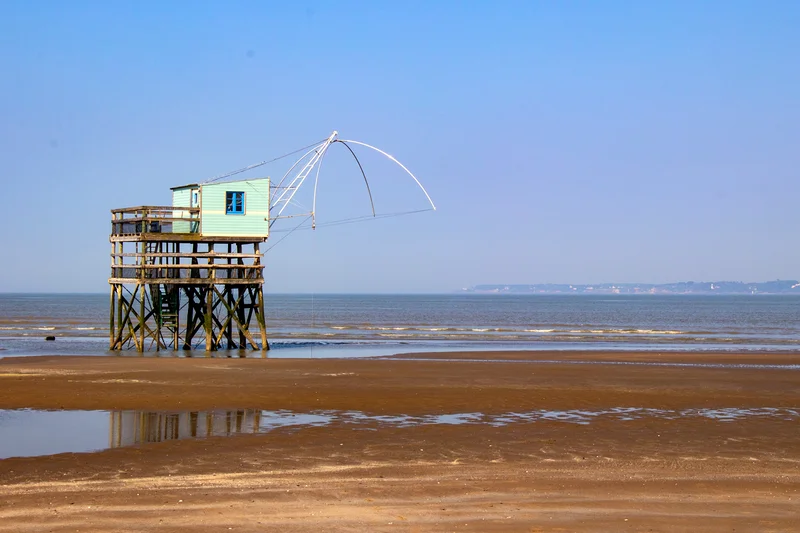
Local food centers around seafood and the famous Bonnotte potato. This early-season variety is harvested by hand 90 days after planting in sandy soil enriched with seaweed. Small in size, with thin skin and a melt-in-your-mouth texture, it is served steamed with butter and island salt. You can taste oysters directly at the producers' shacks. At low tide, you can dig for clams, cockles, and winkles right on the beaches.
La Marine, run by three-Michelin-starred chef Alexandre Couillon, sits proudly on the harbor in L'Herbaudière. Expect prime fish straight from the daily auction, garden vegetables, and precise cooking. Try the braised island lobster, line-caught sea bass, or saffron Bonnotte potatoes. Book several months ahead and expect to pay $102-$135*. His bistro La Table d'Élise serves more casual seafood around $34-$45*.
L'Étier and L'Ételle, both mentioned in the Michelin guide, plate up creative land-and-sea dishes. Think scallops with truffles, pan-fried langoustines, and Grand Marnier soufflé. Menus run $34 to $68* depending on the option.
Where to stay in and around Noirmoutier-en-l'Île?
The town center concentrates charming hotels and bed and breakfasts. Général d'Elbée Hôtel & Spa, a 4-star hotel facing the castle inside an 18th-century building, offers rooms from $124 to $260*. Hôtel Fleur de Sel, a 3-star property with a gourmet restaurant, charges $102 to $169* a night.
You will find plenty of family-friendly campgrounds across all the island communes. Vacation rentals are common, but booking is essential by February or March for July and August stays. Rates jump noticeably in high season. You can also stay on the mainland in Fromentine, Beauvoir-sur-Mer, or Pornic for more choices and flexibility.
How to get to and around Noirmoutier-en-l'Île?
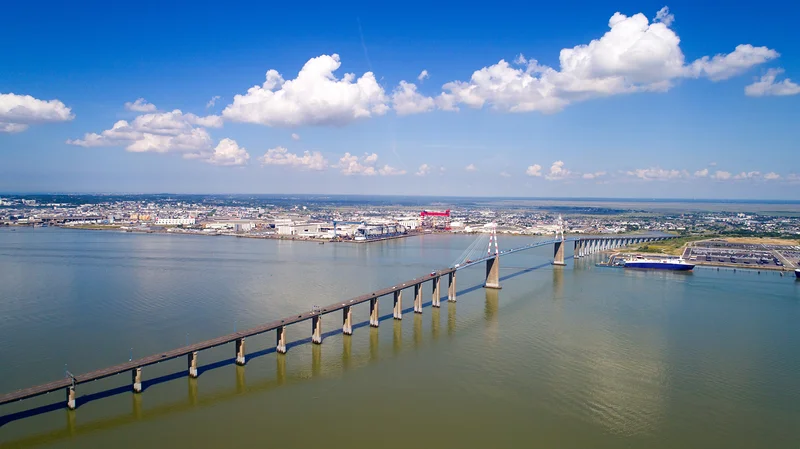
Two road access points connect to the mainland: the Noirmoutier bridge from Fromentine, which is free and open 24/7 leading to Barbâtre at the south of the island, or the Passage du Gois from Beauvoir-sur-Mer. The latter, a unique submersible road, can only be crossed at low tide, from 1 hour and 30 minutes before to 1 hour and 30 minutes after low tide. Check schedules online or posted at both ends. Nine refuge beacons line the route for careless drivers caught by the rising tide.
From Nantes, it is a 1-hour-and-20-minute drive via the D751 and D948. Daily line 13 buses run from the Nantes train station, with 5 trips a day in winter and up to 15 in summer, taking about 2 hours. From Paris, take the TGV train to Nantes, then switch to a bus or car.
On the island, biking is king. A network of 83 km of bike paths connects villages, beaches, and natural sites away from car traffic. The terrain is completely flat. Twelve rental shops are spread across the island, with rates starting at $12* for the day. Free Gratibus shuttles run in July and August, connecting Noirmoutier-en-l'Île to Bois de la Chaise, Le Vieil, and L'Herbaudière. Local buses cost $0.57* per ride between the four communes year-round.
When to go?
May through September offer the best conditions with mild temperatures, generous sunshine, and salt harvesting in the marshes. July and August bring peak crowds and events, but the beaches get packed and prices skyrocket. June and September feel much more serene. Winters stay mild thanks to the microclimate, and mimosas bloom as early as February. Avoid November through March, which is very quiet with many closed businesses and unpredictable weather despite the relative mildness.
Noirmoutier is a destination I love.
Getting around by bike is a real pleasure, with such varied landscapes between the sea, pine forests, salt marshes, and the legendary Passage du Gois.
There is always something to discover, and it is a perfect island for family outings and adventures.