
Playa del Carmen, the beach town that swallowed a fishing village
The sand is still cool, the sea is an almost surreal shade of blue, and the sun is beginning to set the Portal Maya ablaze. This 16-meter bronze sculpture was unveiled on December 21, 2012, the day the Maya calendar cycle supposedly reset. At this hour, you are nearly alone, facing one of the most beautiful sunrises in the Caribbean. Two hours later, this same spot will be swarming with tour operators, street hawkers, and vacationers hunting for mojitos.
The entire contradiction of Playa del Carmen lies in that shift.
What was a tiny Maya fishing port in the 1980s, serving as little more than a ferry stop for the sacred island of Cozumel, has exploded into one of the fastest-growing cities in Latin America. The ancient Xaman-Ha, meaning "waters of the north" in the Maya language, is now simply called "Playa" by the regulars.
The city attracts a cosmopolitan mix of European expats, North American snowbirds, digital nomads, and Mexican families. The result is a strange cocktail of 20 MXN (about $1) street tacos and $100-a-day beach clubs.
Playa del Carmen: A lighter version of Cancún, for better or worse
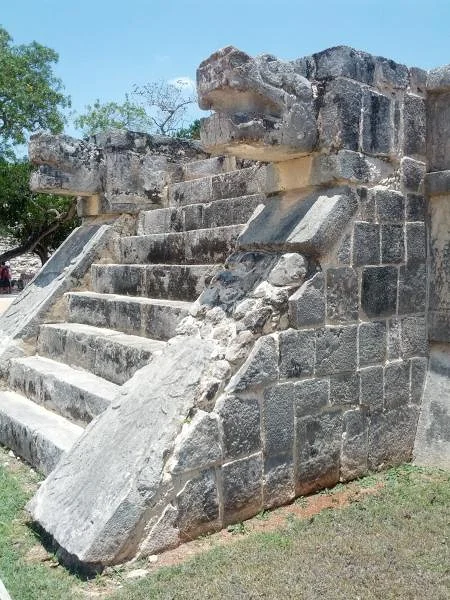
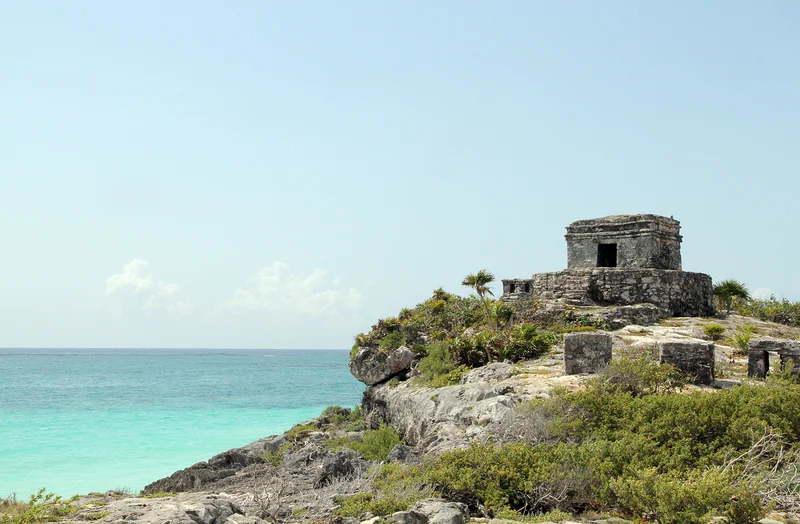
If you are looking for a more laid-back alternative to Cancún without sacrificing a lively nightlife or total tourist convenience, Playa del Carmen checks every box. Couples, bachelor parties, families, and scuba divers all find their rhythm here. The city also serves as an ideal base camp for exploring the entire Riviera Maya: cenotes, the ruins of Tulum, the island of Cozumel, and Chichén Itzá are all within a two-hour drive.
On the other hand, if you are dreaming of a wild, untouched Mexico, you will be searching for a long time. Playa del Carmen was built for tourism, and you can feel it. Quinta Avenida, a 22-block pedestrian thoroughfare that runs parallel to the beach, sometimes feels more like an open-air shopping mall than a Mexican street. You will be constantly approached by people trying to sell you excursions, t-shirts, and occasionally, things much less legal.
Travelers seeking serious cultural immersion will prefer cities like Oaxaca, Mérida, or San Cristóbal de las Casas.
The question of safety in Playa del Carmen
Playa del Carmen remains statistically one of the safest cities in Quintana Roo for tourists. Cartels have a presence, but visitors are not their target. There have been past incidents of gunfire in nightclub areas, particularly around Calle 12.
Nothing is systematic, but keep your usual precautions in mind: do not walk around with valuables, stick to populated areas at night, and check local news before heading out. CAPTA, the tourist protection center, has several offices in town if you run into any trouble.
Sargassum, the unwanted guest
This is the topic no one mentions in the brochures. For several years now, massive amounts of sargassum seaweed have been washing up on the beaches of the Riviera Maya, especially between April and August. Some days, the beaches are covered in a brown carpet that smells like rotten eggs. Other days, the water is crystal clear. It is entirely unpredictable.
Hotels mobilize cleaning crews every morning, and floating barriers have been installed offshore, but the problem persists. Our honest advice: if the beach is your absolute priority, aim for November to March, or consider alternatives like Isla Mujeres or the west coast of Cozumel, which are significantly less affected.
An accessible budget, if you avoid the tourist traps
Playa del Carmen is very affordable if you step off Quinta Avenida to eat and drink. Expect to spend between 600 and 1,800 MXN (about $30-90) per day depending on your style: a hostel bed starts at 200-300 MXN (about $10-15), a decent double room costs between 800 and 2,000 MXN (about $40-100), and a meal at a local taqueria runs 40-80 MXN (about $2-4). Resorts and beach clubs, however, can easily triple that tab.
Quinta Avenida and the center: The noisy heart of Playa
There is no escaping it. Quinta Avenida is the backbone of the city, a long pedestrian artery that runs from Parque Fundadores in the south all the way to Calle 40 in the north. International boutiques, restaurants of every nationality, cocktail bars, and art galleries line the street without interruption. The atmosphere is electric at night, almost too much for some.
Beyond Calle 28 to the north, the Quinta becomes quieter and more local. This is where residents and expats have their hangouts. Take the time to head over to 10th Avenue and the side streets: you will find colorful murals, small independent shops, and an atmosphere that reminds you that you are indeed in Mexico.
Friendly tip: avoid the restaurants on the Quinta between Calle 2 and Calle 14. This is the most tourist-heavy zone, and prices are two to three times higher for quality that is often mediocre. Head north of Calle 28 or go west toward Avenida 30 to eat like the locals.
The beaches: Between postcards and reality
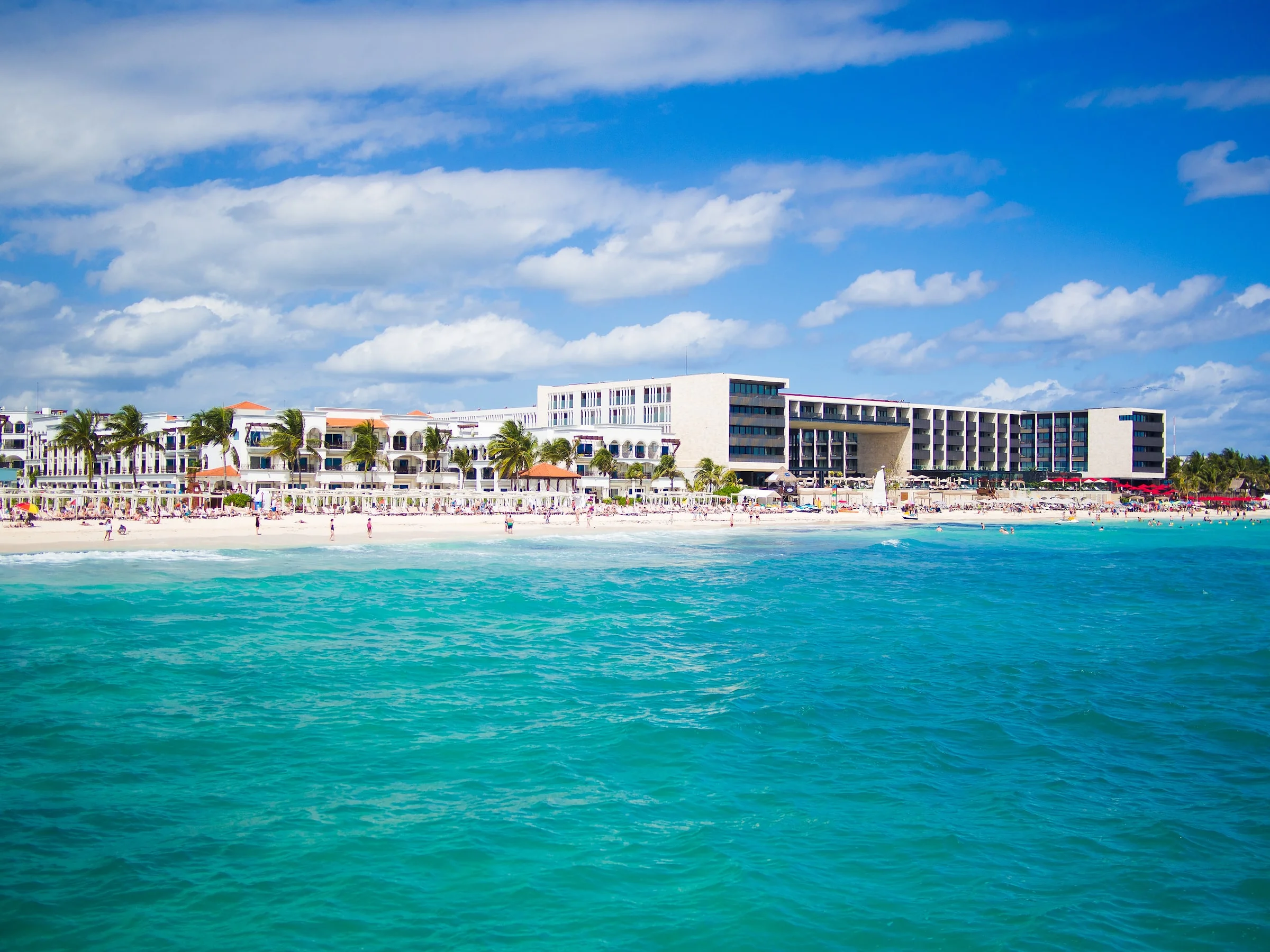
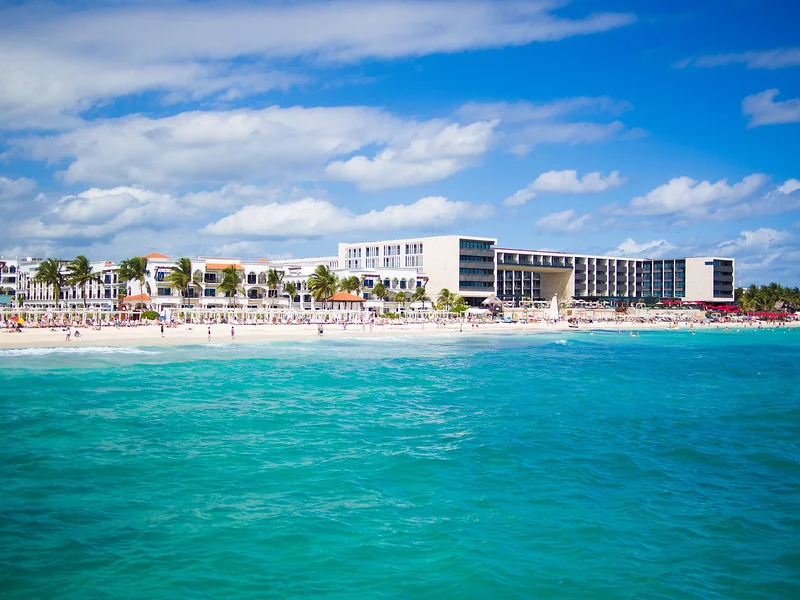
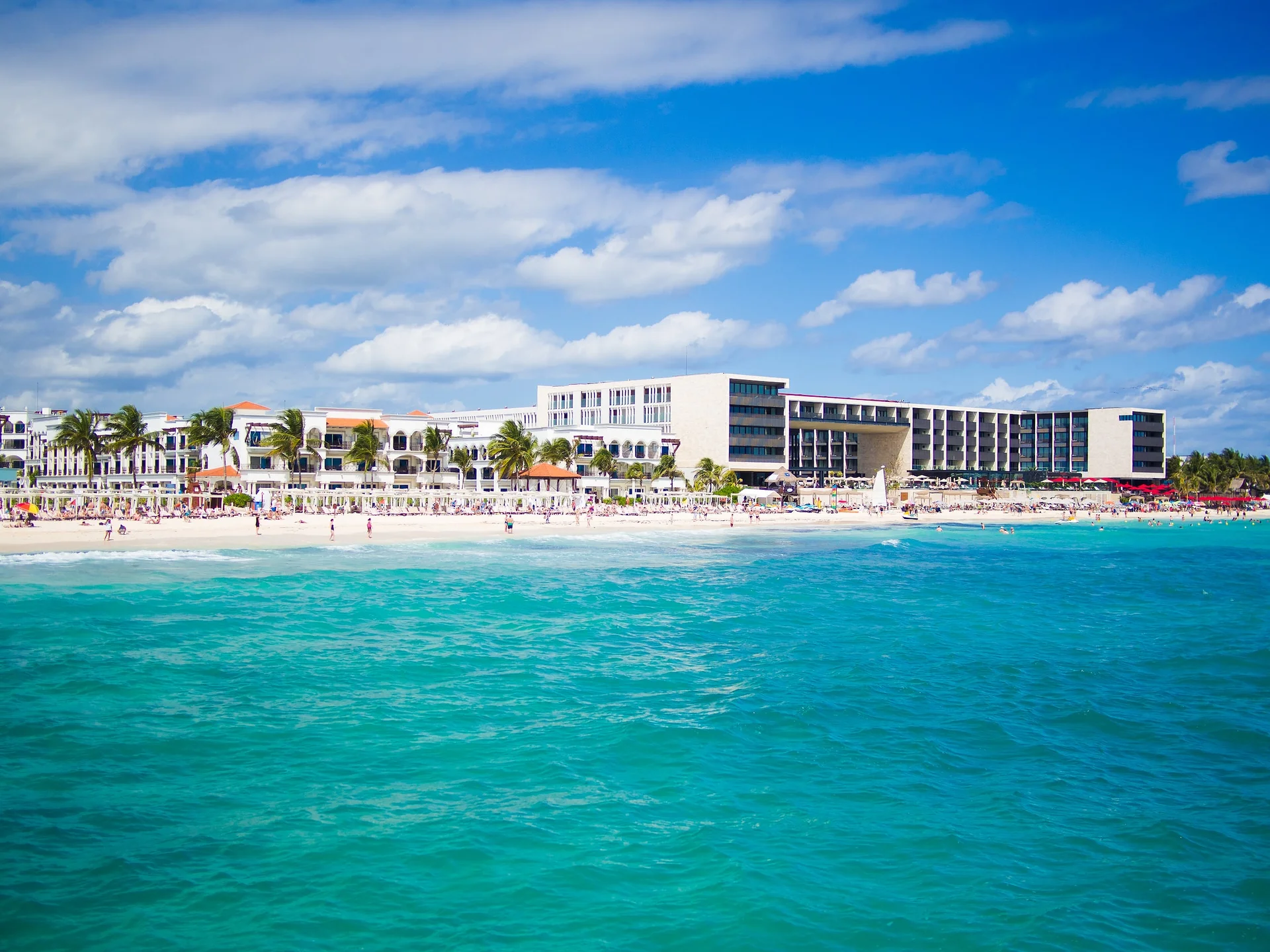
The main beach of Playa del Carmen, facing the city center, looks great in photos but is often crowded and prone to sargassum. For a more pleasant experience, two options stand out.
Punta Esmeralda, north of the city, is the favorite beach of local Mexican families. White sand, palm trees, and a small freshwater cenote that emerges right on the beach. Entry is free. On weekends, the place is overrun by locals. On weekdays, it is a quiet corner of paradise, ideal for a sunset.
Playa Xpu-Ha, a 30-minute drive to the south, offers clear turquoise waters and a setting that is still relatively preserved. Entry costs about 50 MXN (about $2.50), and for 200 MXN (about $10), you get a credit toward the beach restaurant. Playa Mamitas, on the other hand, is the most festive: loud music, beach club, and a Spring Break atmosphere. You have been warned.
Cenotes and excursions: The region's true treasure
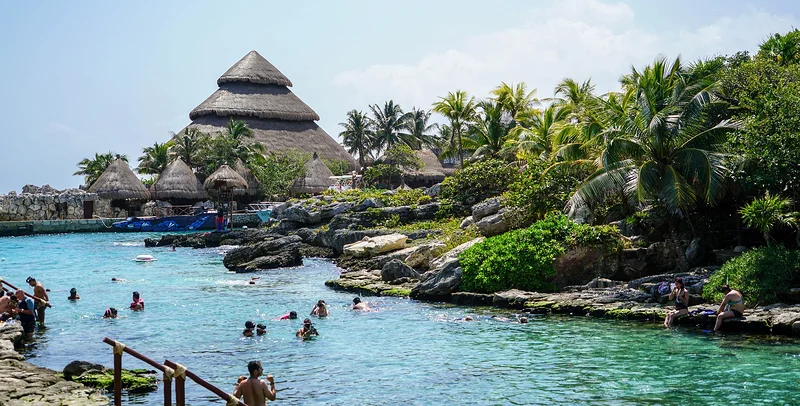
Cenotes are the reason many travelers fall in love with the Yucatán. These natural sinkholes filled with supernatural blue freshwater dot the entire peninsula. Near Playa, cenotes Azul, Cristalino, and Jardín del Edén are reachable in 15-20 minutes by car and offer memorable swimming experiences. Arrive early in the morning to avoid the crowds.
For a more intense experience, Río Secreto is a network of semi-submerged caves where you navigate between stalactites and crystal-clear water during a guided tour. It is one of the most striking activities in the region. Expect to pay about 1,600-2,000 MXN (about $80-100) per person, professional photos included.
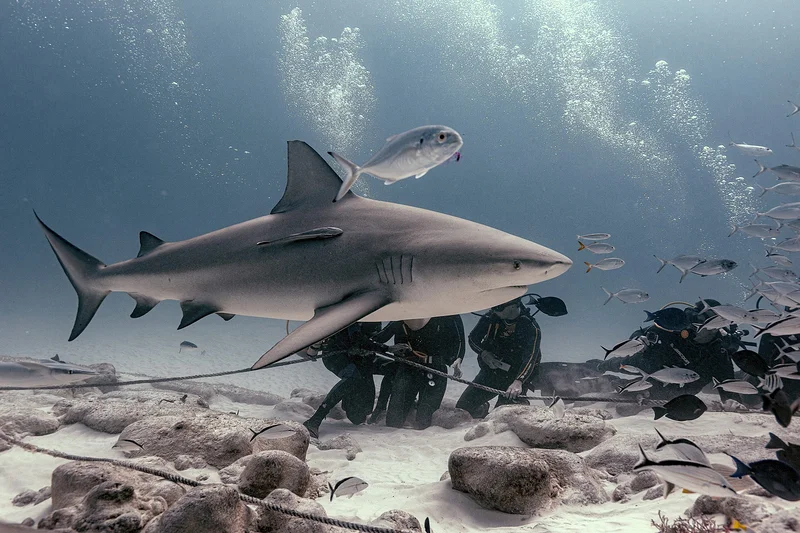
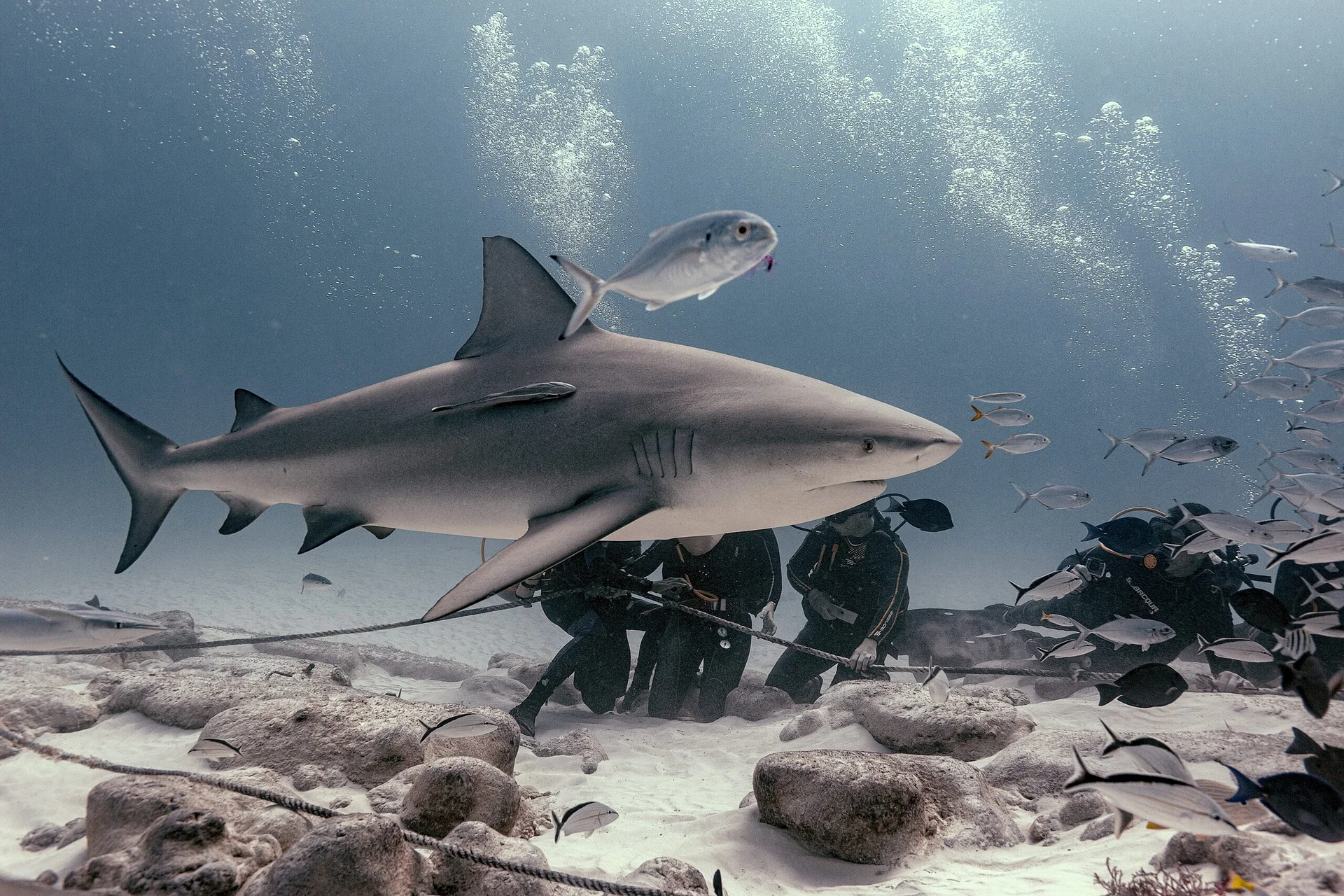
Experienced divers will note that Playa del Carmen is one of the few places in the world where you can dive with bull sharks in natural conditions from November to the end of February. The coral beds off the coast of Cozumel, accessible via a 45-minute ferry, are part of the second-largest reef on the planet.
Friendly tip: for excursions to Tulum or Cobá, avoid the organized tours sold on the Quinta, which are often overpriced and stuffed with stops at souvenir shops. Instead, take a colectivo from Calle 2 for just a few dozen pesos.
Nightlife: From cantina to mega-club
At night, Playa del Carmen transforms. The epicenter of the party is concentrated around Calle 12, with massive clubs like Coco Bongo, a wild cabaret mixing circus acts, impersonators, and a giant dance floor. The shows do not start until 11:00 PM.
For a lower-key evening, Cantina Don PP serves hearty traditional food accompanied by tequila in a local and relaxed setting. Manne's Biergarten, run by a German who has lived here for years, is an unlikely hangout two blocks from the Quinta: craft beers, German food, and a clientele of regulars from all over the world.
Where to eat and drink in Playa del Carmen?
The culinary scene in Playa is one of its best surprises. The local specialty is tacos al pastor: marinated pork slow-cooked on a vertical spit, served with a piece of pineapple, cilantro, onions, and a spicy salsa. To taste the best in the city, head to El Fogón on 30th Avenue. There is often a line, but that is the sign you are in the right place. Tacos start at about 20 MXN (about $1) each.
For a memorable breakfast, La Cueva del Chango, tucked into a tropical garden off the Quinta, offers chilaquiles and huevos rancheros that justify the trip alone. In the evening, the same spot turns into a romantic restaurant. Another local address is El Ñero, a late-night taqueria that opens at 5:00 PM and serves mostly neighborhood residents. Their tacos al pastor rival those at El Fogón.
The most unique experience remains a dinner at Alux, a restaurant housed in a 10,000-year-old natural cave with a cenote inside. Book in advance and try the cocktails based on Xtabentún, an anise liqueur of Maya origin.
Where to sleep in and around Playa del Carmen?
Choosing the right neighborhood makes all the difference. The sector between Calle 14 and Calle 28, on the east side, offers the best compromise between beach proximity, restaurant access, and relative quiet at night. Avoid sleeping near Calle 12 unless you want to vibrate to the rhythm of the bass until 4:00 AM.
Playacar, to the south, is a gated residential complex with all-inclusive hotels, better-maintained beaches, and the free Maya ruins of Xaman-Ha. It is the ideal choice for families who want calm with the city within walking distance. North of Calle 38, the atmosphere is more residential and prices drop: Airbnb-style rentals offer good value for money there.
How to get to and around Playa del Carmen?
The closest airport is Cancún (CUN), the busiest in Mexico. From the US, there are direct flights from most major hubs. From the airport, the ADO bus reaches the center of Playa in about an hour for 200-240 MXN (about $10-12): it is air-conditioned, modern, and reliable. A private taxi costs around 2,000 MXN (about $100).
Once there, the center is easy to navigate on foot. For excursions along the coast toward Tulum or Akumal, colectivos are unbeatable: a few dozen pesos for fast and frequent trips. The ferry to Cozumel leaves every hour from the terminal at the end of Calle 1, costing about 390 MXN (about $20) round-trip for a 45-minute crossing. Renting a car is recommended if you plan to explore remote cenotes or drive to Chichén Itzá.
When to go?
The best time is from November to March: pleasant temperatures around 80-86°F, little rain, and almost no sargassum. This is also the high tourist season, with higher prices and maximum crowds between Christmas and New Year's. For an ideal compromise between weather, crowds, and budget, aim for April-May or November. Avoid June to September if beaches are essential to your stay: this is the peak of sargassum, the heat is crushing, and hurricane season is in full swing.
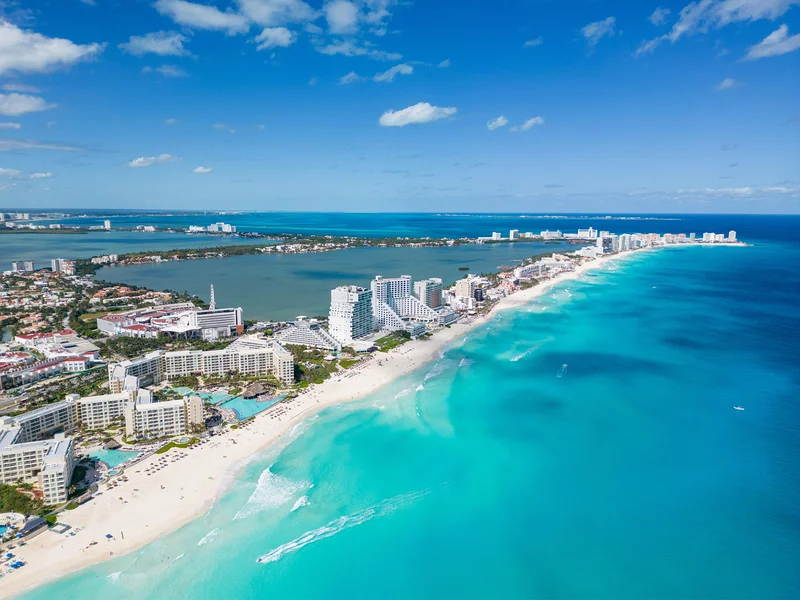
Playa del Carmen is a big strip with tons of shops, restaurants, and clubs, always super lively, day and night. If you have seen the cult scene from the movie The Mask with Jim Carrey and Cameron Diaz, then you absolutely have to go check out the real place where it was filmed: Coco Bongo on the Playa del Carmen avenue.
The must-do excursion in Mexico leaving from Playa del Carmen is going to see the whale sharks. The best time is in August, and you will have the chance to come across the largest fish on the planet. You can even dive with them: I was only a few centimeters away.
It is forbidden to touch them, of course, but everyone respected the rules. Each group had about 10 minutes to enjoy it so as not to stress the whale shark, which was swimming calmly.