Philipsburg, a Capital on a Sandbar
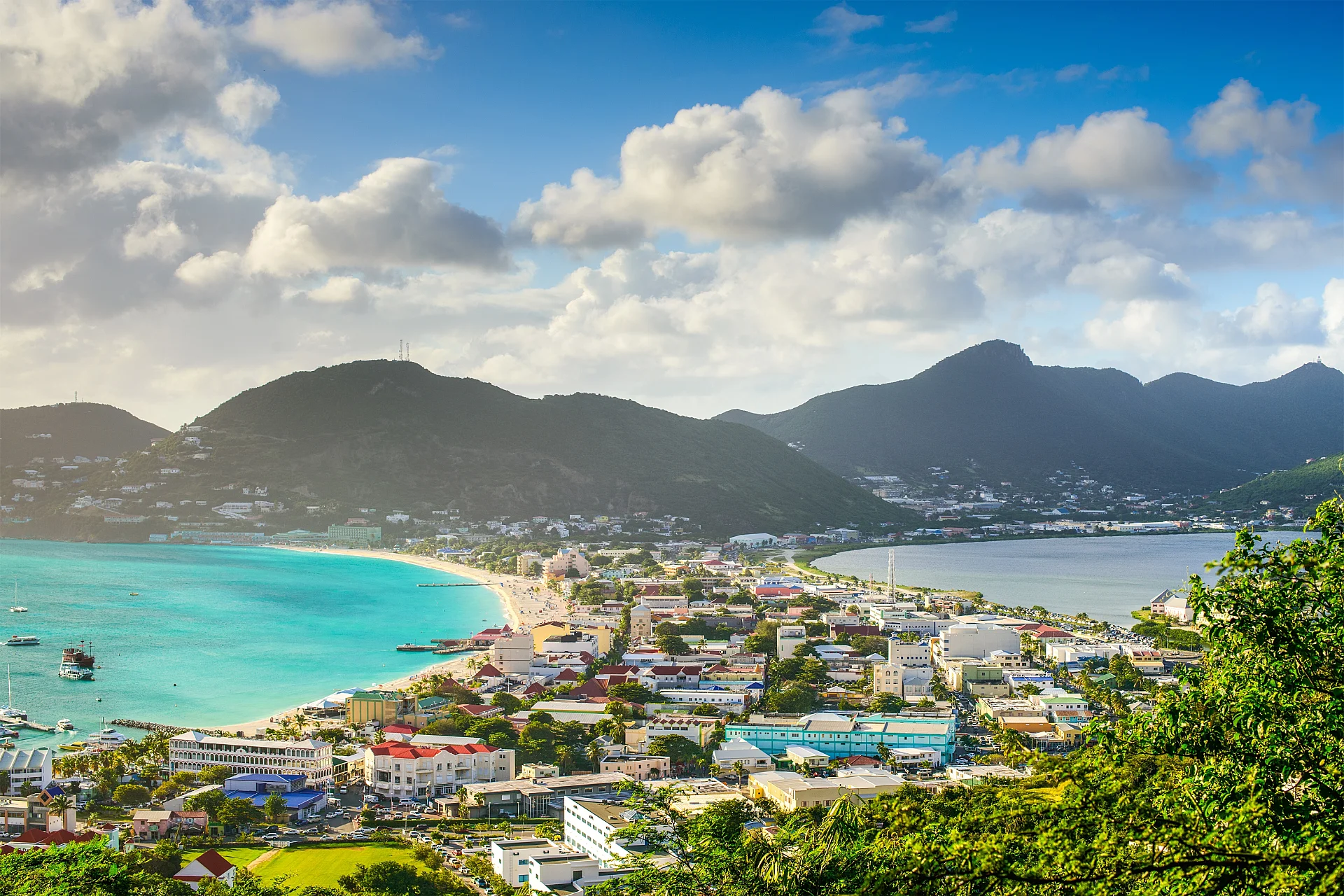
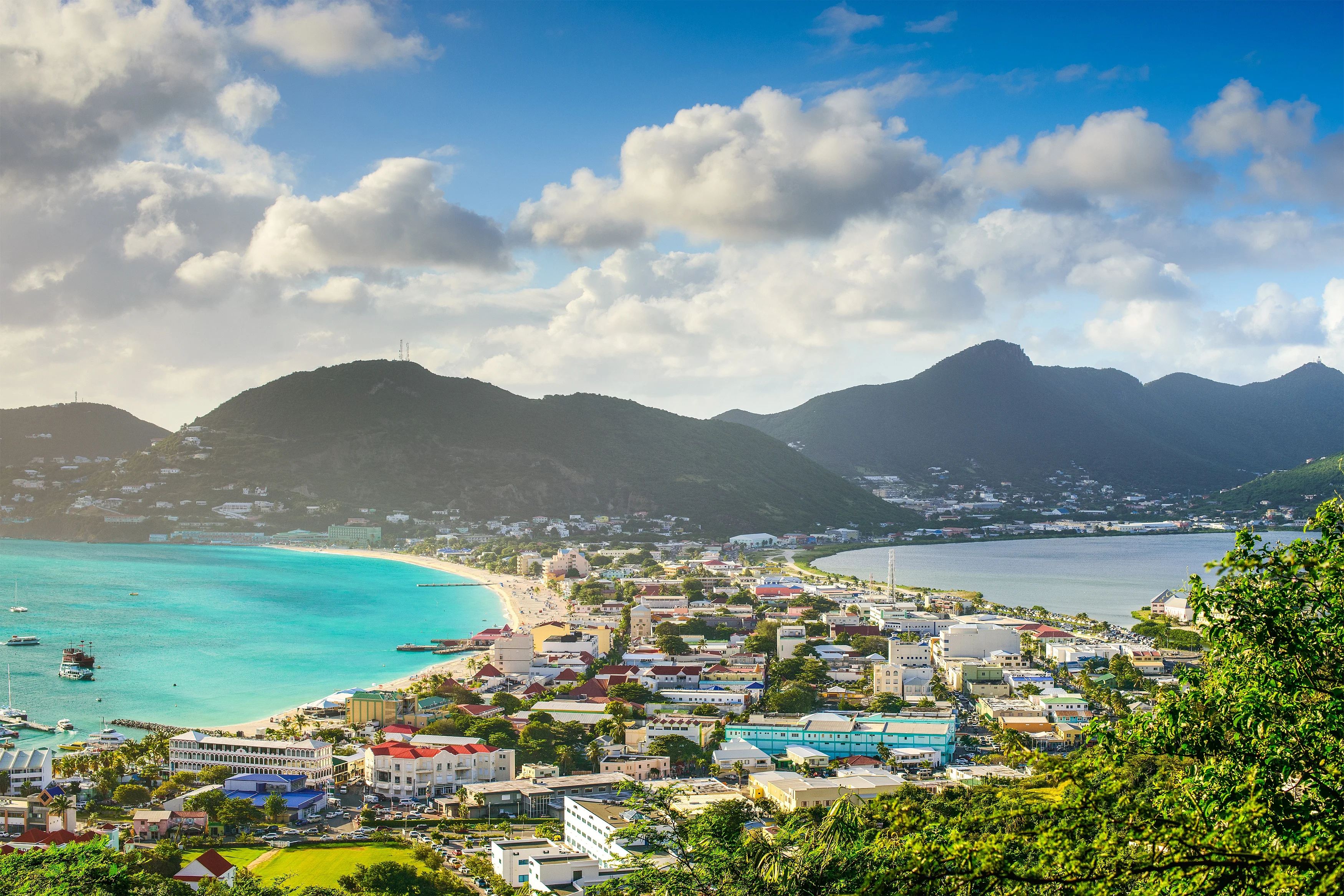
Two streets, a lagoon behind, the sea in front. The town fits entirely on a narrow strip of land three hundred meters wide, wedged between Great Bay and the Great Salt Pond. Everything here revolves around one thing: the arrival time of cruise ships.
A Destination Made for You?
People come to Philipsburg for duty-free shopping, drinks right on the sand, and boat departures. It is the most convenient spot on the island, putting the cruise port, ferries, taxis, banks, and car rental agencies just minutes apart.
Anyone looking for quiet should sleep elsewhere. Between 9 AM and 4 PM on cruise ship days, the beach and main street are packed. Come evening, the town clears out and most kitchens close early.
Good destination for:
- A cruise stopover, everything is walkable from the pier
- Duty-free shopping: liquor, jewelry, electronics
- Heading out on the water: diving, catamarans, the ferry to Saint-Barthélemy
- Lunch facing the bay on the boardwalk
Not ideal for:
- A quiet beach vacation
- Nightlife, the town goes to sleep early
- Historic heritage, outside of Fort Amsterdam and Wathey Square
- Finding parking on a busy day
A Budget That Follows the Cruise Schedule
| Expense | Range |
|---|---|
| Night in a small downtown hotel | 90 to 140 USD |
| Night in a beachfront hotel | 180 to 350 USD |
| Quick bite at a local lolo or snack shack | 8 to 15 USD |
| Meal at a boardwalk restaurant | 25 to 45 USD |
| Beach chair and umbrella on Great Bay | 15 to 25 USD |
| Day out including transport | 45 to 70 USD |
Practical Realities
You can walk across town in fifteen minutes, which is fortunate since parking here is the most difficult on the island. From the Point Blanche cruise terminal, a water shuttle drops passengers off right in the center at Captain Hodge Wharf, saving you the taxi line.
Prices are listed in US dollars and accepted everywhere, even though the official currency is the Caribbean guilder. Outlets are American style and run on 110 volts, unlike the French side of the island. English is the everyday language, while Dutch is used for administration.
Front Street, Back Street, and the Boardwalk
Front Street
Front Street is the commercial backbone of the town: seven hundred meters of jewelry stores, electronics shops, and duty-free liquor boutiques that pull up their shutters as the first cruise ship docks. On days without cruise ships, the street is quiet and half the shops remain closed.
Back Street
One street back, Back Street shows the other side of town with hardware stores, local eateries, and hair salons. This is where you can eat for a third of the price. In between, narrow alleys called steegjes, a legacy of the Dutch layout, connect the two main axes every fifty meters.
BoardWalk
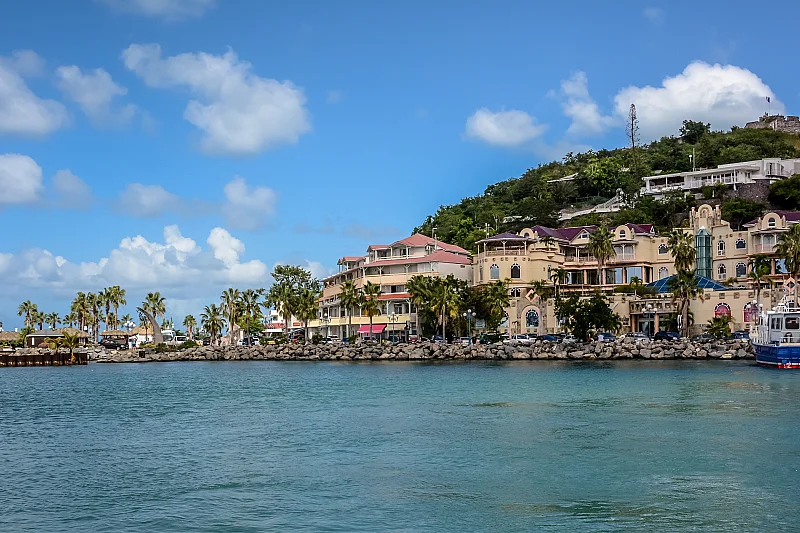
The boardwalk, a wooden promenade built along Great Bay and rebuilt after Hurricane Irma, is the best spot in town to sit down. You will find bars, ice cream shops, grilled fish, and cruise ships framing the back of the bay.
Friendly tip: check the cruise ship schedule before planning your day in town. Two ships on the same morning means five thousand extra people squeezed onto two streets and heavily inflated beach chair rentals.
Salt, the Fort, and the Courthouse Square
The Great Salt Pond bordering the northern edge of the town was its sole economic driver for three centuries. Salt was harvested by hand here and exported all the way to North America, with operations continuing until the mid-twentieth century. Today the pond serves as a bird sanctuary, home to herons and terns.
A Bit of History
On Wathey Square, the white and green pedimented courthouse built in the late eighteenth century is the most photographed building on the island. It served as a prison, post office, and town hall before returning to its role as a courthouse.
To the west, the peninsula separating Great Bay from Little Bay holds the ruins of Fort Amsterdam, the first Dutch military outpost in the Caribbean, established in 1631. It takes a twenty-minute hike up from the beach to reach it, rewarding you with views of both bays at once.
Great Bay, the Beach, and What Lies Beneath
Great Bay Beach stretches along the boardwalk for a mile and a half of pale sand. It is convenient, lively, and never deserted. The water is calm, the slope is gradual, and the bay is sheltered by the fort's peninsula. Rows of beach chairs are available to rent by the day in front of each bar.
Sint Maarten's Prime Dive Spot
Just offshore and a short boat ride away, the wreck of the HMS Proselyte has rested at a depth of 8 to 16 meters since 1801. Cannons, anchors, and the wooden ribs of a British frigate have turned into an artificial reef. It is the island's most popular dive site and remains accessible to beginners.
Departures leave from downtown marinas, including Bobby's Marina and Great Bay Marina, which also serve as departure points for daytime catamarans and ferries to Saint-Barthélemy. Snuba diving, which combines snorkeling with a surface-supplied air hose, lets you explore without needing a tank on your back or a scuba certification.
Where to Eat and Drink in Philipsburg?
Johnny cakes, golden fried dough served with fish or cheese, are sold on Back Street for two dollars. You should also look out for barbecue ribs, rice and peas from the local lunch spots, and saltfish fritters sold in paper cones.
Guavaberry, a local liqueur made by macerating small wild berries, has its home on Front Street in an eighteenth-century Creole building dedicated entirely to the drink. They offer free tastings of several flavors, delivering a tart kick that might surprise you on the first sip.
For dinner, the boardwalk gets the job done without standing out. The island's best dining tables are located in Grand-Case on the French side, a half-hour drive away.
Where to Stay in Philipsburg and Around?
The town center has few hotels, featuring just a handful of basic spots behind Front Street and two resorts on neighboring bays: Little Bay to the west and Divi Little Bay on the peninsula. Staying right in town makes sense if you want to walk everywhere.
Most visitors choose to stay elsewhere on the island, picking Simpson Bay for restaurants and nightlife, Maho for large resorts, or Dawn Beach for quiet surroundings. None of these areas are more than twenty-five minutes from the capital.
How to Get to Philipsburg?
Princess Juliana International Airport is 12 kilometers away and about a twenty-minute drive outside of rush hour. Taxis charge a fixed official rate per trip, running around fifteen dollars for one or two people. There are no direct buses connecting the airport terminal to the center.
Cruise passengers arrive at the Point Blanche terminal, 1.5 kilometers away, and can reach town via water shuttle, taxi, or a twenty-minute walk along the coastal road. Ferries from Saint-Barthélemy dock directly in the heart of downtown.
How to Get Around Philipsburg?
You can easily explore the town on foot since everything from the two main streets to the beach sits within a ten-minute radius. To see the rest of the island, a car rental is necessary, and agencies are available both downtown and at the airport.
Shared vans depart from Back Street toward Simpson Bay, Marigot, and Cole Bay without a fixed timetable. You simply flag them down, and rides cost two to three dollars. Taxis line up at Wathey Square with official rates posted, though you should always confirm the price before getting in.
When to go?
From December to April, the air is dry and the sea is calm, but the town receives the highest volume of cruise ships. The months of May, June, and November offer great weather with fewer crowds and more reasonable rates.
Avoid September and October, the peak of hurricane season, when many shops and restaurants close down for several weeks.