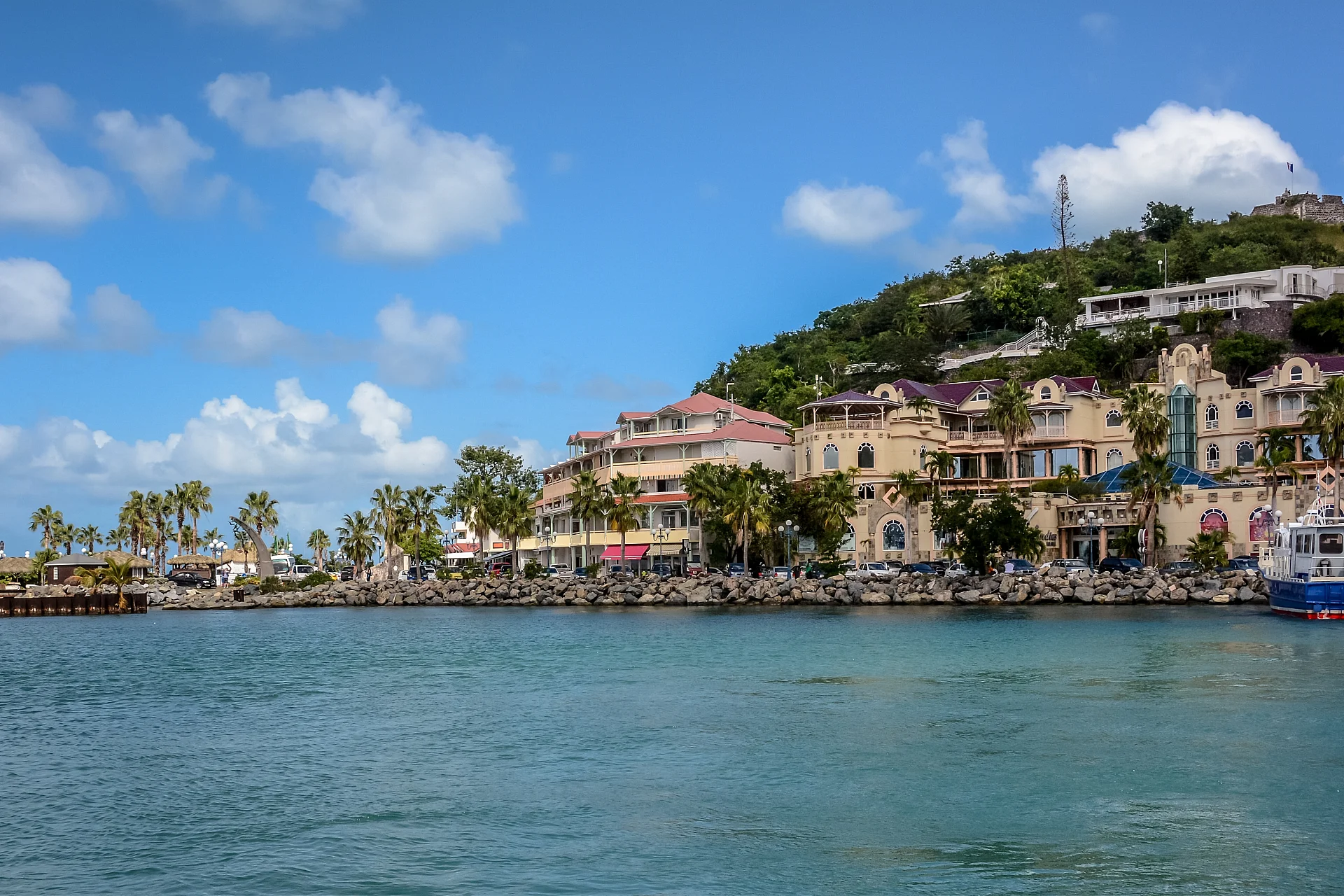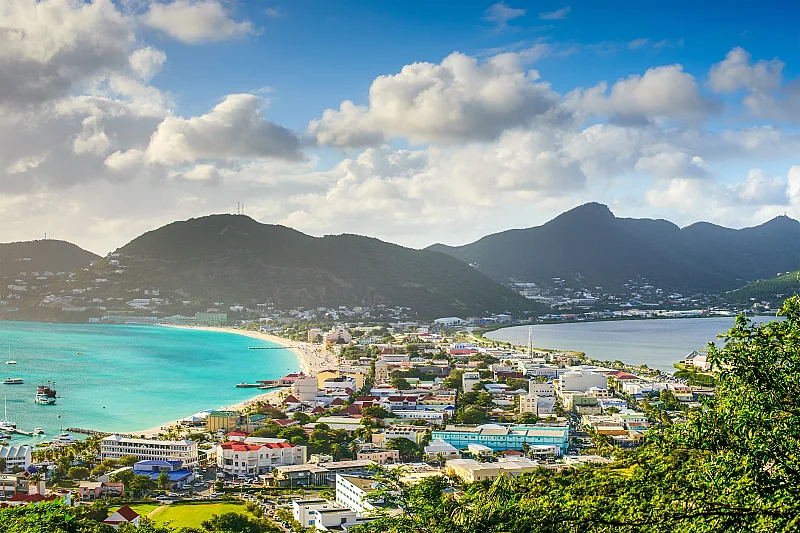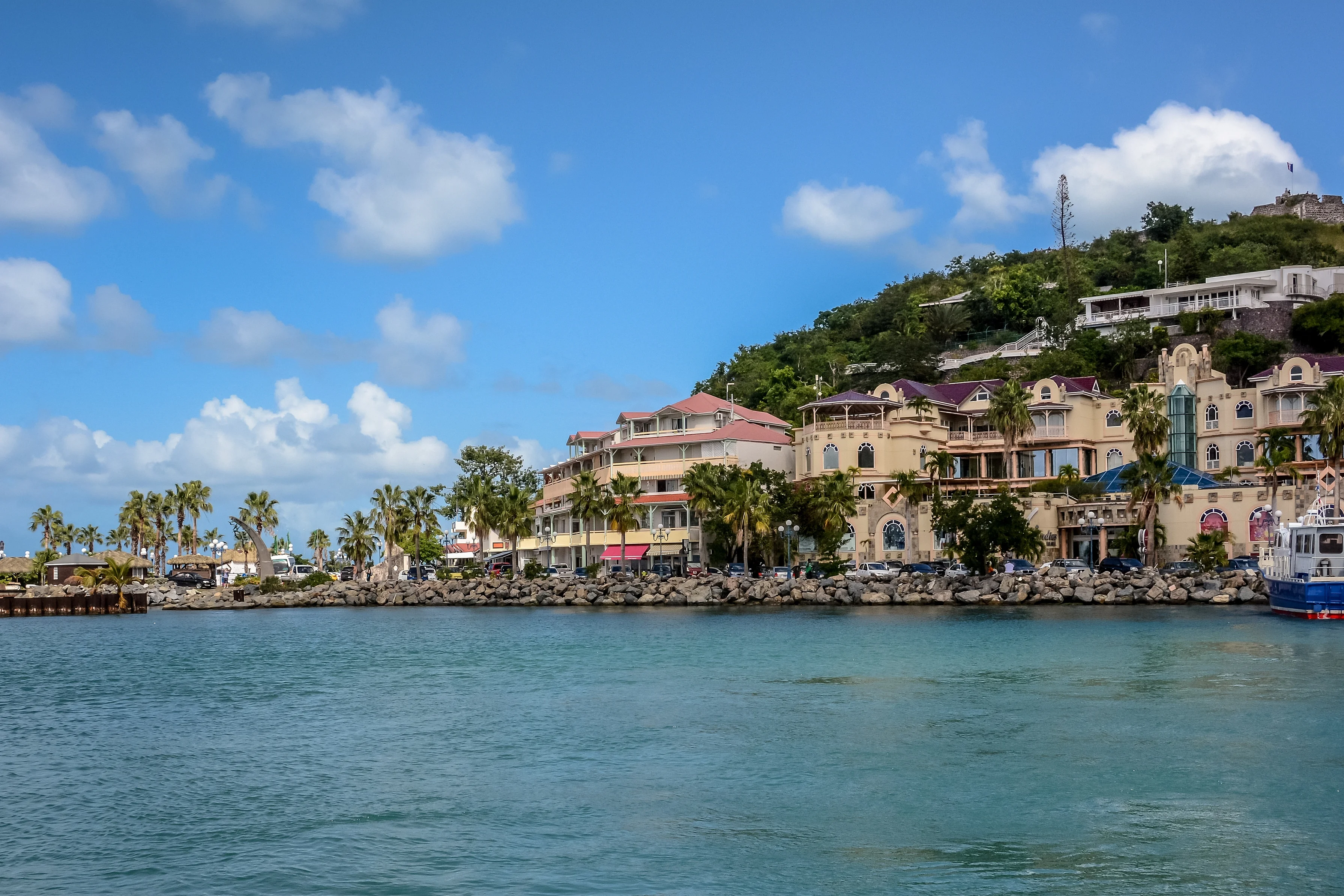
Marigot, the Creole capital of grilled fish and boat varnish
The waterfront market opens before the heat sets in. Under the colorful tin roofs, vendors lay out their mangoes and morning catch, while sailboats bob gently in the bay. Marigot skips the polished resort vibe. It is a lively, slightly chaotic capital of 5,700 residents that holds onto its Caribbean soul despite the luxury boutiques that have sprouted along the harbor.
Is this destination for you?
You will like Marigot if you want a practical base for exploring St. Martin, with beaches just a short drive away, colorful markets, and a small-town atmosphere that moves to the rhythm of boats and commerce. It is also an excellent spot for fans of Creole and French gastronomy, offering everything from casual lolos to more refined tables.
You might be disappointed if you picture a postcard beach right in the city center. Marigot is primarily a port and administrative hub rather than a seaside resort. The center can also feel quite quiet at night, especially in the off-season.
Good for:
- Travelers who want a central base to explore the island
- Fans of local markets and Creole cuisine
- Those who enjoy duty-free shopping and neighborhood boutiques
Not ideal for:
- Travelers who want to step right out of bed onto the sand
- Anyone looking for lively weeknight nightlife
A standard Caribbean budget, on the higher side for the region
The French side of St. Martin applies European pricing to many imported goods, which weighs on daily expenses. Plan for a generous budget, especially for lodging during high season.
| Expense | Range |
|---|---|
| Simple hotel night or studio apartment | $68 to $113* |
| Comfortable hotel night or villa | $169 to $340* |
| Quick bite (lolo, Creole snack) | $9 to $17* |
| Restaurant meal | $23 to $45* |
| Car rental per day | $40 to $68* |
Estimated rates subject to change
Practical realities: renting a car is recommended, and the island is bilingual
Marigot is easy to explore on foot for the center and market, but to reach the beaches of Grand Case, Orient Bay, or Baie Nettlé, a car quickly becomes essential. Public transit consists mostly of local minibuses that are inconvenient for visitors.
The French and Dutch sides of the island share a single landmass, with no physical border, allowing you to cross from one side to the other without noticing. French dominates in Marigot, but English and Creole are spoken everywhere, a legacy of the island's eventful history between colonial powers.
The market and the waterfront
The beating heart of Marigot is its fish and fruit market right on the bay. On Tuesday and Saturday mornings, the crowds peak as spices, tropical fruits, fresh fish, and woven baskets mix in a classic Caribbean atmosphere.
Right next door, the Marina Port La Royale boardwalk lines up cafes and shops facing the sailboats. It is the ideal spot for a fresh fruit juice on a terrace while watching the boats move in and out.
Friendly tip: arrive at the market early on Saturday morning, before 9 AM. Afterward, the heat climbs, the best produce sells out, and tour groups flood the aisles.
Fort Louis and the island's colonial history
Built at the end of the 18th century to protect the port from English attacks, Fort Louis overlooks Marigot from its hilltop. The climb takes about ten minutes on foot from the center via a shaded staircase.
The reward at the top is an unobstructed view of the entire bay, the colorful roofs of the town, and on clear days, neighboring islands. Admission is free and the site has no strict hours, making it an easy stop to squeeze in late in the afternoon when the low light flatters the panorama.
Duty-free shopping on rue de la République
Marigot maintains a reputation as a shopping paradise inherited from its status as a free port. Rue de la République and rue du Général de Gaulle concentrate jewelry stores, perfumeries, and spirits shops, often at more attractive prices than mainland France.
The atmosphere remains more modest than Philipsburg on the Dutch side, which caters heavily to cruise passengers. In Marigot, shopping feels human-scale, sandwiched between cafes and shady pauses.
Where to eat and drink in Marigot?
The lolos, the open-air street food shacks set up near the market, serve generous Creole dishes like grilled chicken, conch skewers, salt cod fritters, and rice and peas. They offer the best value in town for an authentic lunch.
For a more refined dinner, the restaurants along the marina boardwalk feature French-Creole cuisine highlighting freshly landed seafood. Fish colombo and chayote squash gratin rank among the must-try dishes on the island.
Where to stay in Marigot and the surrounding area?
Downtown Marigot offers few beachfront accommodations. It is better to look toward Baie Nettlé, a few minutes away by car, which lines up hotels and residences with direct access to a calm beach.
For a livelier stay, Grand Case, about 15 minutes to the north, draws visitors with its renowned beachfront restaurants. Those who prefer to stay in town will find small, practical hotels for exploring the market and port on foot.
How to get to Marigot?
The island is served by Princess Juliana Airport on the Dutch side, about twenty minutes by car from Marigot. Direct flights run from several US and European cities, particularly in high season, with frequent connections via the French West Indies.
From Guadeloupe or Martinique, regional flights reach the island in just over an hour, making it a practical option for combining multiple Caribbean destinations.
How to get around Marigot?
Downtown is easy to navigate on foot between the market, the fort, and the port. Taxis exist but remain expensive and scarce outside tourist zones.
Car rental is the most flexible solution for exploring the surrounding beaches and villages. Roads are generally in good condition, though traffic can back up during rush hour around the center.
When to go?
The dry season from December to April delivers the most pleasant weather and coincides with peak tourist season, meaning higher prices. Hurricane season runs from June to November, with peak watchfulness in August and September. Check weather forecasts carefully if you travel during this window.