Visiting Cape Verde: Atlantic Africa of a thousand faces
Ten volcanic islands emerge from the Atlantic, 600 kilometers off the coast of Senegal. Here, black lava meets white sand, arid mountains plunge into turquoise ocean waters, and morna rhythms echo through paved alleyways. Cape Verde is neither entirely African, nor entirely European, nor completely Caribbean. It is a mixed-race archipelago that has forged its own identity, between a Portuguese heritage and West African roots.
Is this destination right for you?
This country is aimed at travelers seeking authenticity rather than flashy luxury. If you dream of all-inclusive resorts and poolside entertainment, look elsewhere.
Cape Verde rewards those who accept bumpy roads, staying in local guesthouses, and eating cachupa in small neighborhood diners. The archipelago draws hikers (Santo Antão is a trekking paradise), kitesurfers (Sal and Boa Vista offer exceptional conditions), and live music lovers who hang out in Mindelo bars until the early morning hours.
Be careful, however: infrastructure remains basic on some islands. Mountain roads can be grueling, inter-island ferry connections are sometimes canceled due to wind, and the rainy season (August to September) turns certain trails into torrents.
The cost of living is higher than you might expect for West Africa because almost everything is imported. But for anyone willing to accept these constraints, the archipelago reveals raw beauty and incomparable human warmth.
Santo Antão and Fogo: Islands of character
Island of Santo Antão
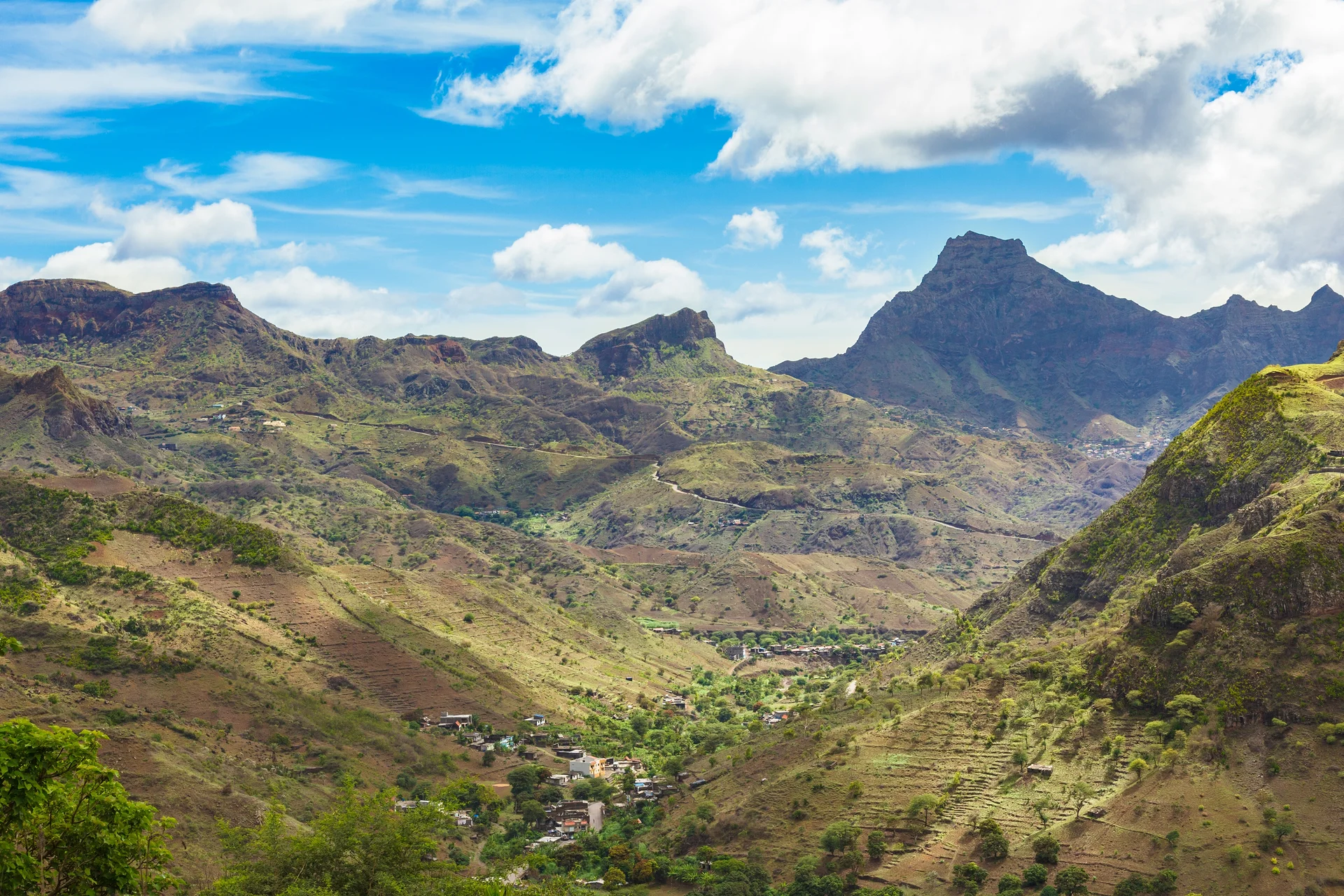
Santo Antão embodies mountainous and agricultural Cape Verde. From the ferry that drops you off at Porto Novo (after a 1-hour crossing from Mindelo), you discover an island sculpted by erosion. The road winding toward Ribeira Grande cuts through breathtaking landscapes: verdant valleys planted with sugarcane, villages clinging to the mountainsides, and gravity-defying terraced farming.
The hiking trails there are spectacular. The trek from Cova to Paul takes you down into a crater transformed into a lush garden. Three to four hours of walking through banana trees, papaya trees, and coffee plants, with sometimes steep slopes but a constant spectacle. Locals brew artisanal grogue (local rum) in traditional stills.
Friendly tip: hire a local guide for your hikes. Not only do they know the best routes (some trails are poorly marked), but they open doors to local homes to taste homemade grogue and share a cup of coffee.
Island of Fogo
Fogo makes a different impression. This island shelters an active volcano that spewed its last lava flows in 2014-2015. You can climb up to the crater of Pico do Fogo (2,829 meters), the highest peak in the archipelago. The ascent starts before dawn to avoid the clouds that pile up by late morning. Count on 4 to 5 hours of climbing through volcanic ash, your legs burning, but the view from the summit takes in the entire archipelago.
At the foot of the volcano, the village of Chã das Caldeiras is slowly being reborn. Residents rebuilt their lava stone homes after the eruption. Here, grapevines are cultivated on volcanic soil that produces a surprisingly good wine. Local cellars offer tastings in a lunar setting.
Sal and Boa Vista: Beachfront Cape Verde
These two flat islands embody the tourist face of the archipelago. Sal draws kitesurfers from all over the world to Ponta Preta and Kite Beach. From November to June, the trade winds blow steadily, creating perfect conditions for gliding across the water. Kite schools are everywhere in Santa Maria, the island's main tourist hub.
But Sal is also white sand beaches that stretch for miles. Santa Maria beach fills up with European tourists, sure, but if you walk 15 minutes south, you find nearly deserted stretches. Water stays around 23-25 degrees Celsius year-round, with excellent visibility for snorkeling.
Boa Vista pushes the concept even further with its 55 kilometers of beaches. Chaves beach, on the west coast, offers fine sand stretching 10 kilometers long. The wind blows hard there (great for kiting, less so for lounging), and Atlantic waves hammer the shoreline. From June to October, loggerhead turtles come ashore to lay eggs at night on these beaches.
Excursions from Boa Vista
The interior of Boa Vista reveals a lunar landscape of dunes and desert. 4x4 excursions take you to the Deserto de Viana, where white sand dunes contrast with the intense blue of the sky. Viana, a ghost village abandoned in the 1940s, sometimes emerges from the sand when the wind clears away the ruins.
Friendly tip: to watch sea turtles, book an organized nighttime outing with a local conservation group rather than a standard tourist excursion. You contribute to protecting the nesting sites, and the guides know the right practices to avoid disturbing the animals.
Santiago and São Vicente: The cultural soul
Island of Santiago
Praia, the capital on Santiago, won't win any beauty contests. This sprawling, noisy city concentrates nearly a third of the country's population. But beneath the apparent chaos, it pulses to the rhythm of contemporary urban Africa. The Sucupira market overflows with colorful fabrics, spices, and crafts. The Plateau neighborhoods preserve run-down yet photogenic colonial buildings.
15 kilometers to the west, Cidade Velha is definitely worth the detour. The first European city founded in the tropics (1462), it preserves the ruins of its fortress, its pillory, and its paved main street running down to the sea. The Real fort of São Filipe, perched on a cliff, once kept watch over slave ships. Today a UNESCO World Heritage site, the town tells the complex story of the archipelago, a crossroads of the triangular trade.
Island of São Vicente
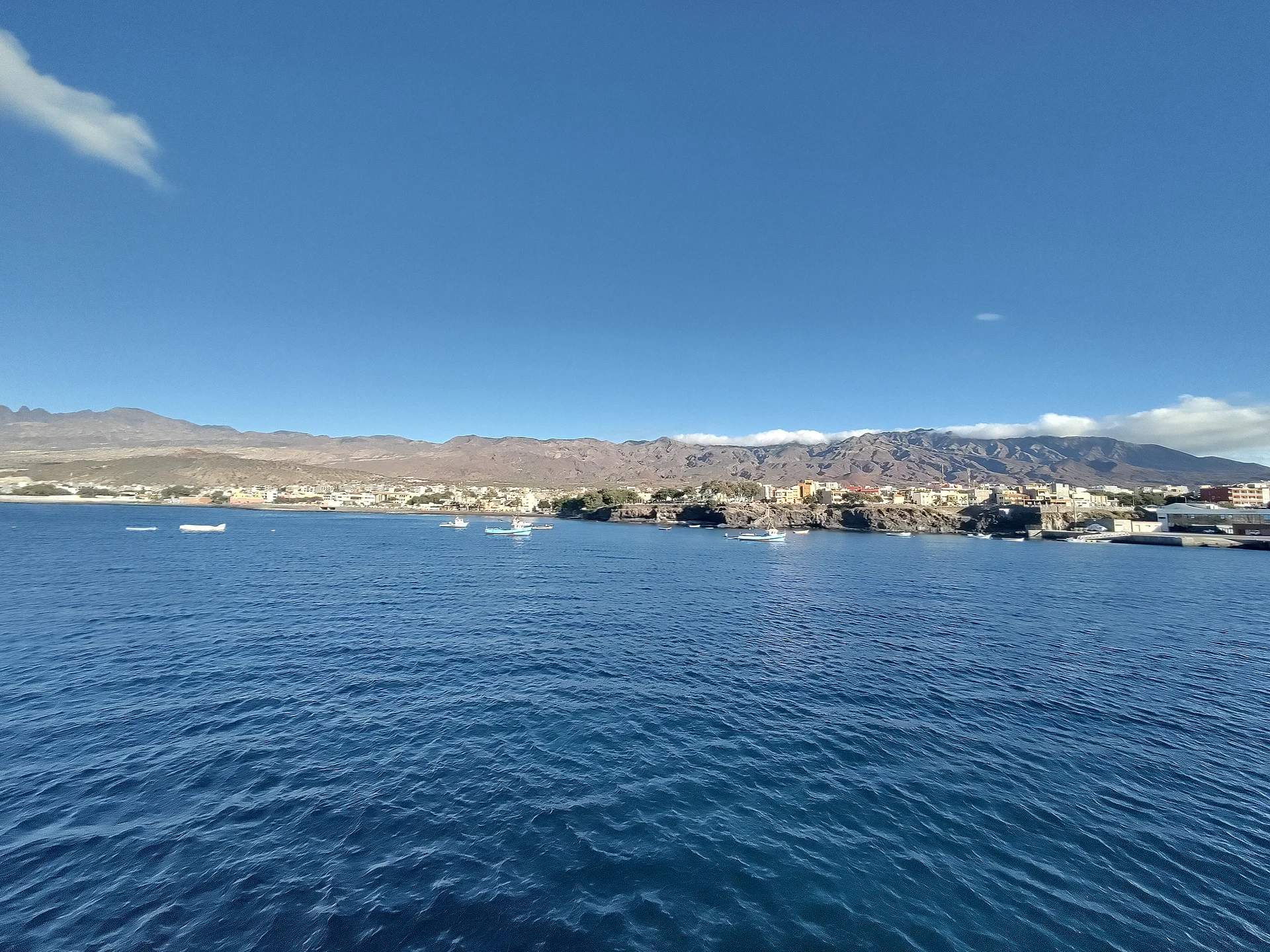
Mindelo, on São Vicente, embodies Cape Verdean elegance. This port city breathes music. In the waterfront bars, live bands roll through morna and coladeira tunes until dawn. Cesária Évora, the barefoot diva, was born here, and her spirit still lingers in every melancholic melody.
Mindelo's bay, encircled by barren mountains, takes on magical hues at sunset. Stroll along Avenida Marginal, sit at a terrace, and order a grogue with lime. The February carnival turns the city into an explosion of colors and rhythms, rivaling Rio in the Cape Verdean imagination.
Cape Verde on the plate: Creole flavors and fresh fish
Cachupa reigns supreme. This hearty stew simmers for hours: corn, red beans, cassava, sweet potato, with pork or tuna depending on the islands and budgets. Every family has its recipe, passed down from generation to generation. The cachupa refogada version uses up the next day's leftovers, pan-fried with onions and eggs.
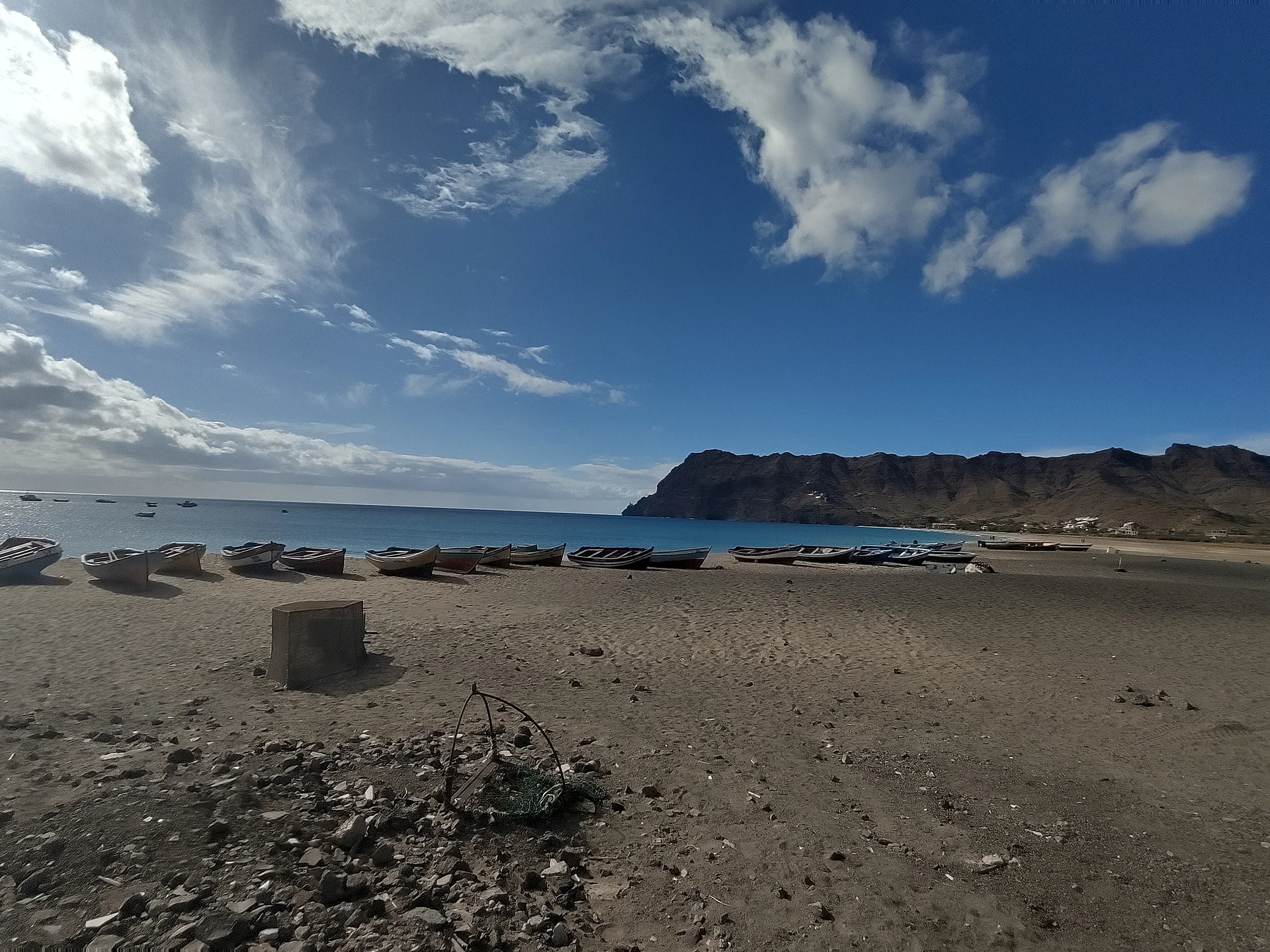
On the beach islands, fish and seafood dominate menus. Grilled lobster in Sal or Boa Vista often arrives straight from the fishermen's traps. Fresh tuna is served as tataki, carpaccio, or simply grilled with a spicy creole sauce. Be careful, prices jump quickly in tourist restaurants: a lobster can cost $28-$33*.
Pastéis (small fried turnovers) are gobbled up everywhere: filled with tuna, local cheese, or sweetened with papaya jam. In the markets, try djagacida, a chicken stew with red beans and rice, or xerém, a corn porridge that accompanies fish.
On the drinks side, grogue (sugarcane rum) is drunk neat or as a punch (with honey and lime). Fogo wine is a pleasant surprise, especially the dry whites produced on volcanic soil. The local Strela beer refreshes after a day at the beach or hiking.
When to visit Cape Verde?
The archipelago enjoys pleasant weather year-round, with temperatures hovering between 23 and 30 degrees Celsius. But two distinct seasons stand out.
The dry season
The dry season, from November to June, represents the ideal period. The sky stays azure blue, rain is extremely rare, and trade winds blow steadily (a delight for kitesurfers, a minor annoyance for anyone looking for glass-calm water). December to March concentrate peak tourism, with Europeans fleeing winter. Accommodation prices jump 30 to 50% during this time, and some beaches on Sal get crowded.
April-May and October-November offer the best compromise: excellent weather, moderate crowds, and softer rates. Hikers prefer November-December, when vegetation is still green after the summer rains.
The rainy season
The rainy season, from August to September, is very relative in Cape Verde (a semi-arid country). Showers are brief but intense, temporarily turning the valleys of Santo Antão into spectacular waterfalls. Temperatures climb a bit (29-31 degrees Celsius), and so does humidity. Certain hiking trails become impassable. On the flip side, this is the low tourist season: half-price hotels, deserted beaches, maximum authenticity.
How to get to Cape Verde?
Flying remains the only realistic option from Europe. Several airlines serve the archipelago, primarily to the airports of Sal (the most heavily trafficked) and Boa Vista.
Direct flights from European hubs like Paris take about 6 hours. TAP Air Portugal offers connections with a layover in Lisbon (8-10 hours total), often the most economical choice (starting at $390-$440* round-trip in low season, $660-$880* in high season). Certain charter airlines operate direct flights from nearby European cities during high season, generally tied to vacation packages.
The national carrier TACV (renamed Cabo Verde Airlines) operates flights from Lisbon and a few West African capitals. Fares vary wildly depending on the season: count on a minimum of $550* direct, more for last-minute bookings.
To reach Praia (Santiago) or São Vicente, flights generally connect through Lisbon or Dakar. Plan for 9 to 12 hours of total travel time. Once there, the inter-island flight network, currently operated by Binter Cabo Verde, connects the main islands, though schedules change frequently and delays are common.
How to get around Cape Verde?
By plane
Island-hopping requires patience and flexibility. Domestic flights by Binter Cabo Verde link islands that have airports (Sal, Boa Vista, Santiago, São Vicente, Fogo). Book early because the small planes fill up fast. An inter-island flight costs $66-$110*. Always keep a backup plan: cancellations and delays are frequent.
By boat
Ferries provide the maritime alternative, cheaper but more unpredictable. The Inter-Ilhas company connects São Vicente to Santo Antão (1-hour crossing, $8.80-$11*), Santiago to Fogo and Brava. The sea can be rough, and crossings are sometimes canceled due to bad weather or technical issues. In high season, arrive at the port 1 hour before departure to guarantee a spot.
By local transport
On each island, aluguers (shared minibuses) represent authentic, budget-friendly local transit. They leave when full, stop on demand, and charge a few euros per ride. The experience is 100% local: loud music, animated discussions, impromptu stops. But schedules are unpredictable and trips are slow.
By car
Car rental offers autonomy and comfort, essential for exploring Santo Antão or the interior of Santiago. Count on $33-$55* per day depending on the category. Opt for a 4x4 on mountain dirt roads. Driving requires vigilance: narrow and winding roads, potholes, stray animals. Some rental agencies refuse to let their vehicles travel on the most rugged tracks.
Taxis are always negotiated before you get in. For a day excursion with a driver, bargain firmly: $55-$77* for a full day remains reasonable. On Sal and Boa Vista, quads are easily rented to explore isolated beaches ($44-$66* per day).