
Where to stay in Cape Verde: the 4 areas to know in 2026
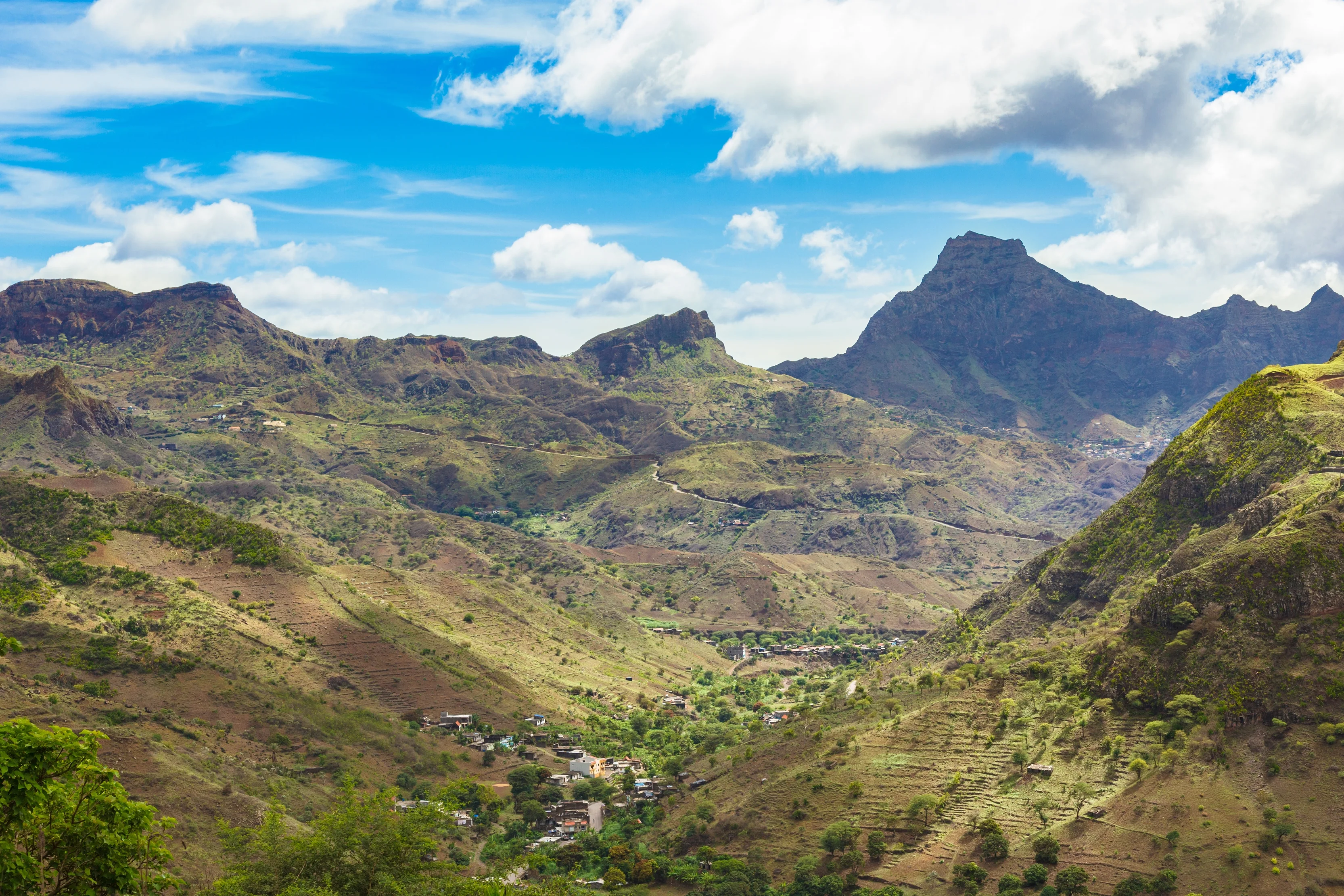
Ten islands, and two entirely different worlds within the same archipelago. To the southeast, Sal and Boa Vista are flat, arid, and swept by trade winds, offering endless stretches of sand. To the northwest, Santo Antão rises to nearly 2,000 metres, lush and carved through with deep ravines. Your choice of island starts shaping your trip the moment you book the flight.
Four bases follow, ranging from all-inclusive beachfront resorts to quiet valley villages. Expect $79* for a solid room on the beach islands, closer to $62* in Mindelo and the mountains. Ophelie, who explored the archipelago, shares her take on the last two.
Compare hotel prices in Cape Verde
In a hurry? Find the best accommodation deals in 3 clicks.
Compare live deals from Booking, Expedia, Agoda and other partners.
The Césaria Évora house, a hike up Monte Verde for a 360 degree view, not to mention the countless beaches..
How many nights in each area?
Each island is reached by flight or ferry, and a transfer eats up half a day. It is wiser to thoroughly experience two islands than to rush through four.
- A week at the beach, 7 nights: Everything based in Sal or Boa Vista without island hopping. European flights land directly here, and the latter offers much emptier stretches of sand.
- Beach and mountain, 10 nights: 4 nights in Boa Vista, then 2 in Mindelo and 4 in Santo Antão. This split captures the two sides of the archipelago, and it is the route ophelie follows.
- Hiking, 6 nights: 1 night in Mindelo upon arrival, 5 in the valleys of Santo Antão. The ferry leaves in the morning, so your first night on São Vicente does not go to waste.
- Low budget: Mindelo and Santo Antão run around $62* a night, compared to $79* minimum on the beach islands.
At a glance: our picks by traveller type
Pick the profile that fits you and go straight to the recommended area.
Map of the areas in Cape Verde
See how the areas sit relative to one another before choosing your base. Click a name to jump to its description.
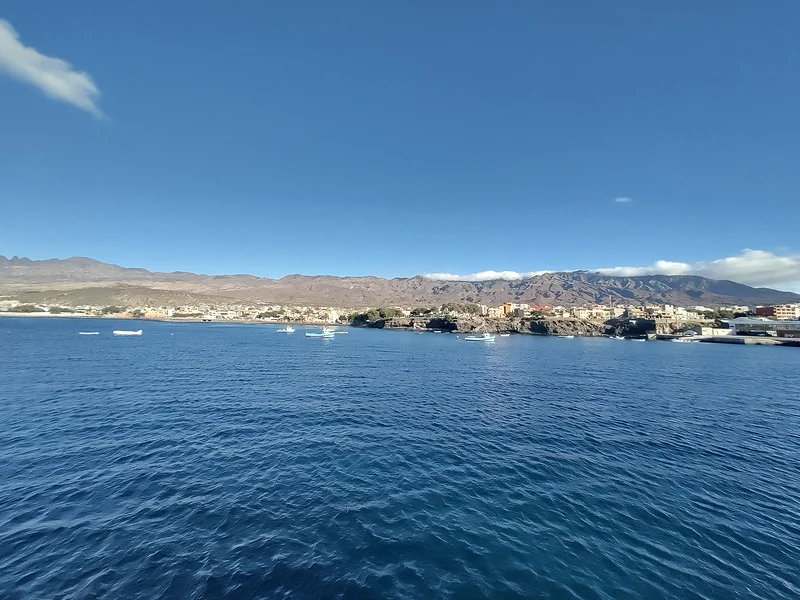
Sal, around Santa Maria Sal Island
for effortless beach time and wind sports
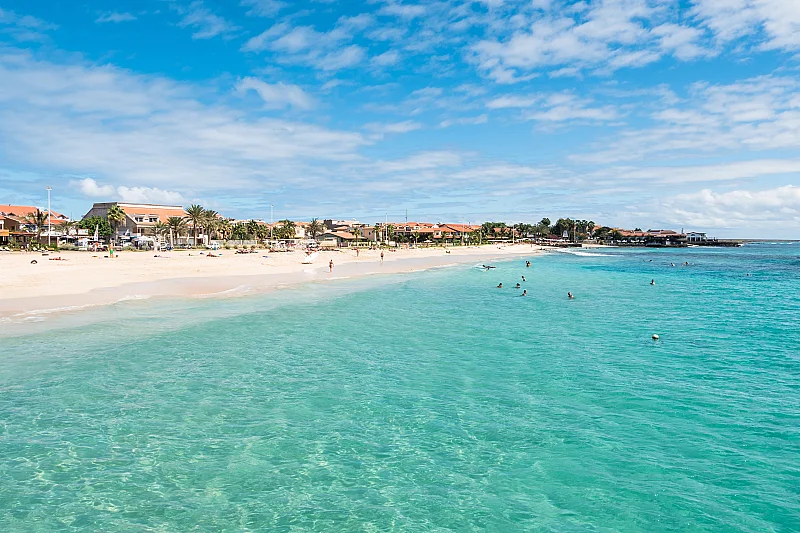
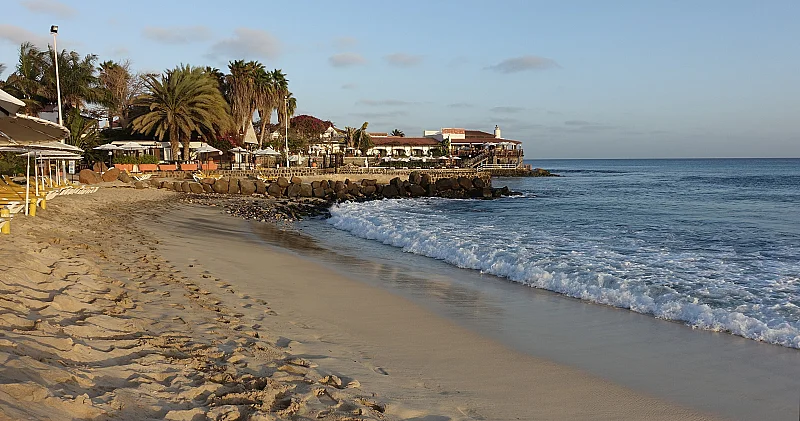
As the home of the international airport, this is where most trips begin. Santa Maria lines up eight kilometres of white sand, all-inclusive resorts, and a kitesurf school every hundred metres, with the Santa Maria beach and its fishing pier anchoring the local scene. The tradeoff is direct: the island is flat, dry, and featureless, and you can see everything in two days.
The towns in this area
What to see and do in this area
Where to stay in this area
Hotel Riu Palace Santa Maria Luxury
Five-star all-inclusive resort right on the beach, featuring a garden and multiple restaurants. The kind of place where you park yourself for the week, which sums up the game plan for most trips here.
DESIGN SUITES Boutique Hotel - Adults Only Mid-range
Adults-only retreat with an outdoor pool and terrace, a few blocks from the pier. The trade-off for the quiet setting is a short walk to the sand.
Hotel Dunas de Sal Mid-range
Two pools set in a garden, a spa, and a gym tucked away from the main strip. The right balance if you want the beach minus the late-night bars.
Pros
- Direct flights from Europe land here
- Beachfront access right outside the hotel along almost the entire southern coast
- Steady trade winds from December to May for sailing and kitesurfing
Cons
- A flat, arid landscape with nothing to see away from the coast
- A heavily concentrated hotel supply with little variation from one property to the next
Boa Vista, around Sal Rei Boa Vista Island
for empty beaches and dunes
The same sand as Sal, with a fraction of the crowds. Santa Mónica Beach stretches for over twenty kilometres without a single building in sight, while Chaves Beach borders a shifting dune desert shaped by the wind. Sal Rei, the small capital, holds onto its colorful colonial houses, and sea turtles nest here from June to October. The catch is that outside the resorts, dining and lodging choices are thin and getting around requires a 4x4.
Where to stay in this area
Barceló Marine Boa Vista - Adults Only Luxury
Adults-only five-star spot featuring a private beach, garden, and outdoor pool. The right pick when you want quiet rather than the energy of a family resort.
Hotel Dunas Boavista Mid-range
Right on the water in Sal Rei, two minutes from Santa Isabel Church. A practical base for walking out to dinner in town instead of relying on a shuttle.
Oasis White Hotel Budget
Rooftop pool and buffet breakfast right in town. Straightforward, well-positioned, and the best rate on the island for this level of comfort.
Pros
- Beaches where you can walk for an hour without passing another soul
- Sea turtle nesting from June to October along the eastern coast
- A compact colonial capital you can easily cover in a single morning
Cons
- Almost everything happens via guided excursions: without a rental car, you are stuck at the hotel.
- Dining options are scarce outside the resorts and Sal Rei.
São Vicente, in Mindelo São Vicente Island
for live music, urban life, and great dining
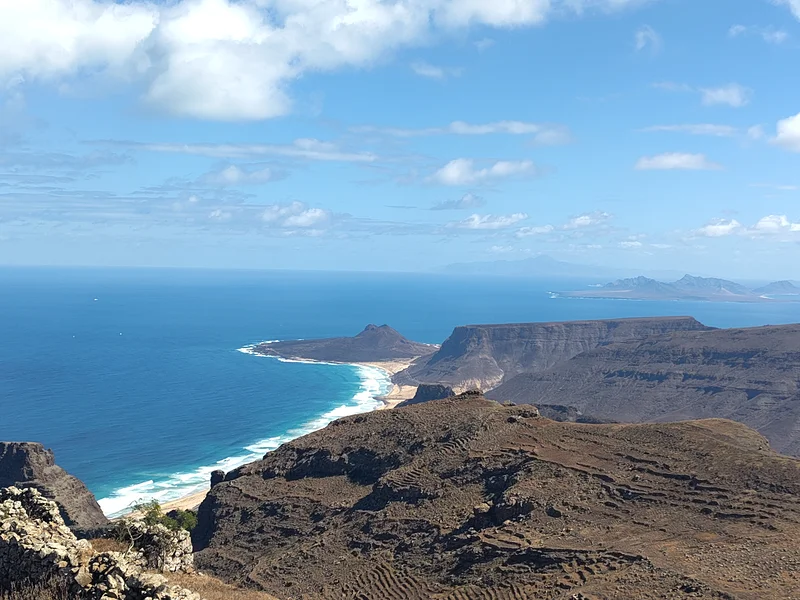
Mindelo serves as the cultural port of the country, home to Cesária Évora and the only real city in the archipelago with a true nightlife scene. Ophelie suggests exploring beyond the marina: the late singer's house, Laginha Beach ten minutes away on foot, and Monte Verde for a full 360-degree panorama. Down south, São Pedro Beach easily fills a day, where visitors can “You can take a trip there to see turtles, but you can also walk to the lighthouse, stroll along the beach, go for a swim, or have a drink at sunset.”.
The towns in this area
Where to stay in this area
Four Points by Sheraton São Vicente Resort Luxury
The island's top-tier comfort, steps from Laginha Beach, complete with an outdoor pool and a gym. Handy if you are heading straight to Santo Antão, since the port is right nearby.
Santa Cruz Boutique Hotel Mid-range
A character-filled spot right in town, between the square and the local bars. A solid pick for walking back after a live music set without needing a taxi.
Pros
- Nightlife and live music venues found nowhere else in the islands
- Restaurants and cafes within walking distance
- The ferry to Santo Antão departs from here, a one-hour crossing
Cons
- The beaches are scenic but windy, less suited for swimming
- An active commercial port, so the waterfront lacks a beach resort vibe
Santo Antão, valleys and Ponta do Sol Island of Santo Antão
for hiking and greenery
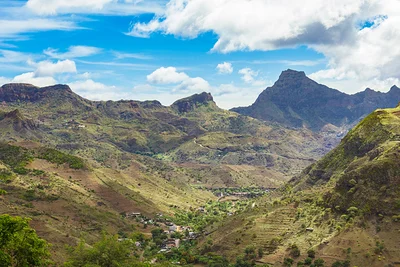
The island has no airport, so visitors arrive via the one-hour ferry from Mindelo into Porto Novo. Ophelie warns that it is strictly an arrival point, not a base to stay in. The road crosses the ridge and drops into a different climate zone defined by cultivated valleys: the Paul Valley climbs past terraced fields of sugarcane, while Ponta do Sol and Ribeira Grande sit right on the ocean edge. Paved stone footpaths connect the hamlets and offer all-day hiking routes.
Porto Novo is the arrival port on Santo Antão. From there, head out on an excursion across the island with its magnificent vegetation! The Paul Valley is worth the trip.
The towns in this area
Where to stay in this area
Boutique Hotel Luz da Lua Luxury
Four-star property with an outdoor pool in Ponta do Sol at the end of the coastal road. The island's only true upscale comfort and the top jumping-off point for the northern trails.
Pousada Green Place Mid-range
Garden, pool, and restaurant in Ribeira Grande, situated between the port and the farmed valleys. Convenient for exploring without driving back over the ridge every morning.
Residencial Vitoria Budget
A straightforward guesthouse in Ponta do Sol featuring a terrace and shared lounge. You stay here to hike, and the rate leaves enough room in the budget to hire a guide.
Pros
- The archipelago's finest trails, marked and stone-paved
- A green and cool climate, a sharp contrast to the sandy islands
- Family-run guesthouses with budget-friendly rates, often including home-cooked dinners
Cons
- No airport, meaning everything comes through the ferry from Mindelo
- Few swimming beaches, as the coast is rocky and the sea is rough
Our tips for booking the right place
- Nearly every island has its own airport: Sal and Boa Vista handle direct flights from Europe, while São Vicente and Santiago rely mostly on domestic hops. Santo Antão has no airstrip at all and depends entirely on the ferry from Mindelo. Moving between distant islands eats up a full travel day, so factor that into your night counts.
- The wind sets the schedule: Trade winds blow hard from December to May, making it prime season for sailing and kitesurfing, though you will find yourself hunting for a windbreak at lunchtime. From August to October the sea calms down, sea turtles nest, and rare rains turn the valleys of Santo Antão green.
- Book crossings ahead: The Mindelo to Porto Novo ferry runs several times daily and fills up fast in high season, while domestic planes have very few seats. Securing both before you leave keeps you from losing a night on the wrong side of the channel.
- Staying in Porto Novo: as ophelie points out, this is the arrival and departure port for Santo Antão. The southern slopes are dry and windy, and the lush green valleys only start once you cross the ridge.
- Booking a room in Espargos on Sal just because the airport is there: the town has no beach or nightlife, and Santa Maria is 15 kilometres away. A single night makes sense only for an early morning flight.
- Choosing Praia as a base means visiting the capital for its market and Cidade Velha, the oldest colonial city in the Atlantic, though it lacks a beachfront strip. One day is enough.
FAQ: where to stay in Cape Verde
Which island should you stay on in Cape Verde?
Where can you stay on a budget in Cape Verde?
Is Cape Verde a good destination for families?
Where should you go out at night?
Do you need to rent a car?
How many nights should you plan?
 Keep exploring
What to do in Cape Verde
Keep exploring
What to do in Cape Verde
Comments (0)
No comments yet. Be the first!