
Hiking in pristine nature
Traveling to Dominica feels like stepping into the shoes of Christopher Columbus discovering the Caribbean! The island is the most untouched in the Lesser Antilles, and its natural beauty is incredibly rich: there are hundreds of waterfalls and the rainforest is absolutely lush.
Coming from Martinique, my partner and I were curious to take the boat over to Dominica, the "English cousin" tucked between Guadeloupe and Martinique. This island is fairly unknown, unless you live in the Caribbean region. Yet, it truly deserves to be discovered, and its people are the kindest in the world.
Dominica has been independent since 1967; it was a British colony and has remained part of the Commonwealth since its independence. English is spoken here, along with a local Creole. With my basic knowledge of Martinican Creole (because yes, there are several different Creoles!), I was able to make myself understood quite easily.
Wotten Waven and its hot springs
We arrived by boat in Roseau, the island's largest city, even though Portsmouth to the north is technically the capital. A change of scenery is guaranteed! Here, the cruise ships tower over the buildings. There’s a lovely, bustling energy in this colorful city, but we preferred to opt for a nature-filled stay by heading straight to the Roseau Valley, to Wotten Waven.
This area is famous for its natural hot spring pools, heated by the volcanic activity that is very present on the island. Between excursions, swimming, and mud baths, we spent three days there! A beautiful route in this area, by the way, is the hike to the Boiling Lake in the Morne Trois Pitons National Park. It’s best to do this hike with a guide, and it’s easy to find one in Wotten Waven. It takes about 5 hours (round trip) to reach that famous boiling lake surrounded by steam: a truly magical sight!
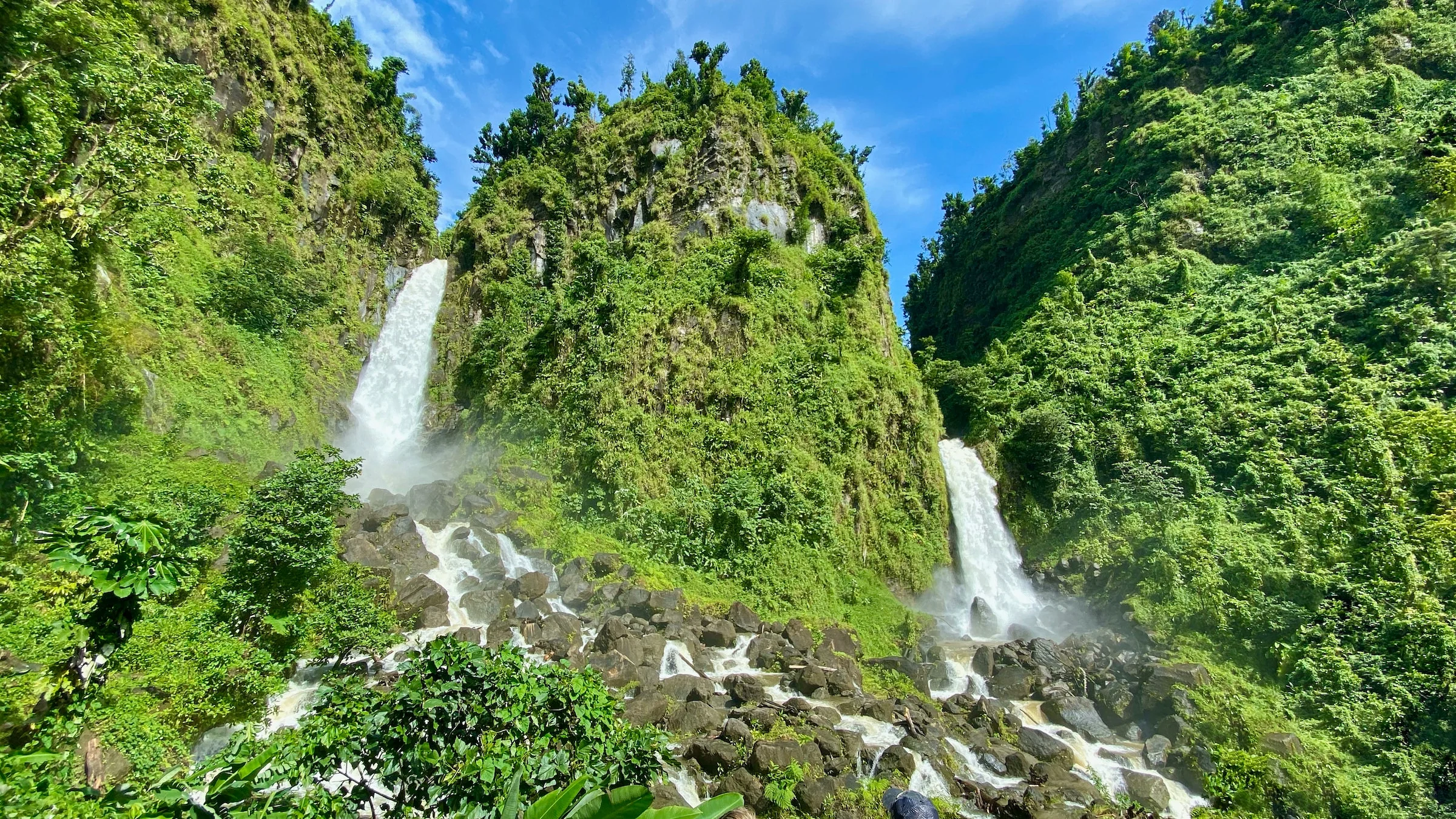
To recover from that fairly strenuous hike, we walked the next day to Trafalgar Falls, two waterfalls about 60 meters high that are easily accessible via a short hike.

Scott's Head and its sublime marine life
Soufrière and Scott's Head are two spots you have to discover in the south of the island. We enjoyed a magnificent dive in the Scott's Head marine reserve (coral reefs, multicolored fish, sea turtles, in short, it was enchanting!).
Staying in the village of Soufrière allows you to really get to know the place, and if you stay more than one night, the locals start to treat you like one of their own! We received great recommendations for charming little local restaurants and beautiful nearby waterfalls. The market is very local and authentic.
We also hiked a few sections of the Waitukubuli National Trail, a hiking path that crosses the island from south to north (184 km!) through the mountains and lush rainforest. The start and end points of each segment are easy to reach, so you can choose to hike for just a few hours. Phew!
They say the island has as many waterfalls as there are days in the year! We can't be far from the truth! Every corner of the forest is carved by magnificent rivers, each with waterfalls more beautiful than the last.

Northern Dominica and its wild coast
The north of the island is much less visited, yet the coastal road leading to Portsmouth is quite picturesque. We spent a short day in the Carib Territory, home to the last descendants of the Carib Indians, the first inhabitants of the area long before colonization. It was interesting to meet the people who gave their name to this great maritime domain covered in archipelagos, which stretches all the way to Mexico.
Dominica captured our hearts; we didn't leave the same as we arrived, and we are already planning to go back to hike the entire Waitukubuli Trail (which takes 15 days, after all!).

Comments (0)
No comments yet. Be the first!