
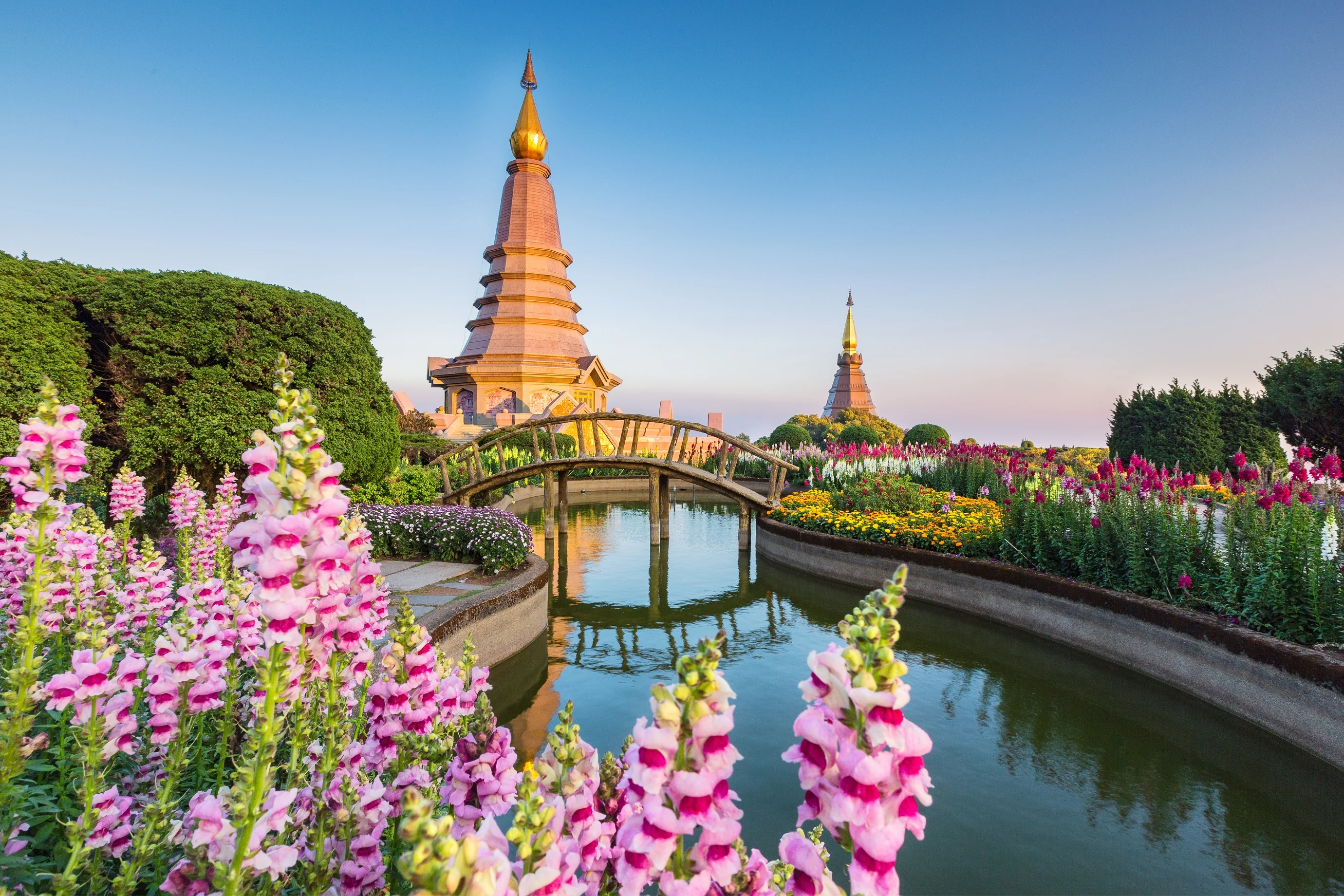
Two weeks to travel across Thailand from north to south. It’s possible, and it’s absolutely magical. I was lucky enough to take this trip, which led me from the golden temples of Bangkok to the turquoise waters of Phuket, with a stop in the lush green mountains of Chiang Mai.
In this complete guide, I’m sharing my day-by-day itinerary, my favorite spots, and most importantly, my practical tips so you can experience the same adventure. Pack your bags: the Land of Smiles is waiting for you!
How long do you need to discover Thailand?

Two weeks is exactly what you need to explore the three facets of Thailand: the urban frenzy of Bangkok, the cultural serenity of the North, and the beachside relaxation of the South. Any less time, and you’ll be rushing without really enjoying it. Any more, and you risk spreading yourself too thin.
What makes this itinerary doable is the excellent network of low-cost domestic flights. For about €30 to €50 per trip with airlines like AirAsia or Nok Air, you can cover in an hour what would take 10 hours by bus. A precious time-saver when every day counts.
💡 My budget tip: book your domestic flights at least 2 to 3 weeks in advance. Prices can double if you wait until the last minute!
My complete itinerary: Thailand from North to South
Here is how I organized my 15 days to see the best of the country without ever feeling rushed. This itinerary alternates cultural discoveries and moments of relaxation, with a crescendo toward the paradise beaches at the end of the trip.
| Days | Destination | Highlights |
|---|---|---|
| D1-D3 | Bangkok | Grand Palace, Wat Pho, Wat Arun, street food |
| D4-D6 | Chiang Mai | Temples, elephant sanctuary, cooking class |
| D7 | Chiang Rai | White Temple, Blue Temple, Golden Triangle |
| D8-D10 | Phuket | Beaches, Big Buddha, Old Town, massages |
| D11-D13 | Phi Phi Islands / Krabi | Maya Bay, snorkeling, kayaking |
| D14-D15 | Return to Bangkok | Shopping, final sightseeing, return flight |
Days 1 to 3: Bangkok, the Asian culture shock
Landing in Bangkok is an immediate plunge into a world where ultramodern skyscrapers stand alongside ancient temples. The Thai capital can be disorienting at first with its chaotic traffic and scents of jasmine and street food. But very quickly, you fall under its spell.
The Grand Palace and the Emerald Buddha

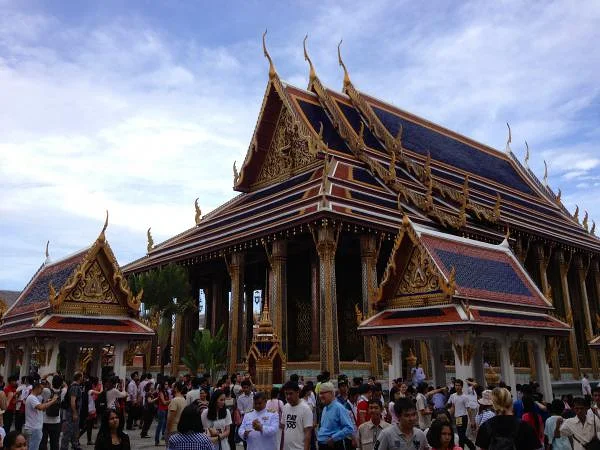
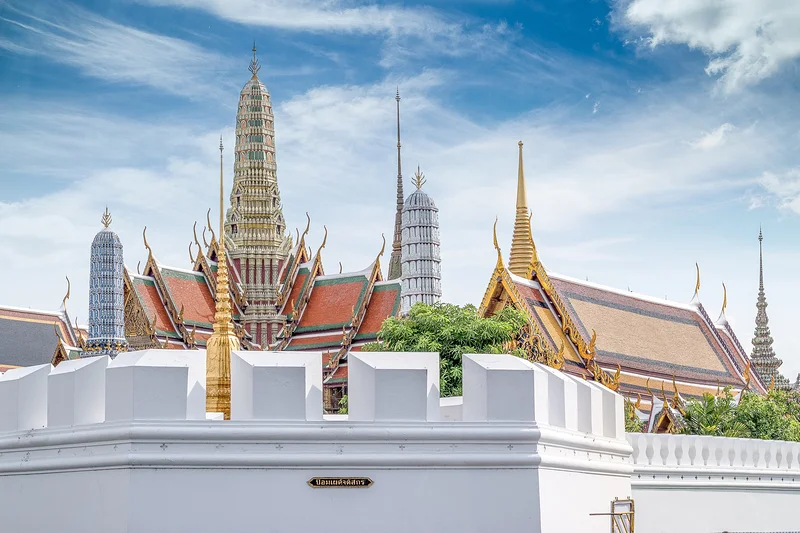
This is THE must-see visit. At 8:30 AM (opening time), I walked through the gates of this dazzling complex that houses Wat Phra Kaew, the most sacred temple in Thailand. The Emerald Buddha, despite its small 76-centimeter size, radiates an incredible aura.
⚠️ Mandatory dress code: shoulders and knees must be covered. Bring light pants and a sleeved t-shirt, otherwise you'll have to buy an outfit on-site (and believe me, the touristy "elephant" pants are not the most stylish).
Entry costs 500 baht (about €13), which might seem expensive compared to other temples. But the architectural richness fully justifies the price. Allow 2 to 3 hours to explore everything without rushing.
Wat Pho: the giant Reclining Buddha

A ten-minute walk from the Grand Palace, Wat Pho houses a 46-meter-long Reclining Buddha covered in gold leaf. The atmosphere is more peaceful, and it is also the birthplace of traditional Thai massage. In fact, the adjacent massage school offers affordable treatments for tired visitors.
Entry: 200 baht (€5). Don't miss the 108 bronze bowls along the Buddha: dropping a coin in each is said to bring good luck.
Wat Arun: the Temple of Dawn
On the other side of the Chao Phraya River, accessible by a short ferry ride (4 baht!), Wat Arun offers a different spectacle. Its central prang of nearly 80 meters, decorated with thousands of pieces of colorful porcelain, sparkles under the sun. Climb the steep stairs for a panoramic view of Bangkok.
Khao San Road and street food

When evening comes, head to the backpacker district. Even if Khao San Road is ultra-touristy, the vibe remains electric. It’s primarily a chance to taste Thai street food: steaming pad thai for 40 baht (€1), chicken satay skewers, mango sticky rice...
For a more authentic experience, venture toward Chinatown (Yaowarat) where locals dine late into the night.
Days 4 to 6: Chiang Mai, the spiritual heart of the North
A one-hour-and-fifteen-minute flight from Bangkok, and I’m in a whole new world. Chiang Mai breathes serenity. Surrounded by mountains, the former capital of the Lanna Kingdom is famous for its 300 temples, night markets, and encounters with elephants.
Must-see temples

It’s impossible to visit them all, but three absolutely deserve your attention:
- Wat Chedi Luang: impressive 15th-century chedi, partially destroyed by an earthquake but still majestic
- Wat Phra Singh: the most revered in Chiang Mai, with its exceptional wall frescoes
- Doi Suthep: perched at an altitude of 1,000 meters, this golden temple offers a breathtaking view of the city
For Doi Suthep, allow half a day. The temple is worth the effort: after 20 minutes on a winding road, you still have to climb 309 steps (or take the funicular for 50 baht). But what a reward at the top!
A day with elephants: how to choose an ethical sanctuary

This was the experience I was looking forward to most, but also the one that worried me. Not all sanctuaries are created equal, and some perpetuate cruel practices under the guise of "rescue."
After a lot of research, I opted for the Elephant Nature Park, founded by Lek Chailert, an iconic figure in elephant protection in Thailand. This sanctuary hosts over 75 rescued elephants on 250 acres of land. You never ride the elephants; you observe them, feed them, and learn their stories.
Signs of an ethical sanctuary
- No elephant riding
- Elephants live in groups and move freely
- No shows or tricks
- Information provided about each animal's history
Red flags to avoid
- Elephant rides offered
- Elephants chained or isolated
- Painting or football shows
- Forced contact with baby elephants
Expect to pay about 2,500 baht (€65) for a full day including transport, lunch, and activities. It’s an investment, but the experience is unforgettable and your money directly funds animal protection.
📅 Book in advance! Elephant Nature Park sells out weeks ahead of time. I almost missed my spot by booking only 10 days in advance.
Thai cooking class: my favorite activity
A piece of advice: don't leave Chiang Mai without taking a cooking class. In half a day, I learned to prepare green curry, pad thai, and tom yum soup. It all starts with a visit to the local market to choose fresh ingredients.
Average price: 1,000 to 1,500 baht (€25-40) for a 4 to 5-hour class including the meal. And believe me, homemade pad thai is nothing like the one in restaurants!
Day 7: Excursion to Chiang Rai and the Golden Triangle
One day is enough to discover Chiang Rai on an excursion from Chiang Mai (3 hours of driving). Two extraordinary temples justify the trip.
The White Temple (Wat Rong Khun)

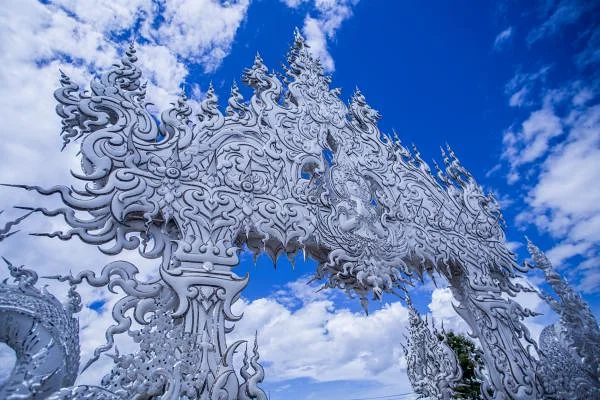
This contemporary temple created by artist Chalermchai Kositpipat is a surrealist work of art. Immaculate white and encrusted with mirrors, it sparkles under the sun as if it came out of a dream. But watch out for surprises: inside, the wall frescoes mix Buddhist imagery and pop culture references (yes, there really is Batman and Hello Kitty).
The Blue Temple (Wat Rong Suea Ten)

Less famous but just as spectacular, this electric blue temple houses a white Buddha that contrasts beautifully with the azure walls. Entry is free, and there are far fewer visitors than at the White Temple.
The Golden Triangle
At the border between Thailand, Laos, and Myanmar, this point where the Mekong converges was once the center of the opium trade. Today, it’s primarily a symbolic photo spot and a place steeped in history. The small Opium Museum is worth a stop to understand this troubled past.
Days 8 to 10: Phuket, between beaches and nightlife

A direct flight from Chiang Mai (about 2 hours), and I’m on the largest island in Thailand. I had already spent nine wonderful days in Phuket on a previous trip, and I was eager to return.
Patong: the beach that never sleeps
My hotel was on the famous Patong Beach (which means "banana plantation" in Thai). It is THE liveliest beach in Phuket: framed by a deep bay and bordered by lush green mountains, it offers an exotic setting despite the hustle and bustle.
During the day and even at night, don't look for peace here. There are always jet skis roaring, street vendors offering massages, sunglasses, and hats, and groups playing beach volleyball. It’s lively, sometimes too much for some.
🏖️ For more tranquility: head to Kalim Beach, just past Patong. You’ll be more peaceful there and can watch surfers on beautiful waves. Be careful, though; the rocks are sharp: bring sandals to go into the water!
Longtail excursion: secret beaches
For 400 baht an hour (about €10) or 1,000 baht for the day, you can rent a longtail, those traditional long-tailed boats characteristic of the region. After 10 minutes of skirting the southern end of Patong, you’ll discover isolated beaches accessible only by sea.
These preserved coves are much quieter than the main beach because jet skis are prohibited there. The water is crystal clear, perfect for snorkeling.
The art of Thai massage
I wouldn't have left the island without trying traditional Thai massages. And I was well served: my hotel offered them at a bargain price, so I got a massage every day. Thai massage is energetic, almost athletic. The first day, I found it intense. But by the second day, what bliss! The accumulated tension disappears as if by magic.
I also tried the fish pedicure: little fish that nibble the dead skin off your feet. It’s ticklish and a bit strange, but quite fun to try at least once!
Good deal: travel club offers
An anecdote: at one of the city markets, we were approached by a salesperson who wanted to tout the benefits of a travel club plan. The deal was simple: we listened to him talk for an hour at the agency about his product, and in exchange, regardless of our final decision, he gave us two round-trip jet boat tickets to a paradise islet.
So we listened politely, declined his offer, and left to get our swimsuits for our free excursion. It was well worth an hour of our time!
Days 11 to 13: The Phi Phi Islands and Maya Bay

From Phuket, a 2-hour ferry takes you to the mythical Phi Phi Islands. These karst formations emerging from a turquoise sea were popularized by the movie "The Beach" with Leonardo DiCaprio. And despite the influx of tourists, the beauty remains intact.
Maya Bay: paradise regained
Closed for several years for ecological regeneration, Maya Bay has reopened with strict rules: limited number of visitors, swimming prohibited, controlled visit duration. The result? A bay that has regained its splendor, with crystal-clear waters where you can sometimes spot baby blacktip reef sharks.
🌅 Anti-crowd tip: opt for a sunrise excursion (departure around 6:30 AM). You will arrive at Maya Bay around 7 AM, just after opening, with far fewer people. Classic tours arrive starting at 10 AM.
National park entrance fee: 400 baht in cash (not included in most tours).
Pileh Lagoon and Viking Cave
Excursions generally include other spectacular stops:
- Pileh Lagoon: a lagoon with unreal blue waters, surrounded by limestone cliffs. Perfect for snorkeling and swimming.
- Viking Cave: a cave where swallow nests are harvested (access is prohibited, but you can observe it from the boat).
- Monkey Beach: a beach populated by macaques. Keep your distance and don't feed them!
Snorkeling with bioluminescent plankton
If you stay on Phi Phi for the night, don't miss the sunset tours that end with a night swim with bioluminescent plankton. Every movement in the water creates magical blue sparkles. A fairy-tale experience.
Days 14-15: Return to Bangkok and final discoveries
The return to Bangkok allows you to enjoy your final hours in Thailand. If you didn't have time at the beginning of the trip, this is the time to visit the Chatuchak market (weekends only) with its 15,000 stalls, or go shopping in the huge air-conditioned malls.
To be honest, the return to reality was very difficult when I landed in Paris. Welcomed by rain and cold, I missed my paradise island and the Thai smiles...
Organized tour or independent travel: which to choose?
The question is legitimately asked before such a trip. Having tested both, here is my analysis.
Traveling independently
This is what I did for this trip, and it is completely doable in Thailand. The country has excellent tourist infrastructure, transport is reliable and affordable, and with a few words of English, you can get by anywhere.
Advantages of independent travel
- Total freedom regarding pace and itinerary
- Controlled budget, possibility of saving money
- Authentic encounters with locals
- Flexibility to extend a favorite spot
Disadvantages
- Time spent organizing logistics
- Potential stress in case of unforeseen events
- Language barrier in rural areas
- Risk of missing out on hidden gems
Opting for an organized tour
For a first trip to Asia or if you prefer not to manage logistics, an escorted tour has real advantages. Experienced guides share anecdotes and cultural knowledge you won't find in any paper guidebook. Everything is planned: transfers, accommodations, visits.
Agencies like Salaün Holidays have interesting offers for choosing your tour in Thailand: 12 to 15-day packages covering the must-sees (Bangkok, Ayutthaya, Chiang Mai, Golden Triangle, Southern beaches). Expect between €1,800 and €3,000 depending on the season and level of comfort, international flights often included.
It’s a particularly interesting option for travelers who want to maximize their discoveries without spending hours comparing transport options or negotiating with local providers.
Budget: how much does 15 days in Thailand cost?
Thailand remains a remarkably affordable destination, even if prices have risen in recent years. Here is a realistic estimate for a "mid-range" traveler who doesn't count every baht but doesn't throw money out the window.
| Expense category | Budget | Low budget |
|---|---|---|
| International flights (R/T) | €600-900 | €500-700 |
| Domestic flights (3-4 trips) | €120-180 | €80-120 |
| Accommodation (14 nights) | €500-700 | €150-300 |
| Meals | €250-350 | €100-150 |
| Activities and entry fees | €200-300 | €100-150 |
| Local transport | €80-120 | €40-60 |
| TOTAL | €1,750-2,550 | €970-1,480 |
💰 Savings tip: Thai ATMs charge about 220 baht (€6) per withdrawal. Withdraw large sums at once, or use a card that reimburses these fees (like N26 or Revolut).
When is the best time to visit Thailand?
The ideal season runs from November to February: pleasant temperatures, low humidity, almost no rain. It is also the high tourist season with higher prices and more crowded sites.
March and April are hot (35°C and up), but still manageable. Avoid the North in March-April, however: it’s the "burning season" where air quality degrades drastically due to agricultural fires.
The monsoon (May to October) brings daily showers, but they are often short and predictable. Prices drop, beaches empty out. It’s my secret for a lower-cost vacation!
⚠️ Important: Maya Bay closes every year from August 1st to September 30th for ecological regeneration. Plan accordingly if it’s a must on your list.
Practical tips before you go
Visa and formalities
French citizens benefit from a visa exemption for stays of up to 30 days. You just need a passport valid for 6 months after your return date. No prior steps are necessary.
Health and vaccines
No vaccines are mandatory, but vaccines against hepatitis A and typhoid are recommended. Get travel insurance covering medical expenses and repatriation: care in a private clinic can be very expensive.
What to pack
- Light and breathable clothing
- Proper attire for temples (long pants/skirt, shoulders covered)
- SPF 50 sunscreen (cheaper in France than in Thailand)
- Effective mosquito repellent
- Electrical adapter (type A, B, and C plugs accepted)
- Copy of passport and insurance
Essential apps
- Grab: the local Uber, reliable and transparent on pricing
- 12Go Asia: to book buses, trains, and ferries
- Google Maps: works very well offline
- XE Currency: to quickly convert baht
My verdict: are 15 days really enough?
Yes and no. Fifteen days allow you to get a taste of the essence of Thailand and understand why this country fascinates travelers from all over the world so much. But let’s be honest: you will leave with an irrepressible desire to return.
Because Thailand is also Koh Samui and its coconut trees, Koh Tao and its seabed, Pai and its hippie vibe, Ayutthaya and its majestic ruins, Khao Sok and its primary jungle... So many destinations that deserve a future trip.
In the meantime, these two weeks will leave you with lasting memories: the scent of jasmine in the temples, the smiles of the Thai people, the taste of pad thai prepared by your own hands, the gaze of a rescued elephant, the softness of a beach at sunset.
So, ready to go?

Comments (0)
No comments yet. Be the first!