
The Grand Palace in Bangkok, 240 Years of Royal Splendor Under Siamese Roofs
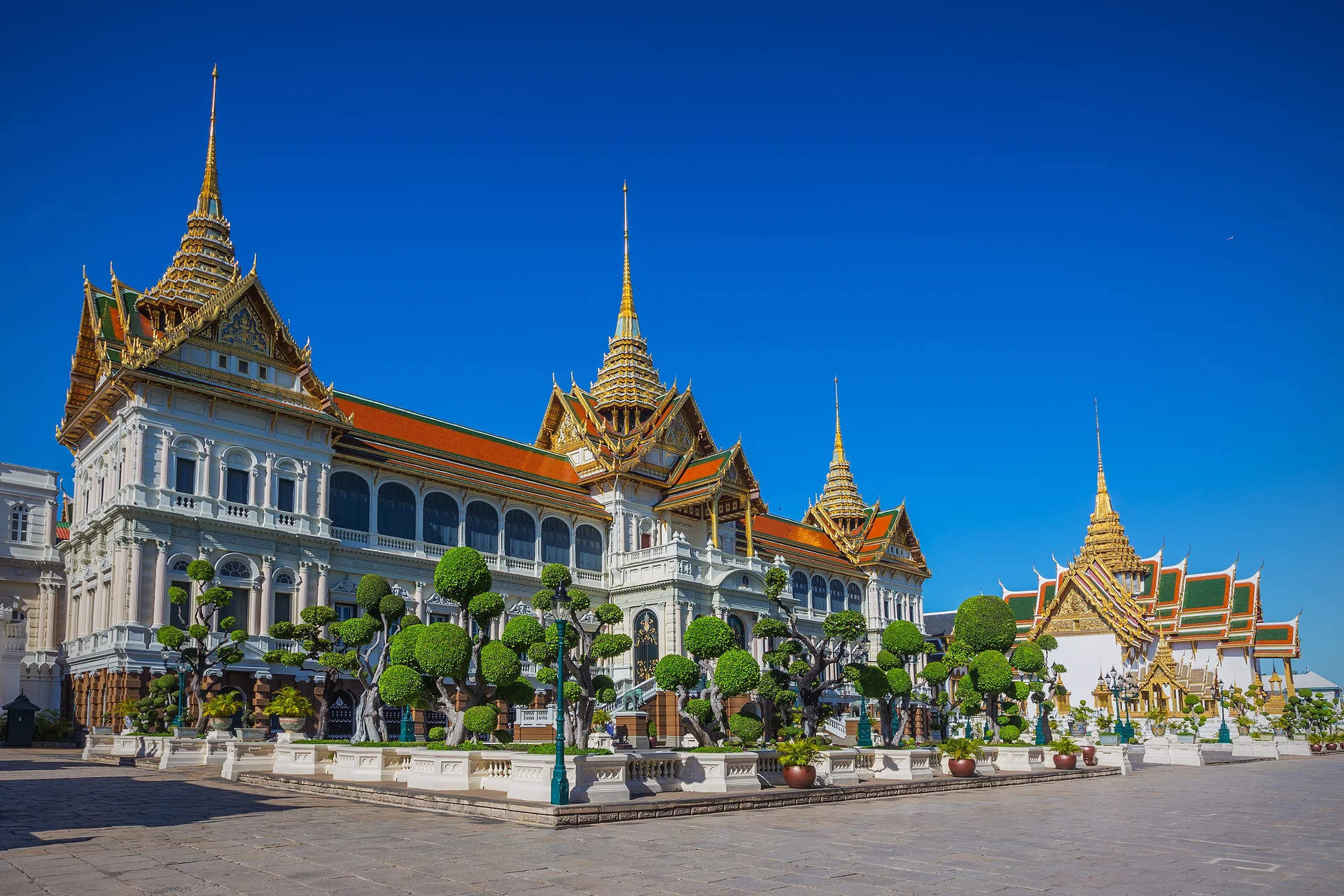
In the morning, when the low angle of the sun hits the gilded roofs and spires pointing toward the sky, the Venetian glass tiles begin to sparkle as if the building generates its own light.
This is no static museum. It is a 218,400 m² complex where royal ceremonies still take place today, surrounding structures built more than two centuries ago in a style unlike anything else in the world.
Why Visit the Grand Palace in Bangkok?
The Phra Borom Maha Ratcha Wang was erected starting on May 6, 1782, by order of King Rama I, founder of the Chakri dynasty. By moving the capital from Thonburi to Bangkok, he wanted a palace that would symbolize the power of the new Rattanakosin kingdom. Every sovereign who followed left a mark, adding new throne rooms, pavilions, and gardens until the site accumulated over a hundred buildings.
This complex embodies the spiritual, political, and dynastic heart of Thailand. It is here that the ashes of the Chakri dynasty kings are kept, where coronations take place, and where the Emerald Buddha resides in its own sanctuary, a 66-centimeter figurine carved from green jasper and considered the palladium of the kingdom. The site welcomes more than eight million visitors a year, making it the most visited attraction in all of Thailand.
Architecture: When Siam Meets Europe
The Chakri Maha Prasat, a Hybrid Masterpiece
The most striking building in the complex is undoubtedly the Chakri Maha Prasat, completed in 1882 under Rama V. Designed by British architect John Clunish, its marble facade follows the codes of the Italian Renaissance, but each of its three wings is topped with a mondop, an ornate multi-tiered spire that is typically Siamese.
Thai people coined a colorful expression to describe this mix: faràng sài chá-dah, meaning "the foreigner wearing the classical Thai dancer's headpiece." Story has it that the architect had planned a European-style dome, but Rama V, eager to assert Thai cultural sovereignty against the colonial powers of the era, demanded it be replaced with Siamese roofs.
This choice, viewed today as a subtle political act, gives the building its unique character.
The Dusit Maha Prasat and Wat Phra Kaew
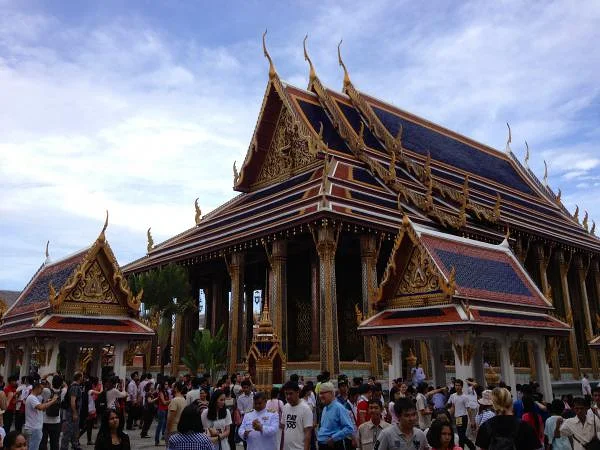
At the opposite end of the stylistic spectrum, the Dusit Maha Prasat, built during the reign of Rama I, represents Rattanakosin architecture in its purest form with cascading roofs, carved gables, and calculated proportions. Today, it serves as the royal audience hall and one of the few spaces that has preserved Rama I's original carved wooden throne.
Adjacent to the palace, Wat Phra Kaew (Temple of the Emerald Buddha) forms the other pole of the site. Its outer galleries are adorned with 178 narrative frescoes depicting the Ramakien, the Thai epic inspired by the Indian Ramayana. Inside the main building, the Emerald Buddha sits atop a nine-meter-high altar. Its gold robes change three times a year to match the seasons, a ritual performed by the king himself.
Friendly tip: The most common scam near the palace involves a well-dressed man stopping you to claim the site is "closed for a royal ceremony" or "closed for lunch." This is entirely false and designed to steer you toward partner shops or tuk-tuk tours. Since January 2024, the official entrance for tourists is exclusively through the Mani Noppharat gate on Na Phra Lan Road. Ignore anyone pointing you toward a different gate.
Planning Your Visit: What to Know Before You Enter
Dress code is strictly enforced at the entrance without exception: shoulders covered, legs down to the ankles, no ripped jeans or athletic wear. Rental clothing is available at the entrance for a small fee. Shoes must be removed before entering the Emerald Buddha chapel.
The courtyard stone reflects heat intensely from 10 AM onward. Arriving at the 8:30 AM opening time allows you to tour in relative thermal comfort and with significantly fewer crowds. An audio guide is available for rental at 200 THB ($6*), which is a useful investment since many on-site informational signs remain minimal.
Grand Palace Highlights
- A single ticket covers the palace, Wat Phra Kaew, and the Queen Sirikit Museum of Textiles
- Open every day of the year except during rare royal ceremonies
- Boat access via the Chao Phraya River offers a pleasant commute without traffic jams
- Recent restorations have restored original brilliance to several buildings
What to Watch For
- Very high visitor numbers in the middle of the day, particularly during high season from November to February
- Intense heat in the open courtyards starting at 10 AM
- Cameras are prohibited inside the main buildings
- Frequent scams in the immediate vicinity of the entrance
A few practical tips to keep in mind:
- Allow at least 2 hours and 30 minutes to cover the palace and temple without rushing
- Bring a hat and water since there is no shade in the main courtyards
- Say "Wat Phra Kaeo" to taxi drivers instead of "Grand Palace" for better recognition
Estimated Admission Ticket Prices
| Category | Rate |
|---|---|
| Adult | 500 THB ($15*) |
| Children under 120 cm | Free |
| Audio guide rental | 200 THB ($6*) |
| Clothing rental (non-compliant outfit) | About 200 THB ($6*) |
Prices are estimated and subject to change
Opening hours
| Monday | 08:30-16:30 |
|---|---|
| Tuesday | 08:30-16:30 |
| Wednesday | 08:30-16:30 |
| Thursday | 08:30-16:30 |
| Friday | 08:30-16:30 |
| Saturday | 08:30-16:30 |
| Sunday | 08:30-16:30 |
Last entry at 3:30 PM. Closed during official royal ceremonies.
How long for this activity
*Information subject to change

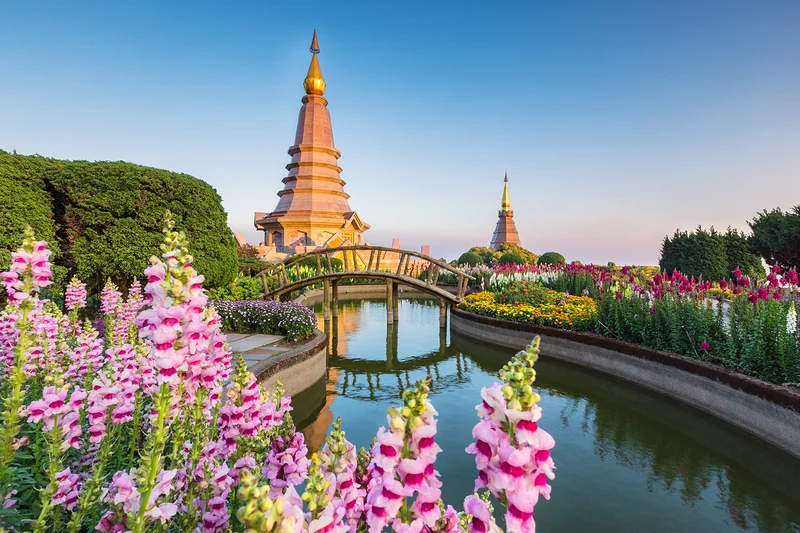
Visiting the Grand Palace is a bit pricey, but it is clearly a must-see in Bangkok.
You are left speechless by the splendor and richness of the buildings, which are perfectly maintained.
You almost forget the crowds because the site is so impressive. It actually makes you wonder how long it took to build such an architectural masterpiece!
Make sure to plan on wearing pants so you can get into the palace, just like at all the temples.