
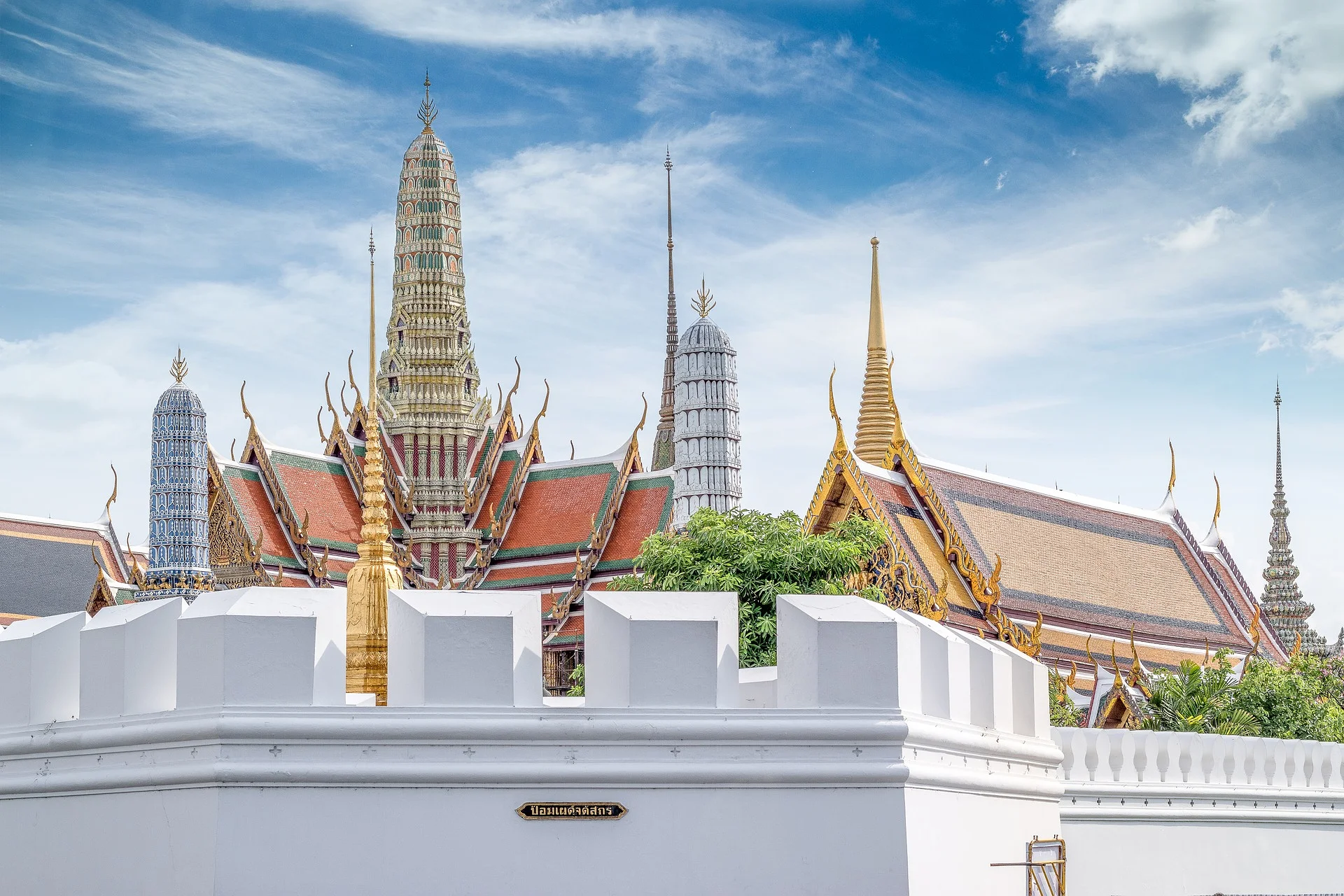
Visiting the Emerald Buddha Temple (Wat Phra Kaeo)
Along the Chao Phraya River, right inside the Grand Palace in the city of Bangkok, sits the temple of Wat Phra Kaeo, also widely known as the Emerald Buddha Temple. It stands as a focal point for religious ceremonies in Thailand.
History
In 1782, Rama I proclaimed himself king and decided to move the capital to Bangkok, setting out to build a brand new palace and temple complex. He was so devoted that when the temple was finally finished in 1784, the royal family was still living in a wooden structure. The complex went up right inside the palace grounds, enclosed by fortifications known today as Rattanakosin Island. Only royalty could enter the sanctuary itself, while monks from across the country handled daily rituals, though none were allowed to reside there.
The Journey of the Emerald Buddha
The famous statue carries a slight naming misnomer, because in the Thai language, the word for emerald also meant green. The Buddha is actually carved from jade, so calling it the Green Buddha would be more accurate, but history is already written. This jade statue was first housed in Chiang Mai at the Wat Chedi Luang temple. Following an earthquake, it moved to Laos in 1551, then eventually reached Wat Arun before finally taking its permanent place inside Wat Phra Kaeo on March 22, 1784.
Alongside the sacred statue, you will see two marble vases gifted to the temple by a European monarch. Inside Wat Phra Kaeo, just east of the main ordination hall or Ubosot, you can view forty-two copper Buddhas commissioned by King Rama III.
It is an essential stop for anyone drawn to sacred architecture and Thai history.
Opening hours
*Information subject to change

The Emerald Buddha Temple is absolutely grand, a breathtaking place. The interior is so impressive that it is hard to find the right words to describe it. Just know that taking photos inside the room where the Emerald Buddha is located is forbidden, but you can capture the exterior, which is just as magnificent.