
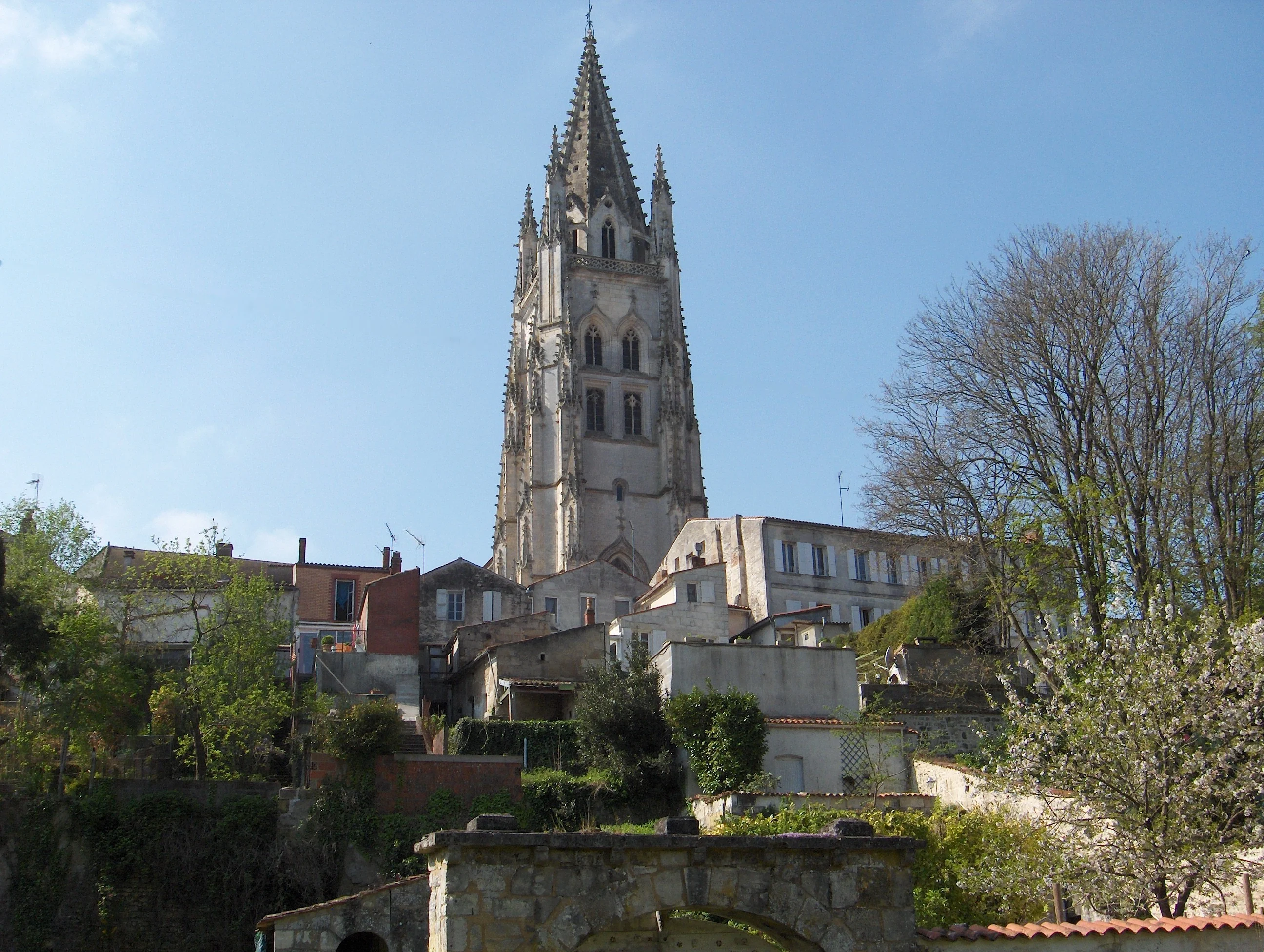
Saintes, a city in the Charente-Maritime department, reigns as the heart of Saintonge, the name of its province before the French Revolution. Inhabited since antiquity, the city boasts a heritage enriched by the Gauls, the Romans, and the Middle Ages. You’ll also find more modern monuments, museums, music festivals, and cultural events. Once a key stop on the pilgrimage route to Santiago de Compostela, Saintes is now a popular destination for travelers who love history and heritage.
How to get your bearings in Saintes?
This city is a 14-piece puzzle, all interlocked; each piece has a name, and together they make up Saintes.
Here are the pieces: Les Boiffiers, Les Tourneurs, L'Ormeau de Pied, La Recouvrance, La Fenêtre, as well as Saint-Rémy, Saint-Vivien, Saint-Eutrope, and Saint-Pierre, plus Saint-Pallais, Saint-Sébastien de Bouard, and finally La Récluse, Le Maine-Saint-Sorlin, and Bellevue… Phew! Take a breath!
The pieces are spread out, it’s up to you to put them in place… Difficult? Not at all (the butter from the Charentes is inspiring me…), here are some clues; careful, this will go fast and you’ll need to keep up. On your marks (pages…), get set…? Let’s go.
Saint Eutrope
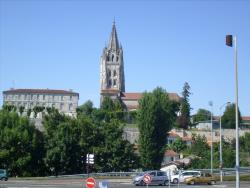 Located just west of the Saint-Pierre district, in the Saint-Eutrope neighborhood, you should spot the silhouette of its Basilica. The area also preserves the remains of a priory and several old hillside houses. Through small alleys (known as "venelles"), you can reach the Arènes valley below, leading to the remains of the Roman amphitheater and a park aptly named Parc des Arènes. Further along, Rue Victor Hugo is the neighborhood's main shopping street.
Then there is the Berthonnière suburb, framed by the Saint-Eutrope hill to the west and the  Capitole hill to the north. Once located outside the city walls, it housed various inns and hostels for pilgrims (those heading to Santiago de Compostela, of course). The streets of the suburb lead you toward Place Saint-Louis, Place de l’Aubarrée, and Place Blair, all three opening onto the Column of Liberty that has stood there since the Revolution. The Square Goulebenéze bridges the gap between Place Blair and the river.
Les Boiffiers and Bellevue
Apartment buildings, social housing, and suburban developments make up the districts of Les Boiffiers and Bellevue. The Avenue de Saintonge connects them to the rest of the city.
Still with me? Careful, don't lose a piece! Alright, let's continue...
La Recouvrance
Fitting into the space formed by the Cours du Maréchal Leclerc, the Cours Genet, and the western bypass, we find the La Recouvrance district. It’s home to a high school, a former seminary, and the Yvon Chevalier stadium. I almost forgot the shopping center, well, you have to eat, right?
The La Recouvrance water tower is adorned with frescoes by contemporary artist Michel Genty. Stop by this spot; it’s truly beautiful.
Saint-Vivien
The Saint-Vivien district is a former suburb dating back to antiquity. The Saint-Saloine thermal baths replaced the ancient thermal baths of Saint-Vivien.
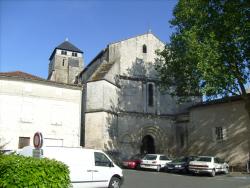 The Saint-Pallais Church, on the right bank, and its surroundings represent the oldest part of the district, likely showing early urbanization from antiquity. It is connected to the main city by a bridge that aligns with the Arch of Germanicus. It has its own Basilica and a Benedictine abbey, the Abbaye aux Dames.
And to finish up with the clues, look for the half-timbered houses, the narrow alleys of the old town, the parks and fountains… and the town hall.
Place the train station district; it was destroyed by bombing during the Second World War and rebuilt starting in 1951 under the direction of several architects, including André Morisseau, throughout the 1960s and 1970s. The station is close to the Bellevue and Les Boiffiers districts, which you’ve already placed… No???? Well then? Come on! Oh my…
The Old Medieval Town
The old medieval town was located around the current Rue des Jacobins. While most houses are half-timbered, some local notables preferred stone. Don't forget the Saint-Pierre Cathedral, the cloister, the episcopal palace, and the Hôtel-Dieu, it would be a crime of lèse-majesté! (A light one, obviously).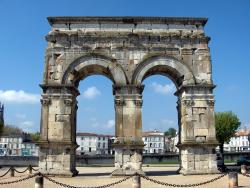
The fortified castle, protector of the city, towers over it; it successively housed representatives of the Duke of Aquitaine and the King of France. As for the ramparts, reinforced several times, they point the way to the city's main suburbs via the Aiguière and Evesque gates. Here, inns and hostels for pilgrims (still those Santiago-bound ones) took up residence, as did tanneries.
Surrounding the medieval center are the Saint-Vivien, Saint-Saloine, and Saint-Macoult suburbs, organized around their respective churches, and finally the Saint-Pallais suburb, dominated by its parish church and, above all, the Abbaye aux Dames, the region's most important religious building.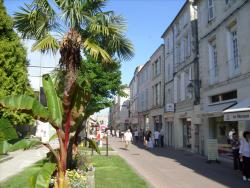
Major Urban Projects
To impress people at a dinner party…
Intendant Guéau de Reverseaux was behind major works. Eager to "air out the city," he established a new road plan, entrusting its execution to the engineer Duchesne, while also ordering the demolition of the old city walls and the cutting of grand boulevards. From 1772 to 1776, many alignment plans were carried out in the city center, while the boulevards were born in 1785.
Interrupted by the Revolution, the work resumed for almost the entire 19th century. Wide, tree-lined avenues were laid out where the old ramparts once stood: the Cours National (1815), the Cours Reverseaux (1835), and then across the Charente, the Avenue Gambetta. Wealthy cognac merchants had imposing mansions built (Château Rouyer-Guillet, Villa Musso, Maison Martineau), while the city equipped itself with monumental public infrastructure (the Town Hall, the courthouse, the Gallia Theater) or more discreet ones (the Nicolas Lemercier school).
Well, you should be almost finished… And don't hesitate to redo this puzzle, just for the pleasure of doing it again. Oh, I forgot, the sea isn't far, 20 minutes and you can spread out your towel!

Comments (0)
No comments yet. Be the first!