
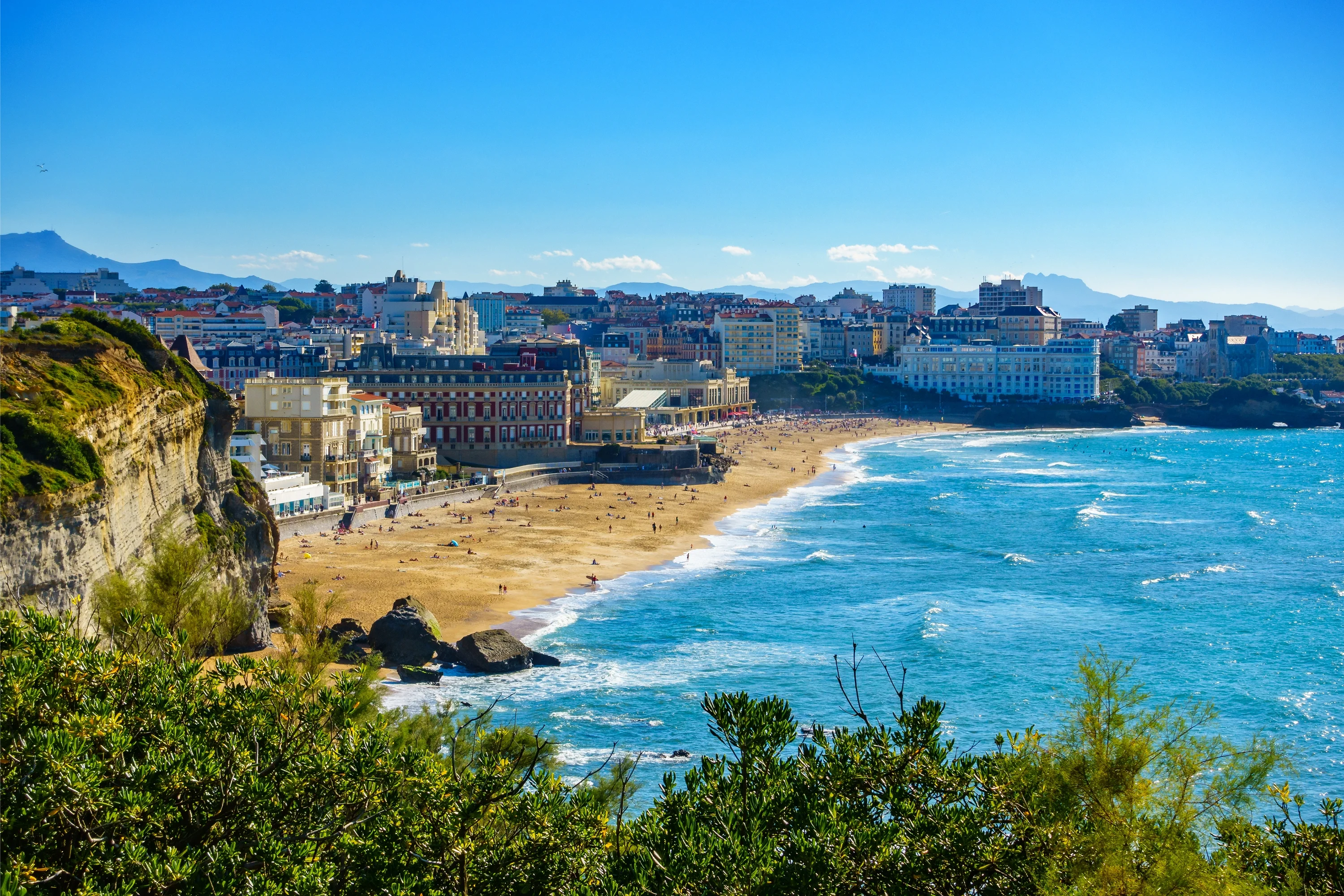
Biarritz
This beauty was once just a tiny whaling village. It was Victor Hugo, acting like a literary Christopher Columbus, who "discovered" it; it became his own personal America. A visionary, he predicted it would quickly blossom into a renowned seaside resort.
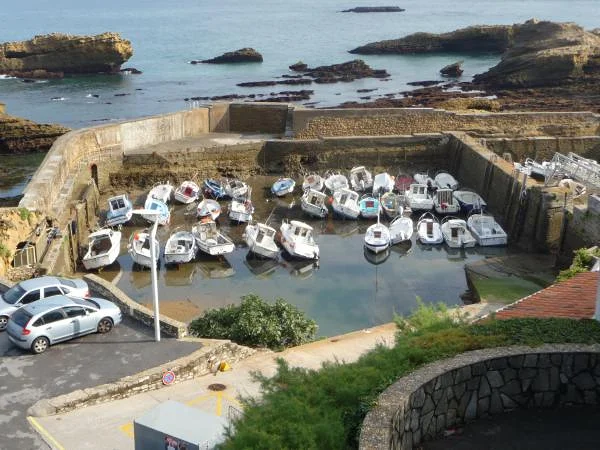
The village was originally split in two: the Saint-Martin church district on one side and the fishing port (Port-Vieux) on the other, both protected by the Château de Belay (or Ferragus).
Its coat of arms features a large whaling boat, which remains the symbol of the city to this day.
It’s still hard to pin down whether its roots are Basque or Gascon. Administratively, the people of Biarritz were part of the Labourd, a Basque province, until 1790.
To ensure local fishermen could find their way home regardless of the wind, tides, moonless nights, or storms, the first lighthouse was built in 1650.
By 1784, sea bathing was all the rage. Napoleon himself took a dip in 1808, and Empress Eugénie decided to make it her vacation spot after staying there for two months in 1854. Napoleon III built her a palace, triggering an influx of royalty from all over Europe. The city became known as "the queen of beaches and the beach of kings." October 1868 saw the first Biarritz regattas, featuring crews from the propeller-driven naval dispatch boats of the French West Coast division, the Chamois and the Argus, commanded by Henri Rieunier, the future admiral, Minister of the Navy, and deputy for Rochefort.
It was in Biarritz that Bismarck met Louis-Napoleon Bonaparte in September 1865 to secure the French Emperor's support for Prussian policy. Biarritz has held onto a few architectural reminders of this history, such as an Orthodox church with a blue-painted dome, a nod to the Russian aristocracy who visited before the Russian Revolution. The French expression "faire la tournée des grands Ducs" (to paint the town red) actually comes from here... funny how these things stick.
The Biarritz saline thermal baths date back to this era (June 1893), based on a design by architect Lagarde. Underground pipes spanning over 20 kilometers brought water from the Briscous salt mines, with a salt content more than ten times higher than seawater. These facilities were closed starting in 1953 and demolished in 1968.
Founded in 1894, expanded twice (in 1911 and 1926), and still open today, the Biarritz Bonheur department store was a temple of luxury and fashion in its day. At the start of the 20th century, most of its employees spoke English. The city of Biarritz was also closely linked to the history of French fashion, particularly the House of Chanel. Coco Chanel opened her 3rd boutique there in 1915, located at 2 Avenue Edouard VII.
The War and the German Occupation
In 1940, during World War II, the Germans carved the Atlantic Wall into the cliffs of Biarritz. To the north, on Avenue Général Mac Croskey beneath a beautiful villa, the BA 34 strongpoint was dug into the Pointe Saint-Martin to defend the Chambre d'Amour beach against a potential landing. To the south, beneath the Côte des Basques, along the Boulevard du Prince de Galles, the BA 41 position still shows its gun ports, visible parts of an extraordinary defensive complex carved into the rock, worthy of the Maginot Line. However, no landing ever took place in Biarritz.
On March 17, 1944, the city was bombed by the second wave of Allied bombers on their way to destroy the Parme airport, after the German anti-aircraft defense had shot down a plane during the first flyover.
After the liberation, the city hosted the American University of Biarritz for a few months, which aimed to provide training for soldiers following the Allied victory in Europe.
Surf, once you're hooked... you're hooked!
In 1957, American screenwriter Peter Viertel, visiting Biarritz with his wife Deborah Kerr for the filming of The Sun Also Rises, used a surfboard that a friend had flown in from California. That was the birth of the sport in Biarritz. The first locals gave surfing a try and launched a trend that would last, fueled by the excellent waves of the Atlantic coast. Today, the city has become one of the European and global hubs for the sport.
A quick tour of the museums
The Sea Museum...
This Art Deco building, attached to the cliff of the Plateau de l'Atalaye, dates back to 1933. It houses a significant collection of marine life and birds. The emblem of the Sea Museum is a white octopus on a blue background.
Asiatica, a museum of oriental art, brings together art objects from India, Tibet, Nepal, and China across 800 m2.
Let's finish with the "jewel box" museum preserving the history of Biarritz
The Historical Museum, located in a former Anglican church, Saint Andrew's, which was purchased by the city in the early 1980s.
Better than Cannes... we've got a red carpet here too!
The Biarritz Festival of Latin American Cinema and Culture presents the best of Latin American creativity every year in all its forms (film competition, short films, exhibitions, conferences). Its 22nd edition will take place from September 30 to October 6, 2013.
The International Festival of Audiovisual Programs is the go-to event for industry professionals; its goals are to foster new talent and facilitate the sale of films outside their countries of origin.
Still not convinced? You’re saying, "Yeah, well... maybe, but..." Well, let's talk about the cliffs.
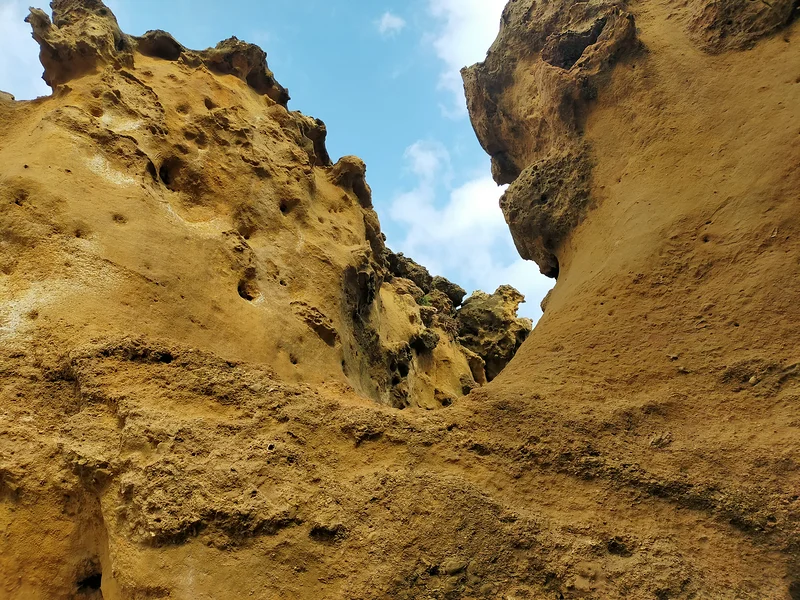
The cliffs of Biarritz have been experiencing constant erosion since the beginning of the 20th century, losing 70 cm per year, a battle successive municipal teams have been unable to win, despite the work undertaken.
And then there are the beaches...
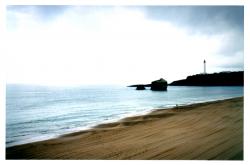
Within the municipality, you'll find the Miramar, Grande Plage, Port Vieux, Côte des Basques, Marbella, and Milady beaches... so, ready with your umbrella and towel?
And even more green spaces and flowers...
120 hectares of wooded areas are maintained by the municipality, along with two lakes, Lac Marion and Lac Mouriscot. The public garden in the city center, across from the Gare du Midi (now transformed into a cultural space), was created in 1903. I shouldn't forget Parc Mazon and the Jardin Lahouze, which are also part of the city's green and flowery spaces.
Even more??!! In its 2012 awards, the city was granted three flowers in the "Villes et Villages Fleuris" (Flowery Cities and Villages) competition.
So, next summer... Biarritz? Or not Biarritz?

Comments (1)