
Albert Kahn Museum: Four Hectares of Travel Just Outside Paris
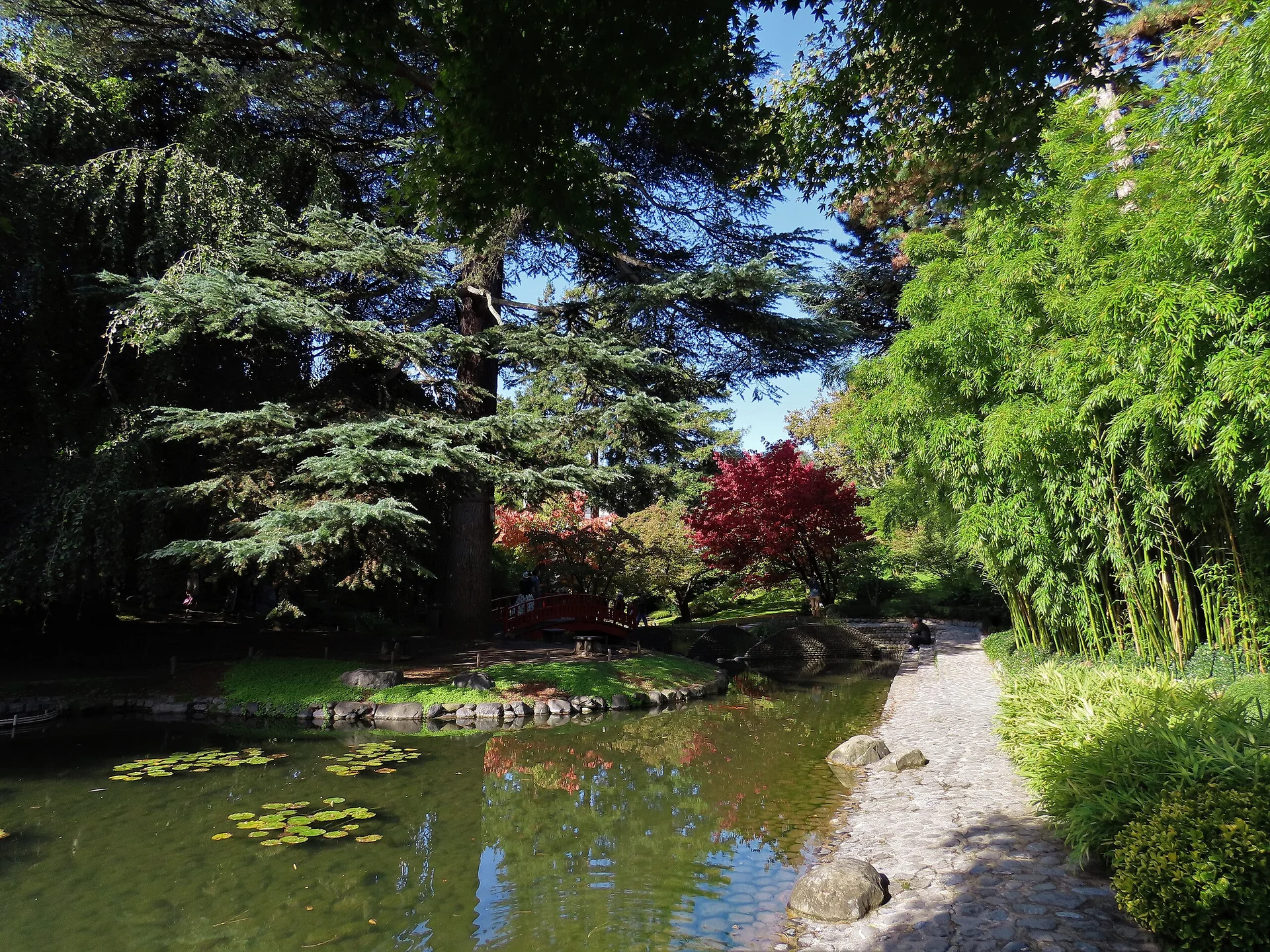
The red bridge reflects in the dark water of the pond. A few steps away, blue Atlas cedars stand alongside Japanese maples. Twenty-five minutes by metro from central Paris, the Albert Kahn Museum offers a rare experience: crossing seven world landscapes without ever leaving Boulogne-Billancourt.
Why Visit the Albert Kahn Museum?
This 4-hectare site embodies the vision of a singular man. Albert Kahn, an Alsatian banker who became one of the wealthiest men in France, believed that mutual understanding among peoples would lead to peace. He compiled the Archives de la Planète (Archives of the Planet), featuring 72,000 color photographs and roughly a hundred hours of film shot in fifty countries between 1909 and 1931. These archives were added to the UNESCO Memory of the World Register in 2025.
Ruined by the 1929 crash, Kahn lived on his estate until his death in 1940. The Hauts-de-Seine department manages this heritage site, which reopened in April 2022 after six years of renovations led by Japanese architect Kengo Kuma.
A Building Designed by Kengo Kuma
The new visitor pavilion contrasts with the bustle of the rond-point Rhin-et-Danube. Its metal-blade facade forms a protective wall. At night, it lights up like a lantern. Inside, oak and bamboo-striated ceilings filter the light.
Kengo Kuma adopted the Japanese concept of the engawa, the intermediate space between indoors and outdoors. Covered walkways protected by wooden slat blinds called sudare wrap around the building. The gaze always travels through something: a bamboo partition, a reflection on glass, a canopy of leaves.
Seven Landscape Scenes to Explore
The Japanese garden serves as the highlight of the visit. The red bridge, a replica of the Shinkyo Bridge in Nikko, spans a pond where maples mirror themselves. A tea house occasionally hosts traditional ceremonies.
The Vosges forest evokes Albert Kahn's native landscapes. The blue forest takes its name from the silver-tinted Atlas cedars. The French garden, designed by landscape architects Duchêne, centers around a rose garden. The English garden lets lawns wander among flowerbeds.
Friendly tip: Admission is free for everyone on the first Sunday of every month. Book online in advance because slots fill up fast. Spring remains the ideal season for the Japanese garden's blooms.
The Photographic Collections
The original autochromes are never displayed because they are too fragile. Reproductions faithfully recreate this grainy technique that used potato starch to reveal colors. A circular room equipped with screens allows visitors to browse the collection by theme.
The Plate Room recreates the projections Albert Kahn hosted for his guests. The Image Factory showcases the operators' equipment, including cameras and custom travel trunks.
A Tea Salon Overlooking the Gardens
The museum restaurant features a terrace facing the English garden. It serves pastries and light dishes, perfect for extending your visit.
Opening hours
October to March: 11:00 AM to 6:00 PM.
April to September: 11:00 AM to 7:00 PM.
Last entry is one hour before closing.
Closed on Mondays, May 1, December 25, and from January 1 to January 20.

There are a lot of photos and a few film screenings to see in the "indoor" part of the museum. Not everything is interesting, but it is still worth wandering around to find a few gems.
Outside, there is a truly magnificent garden that is worth the trip all on its own. The Japanese garden is a real success, with its mix of multicolored plants, its terrain, its ponds...
Special mention to the couple who run the restaurant. They offer real Portuguese specialties that are hard to find elsewhere in Paris. It is delicious and they are super friendly.