
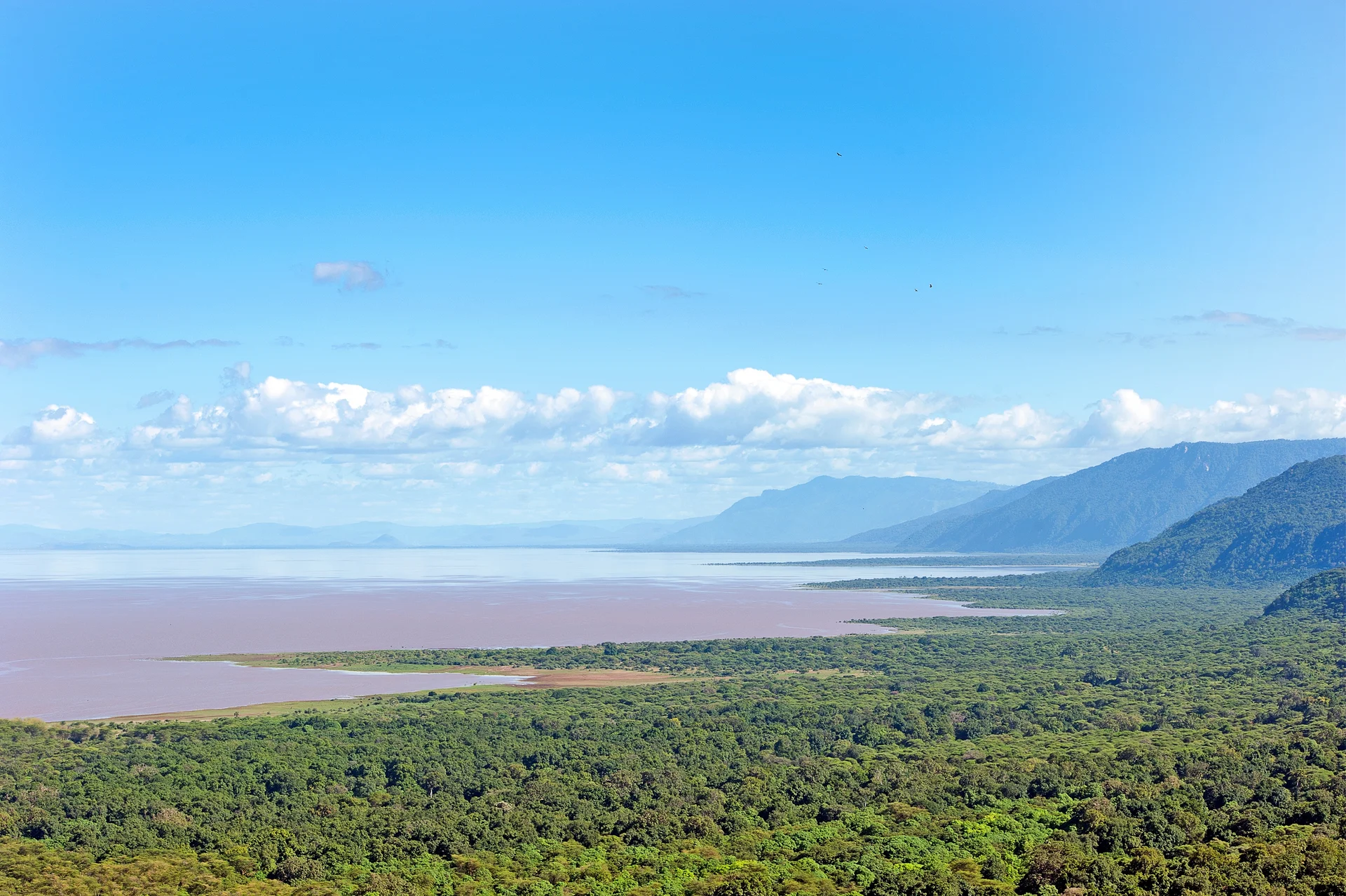
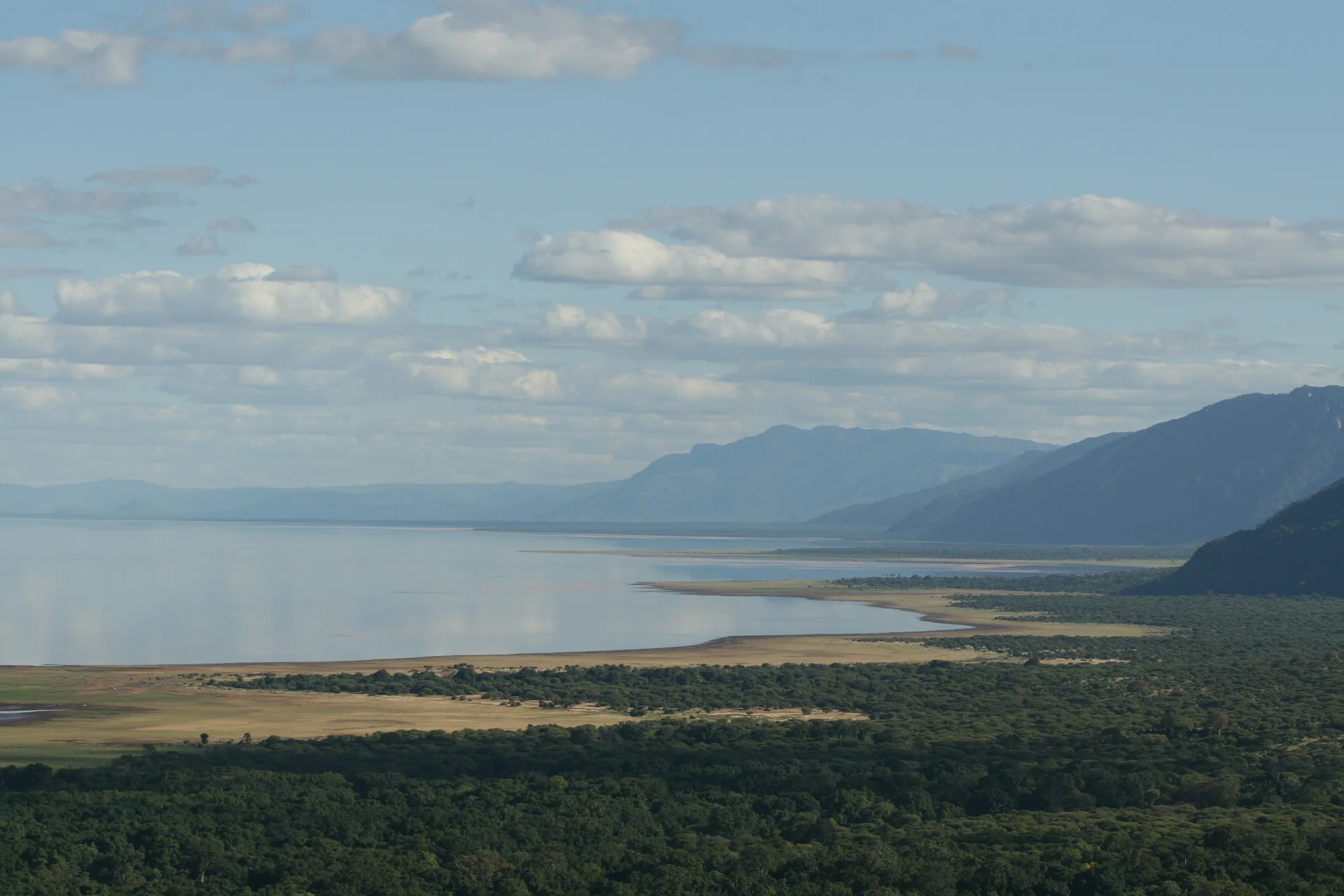
Lake Manyara National Park, the park packing four distinct worlds into a narrow corridor
Dense tropical forest, open savanna, an alkaline lake lined with birds, and the Rift escarpment as a backdrop: that is what awaits visitors in a surprisingly compact space. Lake Manyara National Park spans an elongated strip of land roughly 50 kilometres long, wedged between the western horst of the Great Rift Valley and the lake that gives it its name.
During the wet season, more than two thirds of this area disappears underwater. The lake expands and recedes, redrawing the landscape with the turning seasons.
Why visit Lake Manyara National Park
The park was established in 1960, though the existence of the lake had been documented decades prior by Austrian geographer Oscar Baumann during his 1890 to 1892 expedition. Its modest size makes it a concentrated pocket of contrasting ecosystems, crossed in a relatively short drive. You move from tropical forest to open savanna, then out to the shores of an alkaline lake, never spending more than a few minutes in the vehicle between one scene and the next.
A primate forest right at the northern entrance
Just past the entrance gate, a dense tropical forest blankets the northernmost tip of the park. It supports one of the highest primate concentrations anywhere, with baboons, vervet monkeys, and blue monkeys roaming in large numbers. A suspended canopy walkway lets visitors observe this arboreal life from an unusual vantage point.
Tree-climbing lions and lake birds
Lake Manyara owes part of its fame to its tree-climbing lions, an unusual behavior that draws safari-goers from across the region. The park wildlife remains diverse: elephants, buffalos, giraffes, hippos, zebras, and impalas share the savanna and the lakeshore.
The lake itself acts as a sanctuary for more than 400 bird species. Flamingos, pelicans, and storks gather on its alkaline shores, creating an avian spectacle that contrasts sharply with the large mammals spotted just minutes earlier.
Friendly tip: Driving is restricted to vehicles on marked tracks, and off-road driving is prohibited. You can enter in your own car, even without a four-wheel-drive model, which makes the visit straightforward for anyone not traveling on an organized safari.
Best for
- A short visit combined with other regional parks
- Spotting a remarkably rich population of waterbirds
- A first safari experience, accessible even in a standard car
Less suited for
- Travelers looking for a massive park to explore over several days
- Anyone hoping to see the lake at maximum water levels during the dry season
Opening hours
| Monday | 06:00-18:00 |
|---|---|
| Tuesday | 06:00-18:00 |
| Wednesday | 06:00-18:00 |
| Thursday | 06:00-18:00 |
| Friday | 06:00-18:00 |
| Saturday | 06:00-18:00 |
| Sunday | 06:00-18:00 |
How long for this activity
Comptez une grosse demi-journée de visite, voire une journée entière si vous prenez le temps.
*Information subject to change

In my opinion, Lake Manyara National Park, while charming, is not a must-see in Tanzania. It is neither the largest nor the richest in terms of wildlife. You see few animals there compared to other parks like the Serengeti or Tarangire.
Only visit if you have extra time. It is a nice bonus, but not essential.