
Visiting Grand Canyon National Park
Landscapes that stop you in your tracks
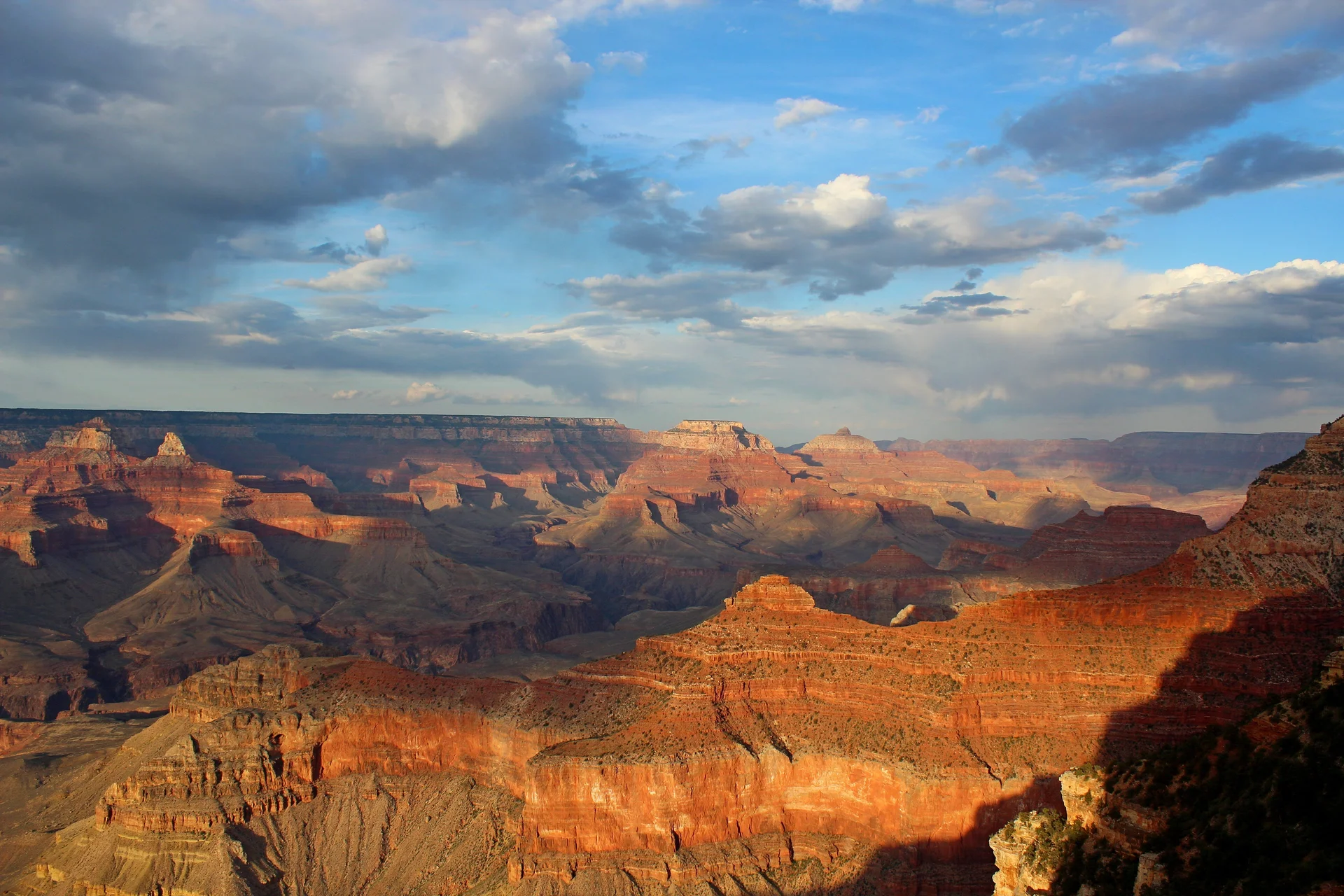
Established in 1919, the vast Grand Canyon National Park covers 500,000 hectares. A UNESCO World Heritage Site, its famous wild, arid landscapes draw 6 million visitors every year. You'll be struck by the erosion of its rock formations in shimmering colors, and by the variety of plant life growing among them. A symbol of the conquest of the American West and the backdrop for countless hit westerns, the park holds some real surprises.
A canyon on an enormous scale
At 446 km long and up to 1,800 meters deep, the Grand Canyon holds the bed of the powerful Colorado River, whose average flow is close to 650 cubic meters per second. Spanish conquistadors came across it in the 16th century, but American explorers only took a real interest in the middle of the 19th century. The canyon's geological origins are complex: the erosion of the Colorado River, combined with other natural processes, carved this one-of-a-kind landscape over millions of years. Around 40 layers of rock, including sandstone, limestone and shale, going back 1.8 billion years, earn it the nickname "time machine."
The two rims of the Grand Canyon: South Rim and North Rim
You can explore the two main rims, roughly 350 km apart: the South Rim, by far the most visited, and the North Rim, wilder and harder to reach. When you arrive, pick up a free map at the Grand Canyon Visitor Center. Hikers can also grab the trail brochure covering the main routes.
At the South Rim, four free shuttle lines make getting around easy. Among them, the Village Route (blue) serves the main lodging and the information center, while the Tusayan Route (purple), which runs only in summer, links the park to the airport at Grand Canyon National Park.
Opening hours
The South Rim of Grand Canyon National Park is open year-round, 24 hours a day. The North Rim is open from mid-May through mid-October.
*Information subject to change

I was breathless when I discovered the immensity of the Grand Canyon. The terrain, the layers of rock, and the colors ranging from beige to clay are magnificent. I hiked for a short day along the side of the canyon to discover the different viewpoints.
It is beautiful, but not the best park for hiking because everything is paved. I would have liked to go down to the bottom of the canyon, but unfortunately, you need to count on at least two days for that route. Shuttles also allow you to get around the canyon. This lets you see more distant perspectives without walking too much if you have little time.
From Tusayan, I finished my day with a helicopter flight (Papillon). Expect to pay about 250 dollars for 30 minutes of flight, but the experience is really worth the price!