Visiting Canada: Glaciers, Big Cities, and Distances That Defy Comprehension
3.8 million square miles. Six time zones. Some lakes the size of small US states. Canada is simply too big to cover in two weeks, and anyone who tells you otherwise hasn't been here. The country runs on two completely different tracks at once: cosmopolitan cities that feel like anywhere in North America, and vast Arctic territories where you can drive for hours without seeing another car.
Who Is Canada Actually For?
This is a trip for people who don't mind long drives and genuinely want open space. If you're after tropical beaches or a packed European-style cultural circuit, look elsewhere. Canada is the right call for hikers, landscape photographers, road trippers, and anyone who wants a realistic shot at spotting bears or moose in the wild. As a US traveler, you'll have zero language issues in most of the country. English is dominant everywhere, and Quebec runs on French, which adds a genuinely different cultural flavor without requiring any extra prep on your part.
Practically speaking, infrastructure is solid. Roads are well-maintained, cities have reliable transit, and accommodations cover every budget. That said, domestic flights are expensive, and some regions are genuinely remote. Weather swings wildly depending on where and when you go. Fall foliage season is spectacular, but winters can hit -22°F (-30°C) and mean it.
Budget Reality Check
Canada is one of the pricier destinations in North America. Budget CAD $100-200/day (roughly $75-150 USD) for a reasonable trip. Camping runs CAD $35-60/night ($26-45 USD), hostels and Airbnbs land around CAD $100-200 ($75-150 USD), and a decent hotel will cost CAD $200-300/night ($150-225 USD). Sit-down meals average CAD $20-30 ($15-22 USD), though cooking for yourself cuts that significantly. National park entry fees add up, and a rental car is essentially non-negotiable if you want to get anywhere interesting.
The Canadian Rockies: Scale You Have to See to Believe
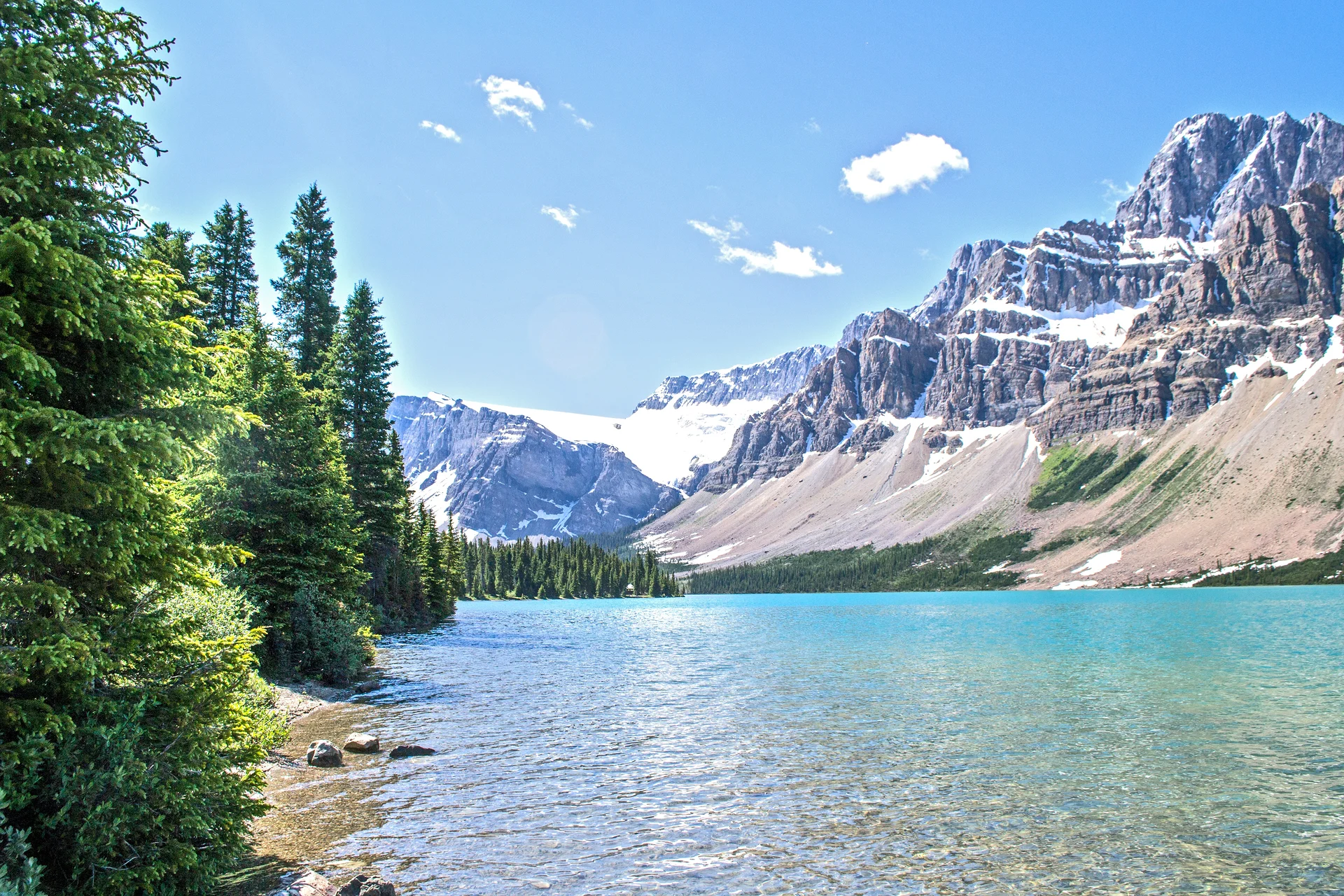
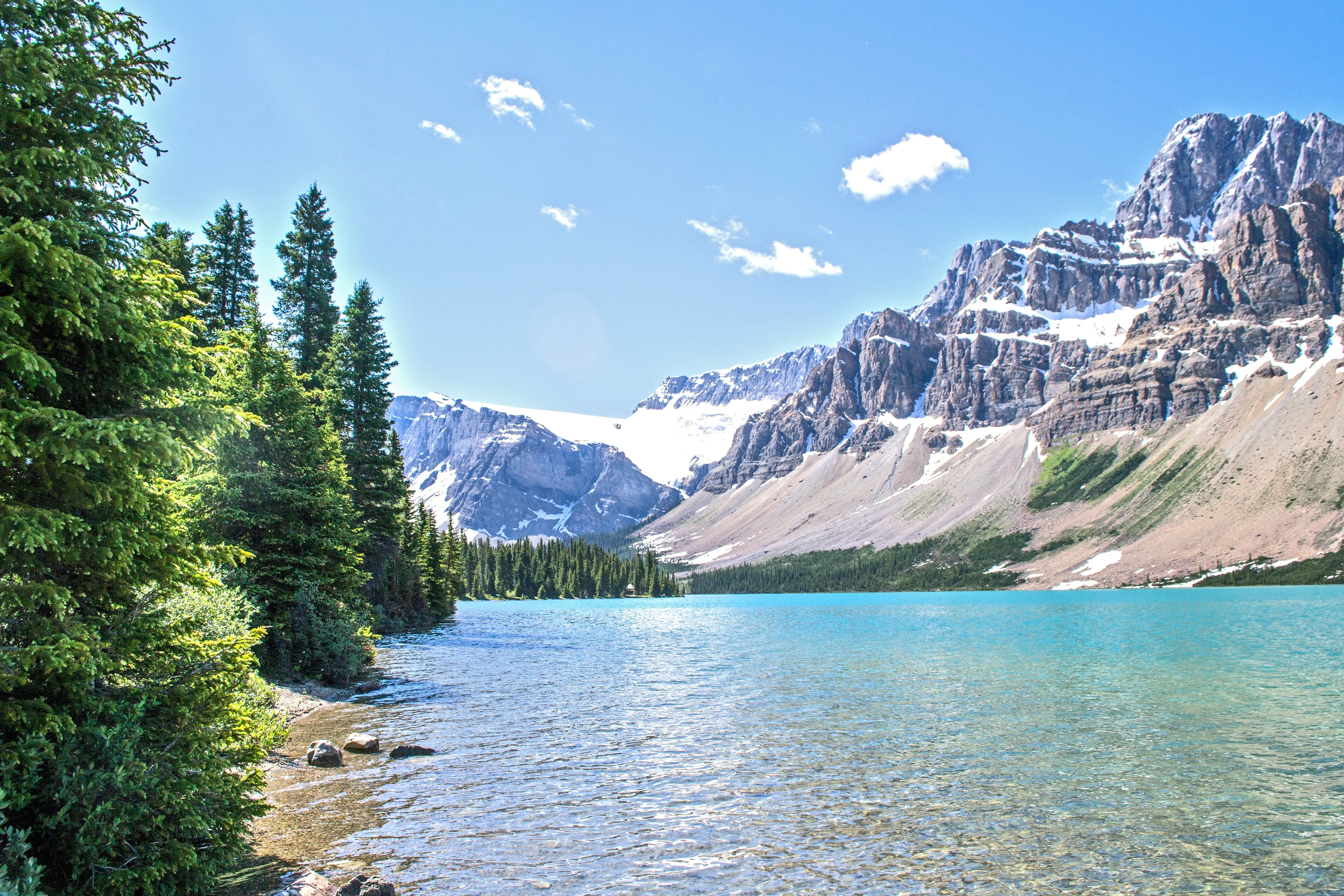
Start with the obvious: Banff and its turquoise lakes draw enormous crowds. Lake Louise and Moraine Lake fill up before sunrise in peak season. Book parking days ahead or show up before 6 a.m. Both are worth it, but the crowds at peak hours can genuinely undercut the experience.
The smarter move is pushing on to Jasper National Park, which is just as dramatic with noticeably fewer people. Maligne Lake, ringed by forested islands, is one of the better payoffs in the entire park system. Between Banff and Jasper, the Icefields Parkway covers 144 miles of continuous mountain scenery. Every bend reveals a glacier, a waterfall, or a snow-capped peak. Set aside a full day, ideally two, to stop properly and do some of the shorter hikes. The Athabasca Glacier lets you walk on the ice with a guide.
Insider tip: Yoho National Park, right next door to Banff, flies under the radar. Emerald Lake delivers the same jaw-dropping mountain reflections with a fraction of the foot traffic.
Western Canada Beyond the Rockies
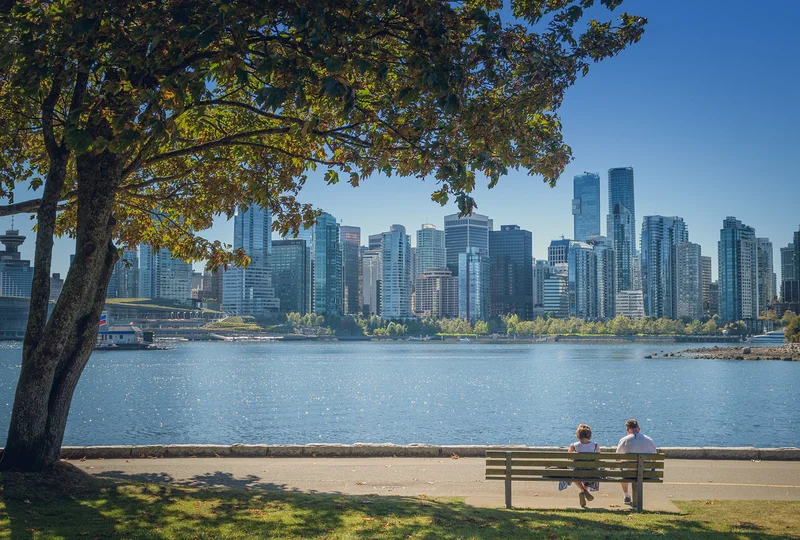
Vancouver is one of those rare cities where you can bike through an old-growth forest in the morning and eat your way through a world-class food market in the afternoon. Stanley Park handles the forest part, Granville Island handles the food, and Kitsilano Beach fills up fast on sunny days. The city is also your jumping-off point for Vancouver Island and its rainforests. Tofino, on the island's wild west coast, draws surfers and anyone who wants to watch Pacific storms roll in from a warm coffee shop.
Further north, the Yukon offers an entirely different kind of trip: lunar landscapes, extreme quiet, and northern lights from September through March. Dawson City, a former Gold Rush boomtown, still has its saloons and a genuine frontier feel. You can drive there via the Alaska Highway, but from Vancouver you're looking at roughly 20 hours behind the wheel.
Eastern Canada: French-Speaking Cities and One Very Loud Waterfall
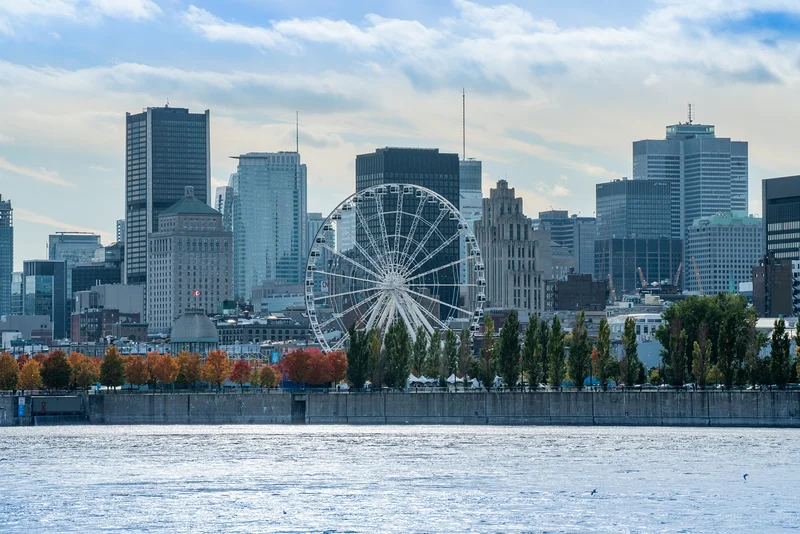
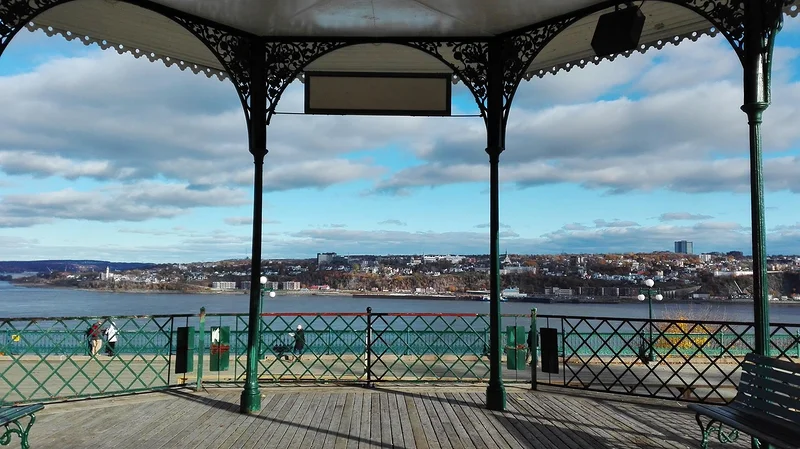
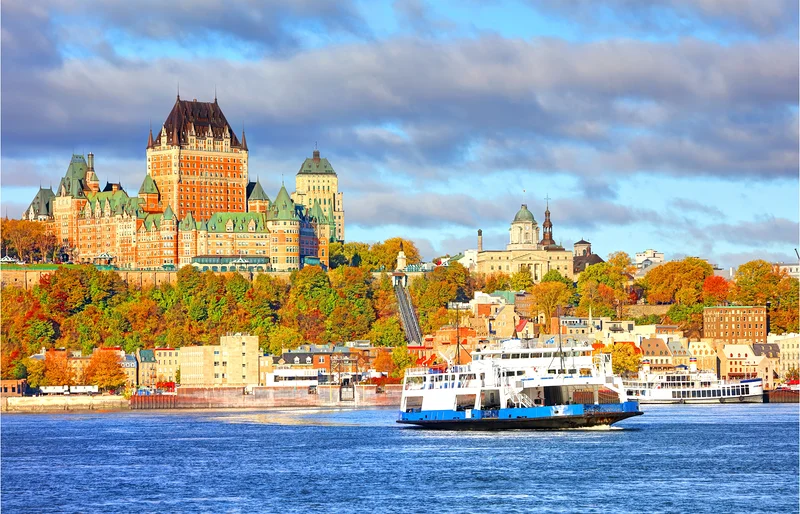
Montreal pulls off something unusual: it genuinely feels like a North American city and a European one at the same time. Old Montreal's cobblestone streets and 18th-century facades could pass for parts of France, while the city's summer festival calendar (Jazz Fest, Just for Laughs) is pure North American energy. Quebec City is smaller and quieter, and honestly feels like someone airlifted a French walled city across the Atlantic. Its fortifications are the only ones remaining in North America north of Mexico, and the historic center is UNESCO-listed. The Château Frontenac sits on the cliff above the St. Lawrence River and is impossible to miss.
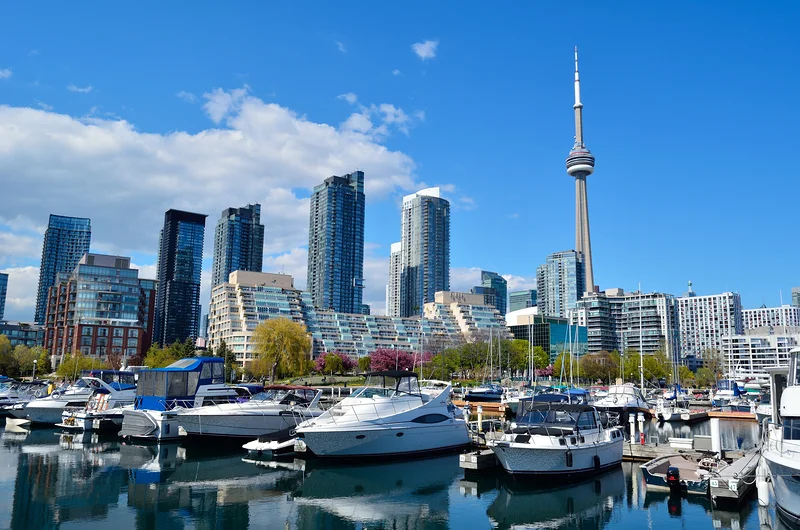
Toronto is Canada's biggest city and leans into it. Skyscrapers, top-tier museums, and neighborhood after neighborhood with its own distinct identity. The CN Tower gives you the vertigo-inducing view, but Kensington Market and the Distillery District tell you more about what the city actually is. About 90 minutes away, Niagara Falls dumps 99,000 cubic feet of water per second over the edge. You can hear it a half-mile away. The boat tours that go right up to the base will absolutely soak you.
Insider tip: The Gaspésie Peninsula in eastern Quebec is almost completely off the radar for most visitors. The national park has dramatic coastal hiking trails, and Percé Rock is one of those geological formations that photographs well from every possible angle.
The Northern Territories: As Remote as It Gets
Nunavut and the Northwest Territories are for travelers who want complete isolation. People come to watch polar bears, paddle between icebergs, or sleep under northern lights that are genuinely unlike anything you'll see further south. Iqaluit, Nunavut's capital, is only reachable by plane from Ottawa or Montreal, and a one-way ticket runs CAD $1,000-1,500 (about $750-1,125 USD).
These regions demand serious preparation. Services are scarce, winter temperatures drop to -40°F (-40°C), and summer is short. But the experience is real in a way few trips are: walking on Arctic tundra, crossing paths with caribou, spending time with Inuit communities. Auyuittuq National Park has glacial fjords that rival anything in Norway.
Wildlife: Where to Find Bears, Whales, and Moose
Canada has remarkable wildlife, but sightings are never a sure thing. In the Rockies, grizzlies and black bears are most active in spring and summer. Keep your distance and make noise on the trail. Moose tend to show up more reliably in Quebec and British Columbia, often near lakes at dawn.
For whales, head to Tadoussac on the St. Lawrence between June and October. Belugas, fin whales, and minkes all move through. On the Pacific side, Tofino and Telegraph Cove are solid spots for orcas and gray whales. Whale-watching tours run around CAD $100-150 per person ($75-110 USD).
Canadian Food: Hearty, Generous, and Underrated
Canadian cuisine doesn't pretend to be subtle. Poutine, Quebec's signature dish, is french fries topped with cheese curds and brown gravy. It sounds simple because it is, and it's exactly what you want after a day on the slopes. Restaurants across the country riff on it with pulled pork, lobster, or bison. On the sweet side, maple syrup is everywhere, and for good reason: Canada produces 71% of the world's supply, mostly out of Quebec. It goes on pancakes, obviously, but also in marinades and desserts like pouding chômeur, a Quebec bread pudding baked in maple sauce.
The coasts deliver serious seafood. Lobster in Nova Scotia, salmon in British Columbia, oysters on Prince Edward Island. Montreal-style bagels, boiled then wood-fired, are denser and slightly sweeter than New York bagels, and the debate between the two styles is taken seriously by people on both sides. Tourtière, Quebec's spiced meat pie, is the kind of thing you want on a cold winter night. And the craft beer scene has exploded nationwide, with solid breweries in every major city.
When to Go to Canada
It depends entirely on what you're after. Summer (June through September) gives you the best weather and access to every park in the country, with temperatures running 68-86°F (20-30°C) across most regions. It's also peak season, which means crowds, inflated prices, and reservations you should have made months ago. Fall (September and October) turns eastern Canada into something that looks like a painting. Quebec and Ontario forests go full red, orange, and yellow, and the leaf-peeping crowds rival summer. Winter (December through March) is for skiers and northern lights chasers. Whistler and Mont-Tremblant are two of the best ski resorts on the continent. Pack for -4°F to -22°F (-20°C to -30°C) in the Prairies and Quebec. Spring is the quietest season with lower prices, but the weather is unpredictable and some parks haven't fully opened yet.
Getting to Canada
As a US traveler, you don't need a visa or an ESTA equivalent to enter Canada. US citizens can cross by land, air, or sea with a valid US passport. Most major US hubs have direct flights to Toronto, Montreal, and Vancouver. Flight times from the East Coast run roughly 1.5-2 hours to Montreal or Toronto; West Coast to Vancouver is about 3 hours. Air Canada, WestJet, and several US carriers cover the main routes.
Note that even US citizens entering by air may be asked to show proof of onward travel or sufficient funds at the border. CBP rules apply on your return, and Canada's CBSA handles entry on the Canadian side. The process is typically quick at major airports.
Getting Around Canada
You need a strategy for the distances. Domestic flights are the fastest option between major cities: Toronto to Vancouver takes 4.5 hours, but expect to pay CAD $300-500 ($225-375 USD) per leg. WestJet and Flair Airlines tend to undercut Air Canada on price. Train travel is limited but works well on the Quebec City-Montreal-Toronto corridor, where VIA Rail runs regularly. Montreal to Toronto takes about 5 hours and costs CAD $80-150 ($60-110 USD).
A rental car is the only real option for national parks and rural areas. Rates start around CAD $50-80/day ($38-60 USD) before gas. Gas runs about CAD $1.50-1.70/liter, which works out to roughly $4.25-4.80 per gallon, noticeably more than most US states. Roads are excellent, but the distances add up fast: Vancouver to Banff is 10 hours, Montreal to Toronto is 5.5 hours. In the cities themselves, public transit is reliable. Montreal, Toronto, and Vancouver all have efficient subway systems that cover the main areas you'll want to reach.