
Visiting the Moorish Castle: Sintra's haunting sentinel
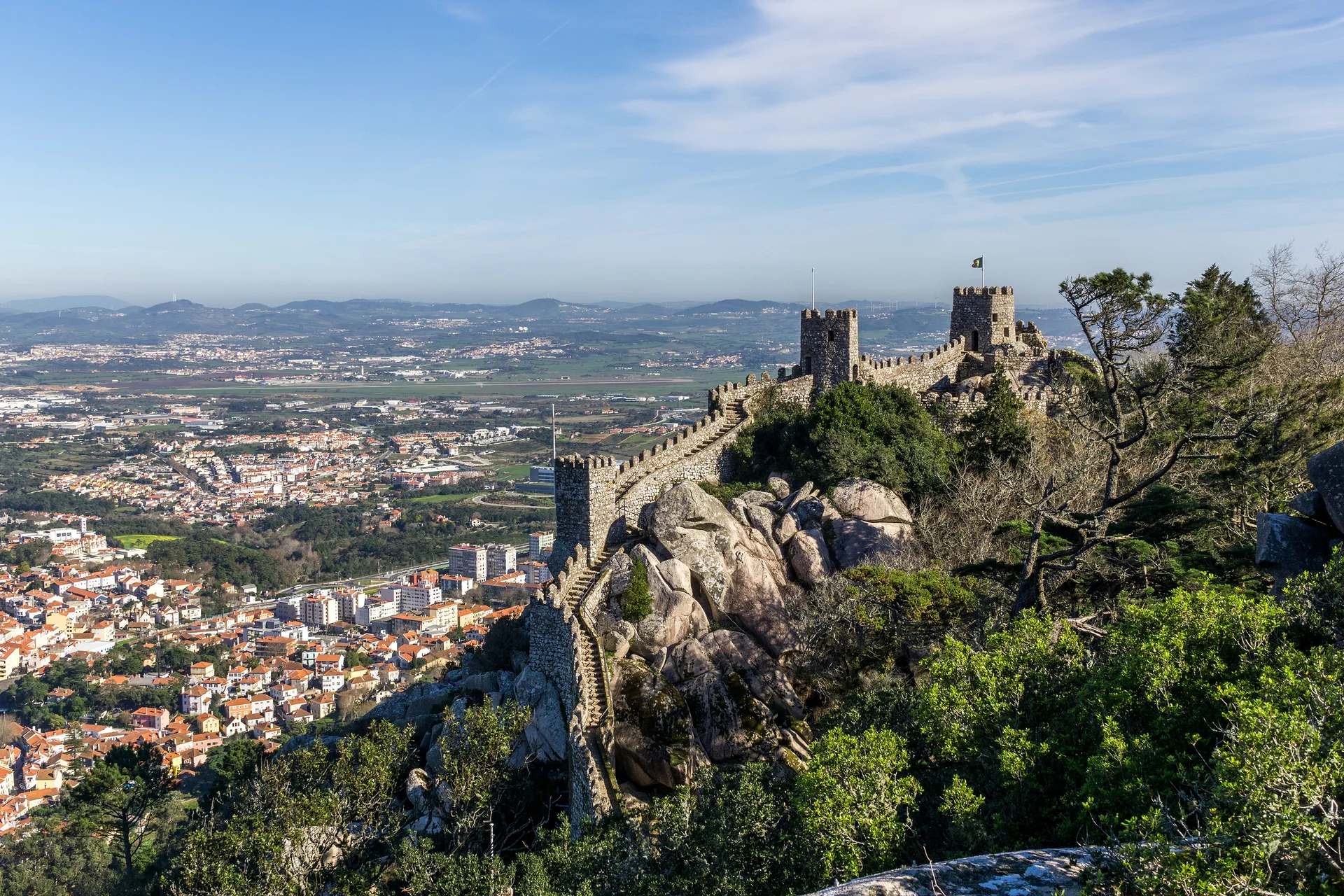
Granite walls snake between boulders like a stone dragon resting on the mystical heights of Sintra. The Moorish Castle stretches its ancient ramparts across a landscape where the Atlantic Ocean glimmers in the distance, while verdant hills whisper secrets of a medieval Portugal where Islamic and Christian civilizations once intertwined.
Why the Moorish Castle is worth the climb
Built in the 10th century by the Moorish populations of Al-Andalus, this castle strategically dominated the valleys of Sintra and monitored the maritime routes leading to Lisbon. After its definitive conquest by Afonso I in 1147, it became a primary witness to the Portuguese Reconquista.
In the 19th century, the romantic King Ferdinand II brought these ruins back to life according to the idealized aesthetic of the medieval past, transforming this military remnant into an architectural jewel. Named a UNESCO World Heritage site in 1995, it embodies a unique meeting of Islamic heritage, Christian conquest, and romantic dreams.
Architectural secrets of a millennium-old fortress
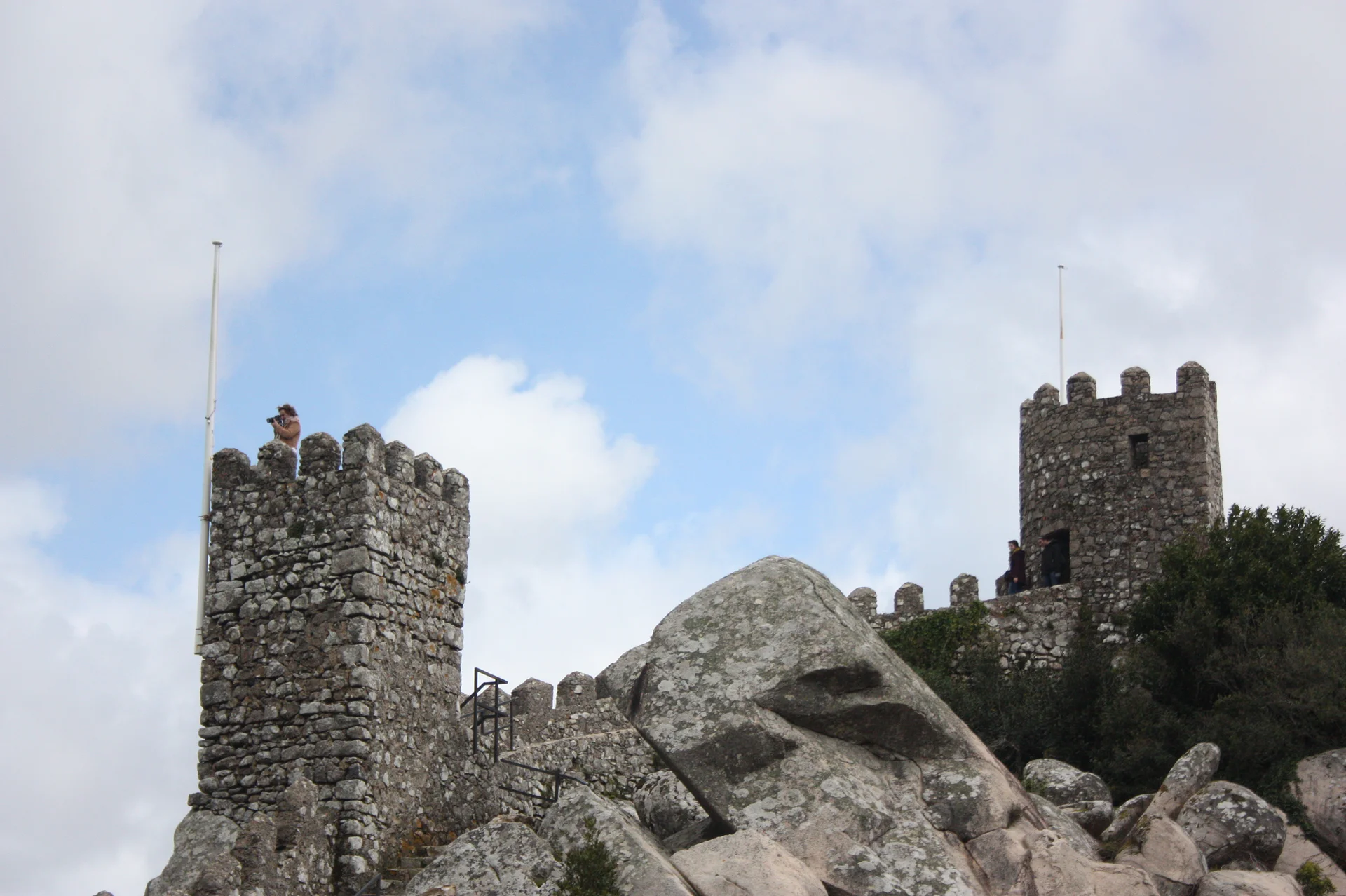
The Torre Real (Royal Tower) is the highest point of the castle, offering the most striking panorama over Sintra. This tower, so named because it was a favorite spot for King Ferdinand, rewards the climb of its 220 steps with a view that embraces the Pena Palace, the hills of the Serra da Sintra, and reaches as far as the towns of Ericeira and Mafra on clear days.
The Alcáçova represents the citadel of the castle, the ultimate refuge in case of siege and the center of Moorish power in times of peace. Its foundations reveal the defensive ingenuity of Muslim architects who exploited every natural feature of the rocky terrain.
Friendly tip: Walk the perimeter path in a counter-clockwise direction to catch the best light for photography and avoid the crowds that typically follow the standard route.
Archaeological treasures and an open-air laboratory
Since 1976, systematic excavations have turned the site into a living history book. The Islamic quarter revealed by archaeologists fascinates with its silos carved into the rock using Al-Andalus techniques, foundations of Moorish houses, and the remains of communal ovens. These discoveries recount the daily life of women, wool processing, and the culinary customs of a bygone era.
The Igreja de São Pedro de Canaferrim (Church of Saint Peter of Canaferrim), a 12th-century Romanesque chapel, now houses the Moorish Interpretation Center. This church, the oldest Christian religious building in Sintra, was built over a former mosque after the reconquest. Its Romanesque portals and the remains of frescoes in the sanctuary bear witness to this layering of civilizations.
The Moorish cistern: A feat of medieval hydraulics
The monumental cistern, built during the Islamic period, reveals the hydraulic ingenuity deployed to supply the fortress. Capable of holding 600 cubic meters of water, it includes ventilation chimneys for air circulation and even supplied the National Palace of Sintra via an underground spring.
Panoramic routes and secret trails
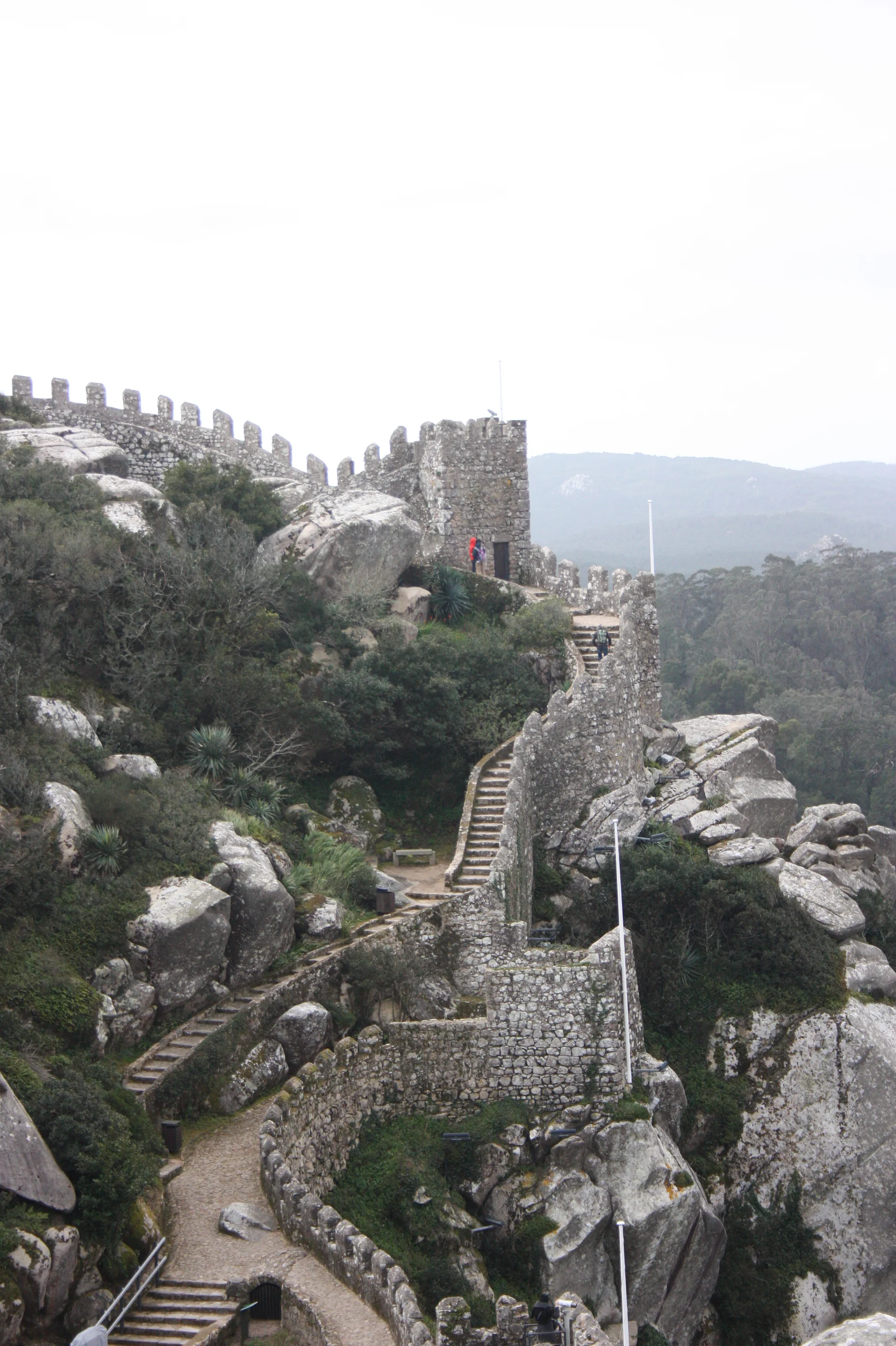
The perimeter path follows the natural undulations of the granite relief, offering a walk steeped in history punctuated by unique perspectives. Each corner unveils a different angle on Sintra, creating a visual symphony between military architecture and the natural landscape.
To head back down toward Sintra, the Caminho de Santa María offers a delightful 20-minute zigzag trail that runs alongside the enclosure walls and traverses the rocks scattered across the hill. This pedestrian alternative avoids the crowded buses while offering prime viewpoints over the town.
Other trails to explore:
- Villa Sassetti trail (1.85 km): A shaded path ideal for reaching the castle at a leisurely pace.
- Path to the Pena Palace: A historic connection highlighting the strategic importance of the site.
- Archaeological quarter viewpoints: Essential for understanding medieval urban organization.
Opening hours
*Information subject to change

Since the Moorish Castle is located up high, the climb up the stairs to the ramparts will reward you with some really beautiful views of the town of Sintra.
Aside from that, the interior of the castle is not very well preserved. For example, there are no period rooms to visit with furniture and artifacts. It is a shame.