
Cabo da Roca at a glance
A unique geographic position
Did you know that Cabo da Roca is the westernmost point of continental Europe? It is a striking location.
Until the 14th century, this cape was considered the edge of the world. The writer Luis de Camoes even wrote in his 1572 book The Lusiads that this was the place where the land ends and the sea begins. The site lives up to its reputation as a world's end, with a wild and rugged landscape. You will encounter other travelers here, but the area remains relatively quiet.
What to see at Cabo da Roca
The primary landmark at Cabo da Roca is its lighthouse, which was built atop the remnants of a 17th-century fort and continues to serve as a beacon for ships navigating the area.
Today, nothing remains of the original fort. Historical records indicate that it once served as a defensive rampart to protect Lisbon during the Peninsular Wars. Once peace returned, the fort was abandoned and slowly weathered into ruins by time and storms.
To see Cabo da Roca at its best, arrive early in the morning or late in the evening to catch the sunrise or sunset. The 140-meter cliffs overlooking the Atlantic offer a panoramic view of the coastline.
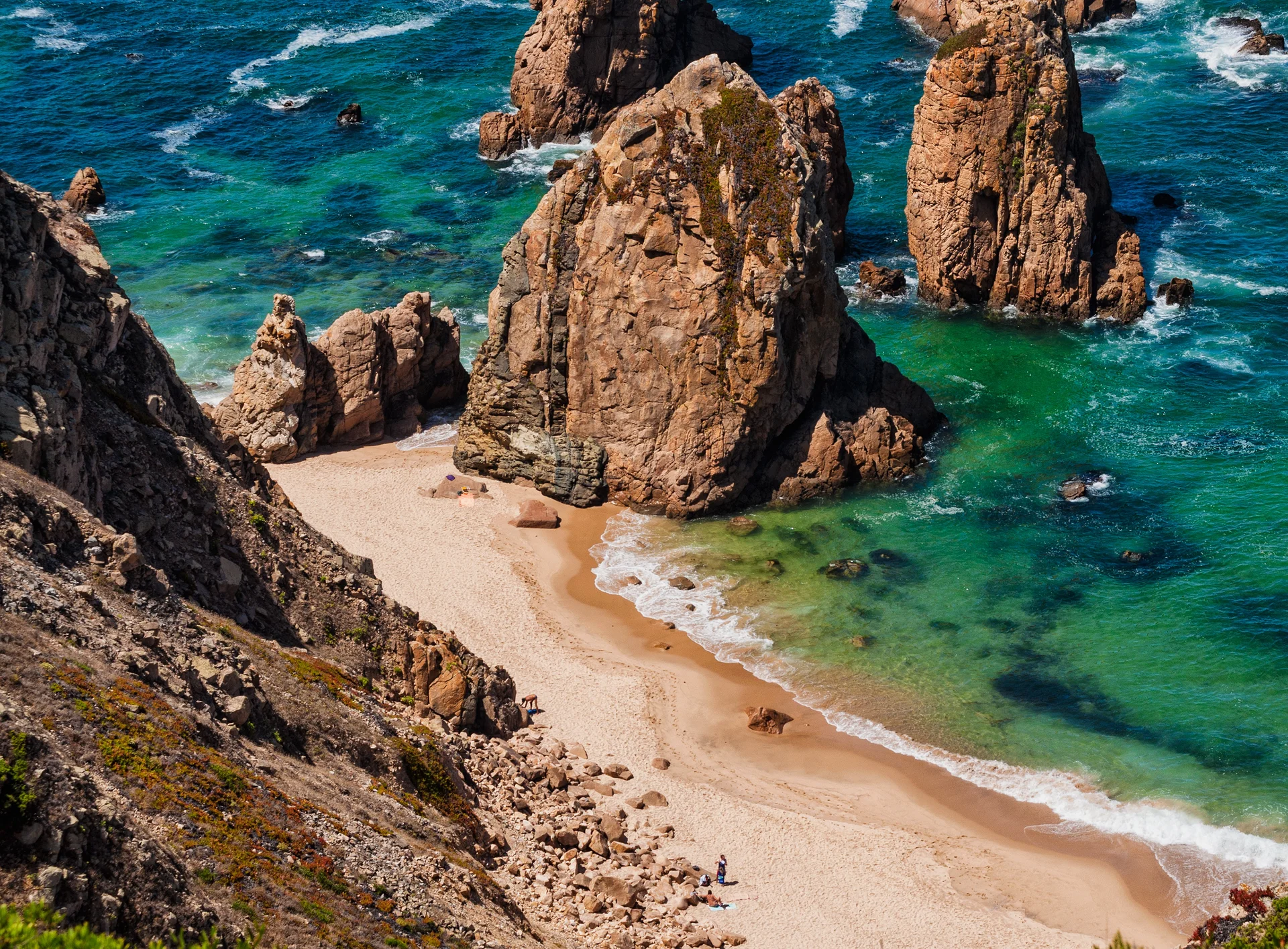
Hiking is the best way to explore this unique spot, thanks to the network of existing trails. The ocher, saffron, and gray cliffs, along with the distinct rock formations, are worth the effort. The site is protected as part of the Sintra-Cascais Natural Park (Parque Natural de Sintra). There are also a few wild beaches and coves for those looking to relax.

These cliffs overlooking the Atlantic Ocean, at the westernmost point of the European continent, are splendid, with some really beautiful views.
If you are careful, you can take various hiking trails and even find some pretty beaches at the foot of the cliffs. Just a heads up, make sure to bring something warm to wear, the water is cold and it is windy!