
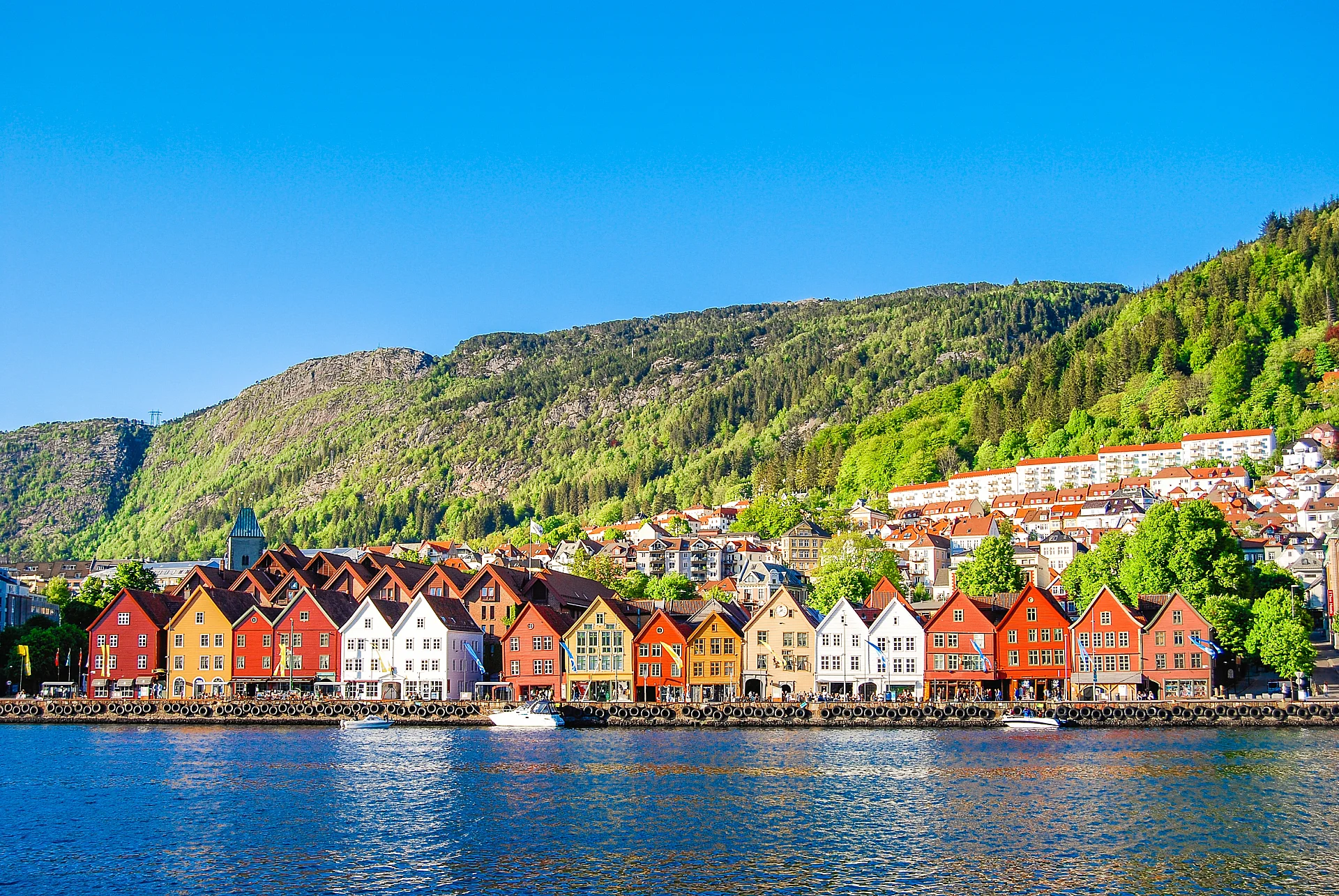
Bryggen, the wooden facade of Bergen that survived seven centuries of fires
Colored wooden facades, leaning against one another like poorly shelved books. The scent of dried cod still hanging in the air near the old trading stalls. Bryggen is not a tourist recreation. It is the oldest commercial district in Bergen, standing in the same spot since the Middle Ages.
Why visit the Bergen Waterfront?
This waterfront owes its existence to the Hanseatic League, which turned Bergen into a major trading hub in Northern Europe starting in the 14th century. German merchants stored and traded dried cod caught in the nearby fjords, an activity that defined the city economy for nearly 400 years.
The site has burned and been rebuilt multiple times, always following the same original techniques and plans. Since 1979, Bryggen has been a UNESCO World Heritage site, recognized as one of the last authentic examples of wooden Hanseatic architecture still standing in the world.
Getting lost in the alleys behind the facades
What strikes you when arriving from the harbor are the colored gables lined up facing the water. But the real experience is hidden behind them, a maze of narrow passages, paved courtyards, and wooden staircases that creak under your feet. Many visitors stop at the photo of the main row without ever venturing inside, a mistake you should not repeat.
These back courtyards now house artisan workshops, galleries, and small shops, located in buildings where the interior structure has changed little over the centuries.
The Hanseatic Museum and archaeological remains
The Bryggens Museum, built on archaeological foundations unearthed after the fire of 1955, helps you understand the daily life of Hanseatic merchants. You can see objects found during excavations, including tools, ceramics, and runic inscriptions carved into wooden sticks.
Nearby, the Hanseatisk Museum (Hanseatic Museum) occupies one of the old trading houses and restores the atmosphere of the era's living quarters and merchant offices, with original furniture preserved thanks to the cold and dry climate of the site.
Friendly tip: Come early in the morning or late in the day when the raking light on the wooden facades is most photogenic, and when the cruise ship crowds have left the alleys.
Pros
- Free access to the district and alleys
- UNESCO site in the city center
- Very different atmosphere between day and evening
Cons
- Very crowded during cruise ship hours
- Alleys are slippery when it rains, common in Bergen
Opening hours
The Bergen Waterfront, including the historic Bryggen district, is a public space that remains open at all times. The streets and wharves are accessible 24 hours a day.
Note: Shops, museums, and restaurants located along the waterfront set their own operating hours, typically from 10:00 AM to 5:00 PM or 6:00 PM, with variations depending on the season.
How long for this activity
Plan on 2 to 3 hours to wander the narrow alleys of Bryggen and walk along the harbor. Allow for half a day if you want to visit the Bryggens Museum or explore the artisan shops in more detail.
*Information subject to change

I recommend heading to the Bergen waterfront to book a fjord cruise. You can visit several spectacular fjords from Bergen. Some take a few hours, while others require a full day. It is a truly unforgettable experience that offers breathtaking views.