
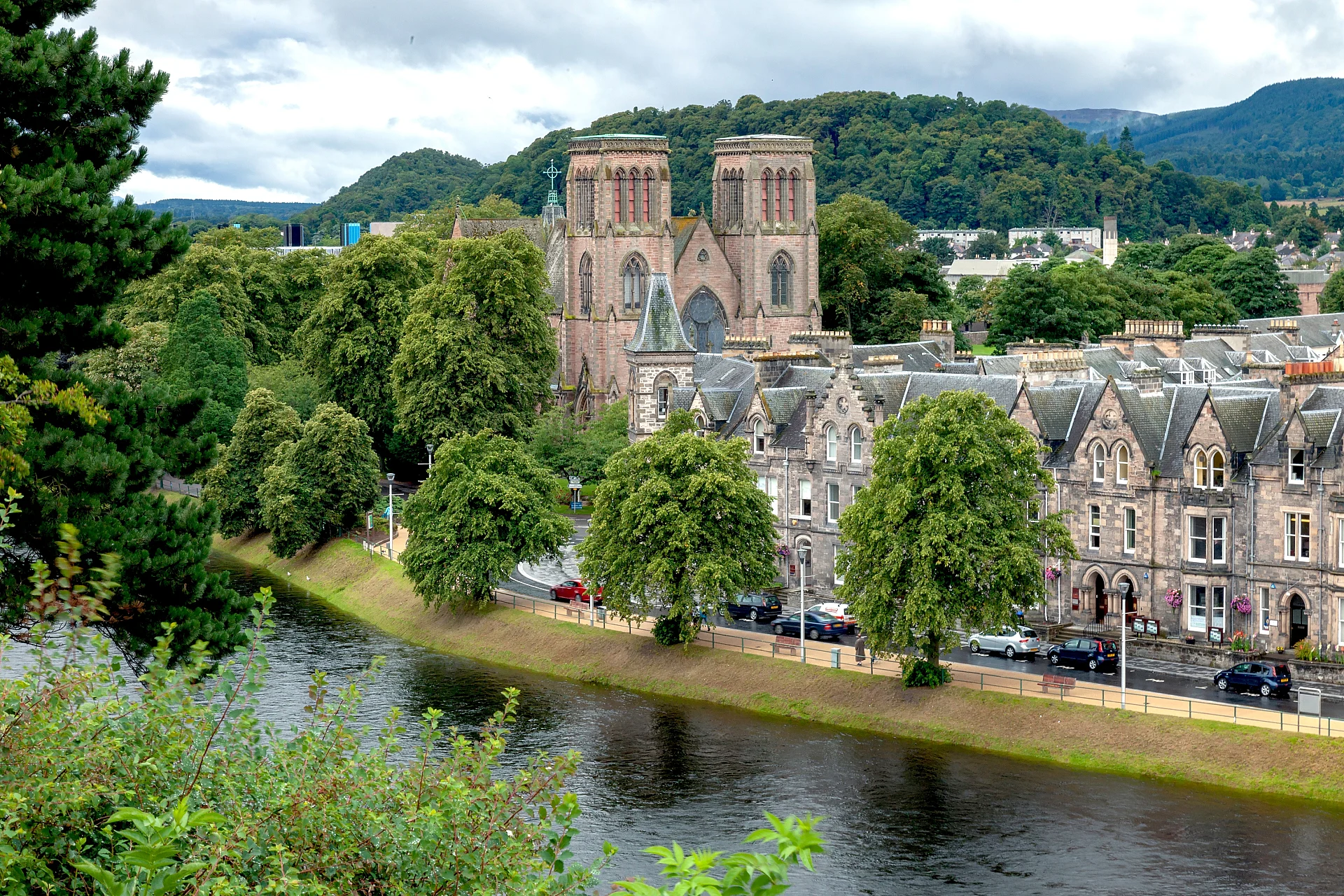
The red sandstone cathedral on the banks of the Ness
On the left bank of the River Ness, two twin spires of red sandstone reflect in the calm water. This is the first impression you get of Inverness Cathedral, the spiritual heart of the Scottish Episcopal Church in Inverness.
Contrary to what its name might suggest, the building does not date back to the Middle Ages. Its construction began only in 1866.
Why visit Inverness Cathedral?
The history of this site is closely tied to the Episcopal Church, which was long marginalized in Scotland following the Presbyterian Reformation. The construction of this cathedral, intended to serve as the seat of the Diocese of Moray, Ross and Caithness, symbolized a resurgence of this Anglican tradition in the Highlands.
The architect Alexander Ross, a local from Inverness, designed an ambitious project blending Norman and Gothic influences. Due to a lack of sufficient funds, the two towers originally planned to exceed 30 meters were ultimately shortened, which explains their somewhat stocky silhouette compared to the initial plans.
An interior that surprises with its light
Once you pass through the porch, the atmosphere changes completely. The nave, lined with columns made of polished granite extracted from local quarries, captures a soft light filtered through stained glass. The contrast between the red exterior stone and this dark gray granite inside creates a unique, almost mineral ambiance.
Among the items to look for are the marble baptismal font, gifted by Russian parishioners in honor of Tsar Alexander II, and a series of Victorian stained glass windows with deep hues that depict biblical scenes.
A house of worship that remains active
The cathedral is not a frozen museum. It still hosts regular religious services and a choir known for the quality of its liturgical music. This active dimension completely changes the experience of the visit compared to a simple tourist monument.
- Free admission for visitors
- Peaceful riverside setting, ideal for a break after a walk along the Ness
Friendly tip: arrive in the late afternoon when the low sun illuminates the red sandstone facade. The effect is particularly striking from the opposite bank of the river.
Pros
- Original Victorian architecture, distinct from classic medieval cathedrals
- Riverside location, very photogenic
- Free access and often uncrowded
Cons
- Recent building (late 19th century), not to be confused with a medieval monument
- Access to certain areas restricted during religious services
Opening hours
Mon-Sat: 9:00 AM to 5:00 PM.
Sun: 12:00 PM to 5:00 PM (open for religious services).
Closed December 25 and January 1.
How long for this activity
Plan on about 30 to 45 minutes to appreciate the interior architecture and the stained glass windows. Allow for one hour if you want to explore the attached garden and take in the view of the River Ness.
*Information subject to change

The Inverness Cathedral is a beautiful monument, typical of Scotland with its red stones. While the interior is stunning and richly decorated, you have to pay for entry, which I find a shame. The admission price is a bit too high for what there is to see. If you are in a rush, just admire the exterior. That is enough.