
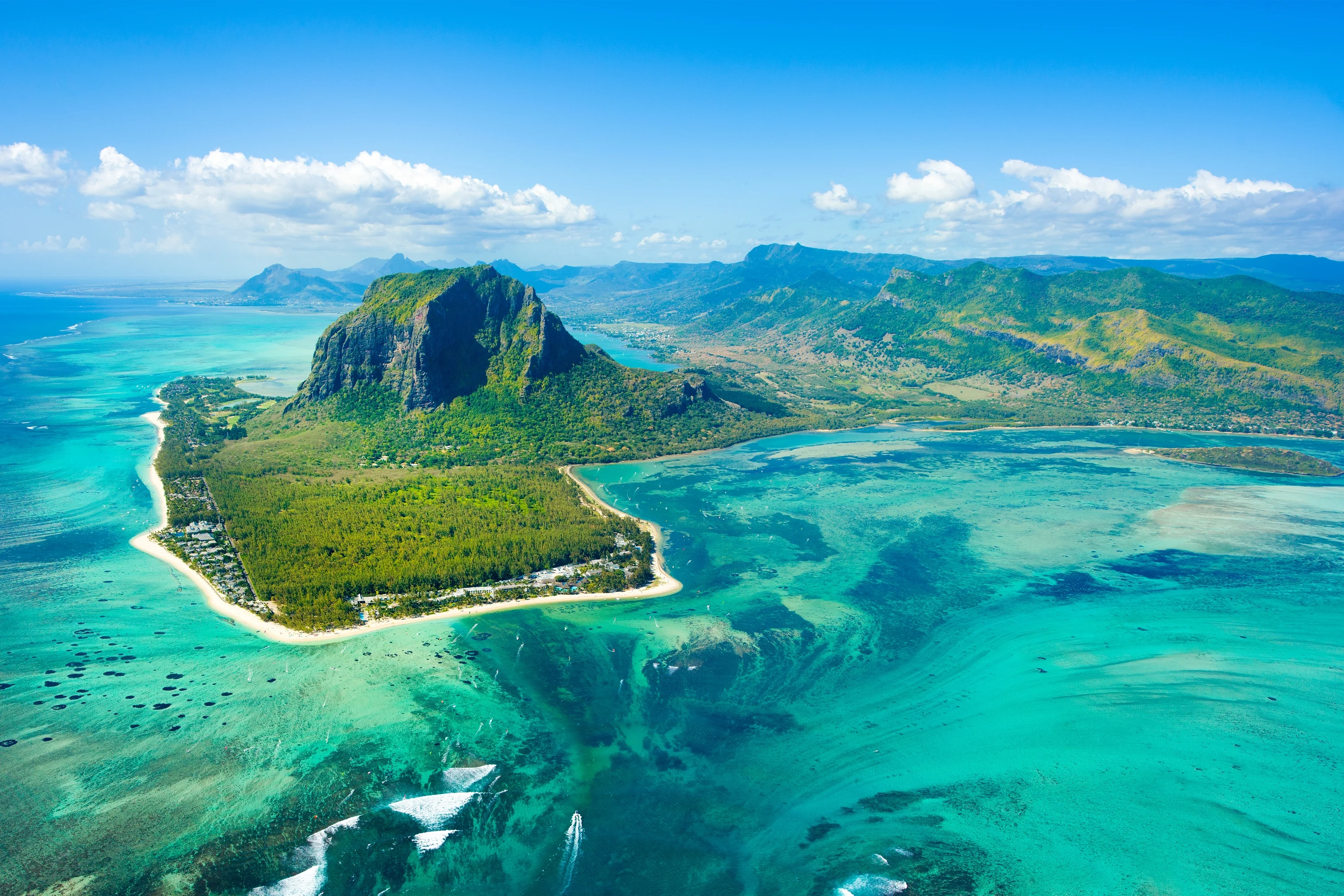
Where to stay in Mauritius: the 3 areas to know in 2026
Here, everything comes down to wind exposure. Trade winds sweep across the southeast for three quarters of the year, meaning on the exact same date and for the exact same price, one coast features a glass-flat lagoon while the other churns with whitecaps. Your travel month dictates your coastline.
Three main bases follow, running from the sheltered north to the exposed east. A room facing the lagoon sits between $220 and $450*; a straightforward spot in the north hovers around $135*; and the west point starts at $450*.
Compare hotel prices in Mauritius
In a hurry? Find the best accommodation deals in 3 clicks.
Compare live deals from Booking, Expedia, Agoda and other partners.
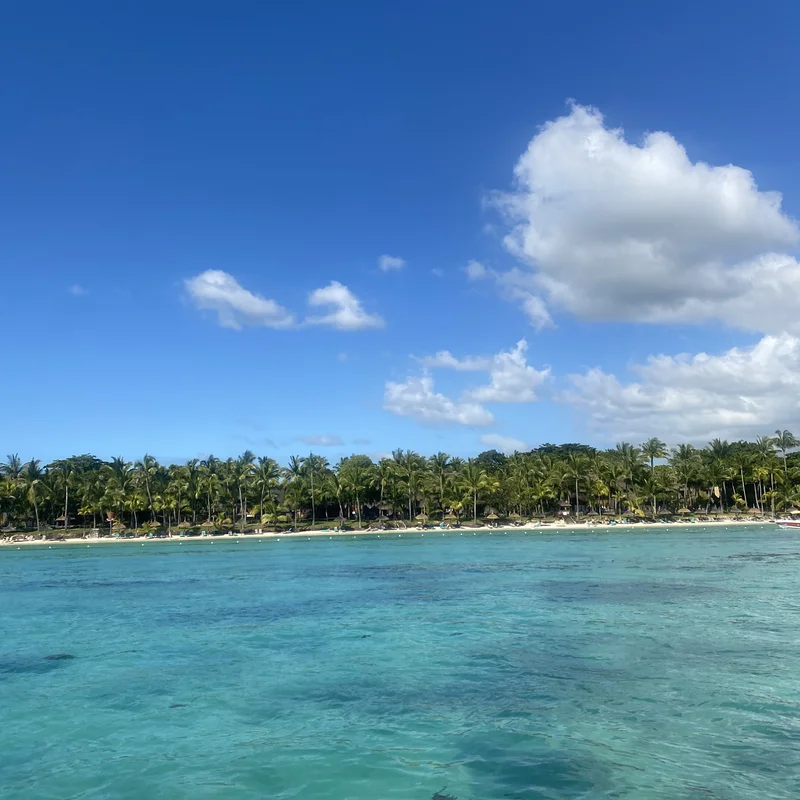
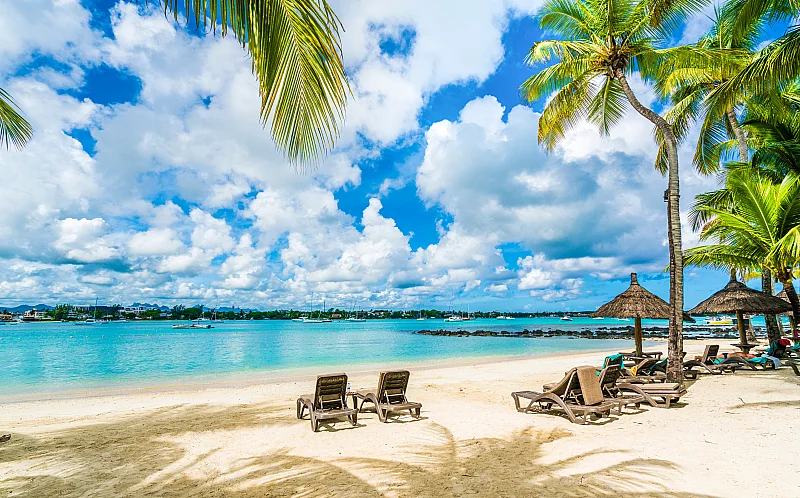
The most beautiful place and one of the finest beaches in Mauritius is in Trou aux Biches, with white sand and turquoise water.
How many nights in each area?
A two-hour drive gets you from one coast to the other, and the weather shifts noticeably between them. Here is how to break it down season by season.
- One week during the southern winter (June to September): Right up in the north, which is the only coast sheltered from the trade winds during this period. It is also whale season, which Kriss spots in August.
- One week during the southern summer (November to April): 4 nights on the east coast for the wide beaches, 3 on the west coast for Le Morne. The trade winds have died down, and the east claims the island's best lagoon once again.
- Ten days: 3 nights in the north, 4 in the west, 3 in the east. Two hours of driving between each stop, making this the only destination on the list where a three-base trip keeps transit costs negligible.
- Short stay, 3 nights: The north without a second thought. It is the one base unaffected by the season, the best connected, and the only spot where dinner options extend beyond the resort.
At a glance: our picks by traveller type
Pick the profile that fits you and go straight to the recommended area.
Map of the areas in Mauritius
See how the areas sit relative to one another before choosing your base. Click a name to jump to its description.
The north, from Trou aux Biches to Grand Baie Northwest coast
for a first trip and for year-round swimming
Protected from the prevailing winds, this stretch delivers regardless of the season and packs the highest energy on the island. Grand Baie concentrates the dining and shopping, while Trou aux Biches holds the long beach. Kriss cuts straight to the point: white sand, turquoise water, and nothing better anywhere else on the island. He points out that in August you can spot whales by boat just offshore. The downside: higher concentration of concrete and crowds than anywhere else.
The most beautiful place and one of the finest beaches in Mauritius is in Trou aux Biches, with white sand and turquoise water.
The towns in this area
Where to stay in this area
Trou aux Biches Beachcomber Golf Resort & Spa Luxury
Three kilometres of beach and thirty-five hectares of gardens, right on the sand Kriss recommends. It is the spot he points out for a drink, and the largest resort on this coast.
Pros
- The coast least exposed to the trade winds, keeping swimming viable all year
- More restaurants and shops than anywhere else on the island
- Whale-watching excursions right in the middle of the southern winter
Cons
- The most built-up sector, lacking the isolated feel of the south
- A main beach that gets very busy during the day
The west, Le Morne and Tamarin West coast
for the dramatic lagoon and wind sports
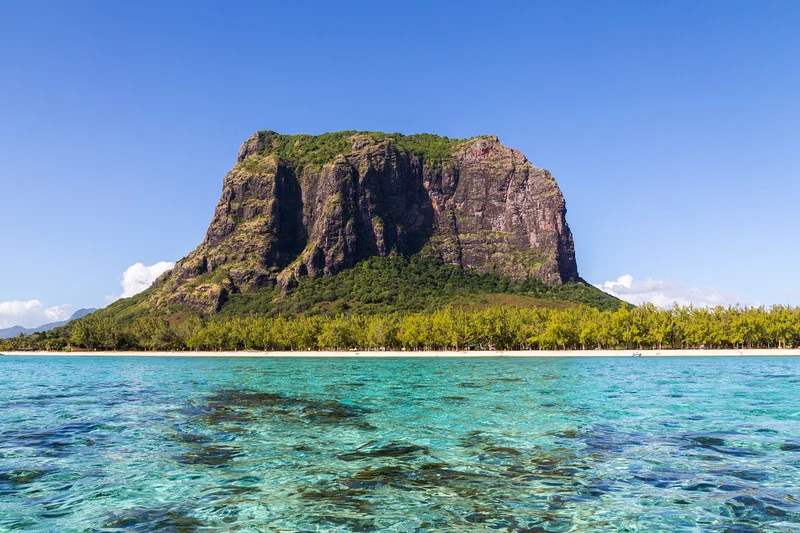
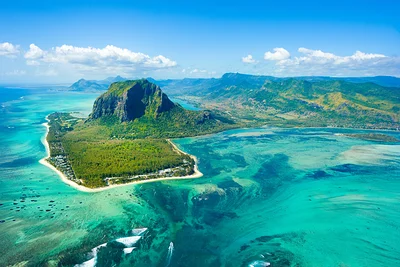
The mountain drops right into the lagoon: the Morne Brabant, a World Heritage site, closes the horizon and creates the most photographed scenery on the island. It is also the main draw for kitesurfers precisely because the wind funnels in. Julien did the hike, seven kilometres round trip: "head out very early in the morning to beat the heat", a bit strenuous, but "the effort pays off with an incredible view". Nowhere else on the island do you pay quite this much.
You get to the summit after a 7km round-trip hike. Leave very early in the morning to avoid the heat. It is a bit physical at times, but the effort is rewarded by an incredible view at the top.
What to see and do in this area
Where to stay in this area
LUX* Le Morne Resort Luxury
Right at the base of the mountain, offering five pools and a spa, with kitesending and snorkeling right on site. The easiest way to have the mountain behind you and the lagoon in front.
JW Marriott Mauritius Resort Luxury
Panoramic ocean views paired with Le Morne Brabant, backed by five restaurants. The other major address on the peninsula, chosen specifically for that iconic mountain backdrop.
Bellevue Tamarin Mid-range
A fifteen-minute walk from Tamarin sand, and significantly easier on the wallet than the peninsula. A solid middle ground for dolphin-watching without resort pricing.
Pros
- The most dramatic scenery on the island, mountain and lagoon combined
- The best waters for kitesurfing and windsurfing
- The dolphins of Tamarin Bay, early in the morning
Cons
- No budget spots directly on the peninsula
- The wind, which draws some travelers in and frustrates others
The east coast, centered around Belle Mare East coast
For the longest stretches of sand, outside the trade wind season
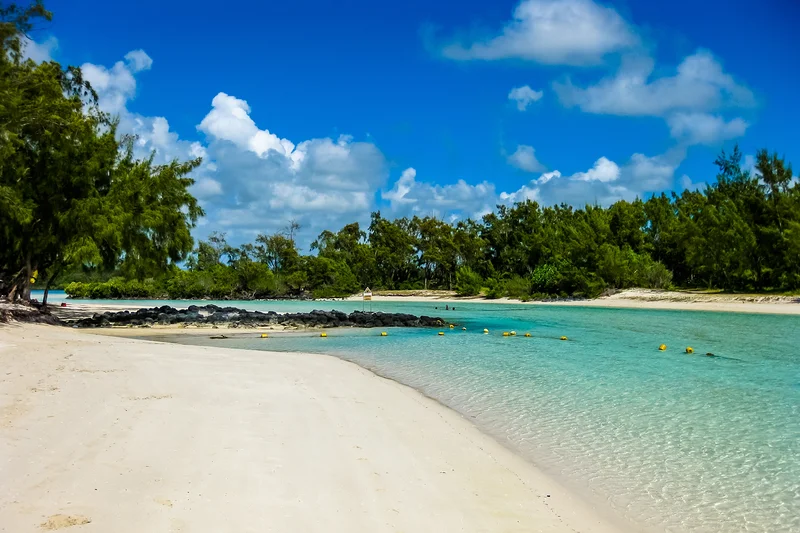
The widest and whitest beaches on the island, featuring a lagoon that stretches far out before hitting the reef. Boats depart here for Ile aux Cerfs, which Julien describes as "one of the most popular excursions" and "simply gorgeous." Keep seasonality in mind: from June through September, this coast takes the trade winds head-on, making the water noticeably choppier than up north. During the southern summer, the dynamic flips entirely.
This is one of the most popular excursions offered to tourists staying in Mauritius. Ile aux Cerfs is just beautiful. A classic you have to do.
What to see and do in this area
Where to stay in this area
Constance Belle Mare Plage Luxury
Two kilometres of private beach, seven restaurants, and two golf courses. The benchmark for this coast when you want a stay where you never have to leave the property.
LUX* Belle Mare Resort & Villas Luxury
Bikes, a pool, and a terrace facing the lagoon. A notch less corporate than its neighbor, sharing the exact same sand out front.
C Mauritius - All Inclusive Mid-range
Steps from Palmar Beach on an all-inclusive plan. The setup that makes this coast accessible, while most other addresses aim straight for the luxury tier.
Pros
- The island's widest and least developed beaches
- Direct departures for Île aux Cerfs and its sandbars
- A very wide lagoon, great for kayaking and snorkeling
Cons
- Exposed to trade winds from June to September, meaning choppy water and seaweed on the shore
- Very little going on outside the hotels, so you end up dining wherever you sleep
Our tips for booking the right place
- The coast is chosen by the calendar, not the photo: The trade winds blow from the southeast from June to September: the east and south take the wind, while the north stays calm. From November to April, the wind drops and the east is gorgeous again, but that is the rainy and cyclone season. The exact same room at the same price does not deliver the same week depending on the month, so checking the date before the shoreline is the only trade-off that matters here.
- Le Morne is climbed at dawn: Julien is straightforward about climbing Le Morne Brabant: seven kilometres round trip, meaning you should head out early in the morning to beat the heat. The trail is not technical but it climbs steadily, and the humidity makes the afternoon grueling. Staying right there on the west side saves you an hour of driving before setting off.
- The south is for visiting, less for sleeping: Chamarel, its colored earths and waterfalls, Mahébourg and its market, and the wild southern coastal road form the most authentic part of the island, and the least equipped for lodging. Treating it as a day trip from the west or north gives you the best of both worlds without hunting for a place to stay where choices are thin.
- Booking on the east coast in July or August without knowing the weather: this is when the trade winds churn up the sea and push seaweed onto the shore, whereas the north remains calm.
- Choosing Port Louis to be central: it is a dense commercial port with no swimmable beach, and the capital city traffic jams must be crossed twice a day.
- Relying on the south for a full beach vacation: the coast there is stunning but exposed, and lodging options are very slim.
FAQ: where to stay in Mauritius
Which part of Mauritius should you stay in?
Which coast depends on the season?
Where can you stay affordably in Mauritius?
How many nights should you spend in Mauritius?
Do you need a car in Mauritius?
When can you see whales?
 Keep exploring
What to do in Mauritius
Keep exploring
What to do in Mauritius
Comments (0)
No comments yet. Be the first!