
Where to stay in Bath: the 3 neighborhoods to know in 2026
You can walk across Bath in thirty minutes, taking in the Roman baths, the abbey, and entire streets of eighteenth-century golden stone, most notably the iconic Royal Crescent. Many visitors make a weekend trip here from London, which sits an hour and a half away by train.
The city sits in a bowl, meaning the centre is flat while everything surrounding it climbs uphill. That elevation change matters more than distance when you are hauling luggage. Expect to pay $147 to $230* for a weekend room, with noticeable drops on weekdays, whereas hostel dorm beds run less than $40*.
The city is famous for its abbey and Roman baths, both of which are very well preserved. But I also really enjoyed walking around the city center.
Compare hotel prices in Bath
In a hurry? Find the best accommodation deals in 3 clicks.
Compare live deals from Booking, Expedia, Agoda and other partners.
At a glance: our picks by traveller type
Pick the profile that suits you to head straight to the recommended neighborhood.
The neighborhood map in Bath
Get your bearings on the neighborhoods and must-see sights before choosing where to drop your bags. Click a name to jump to its description.
The centre and the abbey Around the Roman baths
for doing everything on foot, with no hills
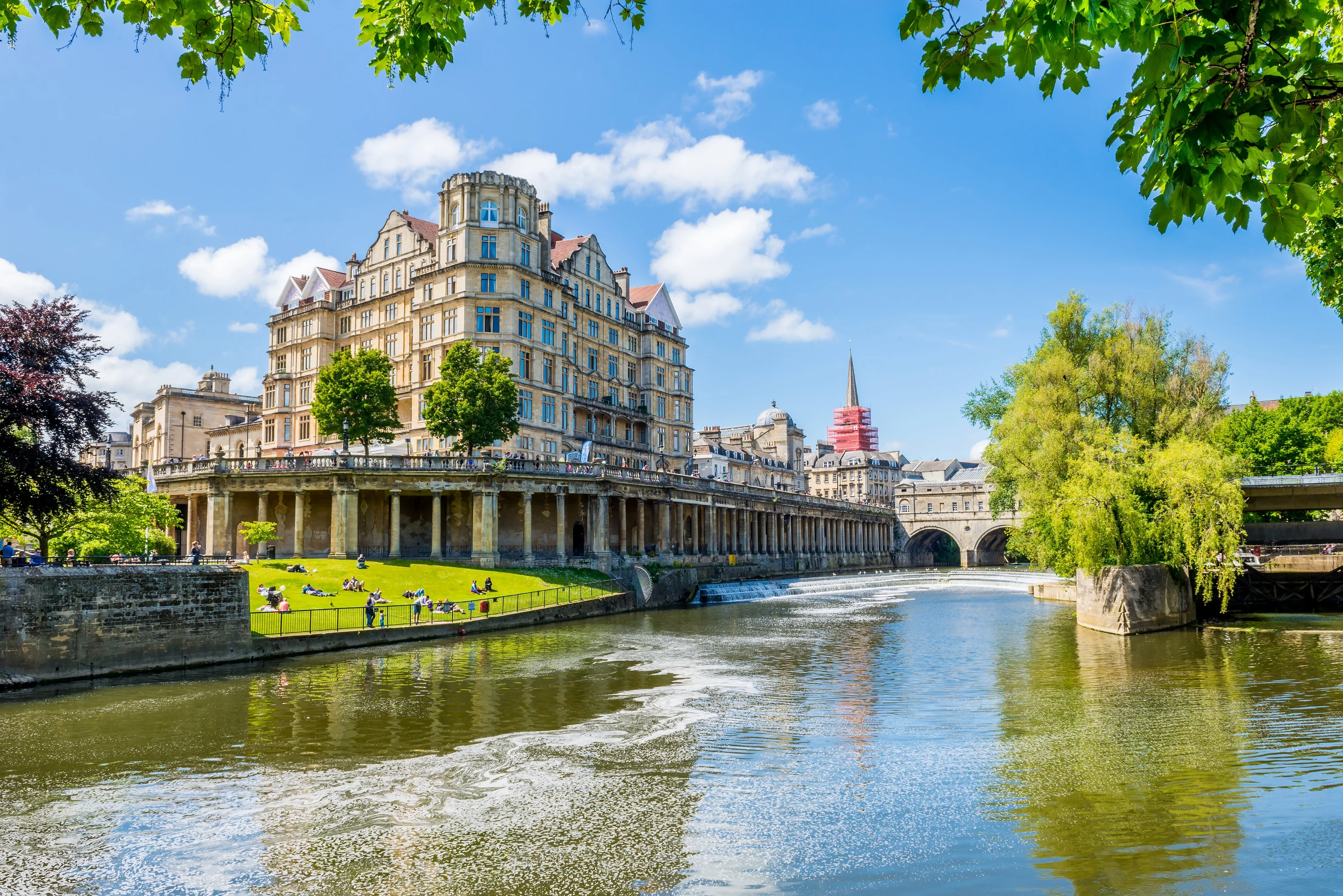
The Roman Baths, Bath Abbey, and Pulteney Bridge, lined with shops reminiscent of the Ponte Vecchio, sit packed closely together. Surrounding them, pedestrian streets feature covered markets, tearooms, and theatres. This is the most practical district, completely flat, and the only one from which you can walk to the train station without climbing uphill. The downside is that weekend rates peak here, and daytime crowds fill the streets.
With its Ponte Vecchio vibe, the architecture of this bridge really impressed me.
Where to stay in this neighborhood
The Gainsborough Bath Spa Luxury
The only hotel in town fed by the thermal springs, featuring its own spa. Just steps from the Roman Baths.
Z Hotel Bath Mid-range
Compact, well-designed rooms in a historic building right in the heart of the pedestrian zone.
Bath Backpackers Budget
Basic hostel right in the centre, one hundred metres from the abbey. The only genuinely low rate in this location.
Pros
- Baths, abbey, and station within walking distance, no hills
- Markets and restaurants all around
Cons
- Highest rates at weekends
- Very busy streets during the day
The Georgian North Around the Royal Crescent and the Circus
for the Georgian architecture and guesthouses
Heading north, the city rolls out its finest ensemble: the Circus, the Assembly Rooms, and the Royal Crescent, a sweeping curve of thirty townhouses facing a sloping lawn. This residential district has guesthouses set inside historic Georgian townhouses, often at better rates than hotels in the centre. The catch is physical: the uphill walk is real, and you will make it twice a day.
Where to stay in this neighborhood
The Royal Crescent Hotel Luxury
Right in the middle of the Royal Crescent, complete with a walled garden and a spa. The city's most prestigious address.
The Queensberry Hotel Mid-range
Four Georgian townhouses combined into an understated hotel, positioned between the Circus and the centre. Acclaimed restaurant.
Brocks Guest House Budget
Guesthouse set in a Georgian terrace between the Circus and the Crescent. The best decor-to-price ratio in the guide.
Pros
- The city's finest architectural ensemble
- Guesthouses priced lower than hotels in the centre
Cons
- A serious climb from the centre
- Very few dining options on-site at night
The station and the south Around Bath Spa
for arriving from London and heading out quickly
The Bath Spa station sits a five-minute walk from the abbey, making this area remarkably convenient for a weekend trip from London. The area has been redeveloped around a shopping centre and the Avon riverbanks: short on character, but with more affordable hotels and car parks, which are rare elsewhere. The entire historic core remains reachable on foot along flat streets.
Where to stay in this neighborhood
Royal Hotel Mid-range
Historic building across from the station, about as practical as it gets for train arrivals.
Travelodge Bath Waterside Budget
Budget chain right on the Avon, minutes from the abbey. The lowest rate in the guide outside of hostels.
Henry Guest House Mid-range
Family-run guesthouse between the station and the centre, set on a quiet street. Just a handful of rooms.
Pros
- Station five minutes from the abbey
- Car parks, which are rare across the rest of the city
Cons
- Lacks architectural character
- Commercial area, quiet at night
Our tips for booking the right place
- Weekend rates double: Bath runs on weekend tourism, mostly coming in from London. Those same rooms drop significantly in price from Sunday through Thursday, and the streets get a lot quieter for exploring. Timing your visit right is the biggest money-saving move you can make, far more than which area you pick.
- Mind the hills when you have luggage: The lower town is flat, but everything around it climbs steeply, including the route up towards the Royal Crescent. A property listed as ten minutes from the centre might mean ten minutes of uphill walking. Check the topography before booking if you are travelling with heavy bags.
- The thermal baths need to be booked ahead: The Roman baths and the modern spa fed by the same natural springs are the town's most requested sights, and time slots fill up fast in high season. Book before you arrive: it shapes your day, not your choice of hotel, since every area is within walking distance.
- Booking up on the hillsides without checking the grade, because while the views are great, the daily climb takes its toll, especially with luggage or kids in tow.
- Picking Bath as a base to visit Bristol or the Cotswolds without a car, since the connections exist but run long, and city parking is pricey and scarce.
- Counting on a late Saturday arrival without a booking, as the town is compact, heavily visited at weekends, and whatever rooms are left will be the most expensive.
FAQ: where to stay in Bath
Which area should you pick for a first visit to Bath?
Where to find affordable lodging in Bath?
Should you stay near the Royal Crescent?
Can you see Bath in a single day?
Do you need a car?
What does a hotel room cost in Bath?
 Keep exploring
Things to do in Bath
Comments (0)
No comments yet. Be the first!