
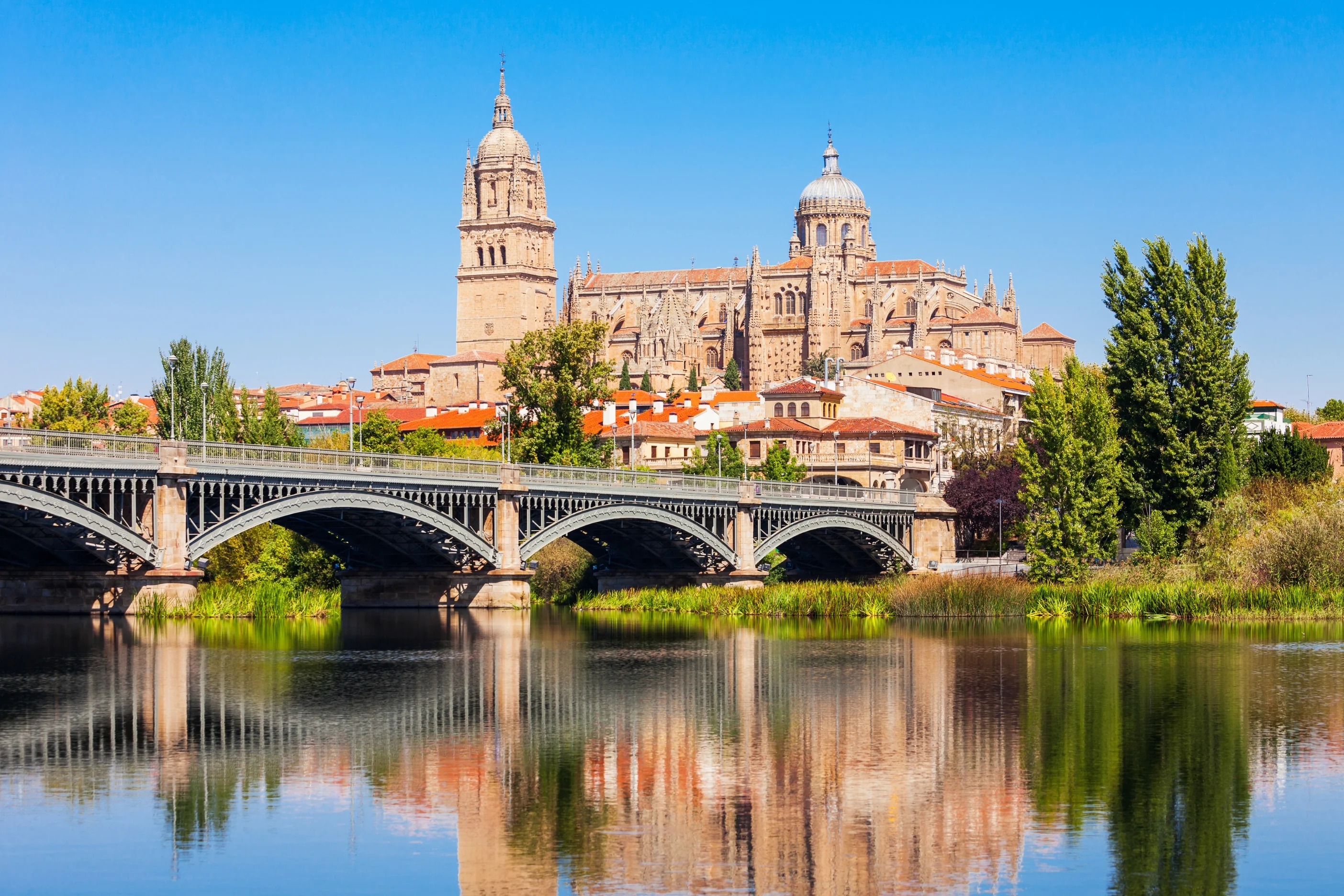
Salamanca, the city where stone changes color
Find the frog. Those three words sum up the obsession that grips every visitor standing in front of the university facade. Dozens of people crane their necks, scanning the medallions carved into the ochre stone, hoping to spot the tiny amphibian supposed to bring good luck.
This slightly absurd quest says a lot about Salamanca: a city that doesn't reveal itself at first glance, where every detail hides a story, and where students rub shoulders with the ghosts of Christopher Columbus and Unamuno.
The ideal destination for history lovers and lively nights
Spain's oldest university draws 30,000 students every year who give the city its unique energy. Architecture buffs will find plenty to love in the concentration of Plateresque and Baroque masterpieces. Night owls will discover an intense nightlife scene fueled by that student population packing the bars on Calle Van Dyck as soon as the sun goes down.
On the flip side, anyone looking for the sea or mountains will be disappointed. The Castilian plain offers little landscape diversity, and the roughly 145,000 residents make Salamanca a manageable city that you can cover in two days. The continental climate brings scorching summers and harsh winters. Pack good walking shoes because the cobblestone alleys are strictly pedestrian.
A remarkably gentle budget
Plan for between $57 and $90* a day all-in. Accommodations run from $45 to $113* a night for a decent room in the city center. Monument admissions rarely cost more than $12*, and the daily lunch special in student bars often drops below $12* with a drink included.
The Plaza Mayor and the historic heart
Let us start with the obvious. Salamanca's Plaza Mayor ranks as one of the most gorgeous squares in Spain, and the praise is well-deserved. Built in the 18th century by Alberto Churriguera, it forms an irregular yet surprisingly harmonious quadrangle framed by 88 arches and topped with medallions depicting famous figures. Unlike other Spanish squares that turned into tourist parking lots, this one pulses day and night.
Café Novelty, the region's oldest, has occupied the southwest corner since 1905. Miguel de Unamuno used to hang out here. Ordering a coffee here counts as much as a cultural pause as a snack break. At night, student musical groups known as tunas sometimes show up to play an impromptu concert in black capes with colorful ribbons flying.
Friendly tip: come back after dark. The nighttime lighting transforms the sandstone facades into golden paintings. Salamanca is considered one of the best-lit cities in Europe, and it lives up to the reputation.
The university and its carved secrets
Founded in 1218 by Alfonso IX of León, the University of Salamanca is Spain's oldest and one of the oldest in Europe. Its Plateresque facade, chiseled like goldsmith work, packs a forest of medallions, coats of arms, and mythological figures. Somewhere in that clutter hides a frog perched on a skull. Finding it without help is supposed to bring exam luck. In reality, everyone cheats by looking it up on their phone.
The interior is well worth the $12* admission fee. The Aula Fray Luis de León keeps its original 16th-century benches, and the old library has a dusty, moving atmosphere of scholarship. Do not miss the Cielo de Salamanca, a 15th-century fresco representing the zodiac that was hidden under a drop ceiling for years.
La Casa de las Conchas
Steps from the university, this 15th-century mansion intrigues visitors with its 365 scallop shells embedded in the facade. The count supposedly matches the days of the year. Legend says a treasure is hidden under one of them. Admission is free, and the interior courtyard is worth a look.
The two cathedrals and the Ieronimus view
Salamanca has two cathedrals stuck right against each other, a rare setup in Europe. The Romanesque Catedral Vieja dates back to the 12th century. The Gothic Catedral Nueva was built between the 16th and 18th centuries without destroying its neighbor. You enter the older one from inside the newer one, creating a striking time-travel effect.
On the facade of the new cathedral, look for the astronaut. Yes, an astronaut carved into medieval stone. It was added during 1992 restorations by mischievous stonemasons alongside a monkey eating ice cream and a stork. The Church let it slide.
Friendly tip: the Ieronimus exhibition lets you climb into the towers for just $4.50*. You walk along the rooftops among the gargoyles and get sweeping views across the entire city. Salamanca's best value by far.
The quieter neighborhoods
Barrio del Oeste, west of the center, makes for a major surprise. This working-class neighborhood turned into an open-air street art gallery. Every garage door and blank wall sports a colorful mural. Few tourists wander over here, which makes the sense of discovery even stronger.
Huerto de Calixto y Melibea, a tiny garden perched on the old defensive walls, gives you an open view of the cathedrals and the Roman bridge down below. The entrance through a discreet gate in a dead end feels like stepping onto private property. Keep going. The spot evokes the tragic love story of La Celestina, a major work of Spanish literature.
Another overlooked curiosity is the Cueva de Salamanca, a crypt where the devil reportedly taught black magic to students. Today, you can see the remains of the city's medieval walls down there. Admission is free, and the vibe is delightfully spooky.
Where to eat and drink in Salamanca?
Castilian food is not light. Hornazo, a pie stuffed with hard-boiled eggs, chorizo, and pork loin, is the signature dish. Guijuelo ham, produced 50 km away, rivals the finest Iberian cured hams. La Armuña lentils and roast suckling pig round out the menu.
For budget-friendly eating, head to Calle Van Dyck north of the center. Bars line the street and dish out generous tapas for a few euros. Bambú, listed in the Michelin guide, serves inventive pinchos in a high-energy setting. Vinodiario draws locals and visitors alike for shareable tapas and a deep wine cellar. Reservations recommended.
For an elevated dining experience, En la Parra earned a Michelin star in 2021. Chef Rocío Parra works with regional ingredients creatively in an intimate twenty-seat space.
Where to stay in Salamanca and around?
The historic center remains the best pick for a first trip. The streets around the Plaza Mayor pack in boutique hotels and rental apartments. The 5-star Hotel Rector occupies a 16th-century palace for comfortable budgets. The NH Collection Palacio de Castellanos offers a middle ground between luxury and reasonable rates.
Shoestring travelers should look toward the university district, where guesthouses and hostels offer rooms between $29 and $57* a night. In the summer, some student dorms open their doors to travelers. Airbnb rentals are everywhere in the center for more independent stays.
How to get to and around Salamanca?
Salamanca does not have an international airport. The easiest setup is flying into Madrid-Barajas and catching an Alvia high-speed train from Madrid-Chamartín. The ride takes 1 hour and 30 minutes and costs between $23 and $45* depending on when you book. The Avanza Bus company also runs direct shuttles from the airport in about 2 hours and 30 minutes.
If you are already driving in Iberia, Salamanca sits about two and a quarter hours west of Madrid and roughly three hours east of Porto. Once you arrive, a car is useless because the historic center is completely walkable in under 30 minutes. Underground parking garages let you park right near the Plaza Mayor.
When to go?
Spring and fall offer the best conditions with mild temperatures and moderate crowds. Holy Week brings massive crowds but puts on an impressive religious spectacle. Summer can feel stifling with temperatures regularly passing 35°C. In the winter, count on the dry cold of the Meseta and freezing nights, along with a quieter city and rock-bottom lodging prices.
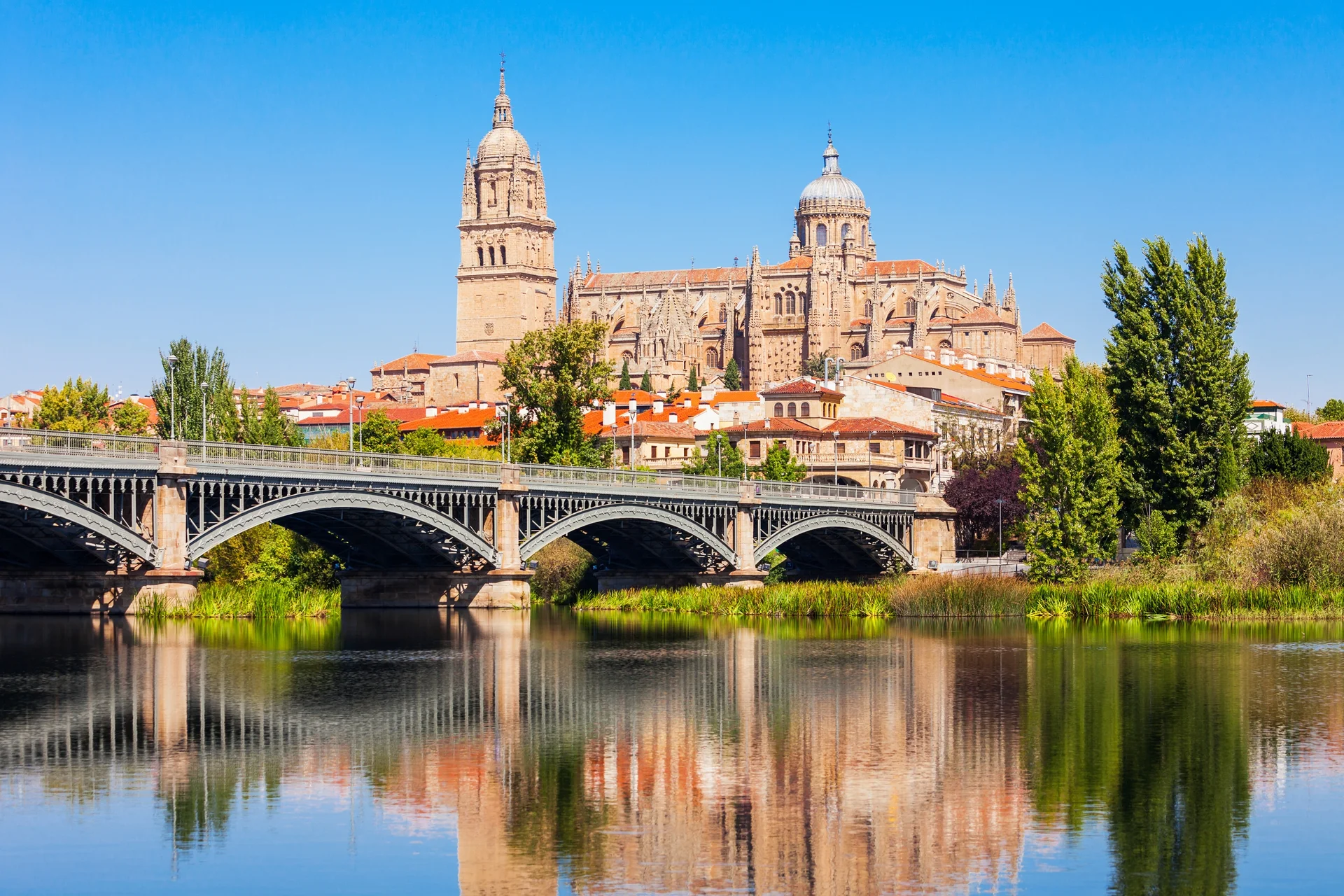
Salamanca is simply my favorite city in Spain!
Located off the beaten path, but not far from Madrid, this city is magical.
Here history is everywhere, in the streets, the monuments, the churches, the university that is so ancient...
I have been back several times and the magic still works. I find this city so endearing.
Have a drink on the venerable Plaza Mayor, and you will understand...