Visiting the Amalfi Coast
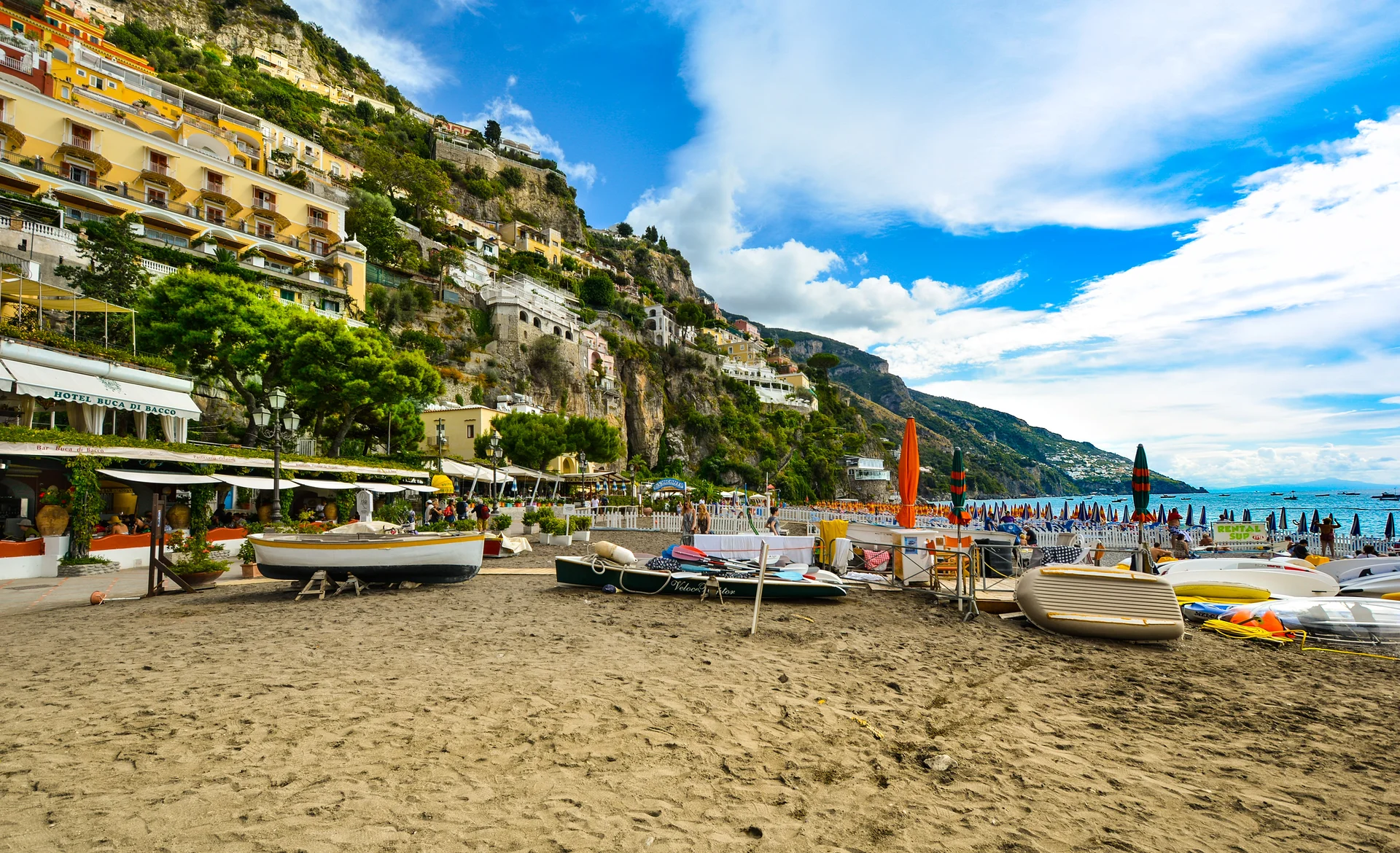
Some fifty kilometres of cliffs south of Naples, between the Sorrento peninsula and Salerno, listed as a World Heritage Site. Here the mountains drop straight into the sea, and the villages were built as staircases in the few hollows: Positano tumbles down in a cascade of pink and yellow façades, Amalfi huddles around its cathedral, and Ravello watches it all from its headland.
A single road, carved into the rock in the 19th century, links the villages, hugging every cove. Above, lemon trees grow in terraces under chestnut pergolas, and mule tracks climb to the ridges. You come for the view, swimming at the foot of the cliffs, walking and limoncello, not for long sandy beaches.
You'll love it if
- You dream of villages clinging to cliffs above a blue sea
- You love walking mountainside trails
- You want to hop from village to village by boat
Look elsewhere if
- You want long sandy beaches: they're small and pebbly
- Stairs are hard for you: everything is climbed on foot
- Your budget is tight in summer: it's one of Italy's most expensive coasts
The must-sees
-
From Bomerano, above Agerola, a trail follows the mountain six hundred metres above the sea to Nocelle, above Positano. The walk takes about three hours, with no real difficulty and the whole coast in view. Set off early, then go down to Positano by the steps.
-
In Ravello, three hundred and fifty metres up, the gardens of Villa Rufolo step down in terraces towards a plunging view of the sea and Maiori. Wagner is said to have found inspiration there for a set in Parsifal. Carry on to Villa Cimbrone and its terrace of statues facing the void.
-
3 Amalfi and its cloister Village
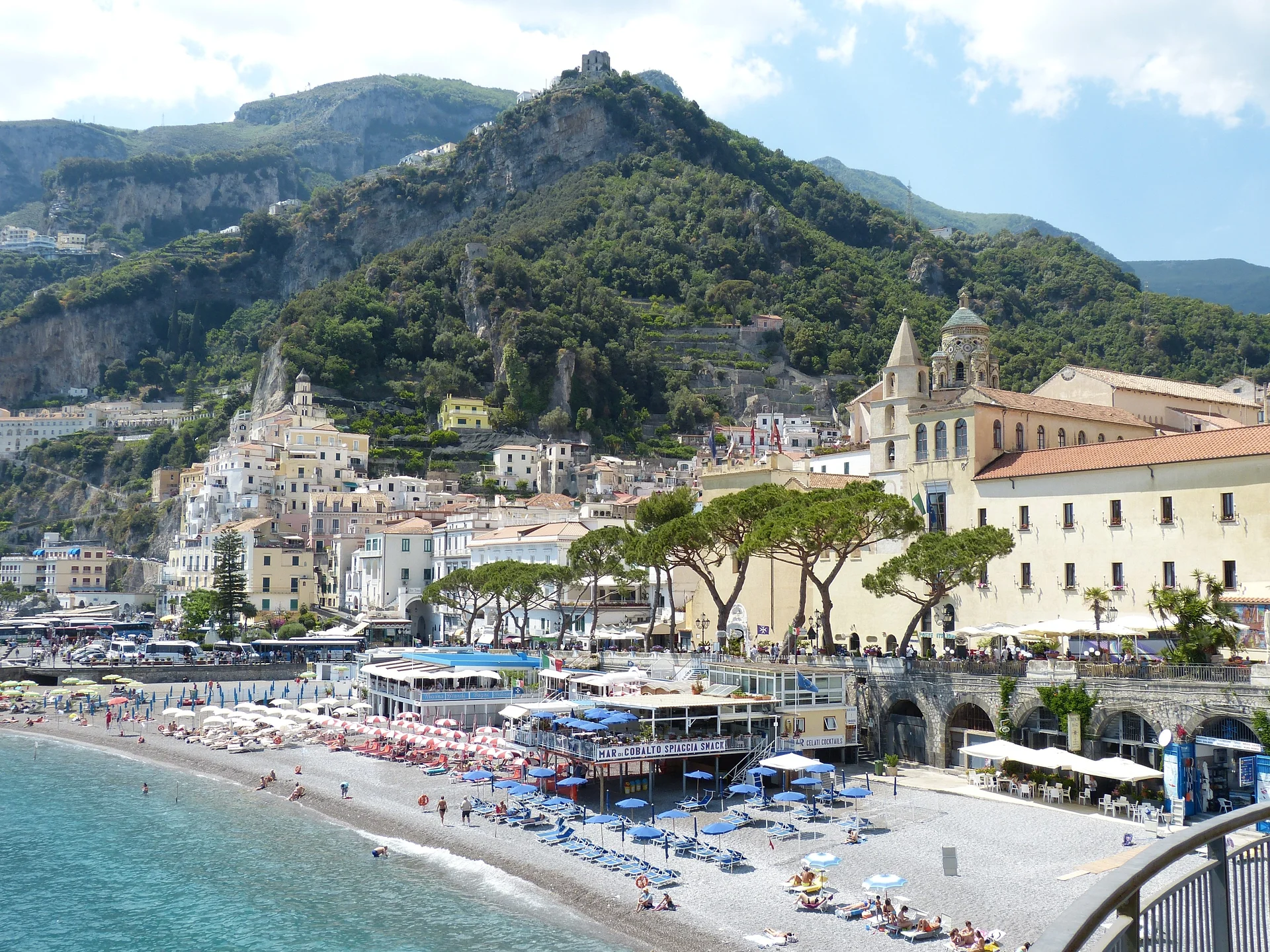
A former maritime republic, rival of Venice and Genoa, Amalfi has kept its brightly coloured cathedral at the top of a great flight of steps, and the Cloister of Paradise with its interlaced arches. Then climb into the Valley of the Mills, where paper was made.
-
4 The coast from the sea Boat
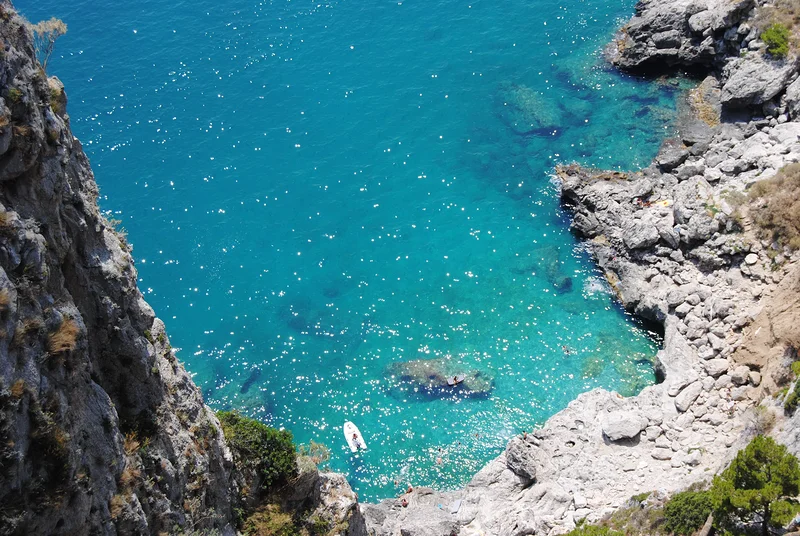
From Amalfi or Positano, boats run along the cliffs, slip into the Emerald Grotto and pass under the bridge of the Furore fjord. A day on a small boat, with swims in the coves, reveals what the road hides.
-
5 The Ravello Festival Concerts
From July to September, Ravello hosts classical concerts on a stage suspended above the sea, in the gardens of Villa Rufolo. The dawn concert, when it's on the programme, starts before sunrise.
The classic trap
Hiring a car to drive the coast in summer. The road is narrow, buses and coaches pass each other on the edge of the drop, and a parking space costs dozens of euros a day, if you can find one. Come by train and bus to Salerno or Sorrento, then get around by boat and bus.
Our itineraries in the Amalfi Coast
| Length | Route | What you see |
|---|---|---|
| 3 days | Positano › Amalfi › Ravello | The three star villages, the cathedral and the hanging gardens |
| 5 days | Positano › Path of the Gods › Praiano › Amalfi › Ravello | The coast from above, from below and by boat |
| 1 week | From Positano to Vietri sul Mare, with Pompeii or Capri | The whole coast, Maiori and Minori, and one big excursion |
Start in Positano: the beach, the lanes and a sunset from a terrace. The next day, the Path of the Gods, then the walk down to the sea. Then take the boat to Amalfi for the cathedral, and go up to Ravello for the gardens. Got a week? Add Maiori and Minori, Vietri for its ceramics, and a day on Capri or at Pompeii.
When to visit the Amalfi Coast
| Appeal | Season | Temperatures | Highlight | Crowds and prices |
|---|---|---|---|---|
| WinterNov. to March | 7 to 15 °C | Empty villages, but many hotels closed | Low | |
| SpringApril to June | 11 to 26 °C | Walking and lemon trees in blossom | Medium | |
| SummerJuly and Aug. | 21 to 31 °C | Swimming and the Ravello concerts | High | |
| AutumnSept. and Oct. | 15 to 27 °C | A warm sea and fewer crowds | Medium |
Our advice
Come in May, June or September: the sea is pleasant, the boats are running, the trails are walkable and prices stay well below August's. From November to March the ferries stop and many hotels close: it's quiet, but you need to choose carefully.
Getting to the Amalfi Coast
-
By plane to Naples The easiest
Direct flights link London, Manchester, Edinburgh, Dublin and many other cities to Naples. From the airport, allow an hour and a half by bus or transfer to Positano.
-
By train to Salerno Without flying
From Rome, high-speed trains reach Salerno in about two hours. From Salerno station the port is a few minutes away, and boats run to Amalfi and Positano.
-
By boat from Naples or Salerno The finest arrival
From April to October, boats link Naples, Sorrento and Salerno to Amalfi and Positano. Arriving by sea, you see the villages just as you imagined them.
Leave the car: the coast road is jammed in summer, and parking is scarce and expensive. Boats and buses are enough to get from village to village. If you hire a car for Campania, return it before you reach the coast.
Getting around the Amalfi Coast
Boats are the most pleasant way: from April to October they link Positano, Amalfi, Minori, Maiori and Salerno. Buses follow the coast road all year, often packed in summer: board at the terminus to get a seat. In the villages, everything is done on foot, up and down steps, and a hired scooter is the other option for the road.
Good to know
Buy bus tickets before boarding, from tobacconists or kiosks. For Ravello and the villages higher up, buses leave from Amalfi. Bring good shoes: even to reach the beach, you'll go down hundreds of steps.
What to eat in the Amalfi Coast
- Limoncello: the liqueur made from the coast's lemons, served ice-cold after the meal.
- Scialatielli with seafood: thick fresh pasta with mussels, clams and prawns.
- Colatura di alici: Cetara's amber anchovy sauce, a few drops on spaghetti.
- Delizia al limone: a small dome of soaked sponge covered in lemon cream.
- Mozzarella and provolone: Campania's cheeses, which you'll find fresh at the grocers of Agerola.
- Tramonti and Furore wines: whites and reds from terraced vineyards.
To eat like the locals, leave the seafront and climb into the lanes: family trattorias there serve the catch of the day and vegetables from the garden. Book in the evening, especially in Positano. And try the coast's lemons, big, fragrant and not very sour: people sometimes eat the peel.
Where to stay in the Amalfi Coast
| Area | What for | Good to know |
|---|---|---|
| Positano | The iconic village, the beach, the terraces | The most spectacular |
| Amalfi | Boats, buses, the cathedral | The most practical |
| Ravello | Gardens, concerts, views and calm | The most elegant |
| Praiano | Sunsets, gentler prices | The quietest |
| Maiori and Minori | Sandy beaches, families | The most family-friendly |
How much does a trip in the Amalfi Coast cost?
| Trip | Length | Budget per person |
|---|---|---|
| Budget (guesthouse in Maiori or Agerola, buses, pizzerias) | 5 days | €500 to €800 |
| Comfort (hotel with a view in Amalfi or Praiano, boats, trattorias) | 5 days | €1,200 to €2,000 |
| Luxury (grand hotel in Positano or Ravello, private boat) | 5 days | €3,000 to €7,000 |
- The season: in May and October, you often pay far less than in August for the same room.
- Transport: the bus costs a few euros, the boat a bit more, a taxi dozens.
- Beaches: sunbeds are expensive to hire; the free sections, smaller, cost nothing.
- Meals: a pizza or plate of pasta in the lanes costs far less than a seafront restaurant.
- Sleep higher up: Agerola or Scala, twenty minutes by bus from the sea, cost much less.
Traditions and way of life in the Amalfi Coast
Between the 9th and 11th centuries, Amalfi was a maritime republic trading with Byzantium and the East. It is credited with spreading the compass in the Mediterranean, and its Amalfi Tables set out the law of the sea. From that time remain the cathedral, the arsenal and a taste for arches and domes from the East.
Later, the paper mills in the valley made the town rich, lemon groves covered the slopes, and then the coast road, finished in the 19th century, opened the coast to travellers. Ravello welcomed Wagner, then writers from all over Europe. Staying in Amalfi? In the evening, once the boats have gone, the cathedral square belongs to the locals again.