
Portovenere, the sixth village the Cinque Terre won't tell you about
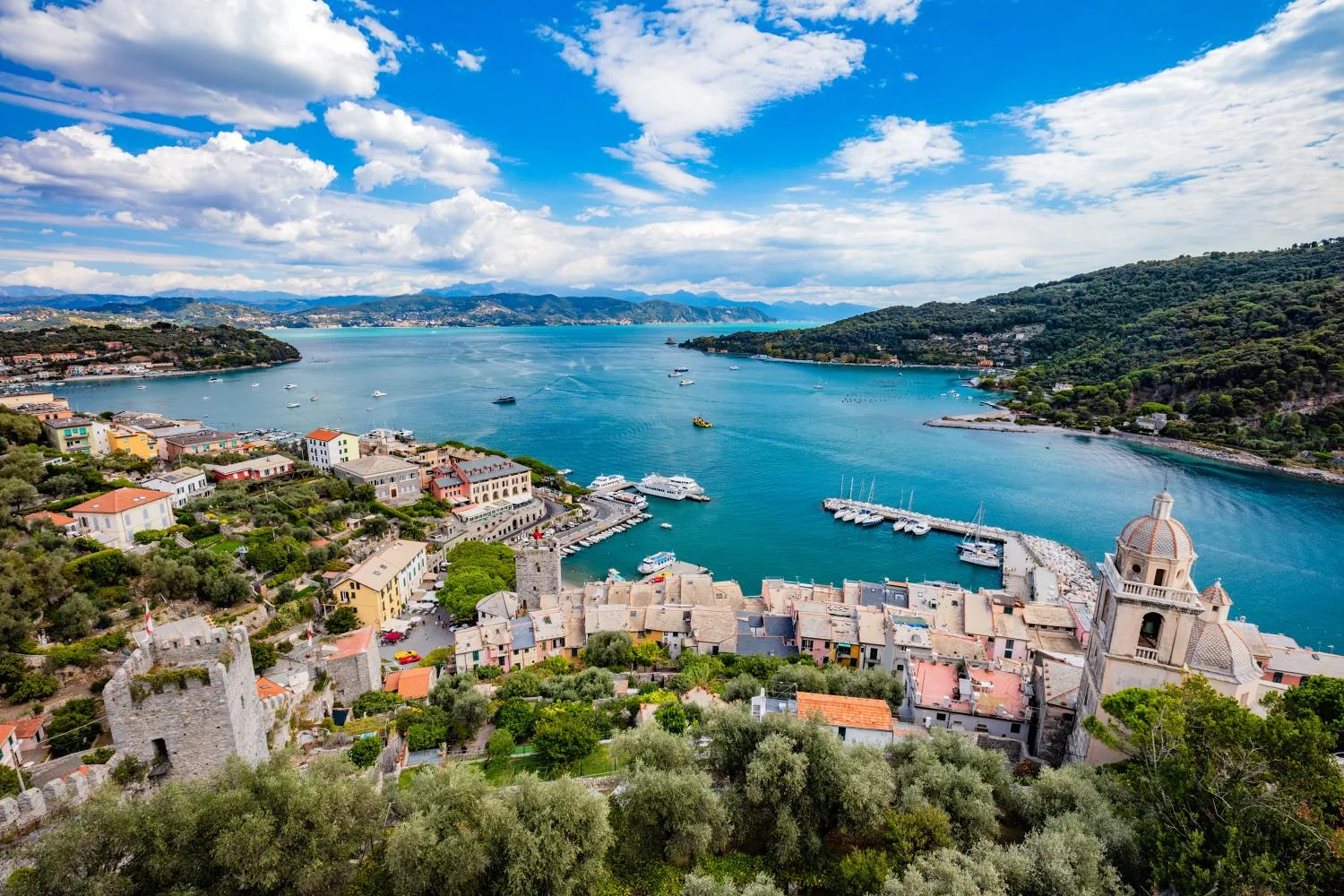
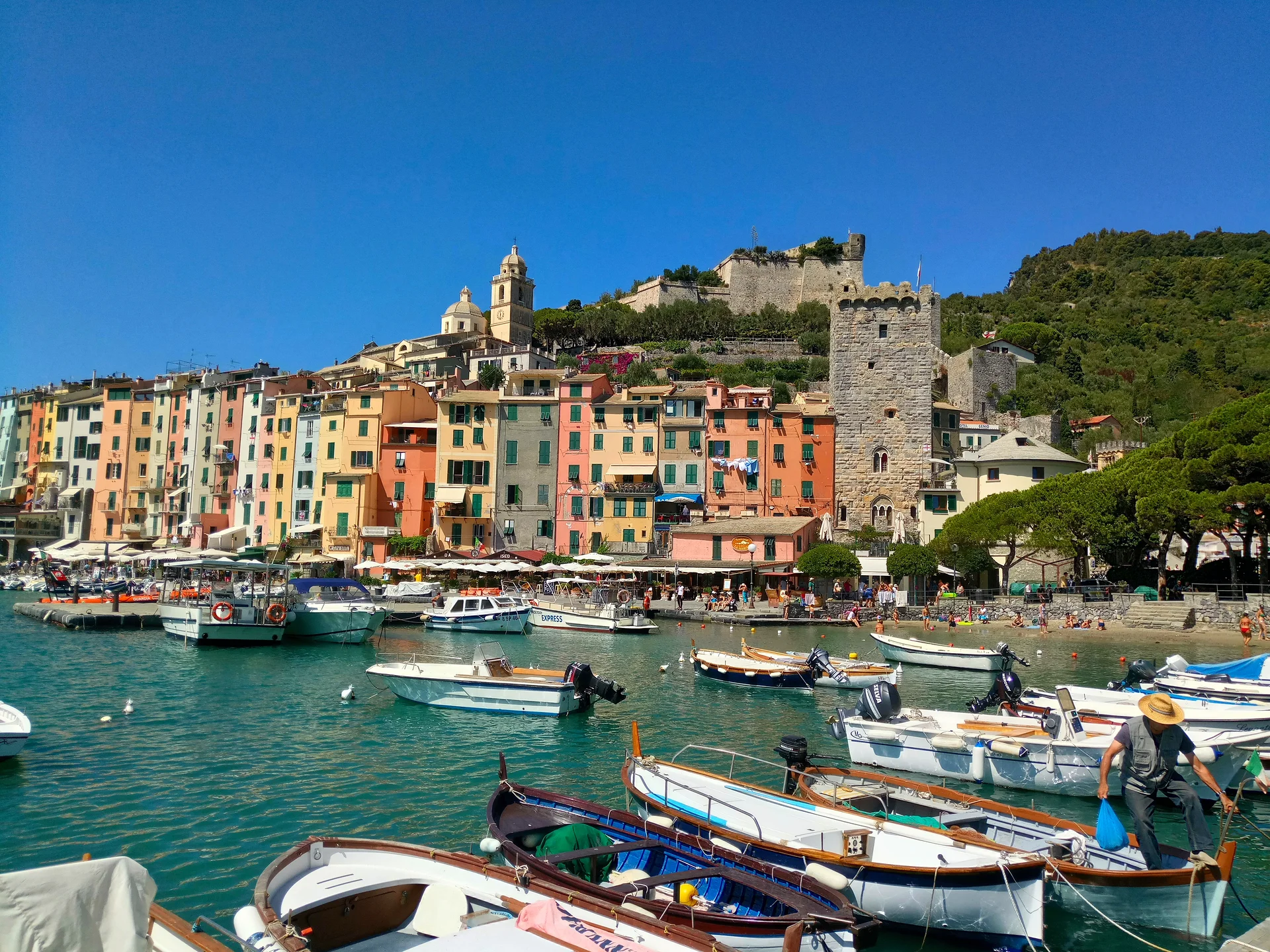
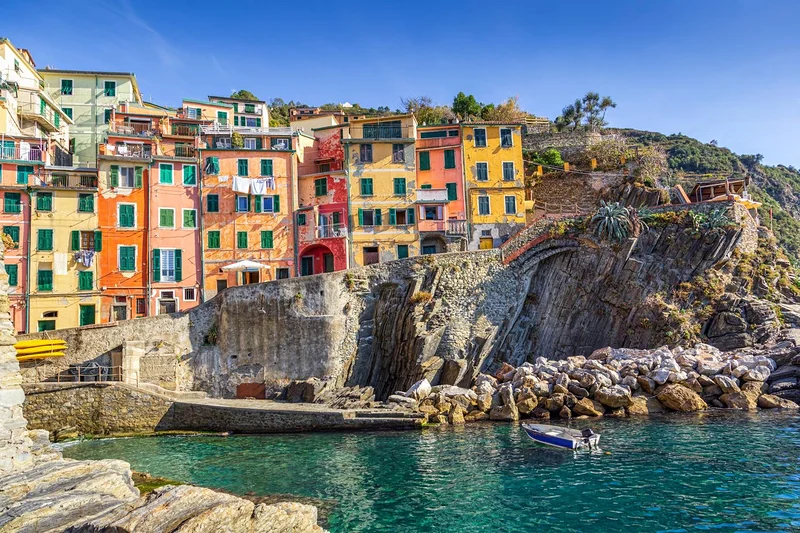
It is 8:00 AM, and the ferry from La Spezia just pulled away from the dock. Twenty minutes later, a row of pastel houses appears in the distance, crammed together like a multicolored wall right at the water's edge. At the tip of the promontory, a black and white striped church looks like it has been defying the sea for eight centuries.
Welcome to Portovenere, a Ligurian fishing village that Lord Byron loved so much he used to swim across the gulf to get there.
Portovenere: the Italian Riviera without the crowds, or close to it
Portovenere is for travelers who want the beauty of the Cinque Terre without the madness. The village works well for couples looking for romance, hikers ready to explore Palmaria Island, and Italy fans who prefer an afternoon spritz by the water over a race for selfies. It also makes a practical base for exploring the five neighboring villages, Lerici, or nearby Tuscany.
On the other hand, if you are looking for nightlife, wide sandy beaches, or a destination set up for very young kids, Portovenere might leave you wanting. The village is compact, and everything on foot involves cobblestones and uphill climbs. Strollers are brutal here.
A safe village that is easy to navigate
Northern Italy is very safe, and Portovenere is no exception. The only real logistical challenge is access, since there is no train station, just one main road, and a parking lot that fills up fast in the summer. Language-wise, local business owners speak enough English, but a friendly "buongiorno" opens doors. The pace here is slow, intentionally slow. They call it dolce far niente.
Budget: reasonable in the off-season, pricey in midsummer
Expect to spend between $90 and $169* a day for two in the shoulder season, lodging included. A B&B night in the center runs between $102 and $210* depending on the month. A seafood dinner at the port hovers around $29 to $45* per person, and the main sights are free or cheap, like admission to Doria Castle for $5.70*.
The port and old town: colors and ancient stones
The first image of Portovenere, the one that sticks with you, is the Palazzata a Mare. This facade of medieval tower houses in sorbet shades, lined up facing the harbor, once served as a rampart against invaders. Today, cafe terraces have taken the place of arrow slits. Grab a table at the Venus Bar with a spritz and watch the fishing boats glide over the turquoise Bocche channel.
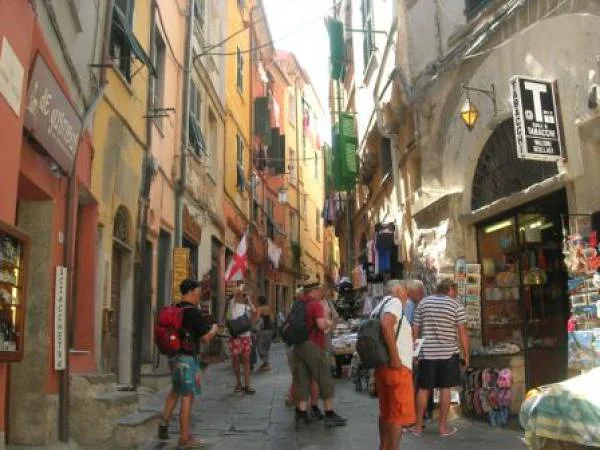
Walk through the Porta del Borgo, built in 1113, to enter the maze of the historic center. Via Capellini, the main drag, is lined with craft shops, focaccerias, and small grocers selling local mortar-made pesto. As soon as you step off this street, the crowds drop away. Stairs climb toward secret courtyards, hanging gardens, and narrow alleys where laundry hangs to dry between the walls.
Friendly tip: for the best photo of the port, head to the Aldo Moro promenade and turn immediately right onto the jetty. It is the perfect angle on the Palazzata, especially in the morning when the sun hits the facades.
Churches and fortress: Portovenere from above
The San Pietro Church, perched on a rocky spur at the tip of the promontory, is easily the most photogenic landmark in Liguria. Its black and white horizontal bands, typical of 13th-century Genoese architecture, clash with the deep blue sea below. The interior is spare, almost austere. The setting does all the heavy lifting.
Just below, Byron's Grotto marks the cove where the English poet came to meditate and swim in the early 19th century. Legend says he swam from here across the gulf to San Terenzo to visit Shelley. Today, it is a favorite swimming spot for locals, who lounge on the flat rocks right by the open water.
Head up next to Castello Doria, a 12th-century Genoese fortress planted at the top of the village. Let's be honest: the interior is empty, with no explanatory panels or exhibits. But the 360-degree panorama over the Gulf of Poets, the Apuan Alps, and the Palmaria archipelago easily justifies the $5.70* entry fee and the climb.
On your way back down, stop by the San Lorenzo Church. Much less visited, it houses the Madonna Bianca painting, whose colors supposedly revived miraculously after curing the village of the plague in 1399. Every August 17th, more than 2,000 torches light up Portovenere in her honor.
Palmaria, the sea, and boat trips
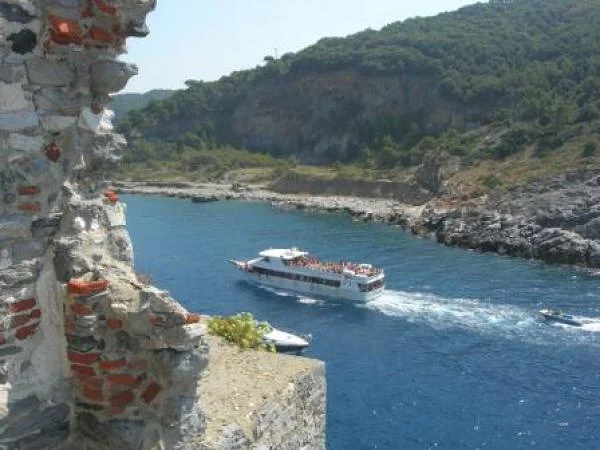
Palmaria Island sits just a few minutes by boat from the harbor, offering a completely different vibe. Hiking trails cut through the Mediterranean scrub with plunging views down the coast. The coves are open for swimming and snorkeling, far from any roads or motor noise. The round-trip ferry costs about $5.70* from the small harbor near the Trattoria della Marina.
For something different, look into oyster tours that circle the islands of Palmaria, Tino, and Tinetto, paired with tastings of local oysters. Portovenere oysters have a distinct green tint and a briny punch, thanks to the unique conditions of the marine protected area. Tino Island, a military zone, opens to the public only two days a year in September for the feast of San Venerio.
Friendly tip: active travelers can tackle the Muzzerone cliffs, a famous rock-climbing spot in Liguria, or hike to the village of Campiglia for a wide-open view of the entire coastline.
From the port to the Cinque Terre: Portovenere as a basecamp
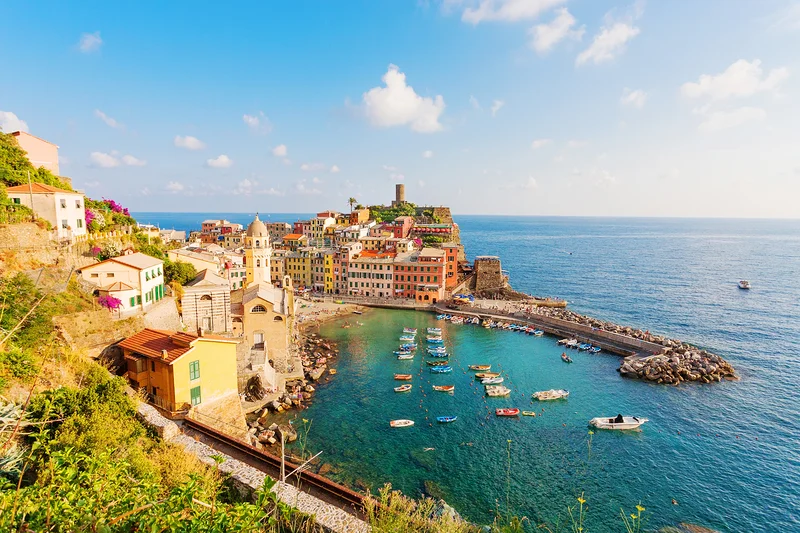
One of Portovenere's biggest perks is its strategic position. Ferries connect the village to the four coastal Cinque Terre towns from April to October. Riomaggiore is a 30-minute boat ride away, and Monterosso takes about 1 hour and 20 minutes. A day pass for the full line costs around $40*.
Heading south, the Gulf of Poets hides other gorgeous villages. Lerici, San Terenzo, and especially Tellaro, a tiny fishing hamlet clinging to the rock, deserve a half-day. A road trip along the coastal highway makes it easy to hit them all if you have a car.
Where to eat and drink in Portovenere?
The cooking here is Ligurian and maritime. Three things to try: muscoli ripieni, stuffed mussels with bread, parmesan, garlic, and parsley that are a local point of pride; mesciùa, a rustic soup of mixed grains and legumes born in sailors' kitchens; and of course mortar-made pesto, which Liguria claims to have invented with fierce pride.
For a meal right on the harbor, Antica Osteria del Carugio serves decent Ligurian specialties on the main street. But the best tables are found just outside the village. Ristorante MarineRei, in the hamlet of Fezzano 6 kilometers to the north, serves fresh fish right on the water in a much more local atmosphere. For a quick bite, Focacceria Portovenere bakes excellent, pillowy, and generous focaccia to go.
How to get to and around Portovenere?
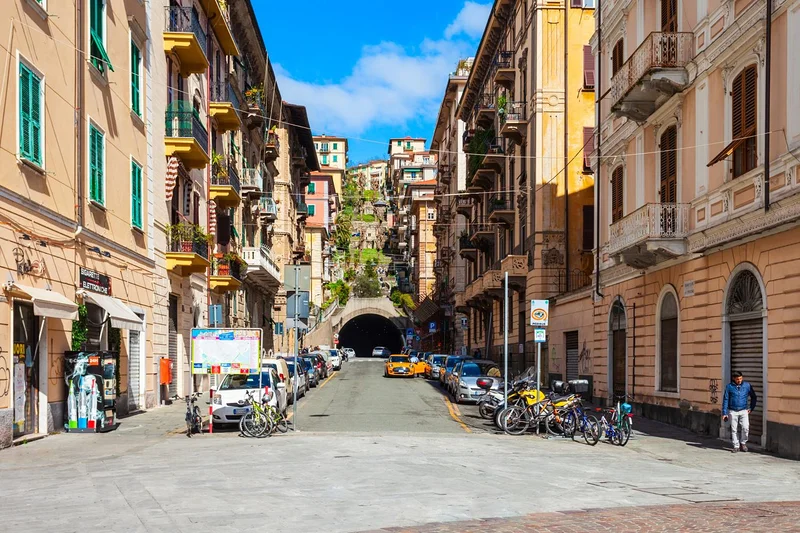
Portovenere has no train station. That is part of why the village stays less overrun than its Cinque Terre neighbors. From La Spezia, Bus Line 11/P runs about every 15 minutes and takes 30 to 35 minutes for a $3.40* fare. Tickets are sold at the station, in tobacco shops, or on the DropTicket app. Keep in mind that schedules can run on island time.
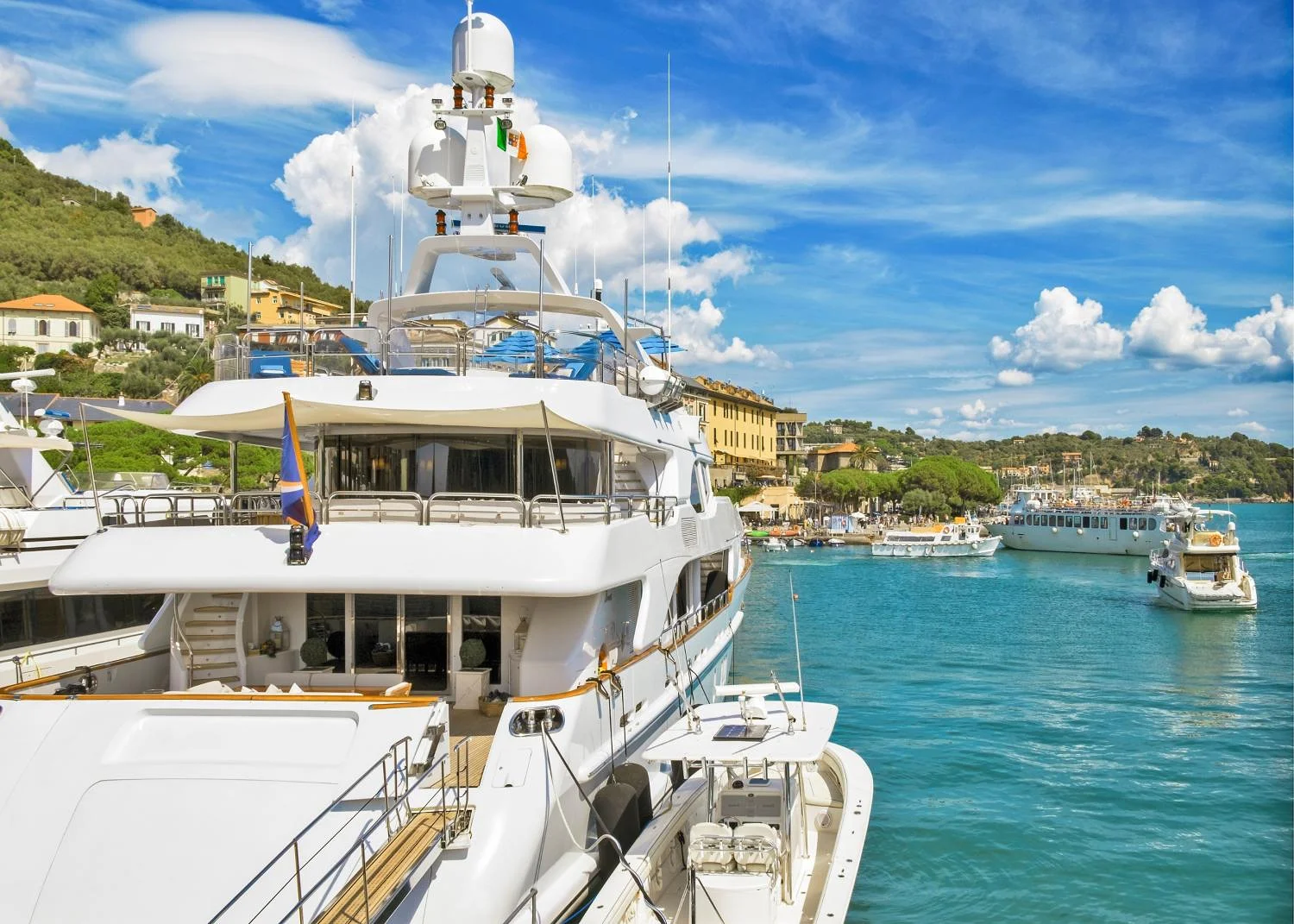
The ferry from La Spezia runs from March to November, with round-trips around $15*. By car, figure on 20 minutes from La Spezia along a scenic coastal road. Parking is paid and lots fill up early in the summer. From France, the nearest airports are Pisa (80 kilometers, about a 1-hour-and-15-minute drive) and Genoa (110 kilometers). By train, La Spezia is reachable from Paris via Milan or Genoa, with a total travel time of roughly 8 to 10 hours.
When to go?
The best windows are April to June and September to October: the weather is mild, the sea is swimmable by June, and the crowds are manageable. July and August are packed, especially on weekends when Italians from La Spezia and nearby cities descend en masse. Winter is quiet and some businesses close down, but seaside walks under clear skies have a distinct charm.
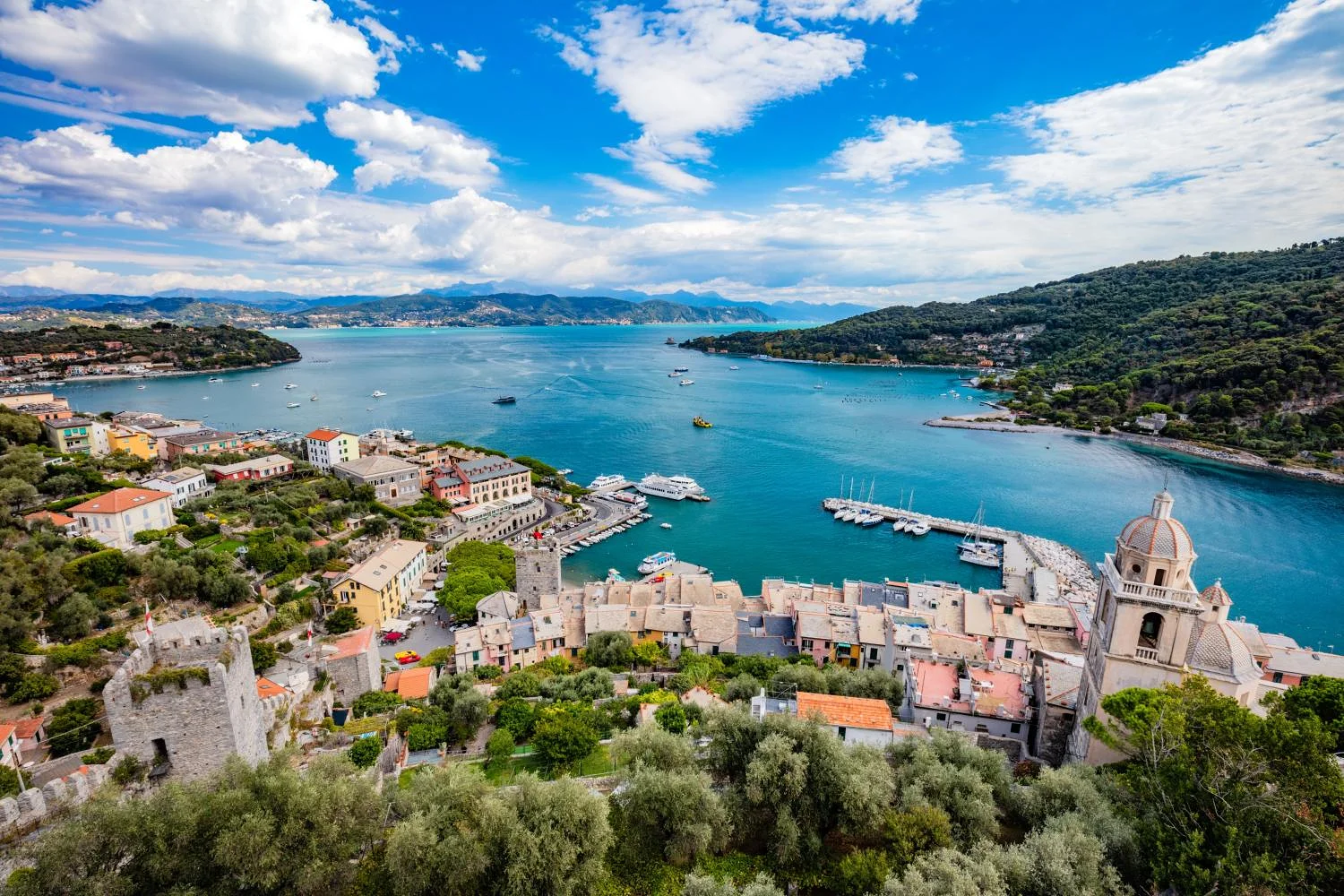
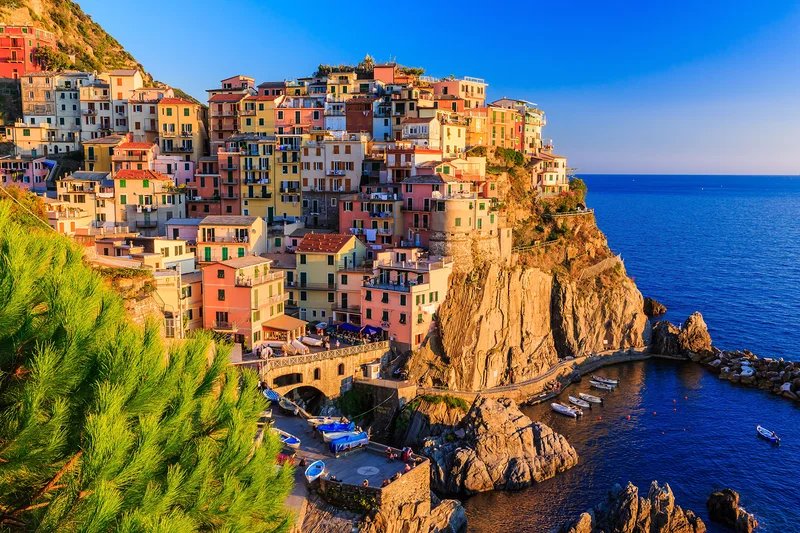
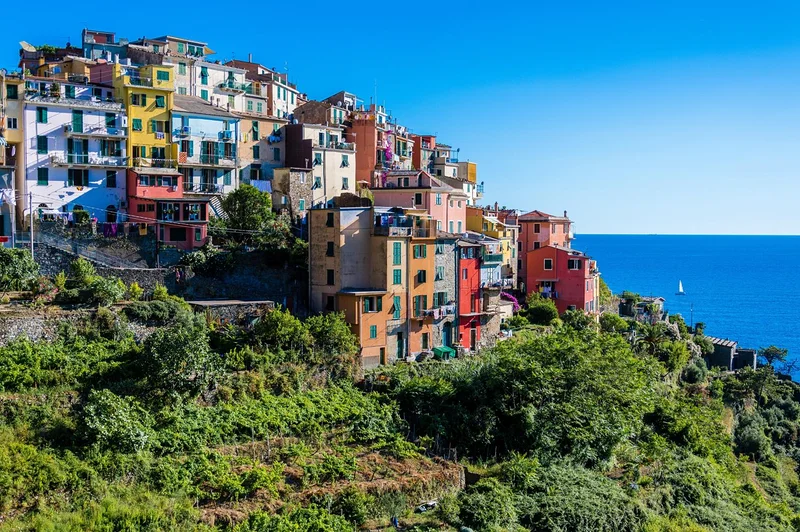
The little town that you absolutely cannot miss if you are visiting the Cinque Terre! It is a bit harder to get there since there is no train station, and access is by bus from La Spezia (a whole experience in itself, I promise!!), but the trip is really worth it! The town is super pleasant for walking around and relaxing on the beaches. You can take little boat trips to the surrounding islands. In my opinion, this little village and its fort have nothing to envy compared to its neighbors, with breathtaking scenery and a really super pleasant atmosphere (and a bit more space on the beaches)!