
Visiting Roussillon: Ochre Cliffs and Painted Alleys
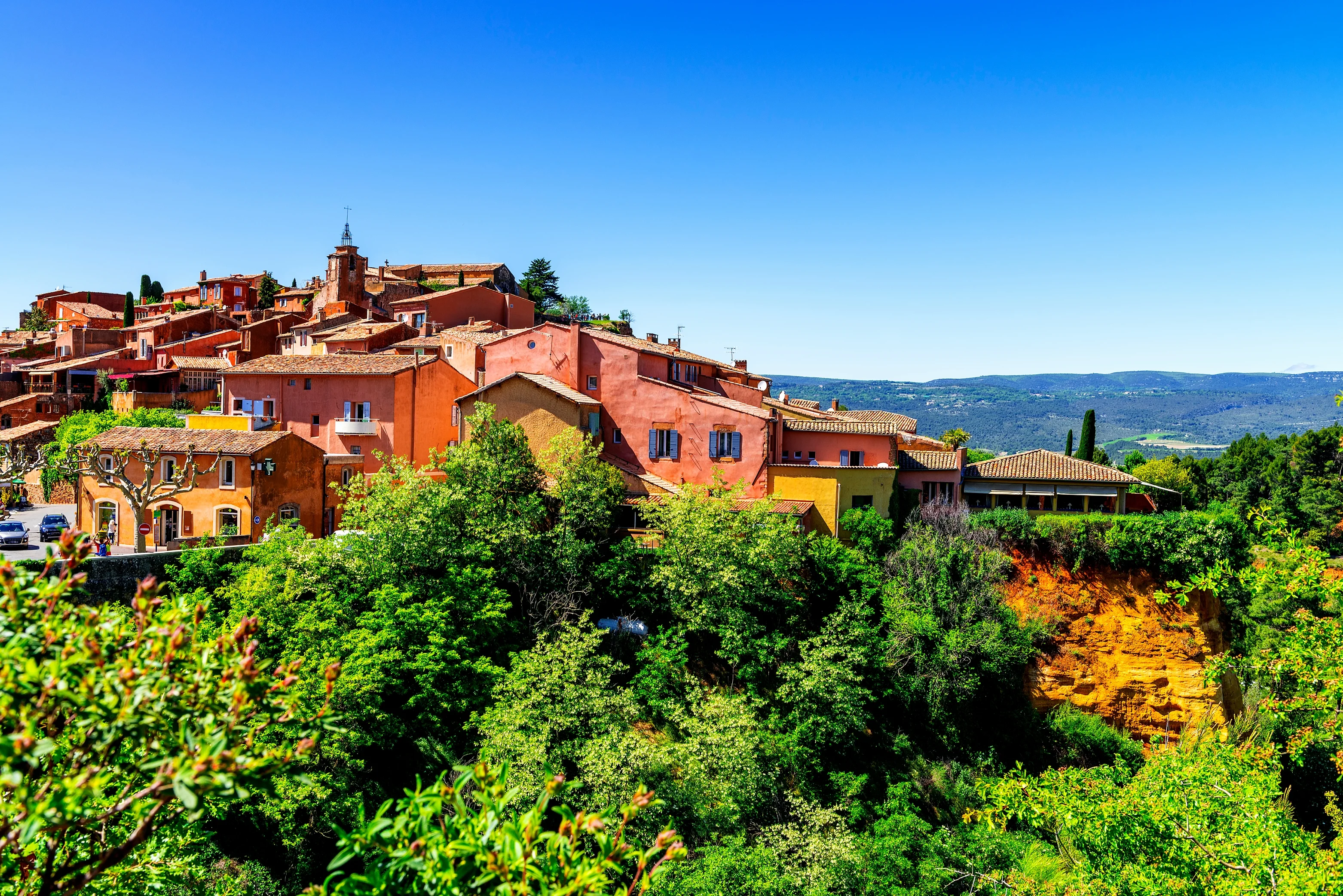
Tucked away in the Parc naturel régional du Luberon, Roussillon stands out for its palette of ochre tones, making it one of the most visually distinct villages in the south of France. It feels less grand than Gordes or Les Baux, yet it wins you over with its color harmony, quiet lanes, and deep connection to the surrounding landscape.
A Village Sculpted in Color
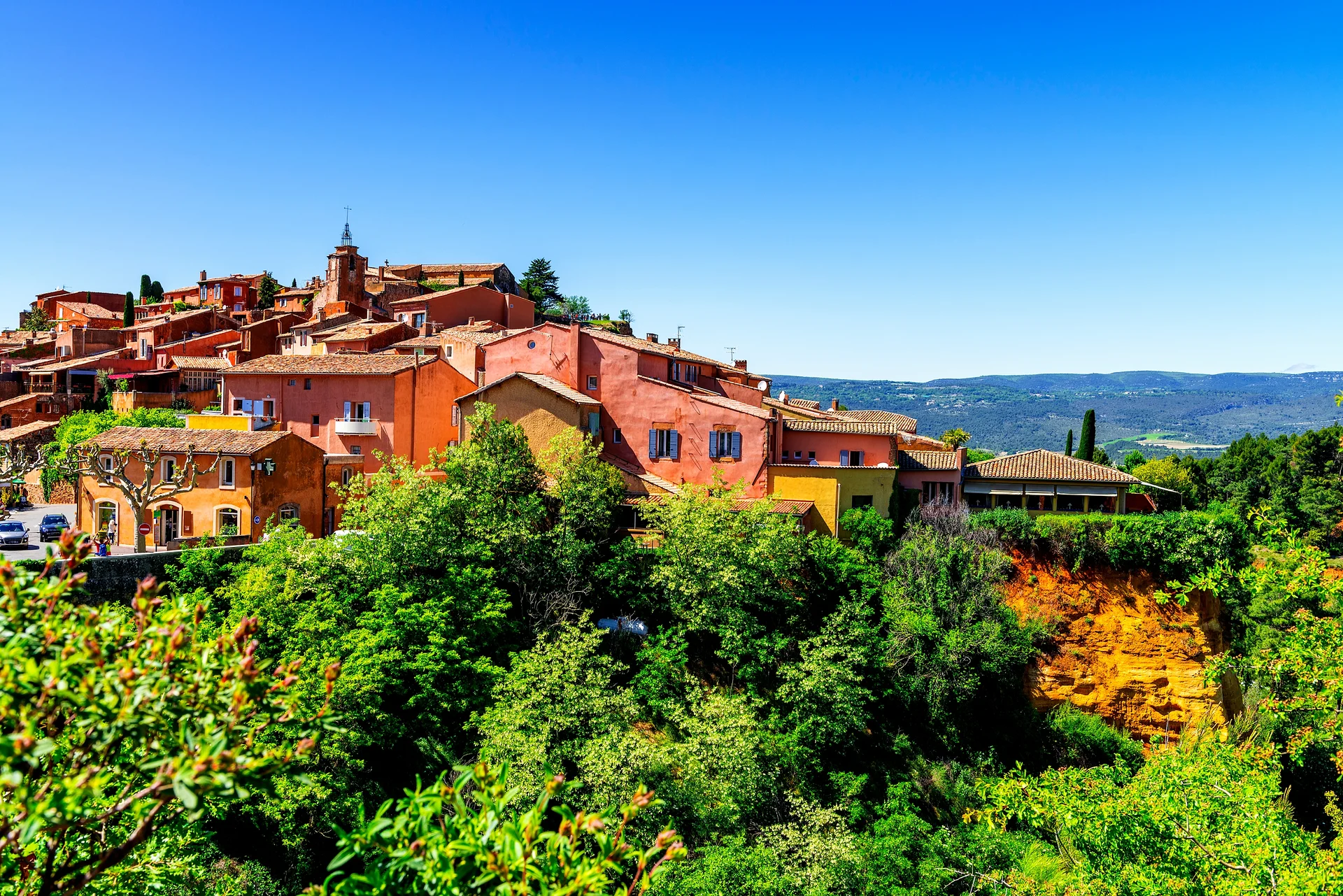
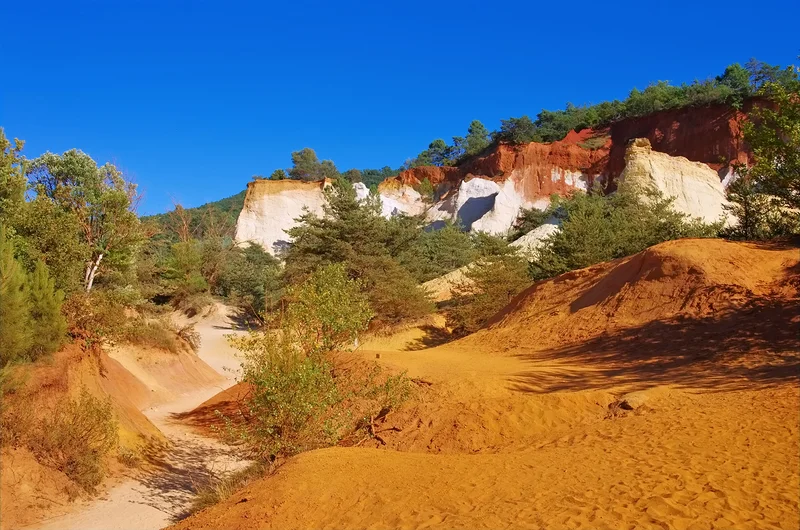
The village stretches along a ridge, framed by the ochre cliffs that built its reputation. As you walk the streets, you will notice facades in shades of red, orange, and yellow, drawn directly from the nearby quarries. The Sentier des Ocres, located just at the edge of the village, leads you into a surreal landscape of pines, cliffs, and geological formations shaped by erosion.
Simple, Coherent Heritage
Roussillon does not house a castle or a massive landmark cathedral. The appeal here is the architectural coherence of the village, with its green shutters, walls coated in natural pigments, stone staircases, and small shaded squares. The église Saint-Michel, rebuilt in the 17th century, dominates the village without disrupting its visual balance. It is a place to explore slowly, at your own pace, without rushing.
Industrial Roots in Ochre
Until the mid-20th century, Roussillon’s economy relied on the extraction and processing of ochre, a natural pigment used for paint and dyes. The Conservatoire des Ocres et de la Couleur, housed in a former factory, showcases this industrial heritage through exhibits and workshops. It is far from a dusty museum, attracting artists and those interested in natural dyeing techniques.
Open Views Over the Luberon
From the top of the village, you get unobstructed views of the Luberon hills and the Vaucluse mountains. Evening light makes the village colors look even more intense. Nearby paths offer easy walks through scrubland dotted with cypress and pine trees. If you have a car, you can easily reach other Luberon villages like Bonnieux, Ménerbes, or Lacoste.
Cuisine Grounded in the Land
In Roussillon, the food highlights seasonal produce and Provençal flavors. You will often find grilled vegetables, local goat cheese, Luberon lamb, or savory herb tarts. For dessert, roasted apricots or Vaucluse peaches are common summer staples. As for drinks, AOC Ventoux and Luberon wines are standard on most menus.
Where to Eat?
- La Treille (near the church): A more refined menu with a nice view over the valley, reservations recommended in season.
- Chez Nino (central square): Simple, hearty dishes, family-style service, and a relaxed atmosphere.
When to Visit?
Spring (April through June) and autumn (September through October) are the ideal times to see Roussillon in comfortable weather. Summer brings larger crowds, though the lanes remain manageable in the early morning or evening. Winter is quieter, though some businesses close for the season.
How to Get There?
From Avignon, expect a drive of about 1 hour and 10 minutes. No public transportation serves the village directly. The closest TGV station is in Avignon, where you should rent a car. Roussillon is accessible via the small roads of the Luberon from Apt or Gordes.
Getting Around
The village is entirely walkable. To explore the surrounding area, a car is essential. Parking is well-organized, with lots provided at the entrance to the village.
I really fell for the village of Roussillon. Perched in the heart of the Luberon, it gives off such a peaceful and warm vibe. What really stood out to me were the colors, the flaming ochre of the facades, the narrow streets bathed in light, everything looks like it came straight out of a painting. You should also check out the little shaded squares and the views over the countryside. It is a place that is worth a visit. Just try to avoid it during peak season.