
Visiting Český Krumlov
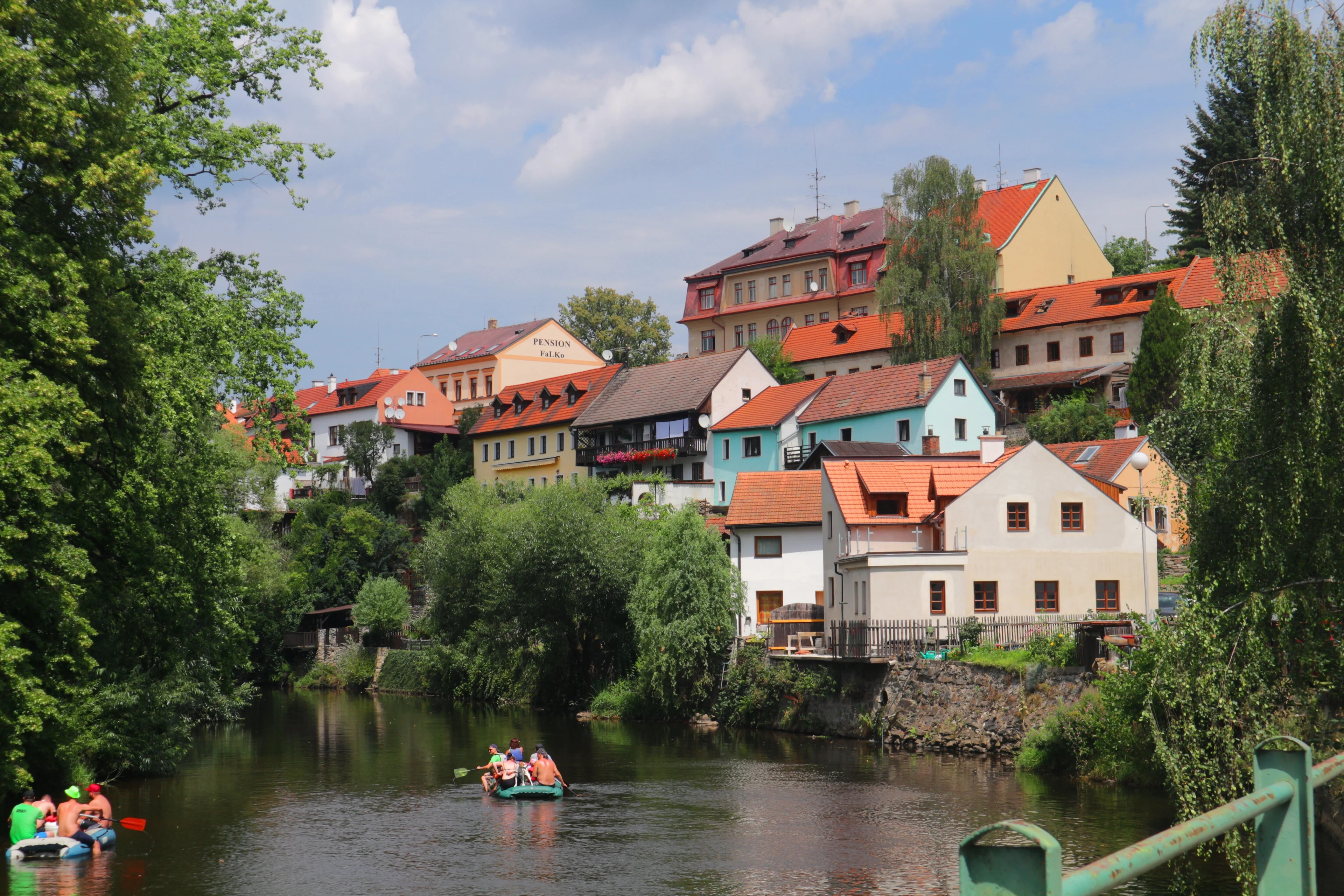
Often called "little Prague", Český Krumlov is a fraction of the size of the Czech capital, yet it matches its grace and beauty. The soaring spire of Saint Vitus Church immediately calls to mind the city of a hundred spires. Tucked inside a loop of the Vltava river, this compact town preserves countless medieval landmarks alongside magnificent Renaissance architecture. The Rosenberg Castle towers over the town as its defining symbol. Inside, the Mask Hall features trompe l'oeil murals depicting scenes from the commedia dell'arte.
A lively little town
Start your walk at the castle. A medieval cobblestone lane, Latrán street, leads right up to it. You cross a bridge over the castle moat, where real bears are kept. The castle complex is massive, featuring forty buildings, five courtyards, and about seven hectares of gardens. Walk the grounds at your own pace, as entry is free unless you book a guided tour. Only stepping inside and climbing the central tower requires a small fee in Czech crowns. From the top, you get a sweeping view of the town and surrounding countryside.
While exploring, make sure to cross the Cloak Bridge, a striking multi-level structure supported by massive stone arches and three tiers of enclosed corridors. It leads straight to the remarkably well-preserved Eggenberg Theater. Český Krumlov keeps you feeling like you stepped right into a storybook. The medieval center, a UNESCO World Heritage site, overflows with baroque buildings. Head to Náměstí Svornosti, the main square, which anchors the historic core alongside a 16th-century town hall. At the center of the square stands the Plague Column, topped with statues of the Immaculate Virgin and the town's patron saints.
The natural beauty of South Bohemia
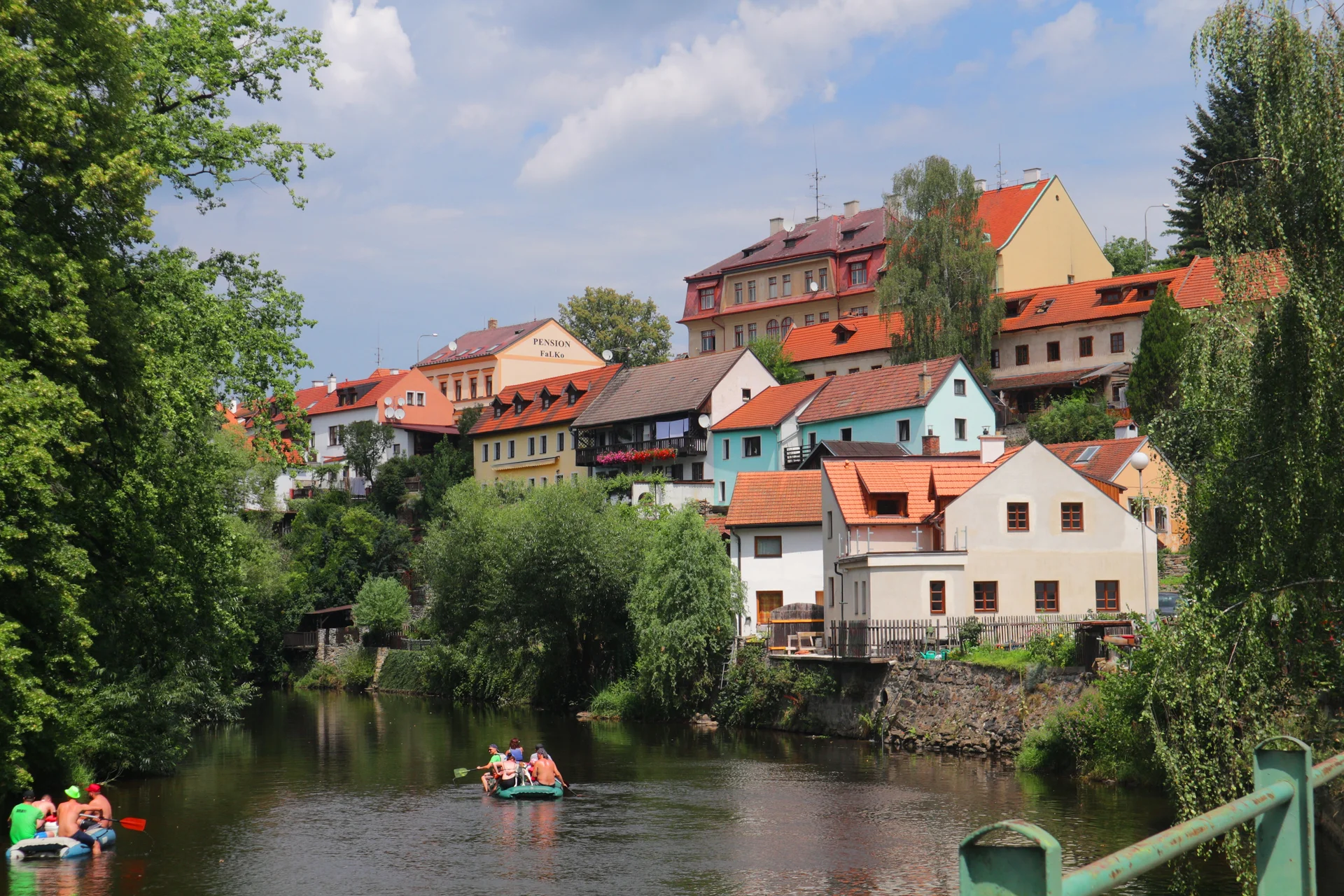
Beyond the local museums like the Regional Museum, which chronicles local history, the surrounding region offers plenty of outdoor excursions. You can kayak or raft down the Vltava river, or head out to the Vyšší Brod Cistercian Monastery, located just a half-hour drive away. Another legacy of the Rosenberg dynasty, the abbey still houses a small community of monks.
The Šumava National Park, on the western edge of the Czech Republic, is well worth a visit. It forms part of the largest forested region in Central Europe. Protected species like lynx and red deer roam here, and you can still see traces of the Iron Curtain that divided Europe during the Cold War.
When to go
To enjoy pleasant weather and the town's seasonal festivals, plan your trip during the warmer months between May and September.
How to get there
From Prague, Flixbus runs direct buses to Český Krumlov in three hours. You can also take a train from Prague to the nearby regional hub of České Budějovice and catch a connecting local train the rest of the way to Český Krumlov.
City (or village?) full of charm, but you can see it all pretty quickly. One day is enough.