Armenia, a country that adopts you before you even choose it
The first thing you notice in Yerevan is neither the monasteries nor the mountains. It is the water fountains. Dozens of small, brushed-bronze drinking water fountains run continuously down every street. Locals stop at them mechanically, and travelers stop out of curiosity.
This simple gesture says a great deal about Armenia: here, people give before you even ask. Roughly the size of Maryland, the country was the first nation in the world to adopt Christianity as a state religion, back in 301 AD. Its capital is older than Rome by 29 years.
Is Armenia right for you? Probably more than you think
Armenia is not a beach destination, an amusement park, or a curated Instagram spot. It is a country of substance that requires a bit of effort and rewards you immensely. If you are looking for white-sand beaches or luxury resorts, keep moving. On the other hand, if the idea of losing yourself among millennium-old monasteries, eating a memorable meal for pocket change, and crossing paths with people genuinely thrilled by your presence appeals to you, then keep reading.
Great destination for:
- History buffs, religious heritage enthusiasts, and medieval architecture fans
- Hikers and lovers of wide-open mountain spaces
- Budget-conscious travelers looking for exceptional value
- Foodies curious about Caucasian and Middle Eastern cuisines
- Travelers seeking authenticity and strong human connections
- Those who like combining two countries: the Georgia and Armenia duo is a classic
Not recommended for:
- Anyone looking for beaches, lounging, and all-inclusive resorts
- Travelers who require reliable and punctual public transit
- Partiers looking for an intense nightlife scene
- People who are extremely sensitive to cold if traveling in winter
- LGBTQ+ couples who want to openly display affection outside of Yerevan
One of the lowest budgets in Europe
Armenia ranks among the top 10 most affordable countries in Europe. A full meal at a good local restaurant costs between $8.80 and $17*, a taxi across Yerevan runs less than $2.20*, and staying in a family-run guesthouse rarely exceeds $28* a night. The only downside is that since 2022, an influx of Russian residents has driven up accommodation prices in Yerevan by roughly 30 to 40 percent.
| Trip Type | Where | Duration | Estimated Budget |
|---|---|---|---|
| Monasteries and nature road trip | Yerevan, Noravank, Tatev, Dilijan | 10 days | $550 to $990* |
| Cultural city break | Yerevan and surroundings | 4-5 days | $220 to $500* |
| Trek and hiking | Dilijan, Geghama, Syunik | 1 week | $330 to $660* |
| Caucasus circuit (Georgia + Armenia) | Tbilisi, Yerevan, north and south | 2 weeks | $880 to $1,650* |
| Wine and food trip | Yerevan, Areni, Vayots Dzor | 5-6 days | $390 to $770* |
| Budget backpacking | Countrywide tour | 2 weeks | $330 to $610* |
Getting around Armenia daily: what you need to know
Main highways are in solid shape, but secondary roads throw curveballs like potholes, missing signs, and directions written entirely in the Armenian alphabet. Local driving is assertive, especially in Yerevan. Outside the capital, marshrutkas (shared minivans) link towns for just a few euros without fixed schedules. English is becoming more common among young people in Yerevan, but in rural areas, you will find only Armenian and occasionally Russian spoken.
Is it dangerous to travel in Armenia?
Armenia ranks among the 8 safest countries in the world according to the 2025 Numbeo index. Violent crime against tourists is practically nonexistent. The only serious precaution involves the border zone with Azerbaijan, which is closed, and you should avoid coming within 5 km of it. The border with Turkey is also closed. Entry happens by air or via the land borders with Georgia or Iran.
Can women travel solo in Armenia?
Solo female travelers almost universally report a strong sense of security. Street harassment is rare, and Armenians tend to be protective of visitors. You might catch a few curious stares in rural areas, but they are never hostile. When visiting monasteries, make sure to pack something to cover your shoulders and knees.
For LGBTQ+ travelers, caution is necessary since homosexuality is legal, but social attitudes remain conservative, especially outside Yerevan. Public displays of affection are best avoided.
Suspended monasteries and carved stones: heritage that stuns
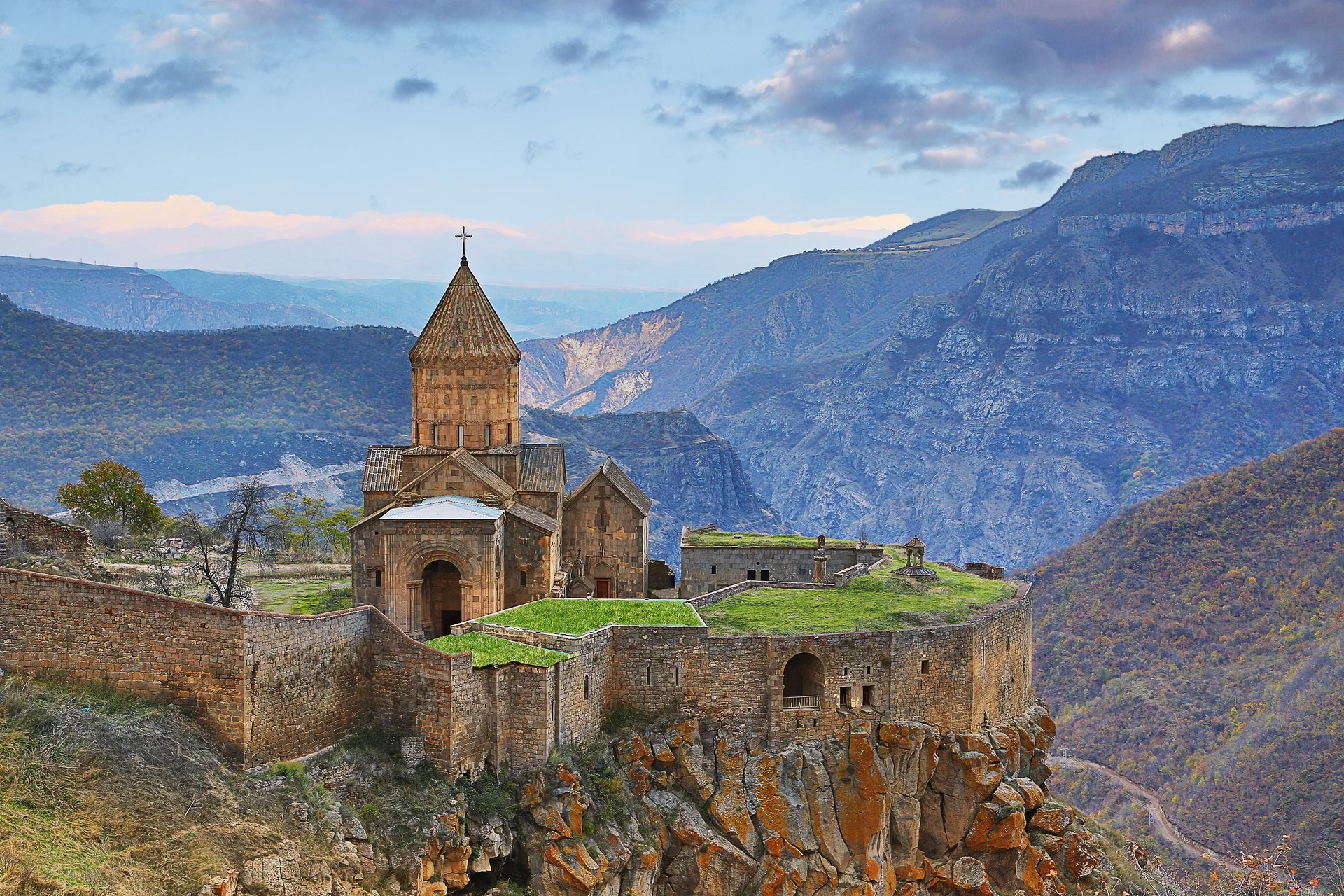
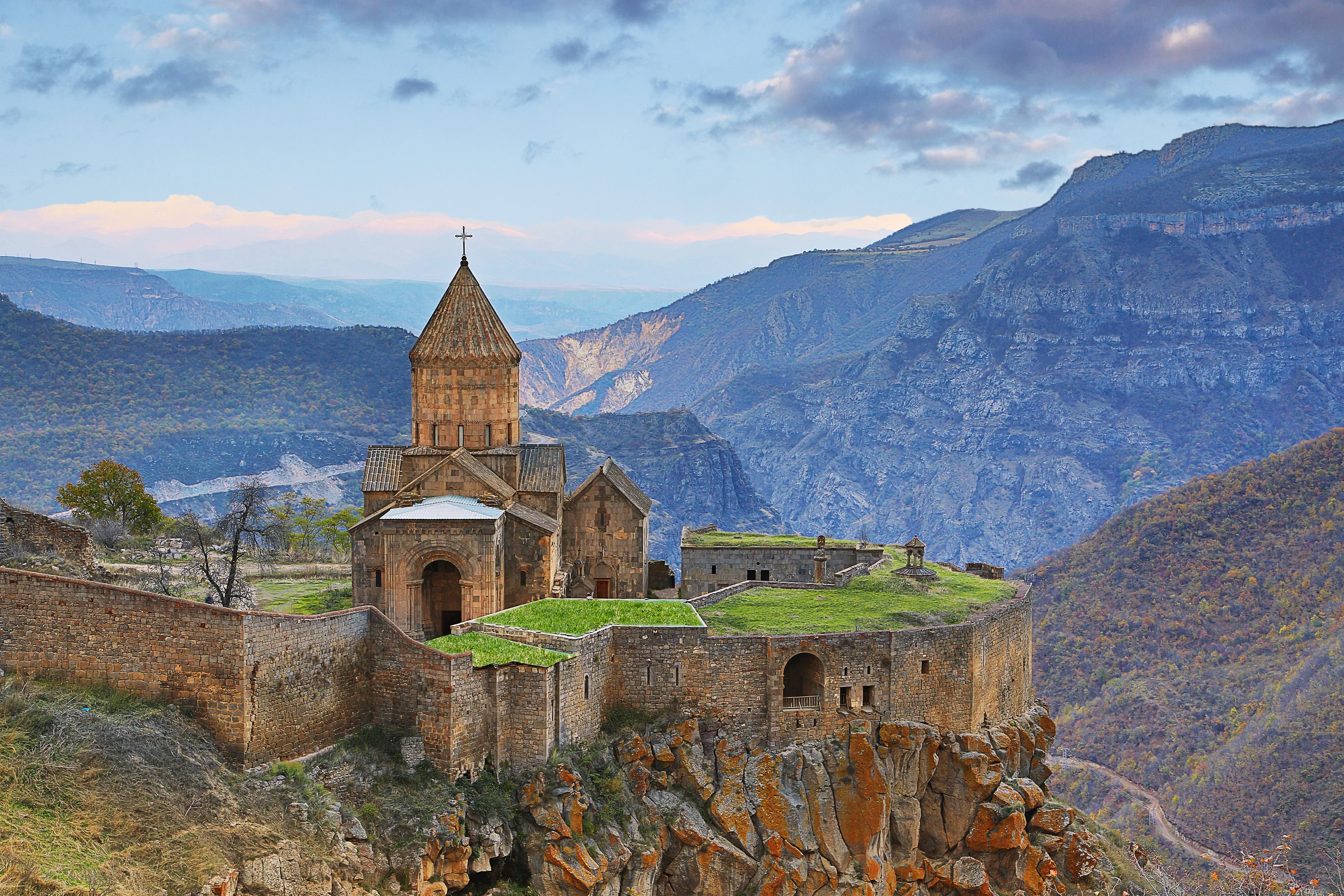
The country holds hundreds of monasteries, often dropped into scenery that looks like an art director picked it out. The most spectacular is arguably Tatev, reached via the longest reversible aerial tramway in the world: 5.7 km above the Vorotan Gorge. The 9th-century monastery sits perched on a rocky promontory overlooking the canyon.
Geghard, a UNESCO World Heritage site, is partially carved directly into the cliffside. Springs bubble up inside the main chapel. Go on a Sunday morning to hear the nuns singing inside the grotto, as the natural acoustics give you chills.
Friendly tip: most monasteries are free to enter. Only a few sites, like the temple of Garni, charge an admission fee of around 1,500 AMD. The khachkars, those intricately carved stone cross-stones found by the thousands, are reason enough to make the trip.
Khor Virap delivers the quintessential Armenian postcard shot: the monastery in the foreground with snow-capped Mount Ararat rising in the background right across the Turkish border. According to tradition, King Tiridate IV imprisoned Gregory the Illuminator in a pit here for 13 years before converting to Christianity.
From mountains to extinct volcanoes: raw nature
More than half of Armenian territory sits between 1,000 and 2,000 meters in altitude. Dilijan National Park, nicknamed the "Armenian Switzerland," serves as the green lung of the country. Its marked trails cut through dense beech and oak forests, leading toward mountain lakes like Parz Lake and tucked-away monasteries like Haghartsin.
In the Garni Gorge, the "Symphony of Stones" makes for an incredible geological sight featuring perfectly regular hexagonal basalt columns forming a stone organ tens of meters high. It is an easy 15-minute walk down from the temple.
Lake Sevan, nicknamed the "Armenian Sea," covers 5 percent of the country's surface area. Sitting at 1,900 meters above sea level, it is one of the highest large mountain lakes in the world. Armenians head here in the summer to swim, eat grilled trout, and visit the Sevanavank monastery perched on the shore.
Friendly tip: the Hike Armenia app maps out dozens of trails complete with GPS tracks, difficulty levels, and descriptions. It is an essential tool for hiking across the country.
Yerevan, the pink capital that stays up late
Yerevan is no classic beauty, as Soviet-era architecture rubs shoulders with trendy cafe patios and contemporary art galleries. Republic Square, with its evening musical fountains, makes a natural starting point. The real beating heart of the city is the Cascade, a monumental stairway housing the Cafesjian Center for the Arts and offering panoramic views of Mount Ararat on a clear day.
The Matenadaran preserves one of the largest collections of medieval manuscripts in the world. The Armenian Genocide Memorial at Tsitsernakaberd is a must-see stop that is understated, poignant, and free. It provides the context needed to understand the collective memory of the nation.
At Avygeo, we have a soft spot for the weekend Vernissage flea market. You will find everything from hand-carved chess sets and antique carpets to musical instruments and Soviet memorabilia. For an evening out, the streets surrounding Saryan Street pack in wine bars and restaurants with a relaxed vibe.
The wild south: gorges, caves, and ancient vineyards
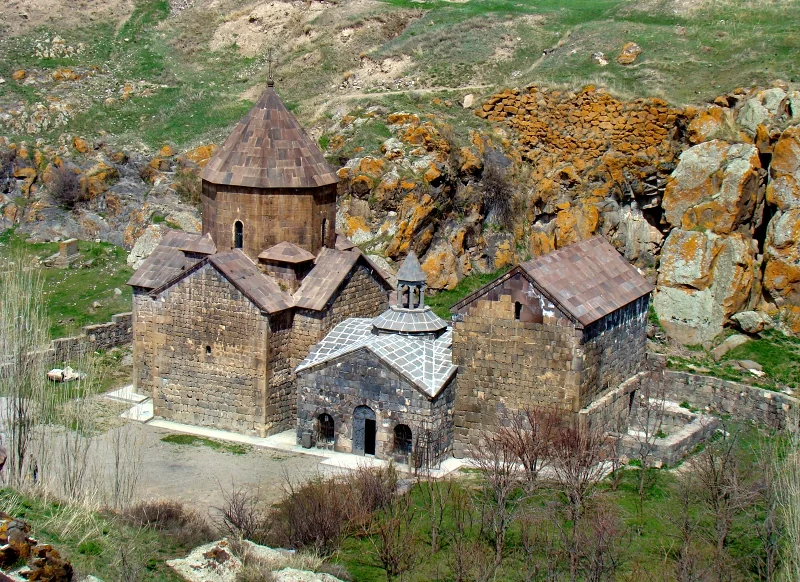
Southern Armenia is the least visited and, in our view, the most striking region. The drive between Eghegnadzor and Goris cuts through western-style landscapes featuring ocher hills, red cliffs, and dizzying canyons. The Noravank monastery, tucked into a basin of orange cliffs, hits a breathtaking peak of beauty at sunset when the stone seems to catch fire.
Around Areni, winemaking has more than 6,100 years of history. The Areni-1 cave yielded the oldest known winery in the world. Small winemakers in the Vayots Dzor valley offer casual tastings, often right at home around a table that keeps filling up as the conversation flows.
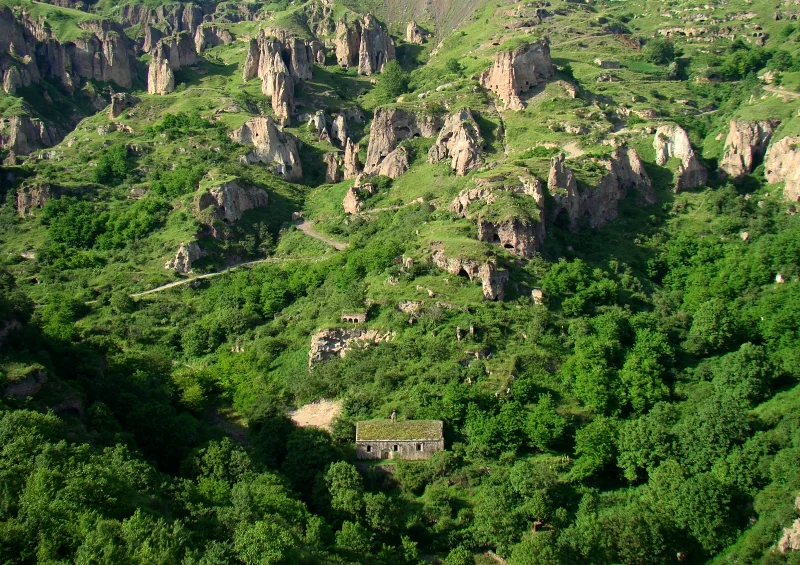
Goris fascinates visitors with its cave dwellings, as hoodoos and abandoned 19th-century cliffside homes dot the surrounding hills. It serves as the jumping-off point for Tatev via the cable car.
Friendly tip: if you are renting a car, the drive between Goris and Tatev offers grandiose lookouts. Plan for 30 minutes by car, or 12 minutes via the Wings of Tatev cable car for about $7.70* round-trip.
Armenia on your plate: when eating becomes a social event
Armenian cuisine goes far beyond a simple list of dishes, functioning more like a ritual. Meals run long, tables are always overloaded, and turning down a second helping borders on a diplomatic incident. Khorovats, the Armenian barbecue of pork or lamb marinated and grilled over wood fire, rules family gatherings, and every father considers himself the best grill master in the Caucasus.
Lavash, a flatbread baked in a clay oven called a tonir, is inscribed on UNESCO's intangible heritage list and doubles as a plate, spoon, and napkin all at once. Tolma, vine leaves stuffed with minced meat and rice, is the dish every Armenian grandmother claims to make better than anyone else.
Lahmajoun, an Armenian cheese-free pizza topped with spiced meat and a squeeze of lemon, is available everywhere for $2.20 to $3.30*. For winter mornings, khash is a rich beef trotter broth served at dawn with raw garlic, dry lavash, and vodka. Ghapama, pumpkin stuffed with rice and dried fruit, is the ultimate celebration dish and even has its own popular folk song.
When to visit Armenia?
The sweet spot falls between mid-May and early June, and then again between late September and mid-October. Temperatures are mild, trails are clear, and crowds at monasteries stay low. Spring carpets the mountains in wildflowers, while autumn dresses the forests of Dilijan in gold and copper.
Summer can turn scorching in Yerevan with peaks hitting 40 °C. It marks high tourist season, though crowds remain manageable. Winter gets harsh in the mountains with temperatures dropping to -20 °C in the north, but Tsaghkadzor turns into an affordable ski resort. The Armenian New Year period from December 31 to January 6 is festive and warm.
How to get to Armenia?
From North American gateways, flights typically route through major European hubs like Frankfurt, Paris, or Vienna to reach Yerevan. Connecting itineraries run regularly on carriers like Lufthansa, LOT, Austrian Airlines, or Aegean. Zvartnots Airport sits 12 km from Yerevan, which is a 20-minute taxi ride costing $4.40 to $6.60*.
US citizens do not need a visa for tourist stays under 180 days. A valid passport is all that is required. Land borders with Turkey and Azerbaijan remain closed, so driving across the border is only possible from Georgia or Iran.
How to get around Armenia?
Car rental stands out as the most practical way to explore the country in depth. Expect to pay $44 to $55* per day. An International Driving Permit is recommended. The GG app works well in Yerevan for booking low-cost taxis.
Marshrutkas connect towns for $2.20 to $6.60* per trip, though they depart once full without a guaranteed schedule. A daily train links Yerevan to Gyumri in 3 hours, and in the summer, the line extends all the way to Lake Sevan.
Hitchhiking works remarkably well in Armenia as a common practice inherited from the Soviet era. For day trips out of Yerevan, many agencies offer small-group tours to major sites for $11 to $28* per person.