

Where to stay in Luzon: the 4 areas to know in 2026
Our three reviews of Manila do not agree, and their disagreement tells you where to stay. The harshest writes: "Manila doesn't offer much of interest for travelers, other than its practical function as the home of the international airport". Another describes the opposite, "relaxing, green, and new places just like in Western capitals, specifically in Global City". The third settles it: "for a short stay, you can have a great time. Just plan on visiting the rest of the country too."
The answer lies in the disagreement: you do not sleep "in Manila", you sleep in a district, and our most detailed review names them one by one. Intramuros and its cobblestone streets, Global City clean and open at night, Makati the embassy district, "worth doing in one day, but don't linger". And two escapes, also named: Tagaytay an hour and a half south, Banaue up in the northern mountains. Four areas below.
Compare hotel prices in Luzon
In a hurry? Find the best accommodation deals in 3 clicks.
Compare live deals from Booking, Expedia, Agoda and other partners.
for a short stay, you can have a great time. Just plan on visiting the rest of the country too.
One base or several?
Luzon is not a city break, and it is our review that says so: "just plan on visiting the rest of the country too". The two escapes out of the metro area head in opposite directions, an hour and a half south, nine hours north.
- A long weekend: Intramuros, two nights, and that is what our reviews advise: "for a short stay, you can have a great time". The old Spanish quarter, Rizal Park, the bay at sunset.
- A week: Intramuros then Tagaytay: two nights, then two. The contrast our reviews describe, from a "very polluted" city to a "cool" climate an hour and a half's drive away.
- Ten days: Add Banaue, two nights, and accept the journey: our reviews warn that "the roads are damaged and the trip is not necessarily comfortable". Both members who went there came back enthusiastic.
- Two weeks: Fly somewhere else: our reviews are unanimous on this point, Manila is "the home of the international airport that makes it easier to reach other regions of the Philippines". Two nights in Makati or Global City are enough before the flight.
How much driving between two bases?
Nothing is done on foot between the areas, and our reviews each say so in their own way: "monstrous traffic jams, especially around EDSA" in the metro area, and "damaged" roads to get up north. The bus is the only transport our reviews name.
| Route | Driving time | Good to know |
|---|---|---|
| Intramuros → Makati | 30 to 60 min | 8 km, but "monstrous traffic jams" according to our review |
| Airport → Makati | 30 min | 8 km, the shortest trip |
| Manila → Tagaytay | 1 hr 30 | 60 km |
| Tagaytay → Talisay | 30 min | "the winding road that goes down to the edge of the lake" |
| Manila → Banaue | 9 hr | 350 km by night bus, "the roads are damaged" |
At a glance: our picks by traveller type
Pick the profile that fits you and go straight to the recommended area.
Map of the areas in Luzon
See how the areas sit relative to one another before choosing your base. Click a name to jump to its description.
Makati and Global City Makati, Bonifacio Global City
for a stopover, as close as possible to the airport

Our review describes Makati by what grows there: "the place where the skyscrapers grow. Practically all the embassies are gathered in Makati, along with the corporate headquarters.. in short, it is the economic heart of the Philippines." Then it passes judgement, and its sentence doubles as advice on length of stay: "not necessarily relaxing because there is a lot of pollution, traffic, and noise". The neighbouring district gets the opposite verdict from the same member: "you can find relaxing, green, and new places just like in Western capitals, specifically in Global City […] the streets are clean and the buildings are new. There are no crime issues. It is a neighborhood that is alive day and night because a majority of Filipinos work the night shift when they are employed by foreign companies. The restaurants and bars are open all night long."
Worth doing in one day, but don't linger.
Where to stay in this area
Tune Hotel Makati, Manila Budget
A 3-star hotel at the corner of E. Mercado and F. Calderon, from $30* a night. Check-in 2 p.m., check-out 11 a.m.
Pros
- "The restaurants and bars are open all night long" in Global City, notes our review: handy after a night flight
- "There are no crime issues" in that district, according to the same review
Cons
- "A lot of pollution, traffic, and noise", warns our review about Makati
- Malls, office towers and embassies: little to visit
Intramuros and old Manila Intramuros, Rizal, Manila Bay
for cobbled streets and the bay at sunset

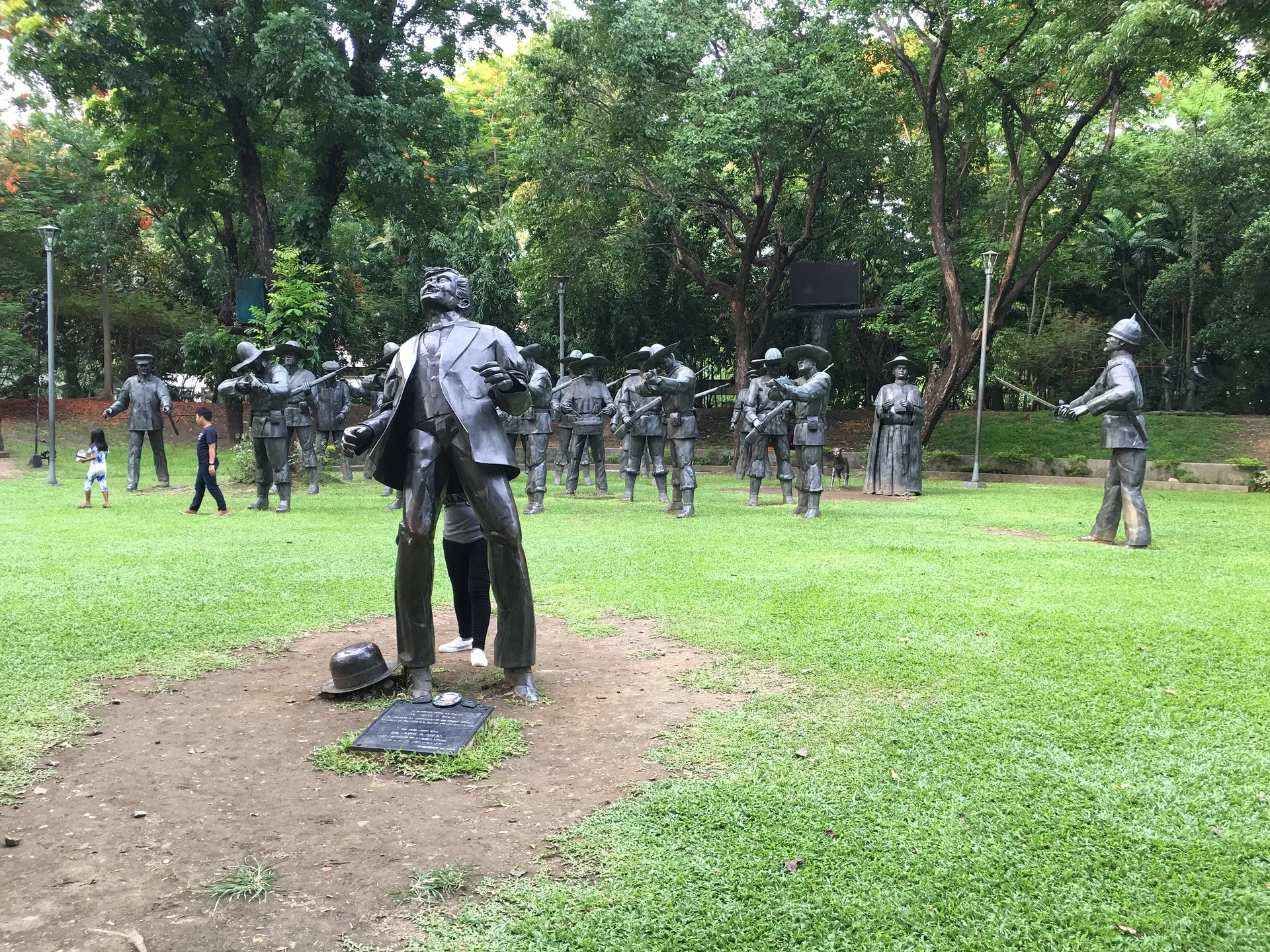

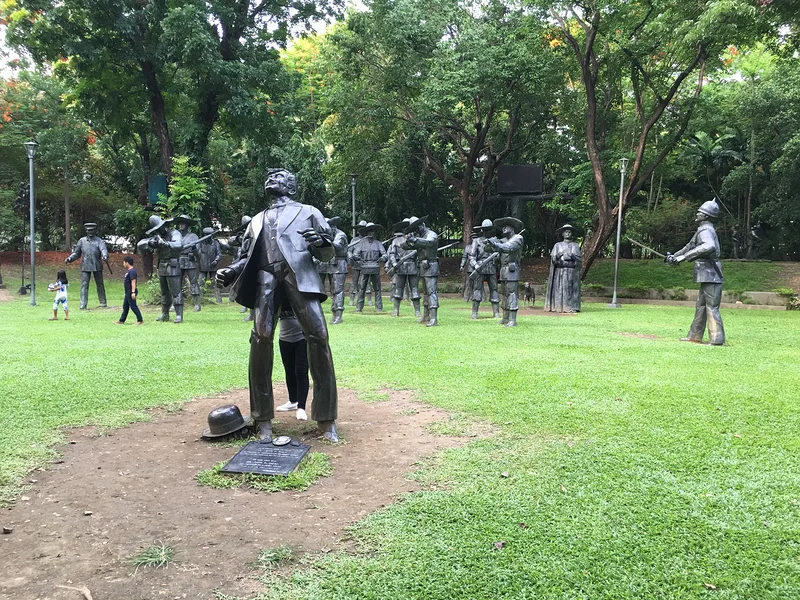
This is the district our review names first in its list of "places to visit": "Intramuros: Spanish quarter with cobblestone streets and traditional Hispanic-style houses". It goes on to "Manila Bay: to see the sunset and eat balut for the more adventurous". Rizal Park is summed up in a few words: "it is a place steeped in history, and restful". And the same review names, without flinching, what the city also shows: "you can find other extremely poor neighborhoods where people live on the street, picking through trash to cook leftovers and resell them". Our harshest review puts it differently: "what strikes you most is the stark contrast between the luxury hotels and the poverty that is everywhere in the streets".
Intramuros: Spanish quarter with cobblestone streets and traditional Hispanic-style houses.
What to see and do in this area
Where to stay in this area
White Knight Hotel Intramuros Mid-range
29 rooms in a colonial mansion right in the middle of Intramuros, that is to say exactly the quarter "with cobblestone streets and traditional Hispanic-style houses" our review describes.
Pros
- The oldest and most walkable district in the metro area, according to our review
- The SM Mall of Asia and Robinson's Place are within reach: our reviews go there for their food courts
Cons
- Our harshest review finds the city has only one function, "the home of the international airport"
- "For those sensitive to pollution, I do not recommend this city, as it is very polluted", writes our review
Tagaytay and Taal Lake Tagaytay, Picnic Grove, Talisay
for cool air, an hour and a half from Manila

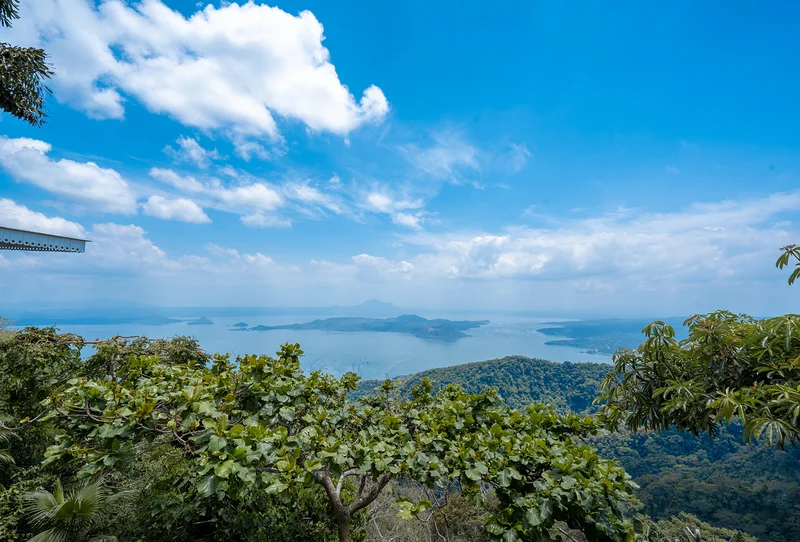
Our review describes an inverted change of scene: "the climate there is cool, and pine trees similar to those growing in Europe will make you think you are in the Alps. There are also houses similar to our mountain chalets." With the view that brings you here: "perched in Tagaytay, you can see the lake and the smallest active volcano: Taal". The same review gives the dish, "taste the local specialty, Bulalo: beef with a broth", an address, "go take a tour of Sonya's Garden. It is a place out of time. It is a garden with edible plants and flowers", and a road, "take the winding road that goes down to the edge of the lake to go see the town of Talisay". Our two reviews of Picnic Grove say what the place is for: "if you want to escape the hustle of Manila for a while, Picnic Grove is a really good place to go".
The climate there is cool, and pine trees similar to those growing in Europe will make you think you are in the Alps.
What to see and do in this area
Where to stay in this area
Taal Vista Hotel Mid-range
261 rooms facing Taal Lake and its volcano, with a choice of two wings, lake side or mountain side. This is the view our review comes for: "you can see the lake and the smallest active volcano".
Pros
- A cool climate, an hour and a half from the capital
- "You can stroll along the trails or simply sit, relax, and take in the view of Taal Lake", notes our review
Cons
- Our review warns that the garden restaurant is "rather chic and quite expensive for the locals"
- The area is best explored by car
Banaue and the rice terraces Banaue, Ifugao
for the rice terraces, at the end of a long journey
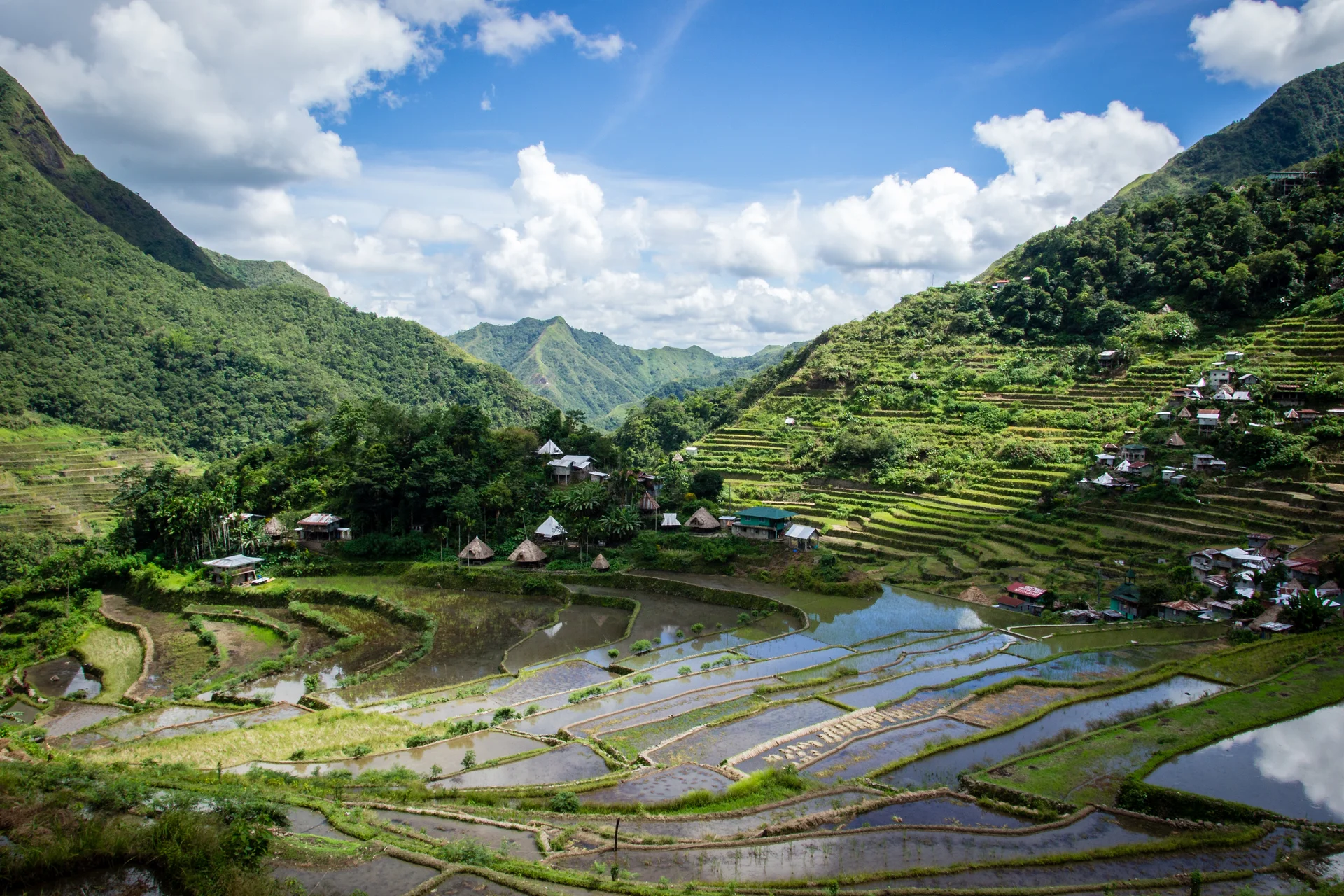
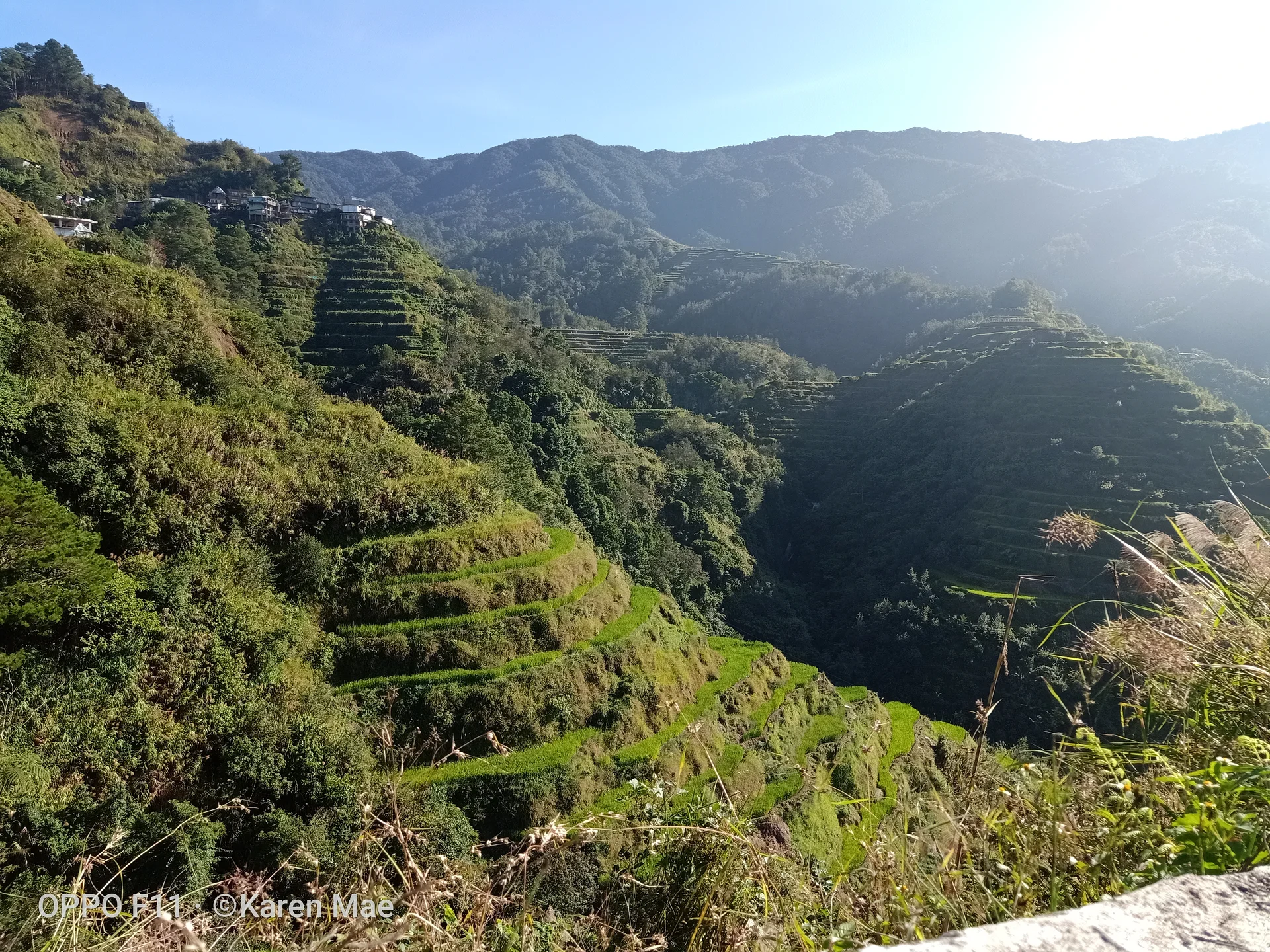
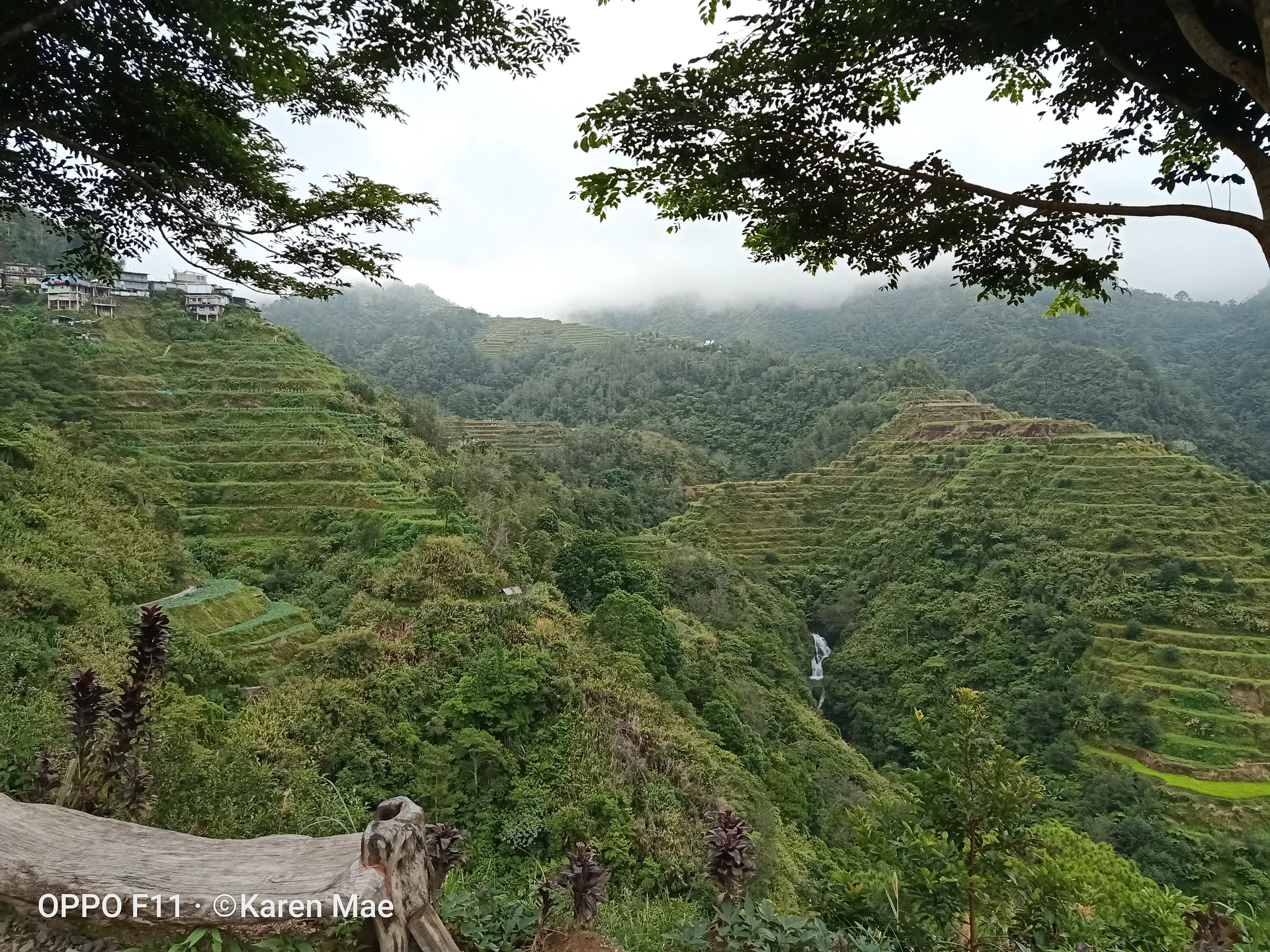
Our two reviews agree on everything, including the effort. The landscape: "perched in the mountains, this region offers spectacular rice terraces carved into the hillsides. The view is breathtaking. Authentic and genuine, Banaue is absolutely worth the trip to discover the mountainous soul of the Philippines." The access: "depart from Manila by bus, but watch out because the roads are damaged and the trip is not necessarily comfortable". And the same recommendation, twice: "hire a guide, which is not expensive in the Philippines, and they will take you to the best spots", "hikes are organized through the rice fields, where you can enjoy the exceptional scenery and also meet the local people". The Banaue Rice Terraces are a World Heritage site, and our review opens with that.
depart from Manila by bus, but watch out because the roads are damaged and the trip is not necessarily comfortable.
Where to stay in this area
Banaue Hotel Mid-range
81 rooms at 1,200 metres above sea level, each with a private balcony over the terraces. A state-run property, and the simplest way to see the panorama our two reviews describe without getting back on the road.
Pros
- Meeting people, not only scenery
- "A guide, which is not expensive in the Philippines", notes our review
Cons
- Nine hours by bus from Manila on "damaged" roads, according to our review
- The terraces are explored on foot: this is not a stop for drivers
Our tips for booking the right place
- Our three reviews of Manila contradict one another, and that is the answer to the question: It is rare for three members to disagree this sharply. The harshest: "I have to admit that I didn't really enjoy my visit to Manila. Aside from discovering a few interesting markets, the city didn't win me over." Another: "in Manila, you can find relaxing, green, and new places just like in Western capitals, specifically in Global City, the business district of Manila." The third: "the city of Manila (excluding the suburbs) and its 1.6 million residents is the densest in the world […] you get a downtown that is hyper-active, hyper-crowded, and a total change of scenery. Sure, some people will find it to be too much." All three describe the same city. What they do not describe is the same district: in Manila, you choose your district before your hotel, and there are four.
- Our most detailed review names the districts one by one, with what each is for: It is the most useful list in the region, and it fits in five lines: "Intramuros: Spanish quarter with cobblestone streets and traditional Hispanic-style houses. Manila Bay: to see the sunset and eat balut for the more adventurous. Greenhills: for shopping deals (smartphones, clothes, objects, electronics...). Makati: the business and embassy district." And the same review had already described Global City separately, because what you do there is different: you sleep in peace, the streets are clean, and "the restaurants and bars are open all night long". One district per use, not a ranking.
- Makati: our review gives the length of stay itself, and it is one day: "Makati is the place where the skyscrapers grow. Practically all the embassies are gathered in Makati, along with the corporate headquarters.. in short, it is the economic heart of the Philippines. Not necessarily relaxing because there is a lot of pollution, traffic, and noise.... Worth doing in one day, but don't linger." That sentence carries double weight when choosing where to stay: it says you can sleep there, because it is the district best served from the airport, but that you should not build your trip around it. The district bears it out: it is mostly malls, office towers and embassies.
- Tagaytay is an hour and a half's drive to change climate, and our review spells it out: "Tagaytay is an hour and a half south of Manila. The climate there is cool, and pine trees similar to those growing in Europe will make you think you are in the Alps. There are also houses similar to our mountain chalets. Perched in Tagaytay, you can see the lake and the smallest active volcano: Taal." The same review gives the economic reason for the place, which appears nowhere else: "Tagaytay is famous in the Philippines for its fertile soil. Countless flowers grow there, and the nurseries ship their plants all over the Philippines." And its address: "Sonya's Garden. It is a place out of time. It is a garden with edible plants and flowers […] the cuisine is healthy and vegetable-based, which is rare in the Philippines", with its price reservation: "rather chic and quite expensive for the locals".
- Banaue has to be earned: nine hours by bus, and both our reviews advise a guide: Both our members came back won over, and both warn about the journey: "to get there: depart from Manila by bus, but watch out because the roads are damaged and the trip is not necessarily comfortable". Both advise the same thing on arrival. The first for the route: "hire a guide, which is not expensive in the Philippines, and they will take you to the best spots". The second for meeting people: "hikes are organized through the rice fields, where you can enjoy the exceptional scenery and also meet the local people". At that price in travel time, you do not come for a day: you sleep there.
- Shopping malls, more useful than they seem: Our members say it plainly, and they stand by it: "I am amazed by the staggering number of shopping malls and their size. The ones in France are really tiny in comparison." The SM Mall of Asia: "the largest shopping mall in Asia […] you can find brands that you don't find in the West". Robinson's Place, for a food-related reason: "what I prefer: the food court: between 50 and 100 restaurants lined up one after another offering different cuisines, because yes, in the Philippines eating is a real hobby!!!! Filipinos are used to eating at all hours of the day." In a metro area where our reviews describe the heat, the pollution and the traffic jams, an air-conditioned mall is also a dining room and a shelter.
- Poverty, which our members do not hide: Two of our three reviews of Manila mention it, from two points of view. The first, after describing Global City: "on the other hand, you can find other extremely poor neighborhoods where people live on the street, picking through trash to cook leftovers and resell them". The harshest, which makes it the reason not to come back: "what strikes you most is the stark contrast between the luxury hotels and the poverty that is everywhere in the streets". Anyone choosing a luxury hotel in Manila should know what they will see on stepping outside, and that same contrast is what leads the first member to recommend a district rather than a city.
- Building a whole trip around Makati: our review says it is "worth doing in one day, but don't linger".
- Planning Banaue as a round trip from Manila: nine hours by bus on "damaged" roads, according to our review.
- Counting on walking between the districts: our review counts jeepneys, motorbikes and cars by the thousand, and "monstrous traffic jams, especially around EDSA".
- Coming to Manila for the city itself if pollution bothers you: "for those sensitive to pollution, I do not recommend this city, as it is very polluted", writes our review.
- Going no further than Luzon: our three reviews of the capital all end with the same instruction, "just plan on visiting the rest of the country too".
FAQ: where to stay in Luzon
Should you sleep in Manila?
Where should you stay near Manila airport?
How do you get to Banaue from Manila?
Where can you escape the heat of Manila?
How many nights in Luzon?
 Keep exploring
Things to do in Luzon
Comments (0)
No comments yet. Be the first!