

Visiting Tagaytay
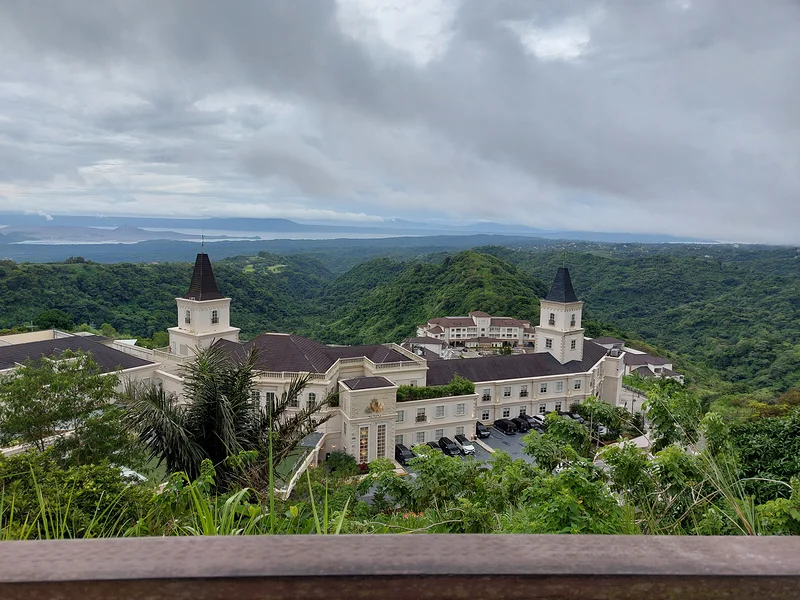
Tagaytay is a city in the province of Cavite, in the Philippines, located in the southern part of Luzon island where the Philippine capital, Manila, is also situated. Sitting at an elevation of 600 metres, it enjoys a cooler climate than the rest of the country. The name Tagaytay comes from the tagalog language, which forms the basis of Filipino, the national language, and means "ridge." True to its name, Tagaytay sits on a ridge overlooking Taal Lake and its dramatic volcano, framing sweeping views of the surrounding landscape. The view from the roof of the Taal Vista hotel is among the most famous in the area.
The city of Taal volcano
Tagaytay is primarily known for its hilltop location offering striking panoramas of the caldera and Taal volcano. This elevated spot was originally chosen to protect the town from frequent volcanic eruptions that wiped out many surrounding settlements.
The Taal volcano is often billed as one of the smallest active volcanoes in the world, though it sits inside a caldera measuring several dozen kilometres across: it is only the central crater cone that is small. It erupted in 2020, followed by further activity in 2021 and 2022, and remains part of the Pacific Ring of Fire. From the nearby village of Talisay, you take a boat then hike for about forty minutes to reach the summit, its fumaroles, craters, and inner lake. The volcano island has been classified as a permanent danger zone since the 2020 eruption, so access depends on current official orders.
Tagaytay grew in prominence at the beginning of the 20th century: located just a couple of hours south of Manila, it steadily became a go-to escape for capital residents looking for nature and quiet. Philippine President Manuel L. Quezon traveled to Tagaytay in 1938 to sign Commonwealth Act No. 338, which officially established the city.
A base for hiking
Tagaytay features several green spaces like Picnic Grove and the People's Park in the Sky, which has a fascinating backstory. These grounds were originally laid out to serve as a mansion for the former Philippine dictator, President Marcos. Following the People Power Revolution in 1986, the property was preserved and turned into a public park open to everyone.
Tagaytay also serves as an ideal base for tackling nearby mountain hikes, such as Mount Batulao, Mount Talamitam, or Mount Pico de Loro. The city is equally known for its flower farms and coconut plantations. Make sure to check out the Tagaytay market or try a bowl of bulalo, a rich beef shank soup that is the regional specialty.
When to go?
The dry season runs from November to March, bringing warm temperatures and minimal rainfall across the Philippines.
How to get there?
From the capital city of Manila, grab a bus from the Parañaque Integrated Terminal Exchange (PITX). The ride takes about 2 hours. By car, you can reach it via the Santa Rosa-Tagaytay Road in an hour and a half.

Tagaytay is an hour and a half south of Manila.
The climate there is cool, and pine trees similar to those growing in Europe will make you think you are in the Alps.
There are also houses similar to our mountain chalets.
Perched in Tagaytay, you can see the lake and the smallest active volcano: Taal.
There is a Ferris wheel as an attraction, and a lot of restaurants (like everywhere in the Philippines). Taste the local specialty, Bulalo: beef with a broth.
Tagaytay is famous in the Philippines for its fertile soil. Countless flowers grow there, and the nurseries ship their plants all over the Philippines.
Go take a tour of Sonya's Garden. It is a place out of time. It is a garden with edible plants and flowers. It is possible to eat on site, and the cuisine is healthy and vegetable-based, which is rare in the Philippines. It is a rather chic restaurant and quite expensive for the locals.
Take the winding road that goes down to the edge of the lake to go see the town of Talisay.