
Where to stay in Zanzibar City: the 4 neighborhoods to know in 2026
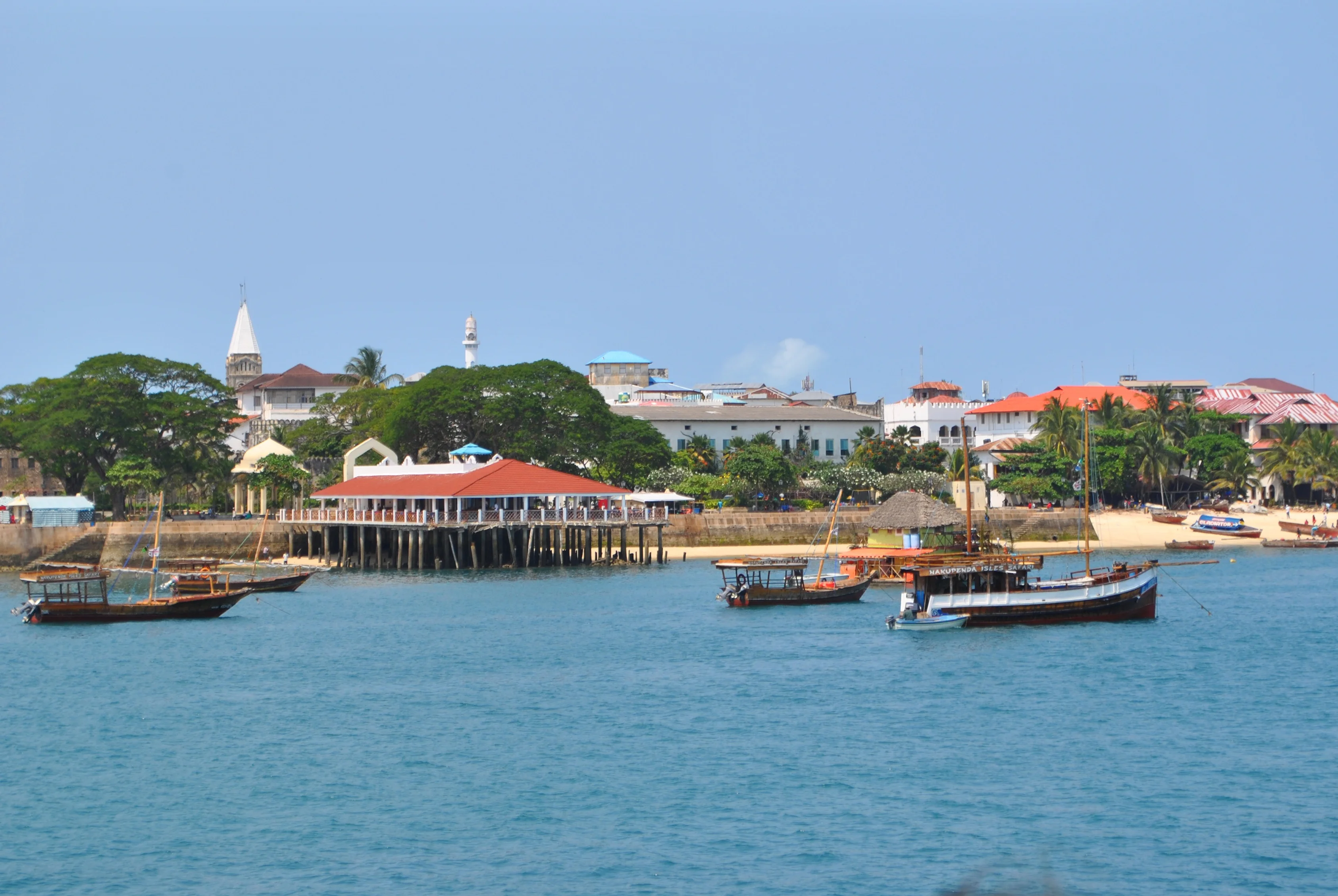
People come to Zanzibar for the beaches of the east and the north, and they rarely sleep in its capital. That is a miscalculation, and one sentence corrects it: Stone Town is the only old town in East Africa on the World Heritage list, its lanes are too narrow for cars, and everything that explains the island fits inside this square kilometre of carved coral. The rest of Zanzibar City is an ordinary, busy Tanzanian town, Ng'ambo, which begins on the far side of the filled-in creek and which no brochure ever shows.
So sleeping here comes down to one question: the lanes, or the beach? And the answer is that both sit in the same neighbourhood, three hundred metres apart. Entry level runs around $40*, a guest house in a Swahili merchant's house asks $79*, the seafront $102*, and the top end of Shangani goes past $430*. Four neighbourhoods follow, and two of them carry excursions rather than addresses.
In Zanzibar City, I was pleasantly surprised by the architecture and the cultural activities.
Compare hotel prices in Zanzibar City
In a hurry? Find the best accommodation deals in 3 clicks.
Compare live deals from Booking, Expedia, Agoda and other partners.
At a glance: our picks by traveller type
Pick the profile that suits you to head straight to the recommended neighborhood.
The neighborhood map in Zanzibar City
Get your bearings on the neighborhoods and must-see sights before choosing where to drop your bags. Click a name to jump to its description.
Stone Town: the maze, the fort and Forodhani The lanes of Stone Town and its carved doors, the Omani old fort of 1699, the House of Wonders, the former slave market and the Anglican cathedral built on its site, the Forodhani gardens and their evening market, Stone Town beach
to see everything on foot, for the island's history, for a first visit
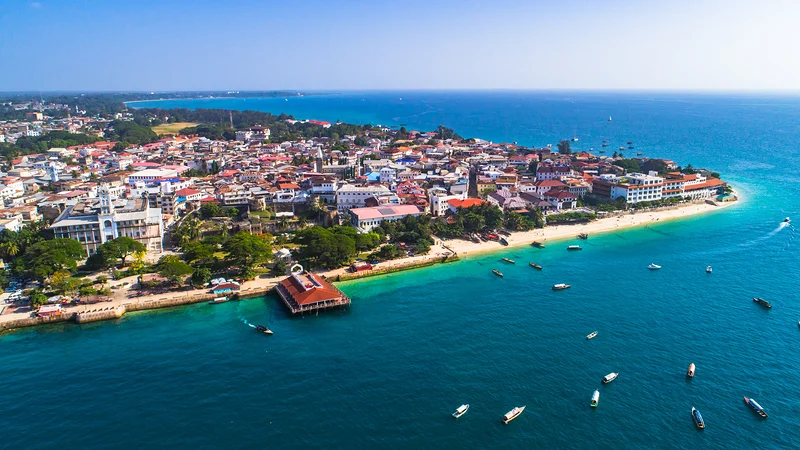
Everything happens here, and everything is done on foot because no car gets through. Stone Town is a maze of carved coral built by Omani, Indian and Swahili merchants: massive doors studded with brass, wooden balconies, inner courtyards, and around a corner a mosque, a Hindu temple or a church. On the seafront, the Forodhani gardens light up at dusk for the skewer market. A few steps away, the former slave market and the Anglican cathedral built on its site in 1879 open from eight in the morning to six in the evening, for five dollars, guide included.
Narrow alleyways, carved doors, scents of spices and the sea.
What to see & do in the neighborhood
Where to stay in this neighborhood
Zanzibar Serena Hotel Luxury
The best location score in this guide, 9.6, and the best overall mark: 8.5 from over three hundred and fifty reviews, with 9.2 for staff, 9.1 for cleanliness and the same for comfort, 8.6 for facilities and wifi. Two historic houses on the Shangani point joined together facing the ocean, five minutes from the Forodhani gardens. Value for money, 8.1, states the price: budget $430*.
Shaba Boutique Hotel Mid-range
8.4 from over sixteen hundred reviews, and 9.6 for staff, the highest figure in this guide in any category. Cleanliness 9.0, comfort and value for money 8.9, location 9.0, wifi 8.3. A restored Swahili house in the heart of the lanes, five minutes from the Darajani market, around $79*.
Tembo House Hotel Mid-range
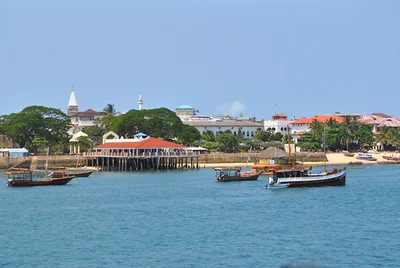
The largest review count in this guide: 8.2 from over three thousand, with 9.4 for location, 8.9 for staff, 8.6 for comfort, 8.5 for cleanliness. The former residence of the United States consul, set on Stone Town beach, two pools, and a terrace from which you watch the dhows come in. The wifi, 7.9, is the weak point. Around $102*.
Pros
- Everything on foot, and no cars in the lanes
- The three best-rated addresses in this guide
Cons
- Two major monuments closed or under works
- Heavy heat in the middle of the day, and you will get lost
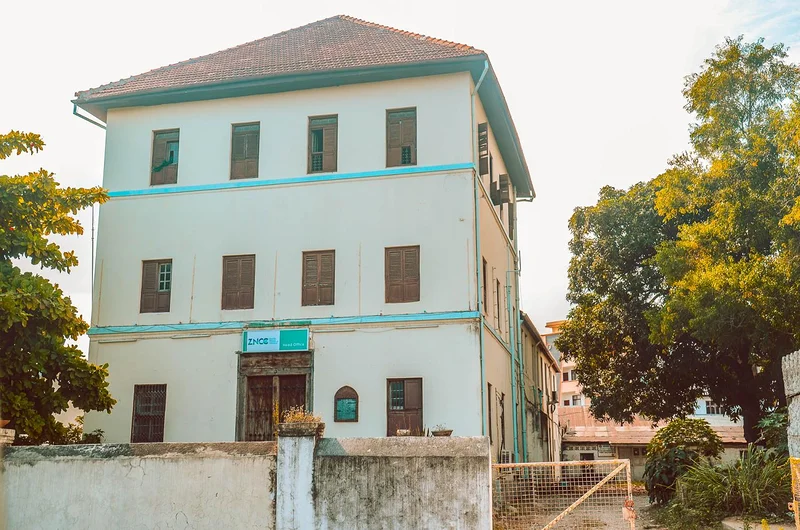
Ng'ambo, Kiembe Samaki and the Jozani road Livingstone's house, now an administrative office, the Jozani forest and its endemic red colobus monkeys, its wooden walkway through the mangrove, the Darajani market and the Michenzani blocks at the entrance to the district
for the Jozani colobus monkeys, to see the working town, for the airport
On the far side of the filled-in creek begins Ng'ambo, "the other shore" in Swahili: the ordinary town, its 1970s housing blocks, its workshops, and the road running out to the airport and the south-east. This is where you set off for the Jozani forest, thirty-five kilometres away, the only place in the world where the Zanzibar red colobus lives: an hour's walk, guides on site, and a wooden walkway that crosses the mangrove without wet feet. Bring insect repellent for late afternoon.
You run into red colobus monkeys there, close enough to get a good look at them.
What to see & do in the neighborhood

Pros
- The national park and its endemic monkeys
- Six kilometres to the airport
Cons
- No address worth naming: this guide names none
- Livingstone's house cannot be visited
The north: Mtoni, Bububu and the channel islands Prison Island and its giant Aldabra tortoises, Chapwani island and its colonial cemetery, the ruins of the Mtoni palace, the coast road to Bububu
for the tortoises, for a quiet beach outside town, for a calm night
The north road follows the water for ten kilometres, passes the ruins of the Mtoni palace and reaches Bububu. Offshore lie two islands twenty minutes away by boat: Chapwani, eight hundred metres long, with its nineteenth-century sailors' cemetery, and above all Prison Island, built to lock people up and finally used as a quarantine station, known today for its colony of giant Aldabra tortoises, the oldest of which have passed a hundred. Ten minutes of crossing, an hour on site, and the finest view there is of Stone Town.
The history of the island is heavy, but the giant tortoises really grab your attention.
Where to stay in this neighborhood
Chuini Zanzibar Lodge by NEWMARK Mid-range
8.0 from over two hundred reviews, with 9.2 for staff, 8.4 for cleanliness and the same for comfort, 8.0 for facilities. The two lowest figures in this guide are its own and they say the same thing: location 7.9 and value for money 7.6, for a garden lodge set on its own beach eight kilometres north of the old town. Budget $124* and a taxi for every outing.
Pros
- The tortoises and the view of the old town
- Quieter beaches ten minutes away by car
Cons
- Only one address named, eight kilometres north
- You need a taxi or a dala-dala for everything
The south: Mazizini, Mbweni and the offshore reefs Chumbe island and its coral reserve, Kwale island and its sandbank, the gardens and ruins of Mbweni, the Chukwani road
for snorkelling, for a day at sea, for the quiet
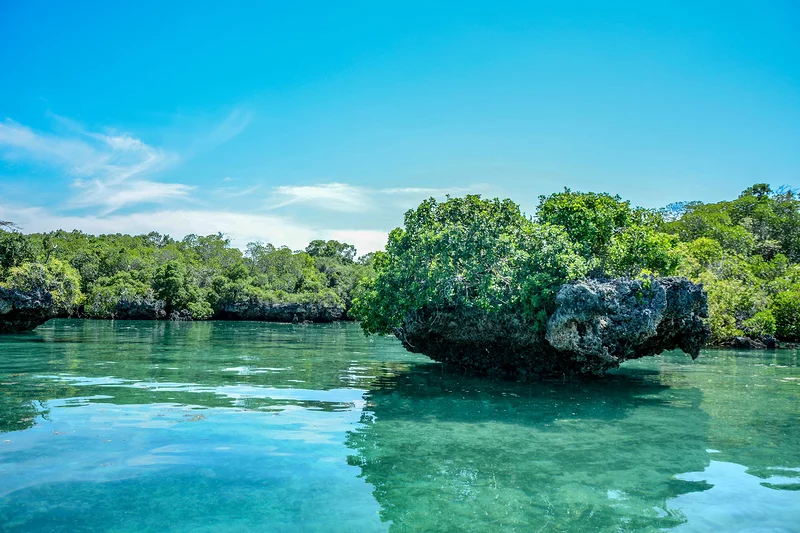
South of town the coast opens into coves and the sea gives onto two islands worth a full day. Chumbe is a coral reserve closed to fishing since the 1990s, where visitor numbers are capped and the snorkelling is exceptional; Kwale, further south, is a sandbank and a lagoon where the dhow trips stop, seafood lunch included. Our member warns that the island fills up in high season: go early, or outside the busy months.
What to see & do in the neighborhood
Pros
- The two best snorkelling sites in the area
- Quiet coves twenty minutes from the centre
Cons
- No address worth naming: this guide names none
- Everything is done as an excursion, leaving in the morning
Our tips for booking the right place
- Two monuments out of three are closed, and you need to know first: The House of Wonders, the sultan's palace of 1883, has been closed since 25 December 2020: its north-west corner collapsed in the middle of restoration work, two workers lost their lives, and the building was still under scaffolding in 2025, with no reopening date. The old fort right next door is also under works: the February music festival had to move to the Mnazi Mmoja grounds. What remains open is worth the detour: the former slave market and its memorial, eight in the morning to six in the evening, five dollars with the guide.
- Walking in Stone Town: early morning, or late afternoon: The lanes are narrow, high and windless: at midday the heat is crushing and the shops close. Our members say the same thing two ways: go early in the morning, when the deliveries come through and the doors open, or late in the afternoon, right up to the evening market at Forodhani. In between, the seafront and its breeze beat the maze. You will get lost anyway, and that has to be accepted: maps are not much use in there.
- A Muslim island: two habits to pick up: Zanzibar is Muslim by a very large majority, and two practical consequences are worth knowing. In town, shoulders and knees covered: swimwear stays on the beach, and this holds even at thirty-five degrees. During Ramadan, a large share of the restaurants in Stone Town close during the day and reopen after sunset: hotels serve, the lanes do not. In both cases nobody will say anything, but the town opens differently to those who go along with it.
- The seasons, and the suitcase that will not roll: The long rains fall from March to May, in heavy short bursts, and that is the low season, the one with the gentlest rates; the short rains come back in November and December. High season runs from June to October, dry and windy. One detail that changes the arrival: no car enters the lanes, the taxi stops at the edge of the district and the last two hundred metres are on foot, over uneven slabs. A bag gets carried; a wheeled suitcase gets dragged.
- Crossing town to see the House of Wonders: it has been closed since December 2020 and no reopening date has been announced.
- Looking for a tour of Livingstone's house: the building holds offices, there is no route and no panel, and our members stayed five minutes.
- Booking in the north or the south expecting to walk to the lanes: it is eight kilometres one way, about ten the other, and a taxi for every trip.
- Planning on a wheeled suitcase for a guest house in the maze: the last two hundred metres are on foot over uneven slabs.
FAQ: where to stay in Zanzibar City
Which neighbourhood should you stay in in Zanzibar City?
How much does a night in Zanzibar City cost?
How many days do you need in Zanzibar City?
Should you sleep in town or on a beach on the island?
When is the best time to come?
What can you see in Zanzibar City in one day?
 Keep exploring
Things to do in Zanzibar City
Keep exploring
Things to do in Zanzibar City
Comments (0)
No comments yet. Be the first!